PMI-ACP Agile Training for a2i: 34 Officials Complete Three Days on Agile Life Cycles, Scrum and Kanban
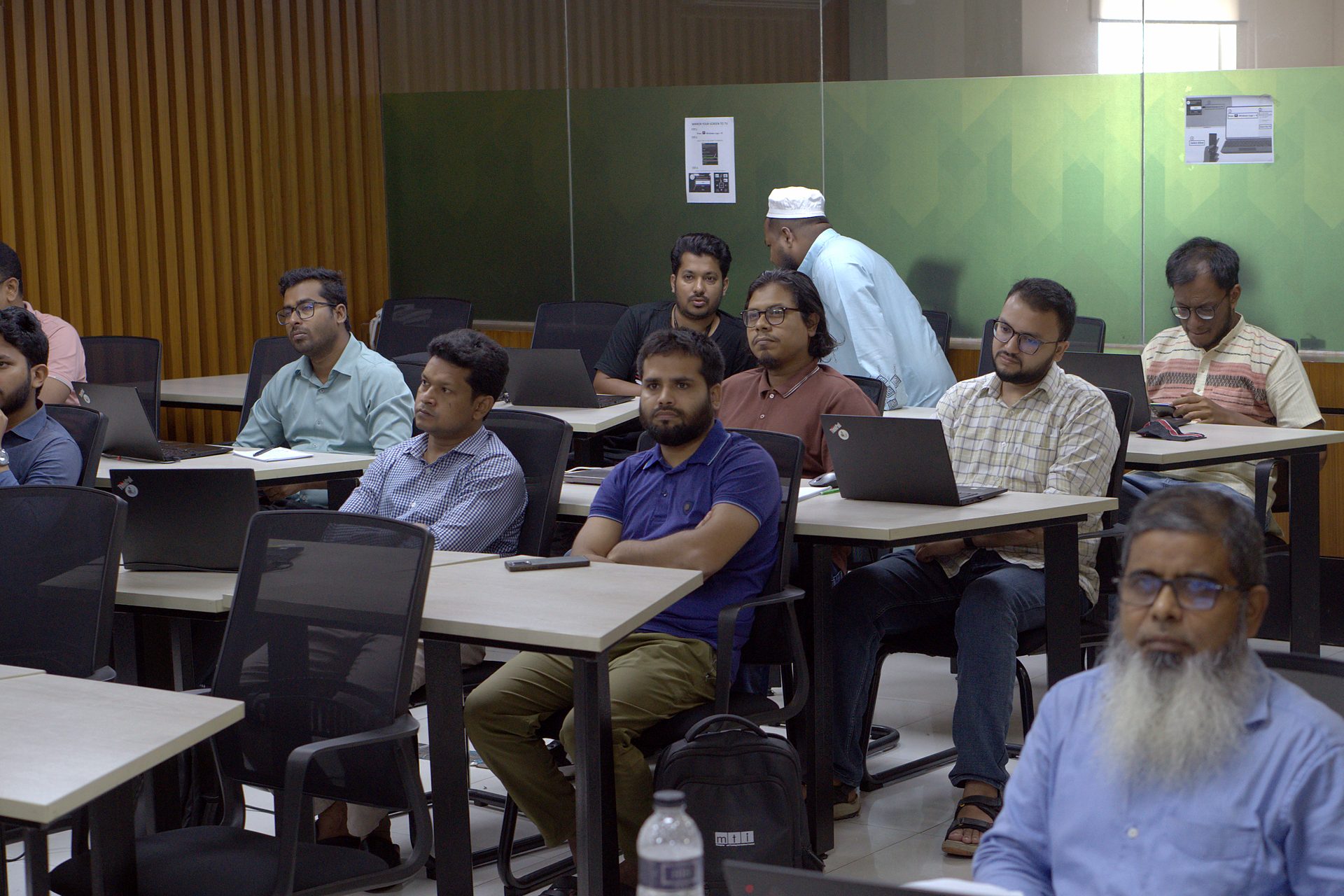
Management and Training International (MTI) Ltd. delivered a three-day course on the PMI Agile Certified Practitioner (PMI-ACP)® for 34 officials and consultants of the Aspire to Innovate (a2i) Programme, ICT Division, on 16 May, 13 June and 20 June 2026 at a2i, ICT Tower, Agargaon. Where a2i’s PMP cohort is built around programme and service managers, the PMI-ACP batch draws heavily on the people who build and run a2i’s platforms — software, DevOps, infrastructure and security engineers — for whom agile is not a theory but the way the work is already done.
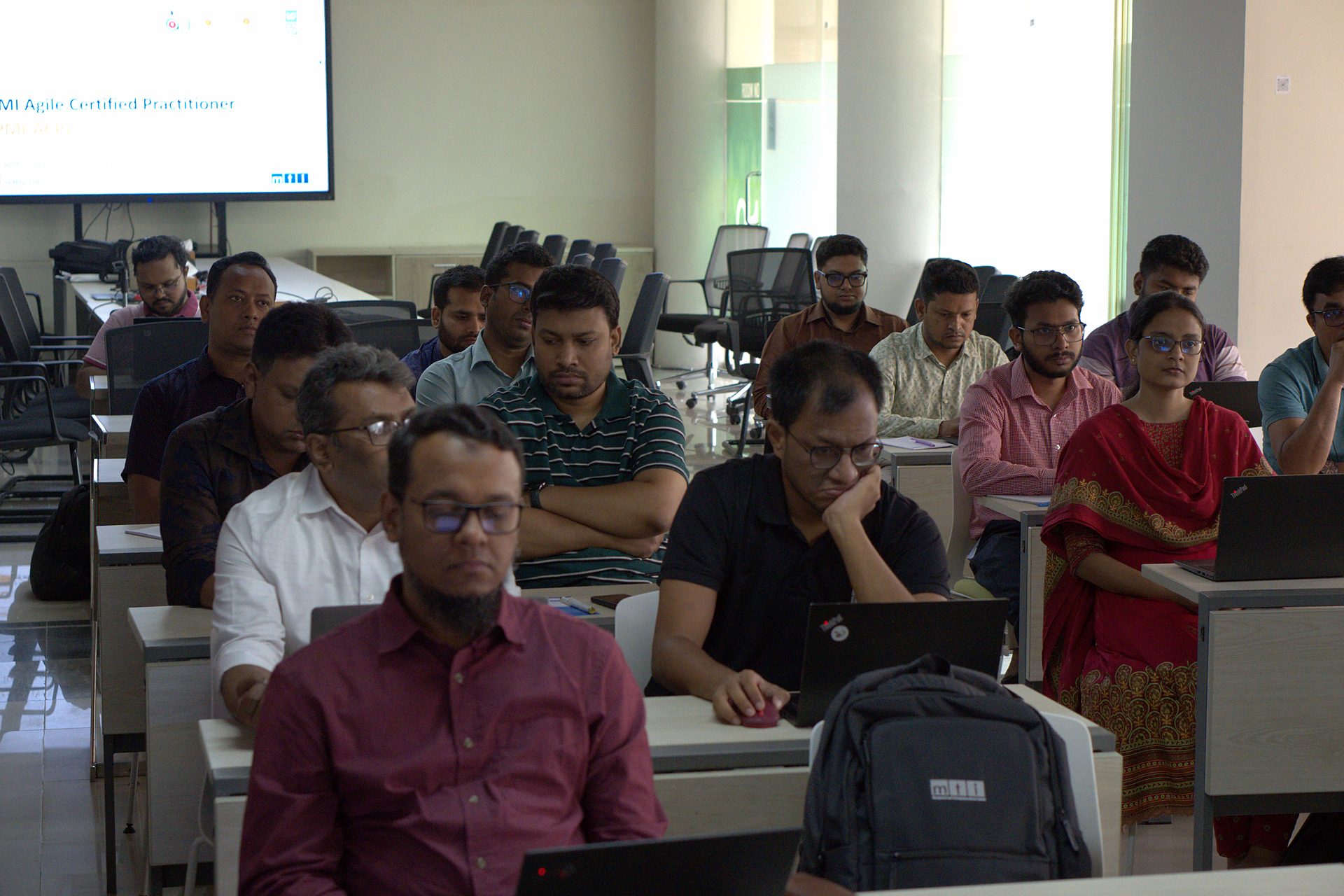
About the engagement: Under the assignment “Hiring a Consulting Firm for Project Implementation Support at a2i”, MTI Ltd. organises the agile capacity-building track for the Aspire to Innovate (a2i) Programme of the Information and Communication Technology Division alongside its PMP programme. The course prepares participants for the Project Management Institute’s PMI Agile Certified Practitioner (PMI-ACP)® credential.
Day 1 — Opening the Course (16 May 2026)
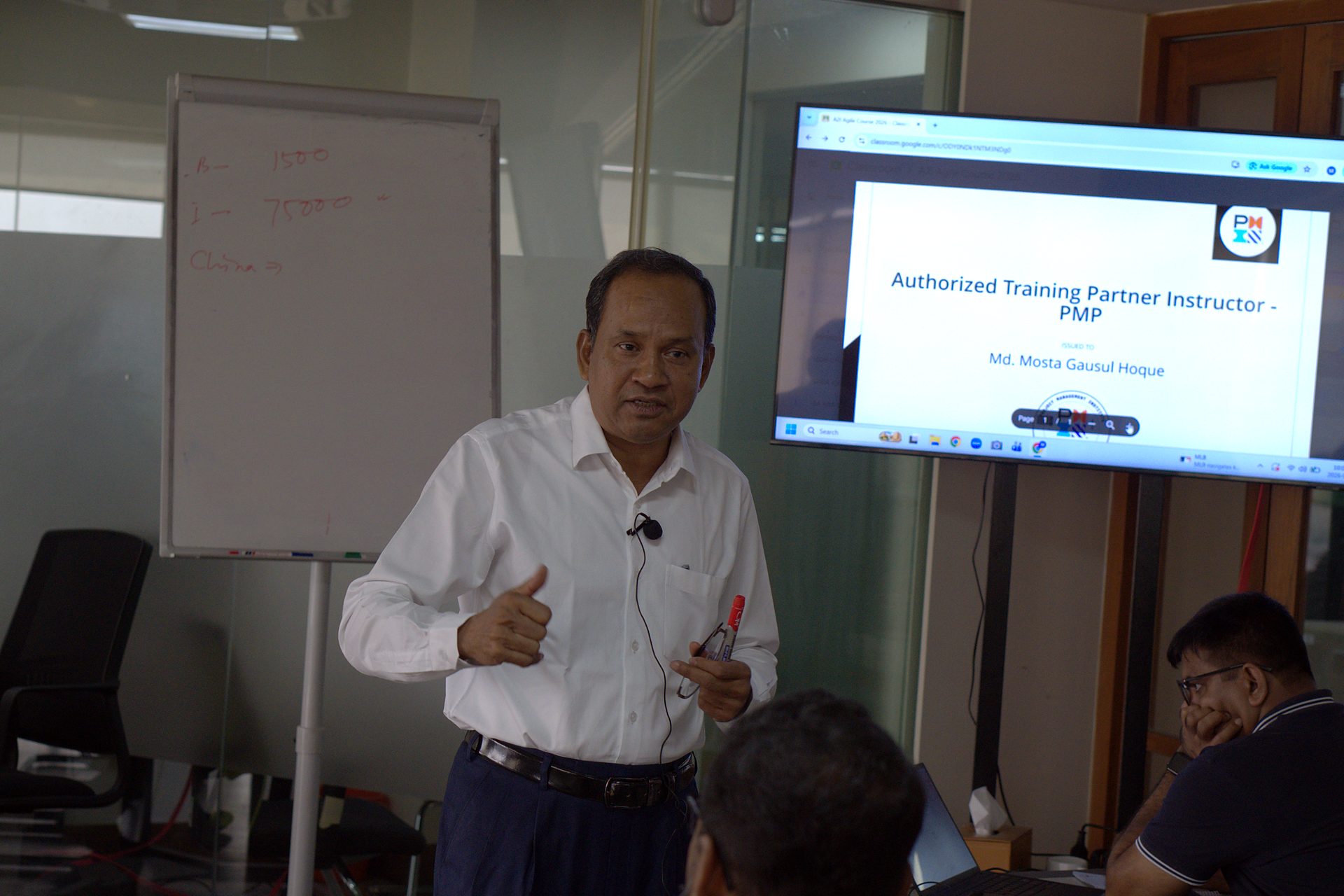
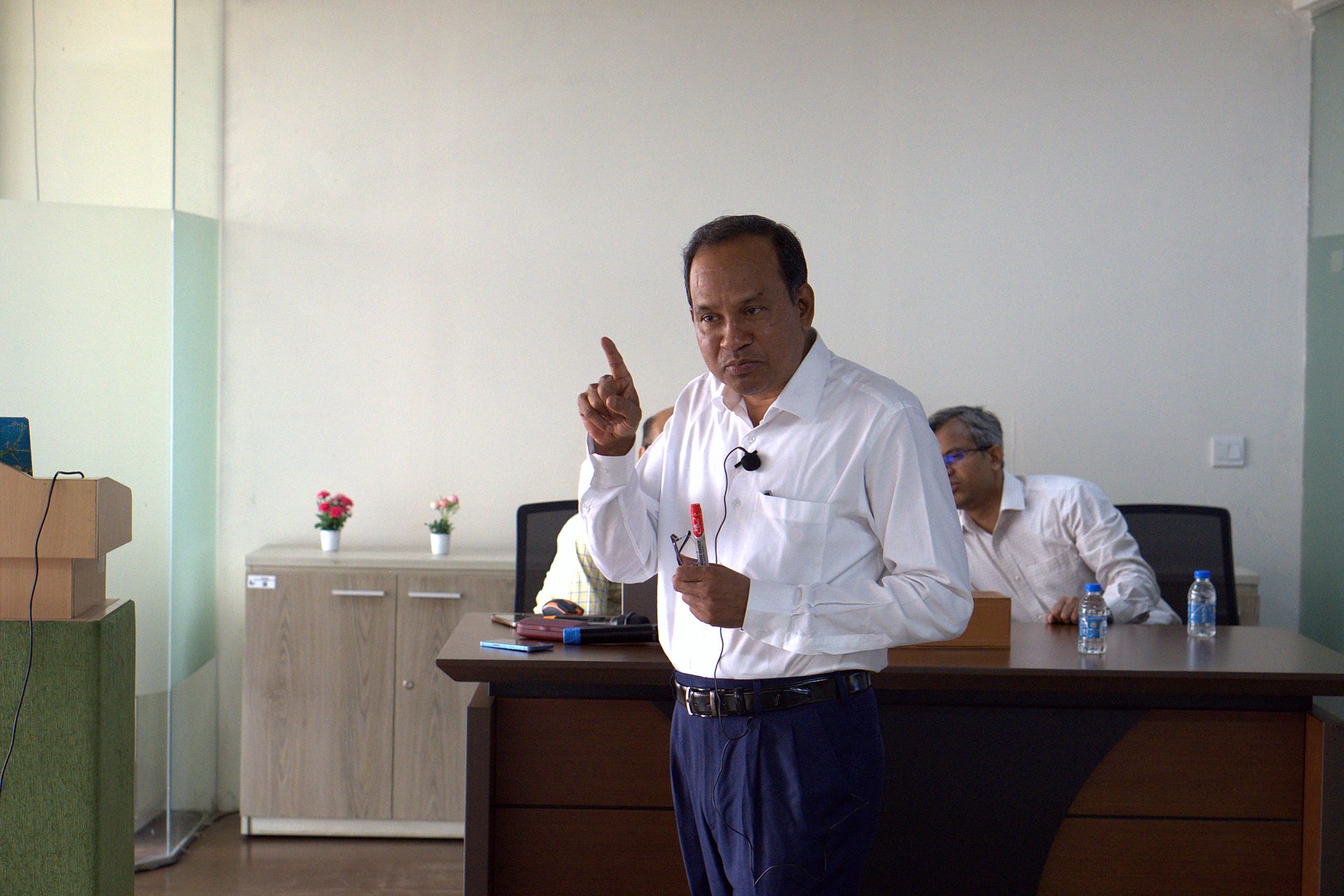
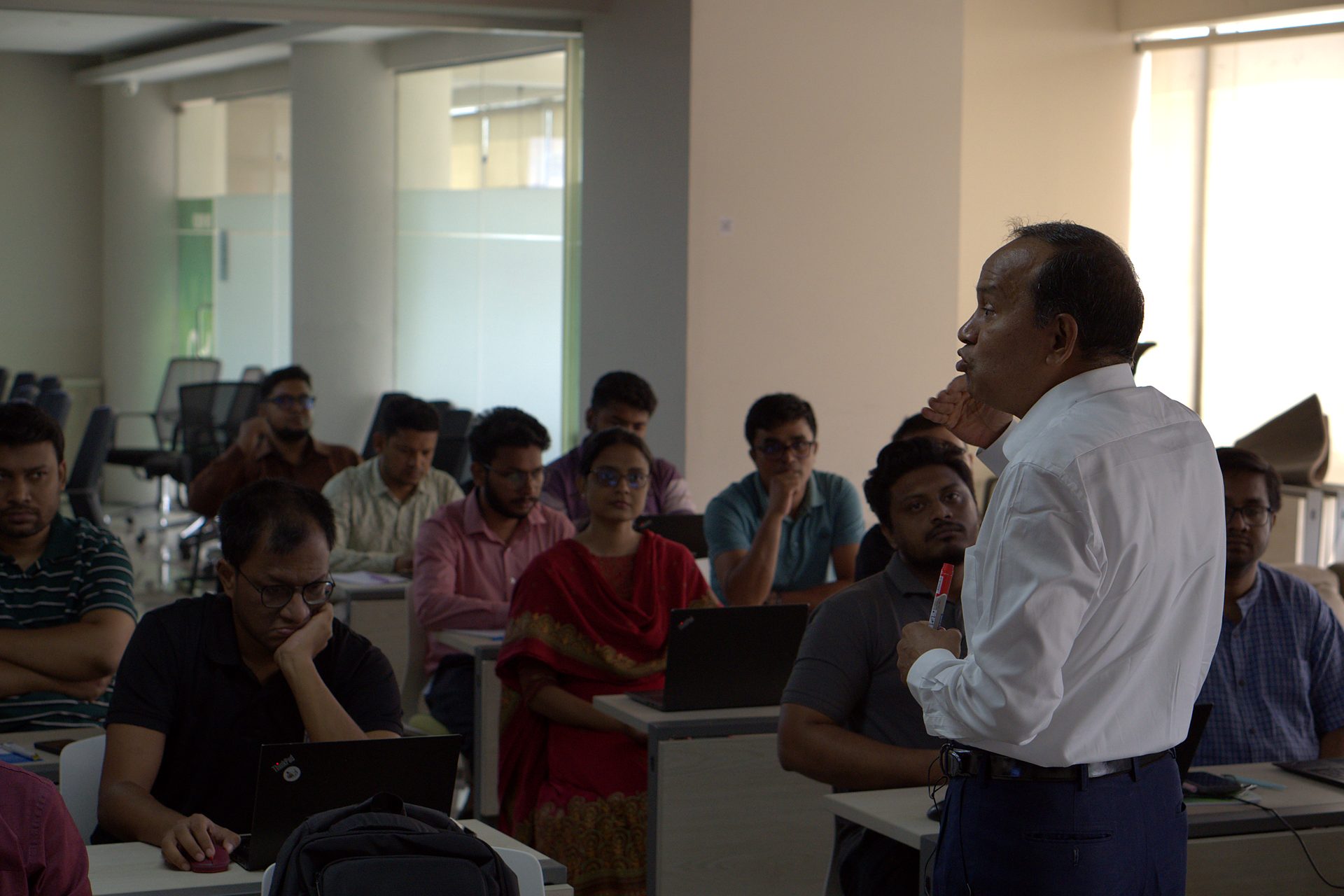
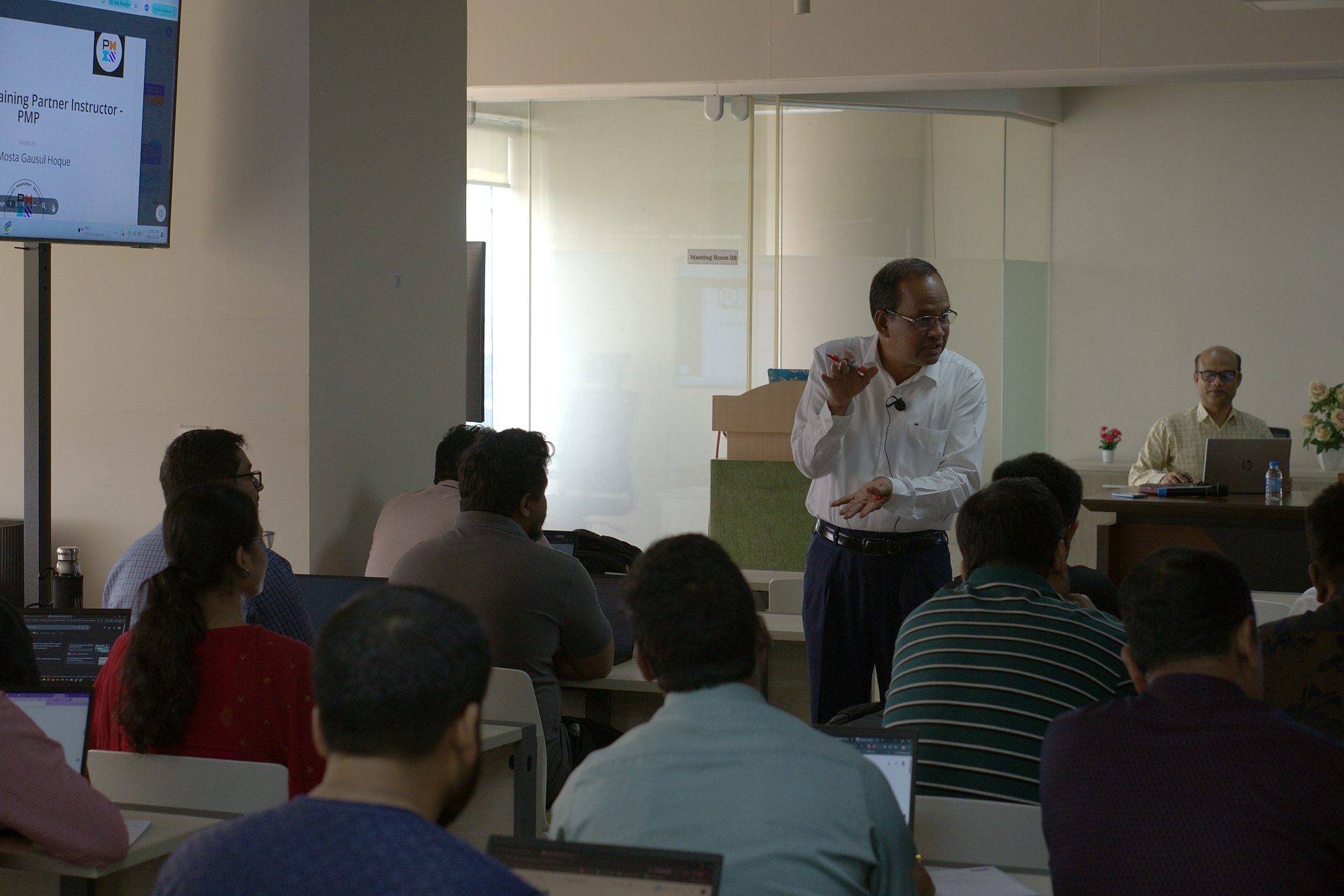
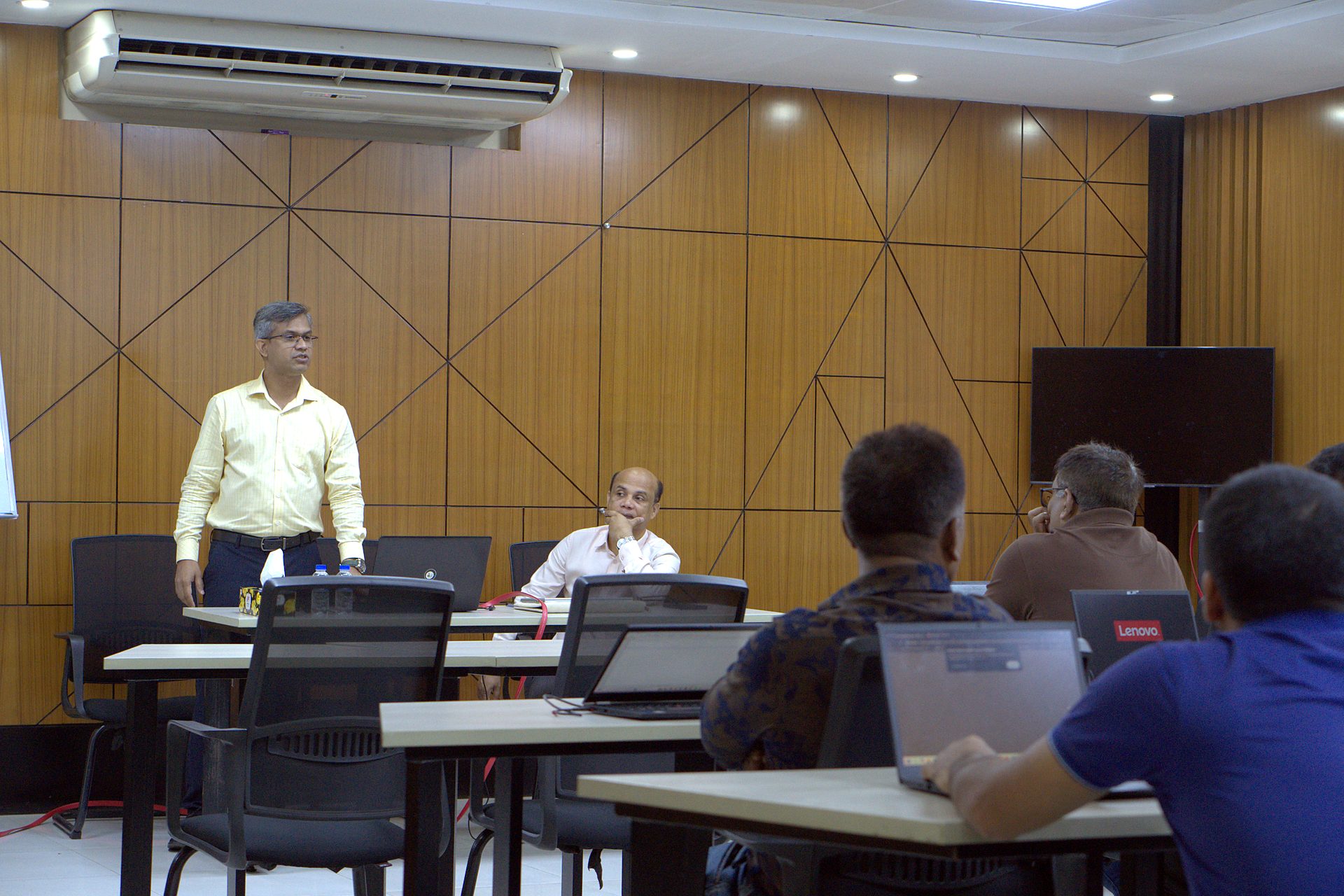
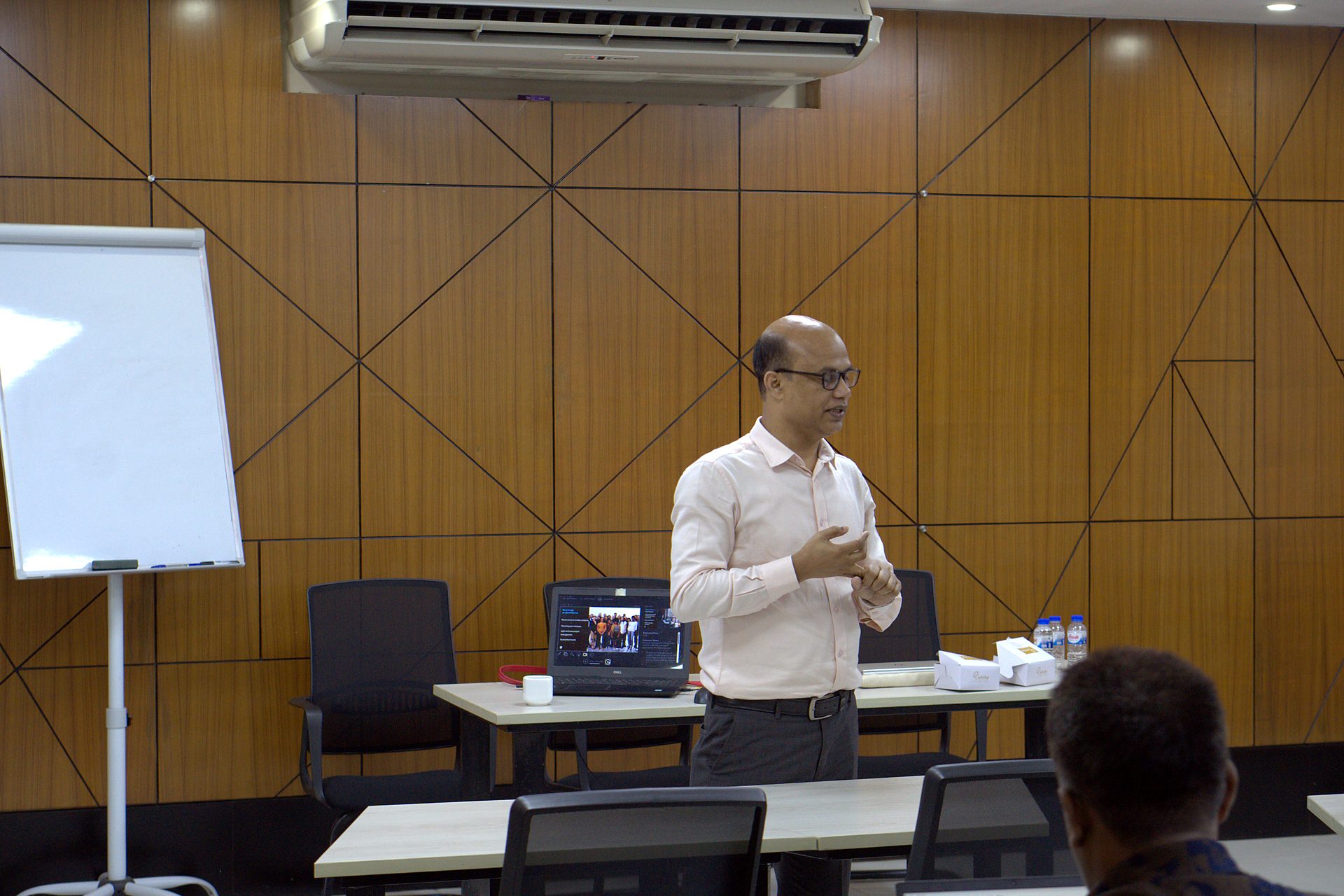
The course opened with Md. Mosta Gausul Hoque, PMP, former Secretary to the Government of Bangladesh, whose PMI Authorized Training Partner Instructor credential was on screen as he introduced the programme. The first day set out what the PMI-ACP credential certifies, how the course is organised, and the shift in mindset that agile asks of people trained in predictive, plan-first project management — a shift with particular weight for a government programme whose projects are approved through DPPs and fixed annual budgets.
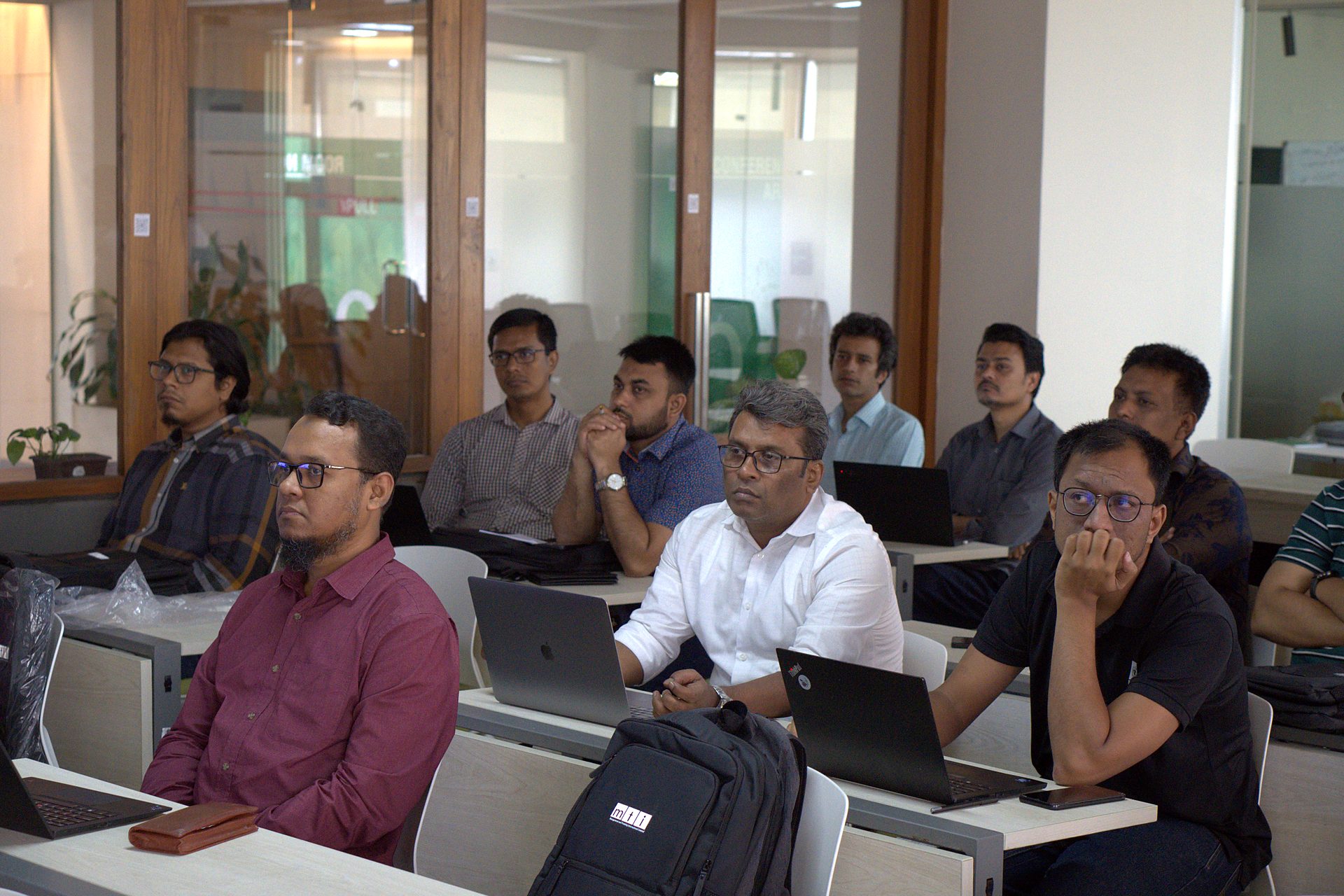
Day 2 — Agile Life Cycles and Scrum (13 June 2026)
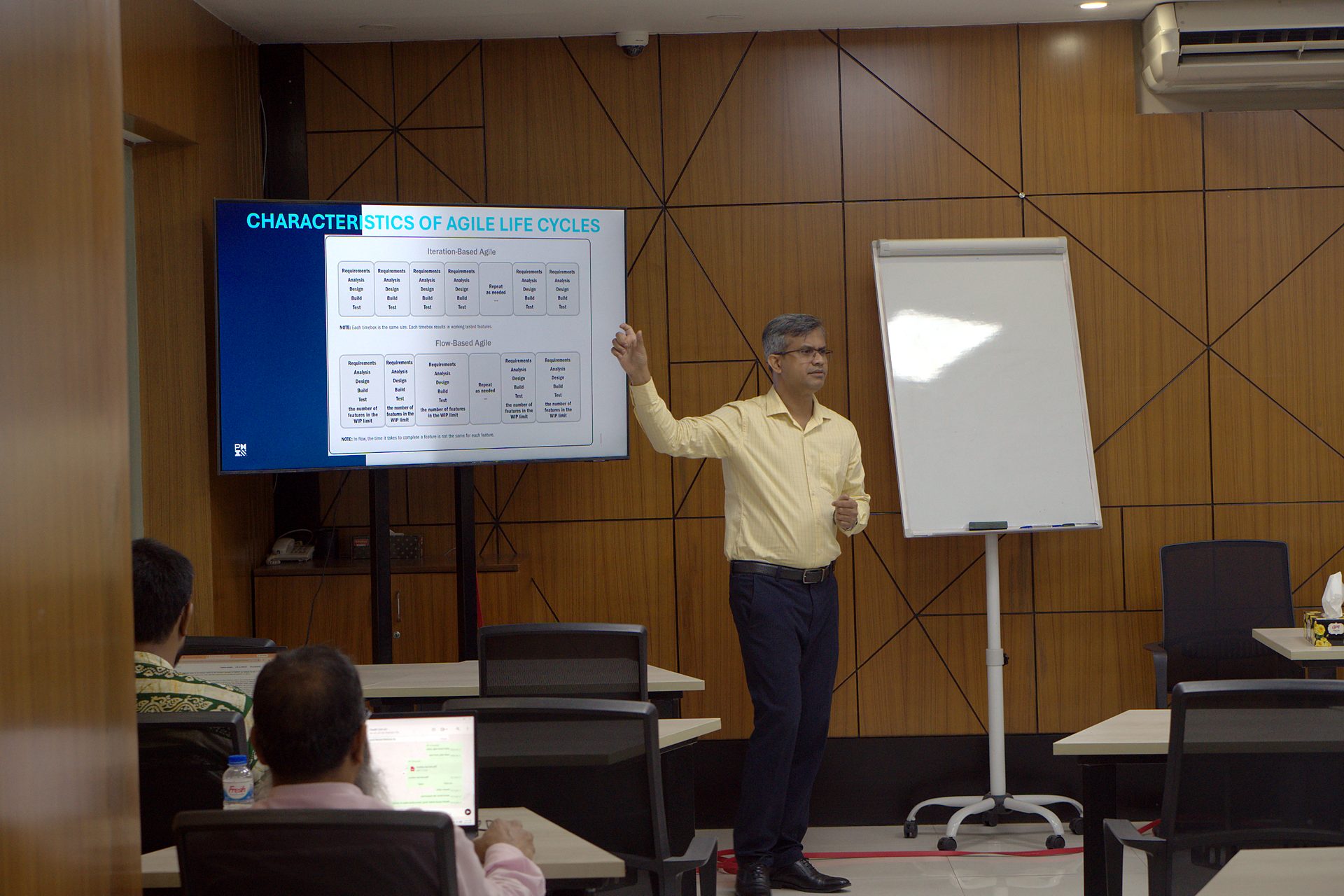
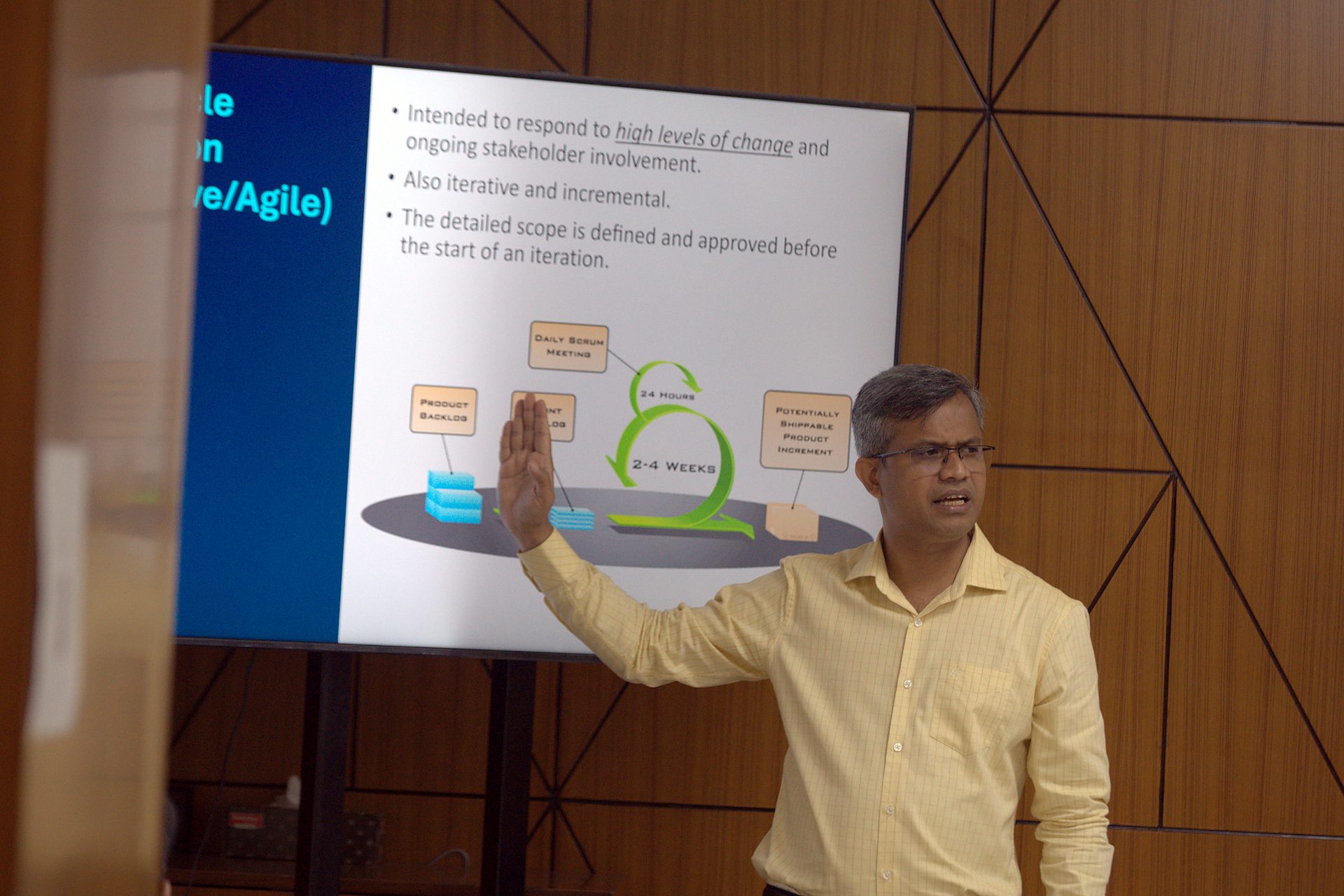
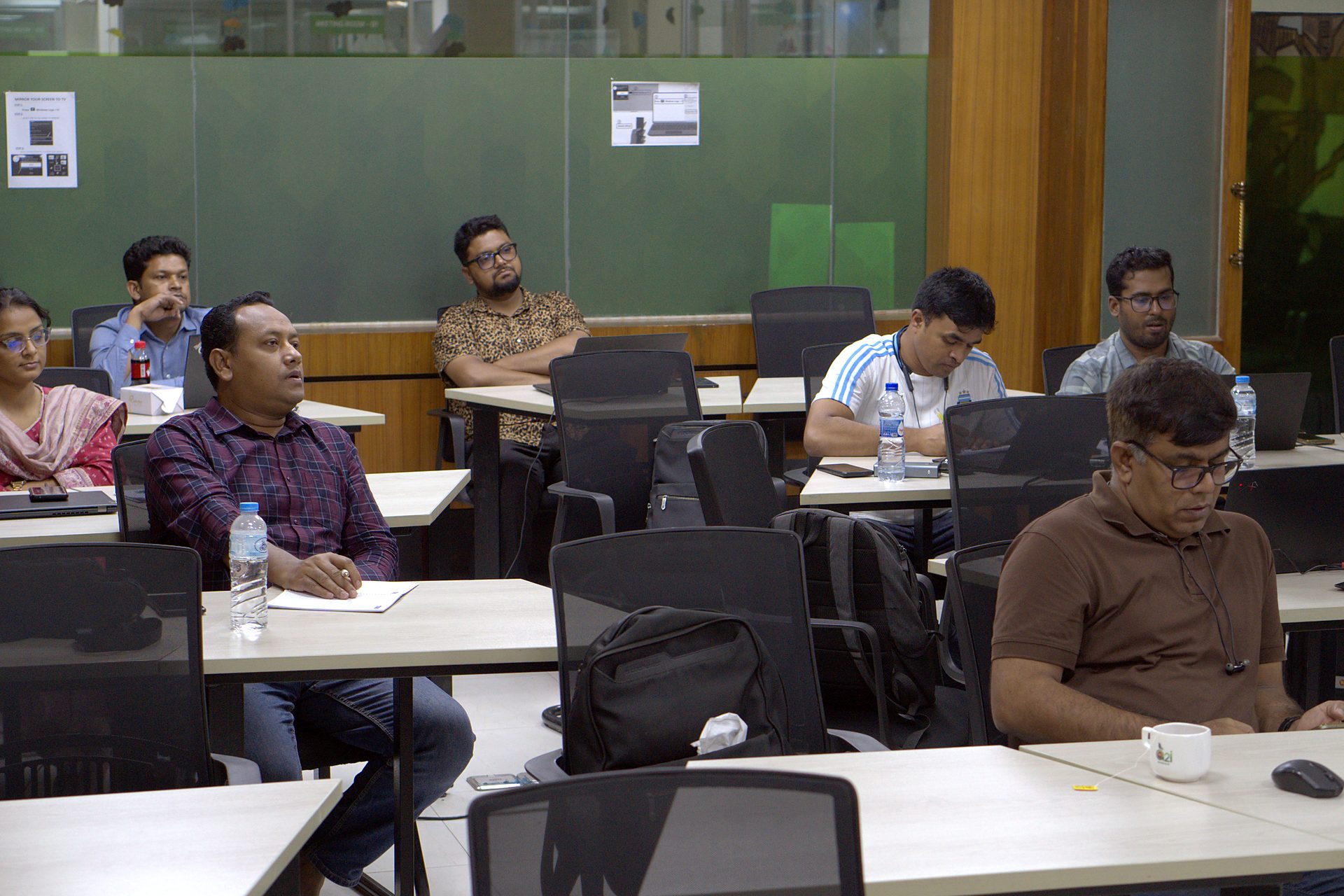
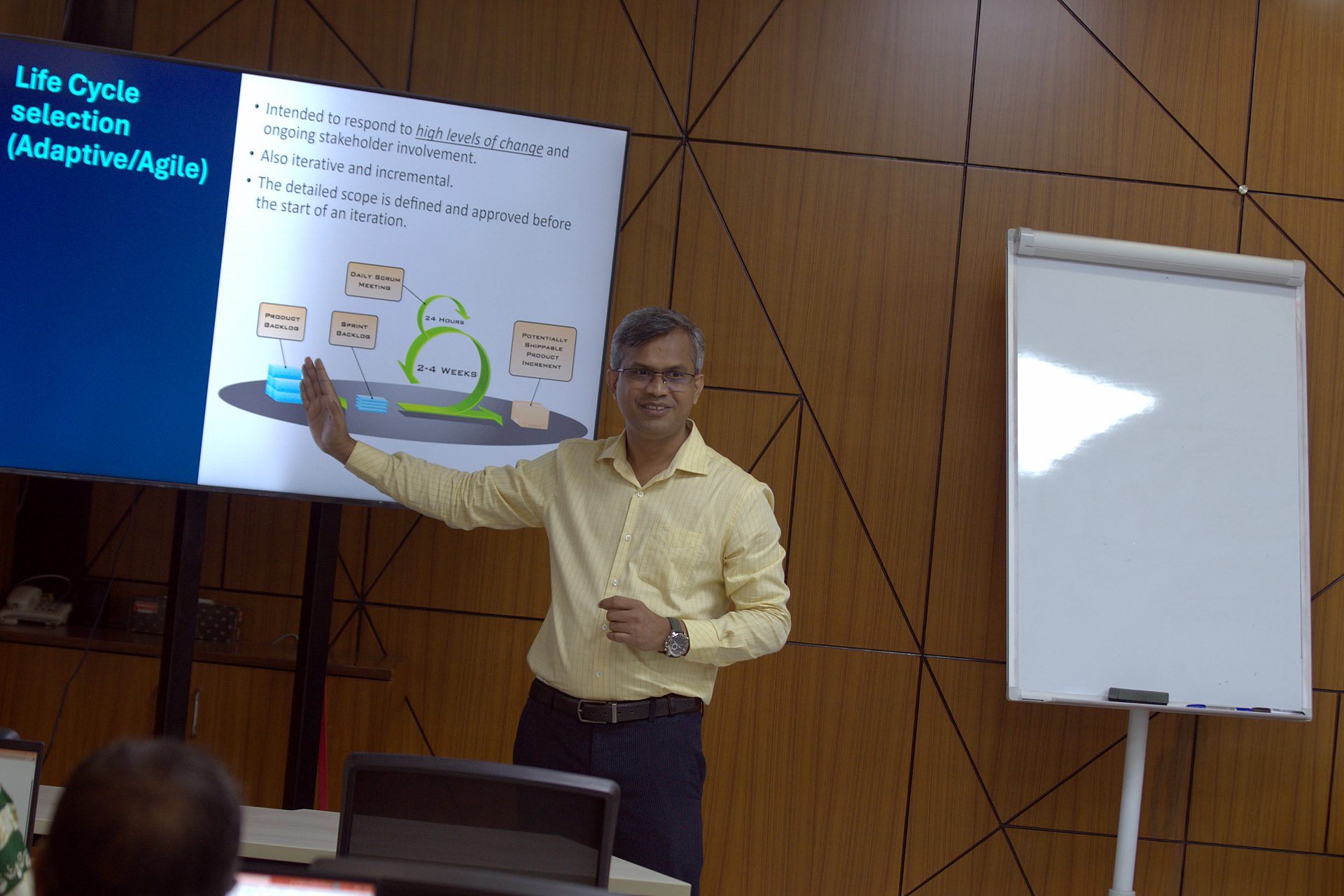
The second day moved into the adaptive life cycle itself. A slide on the characteristics of agile life cycles set iteration-based agile, in which requirements, analysis, design, build and test happen inside each fixed-length iteration, beside flow-based agile, in which features move through the same steps continuously as capacity allows. From there the trainers turned to life-cycle selection: an adaptive approach is intended for high levels of change and ongoing stakeholder involvement, it is iterative and incremental, and the detailed scope is defined and approved before the start of each iteration. The Scrum cycle — product backlog, sprint backlog, a two-to-four-week sprint, the daily scrum and a potentially shippable increment — made the abstraction concrete.
Day 3 — From Product to Task, and Kanban (20 June 2026)
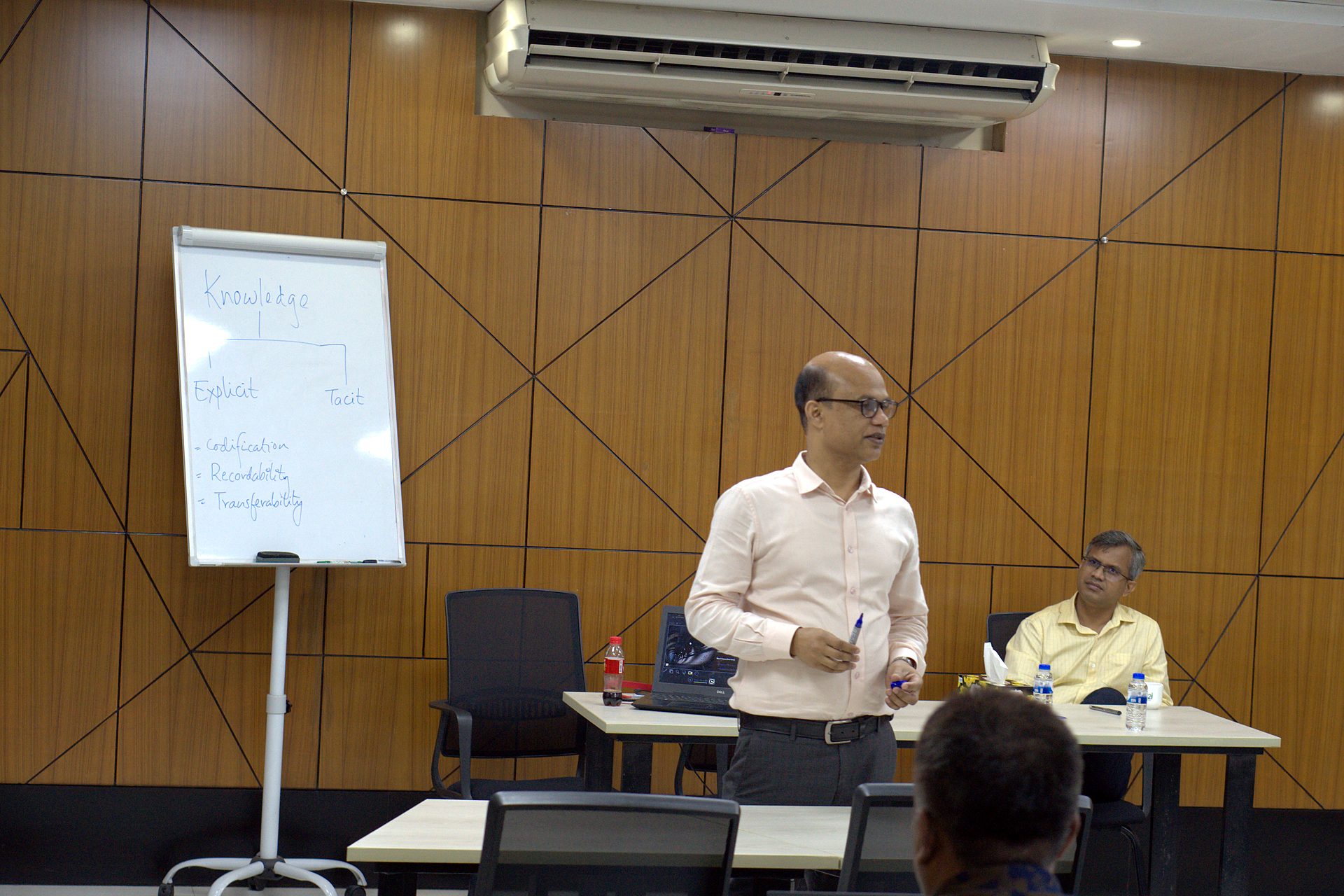
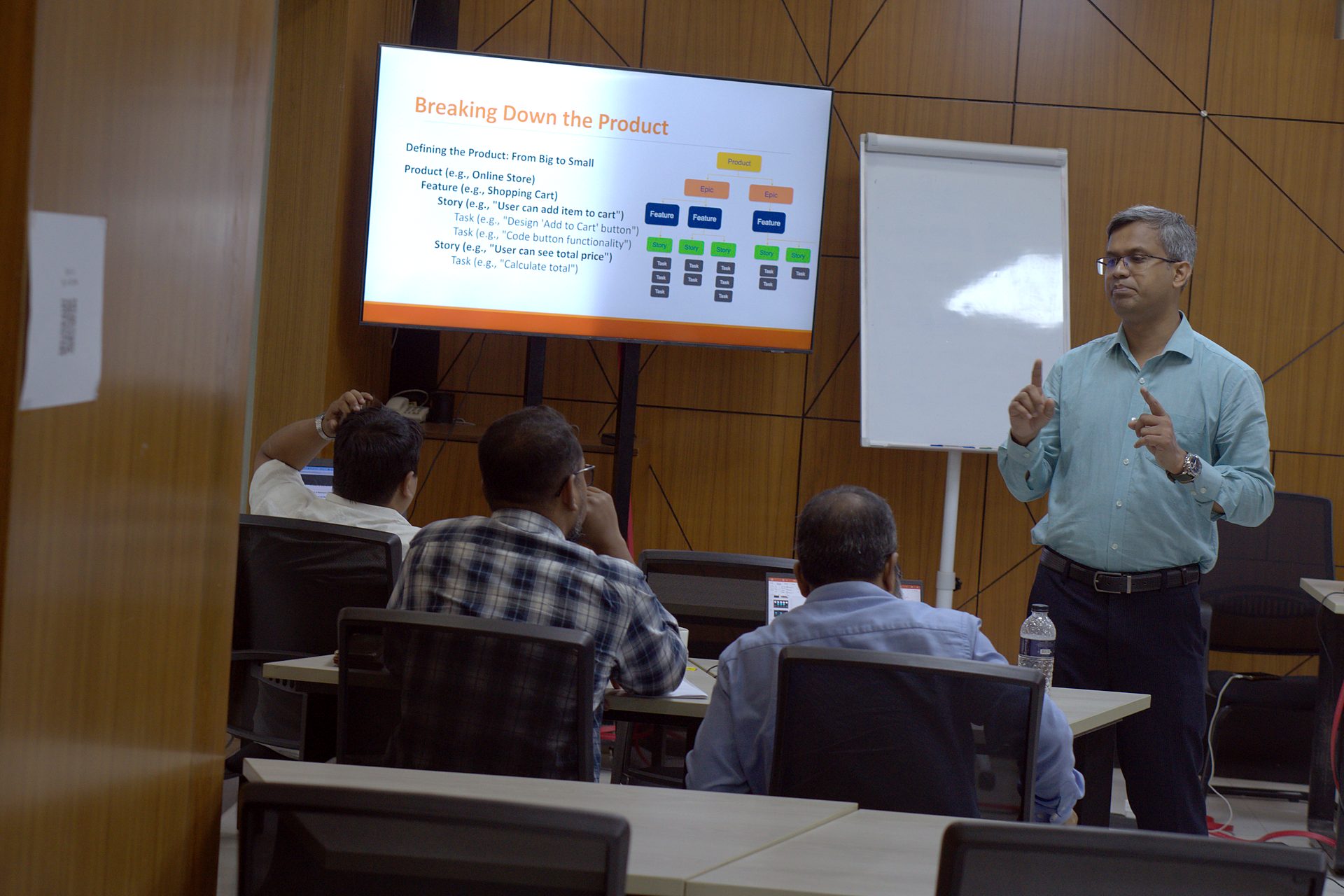
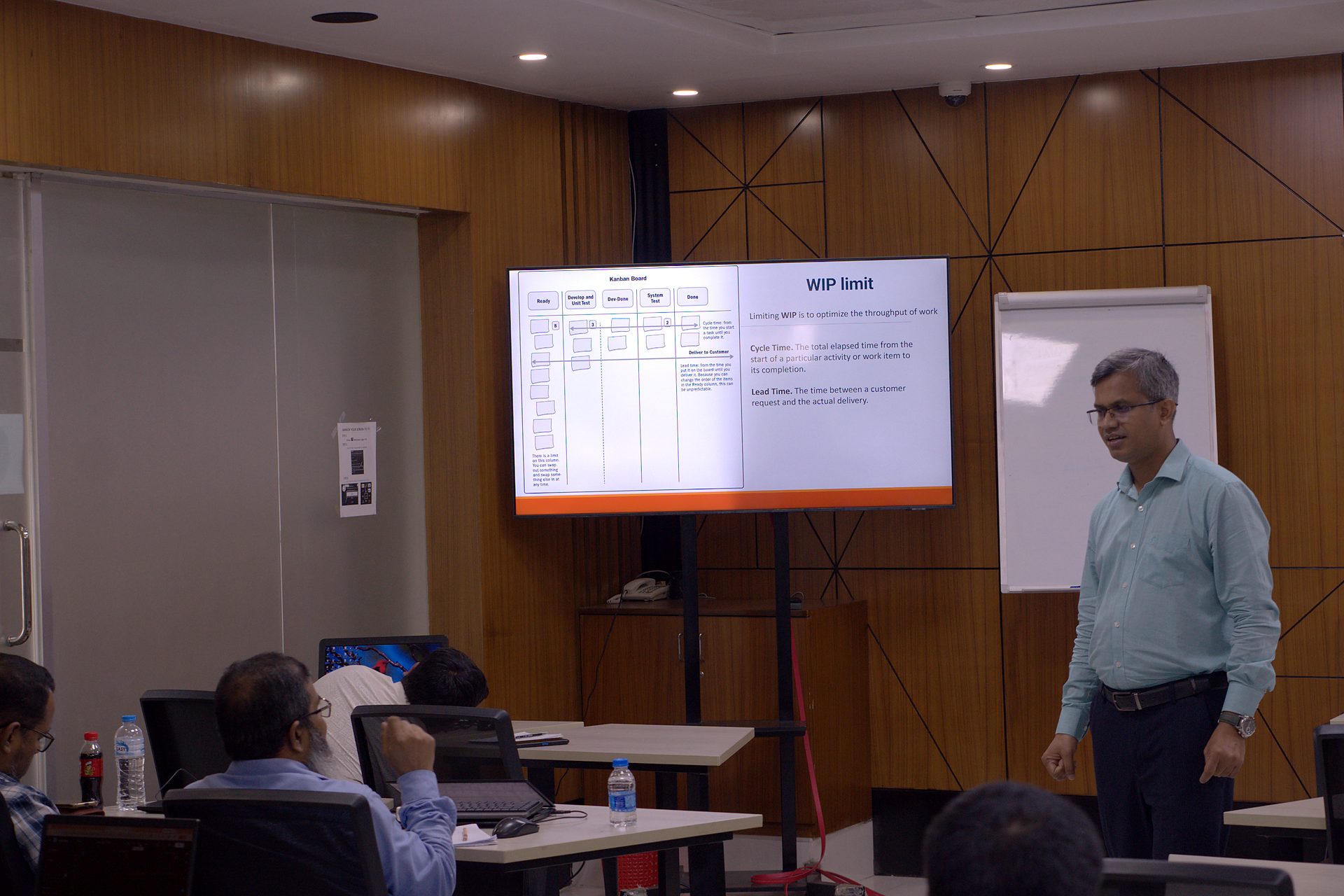
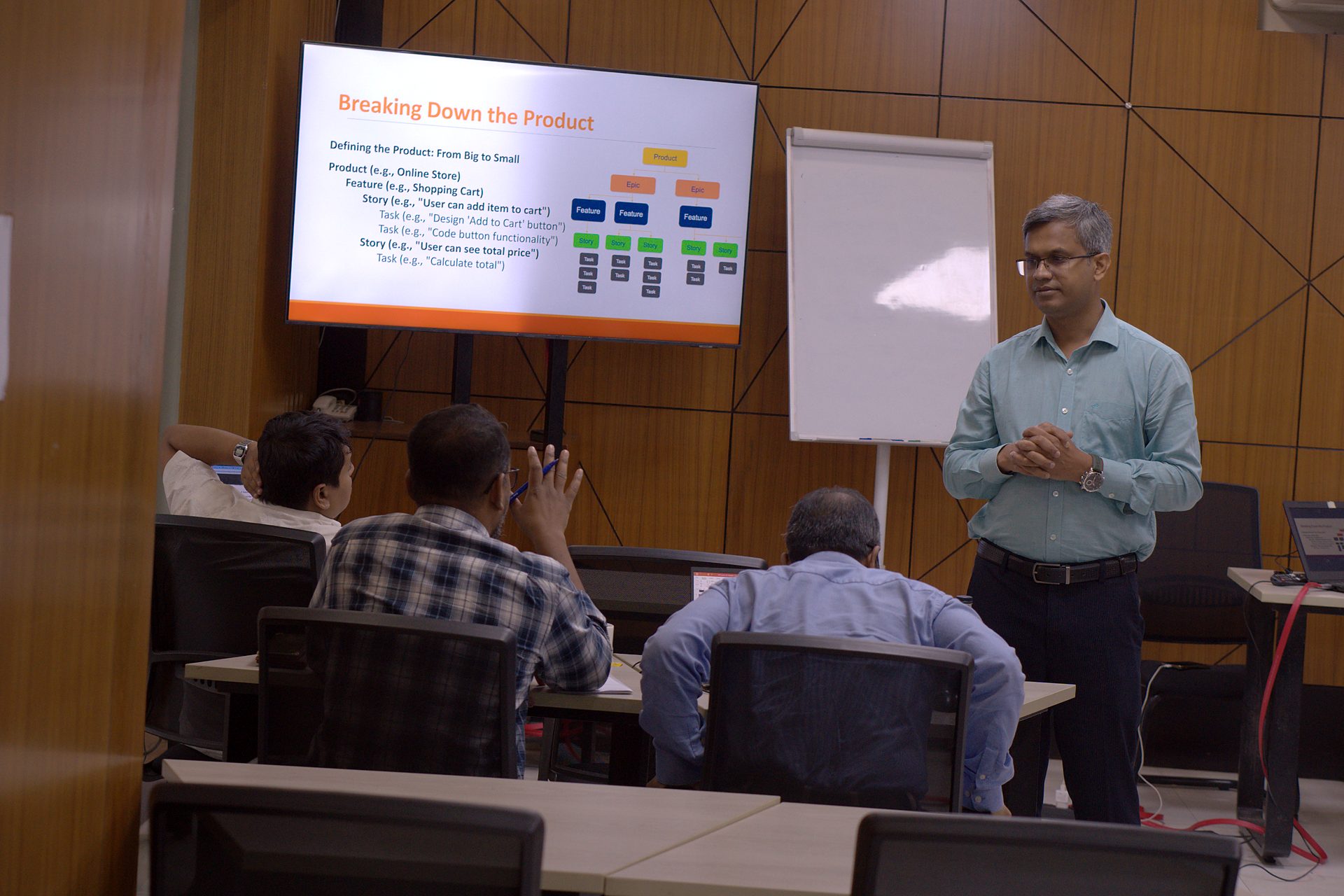
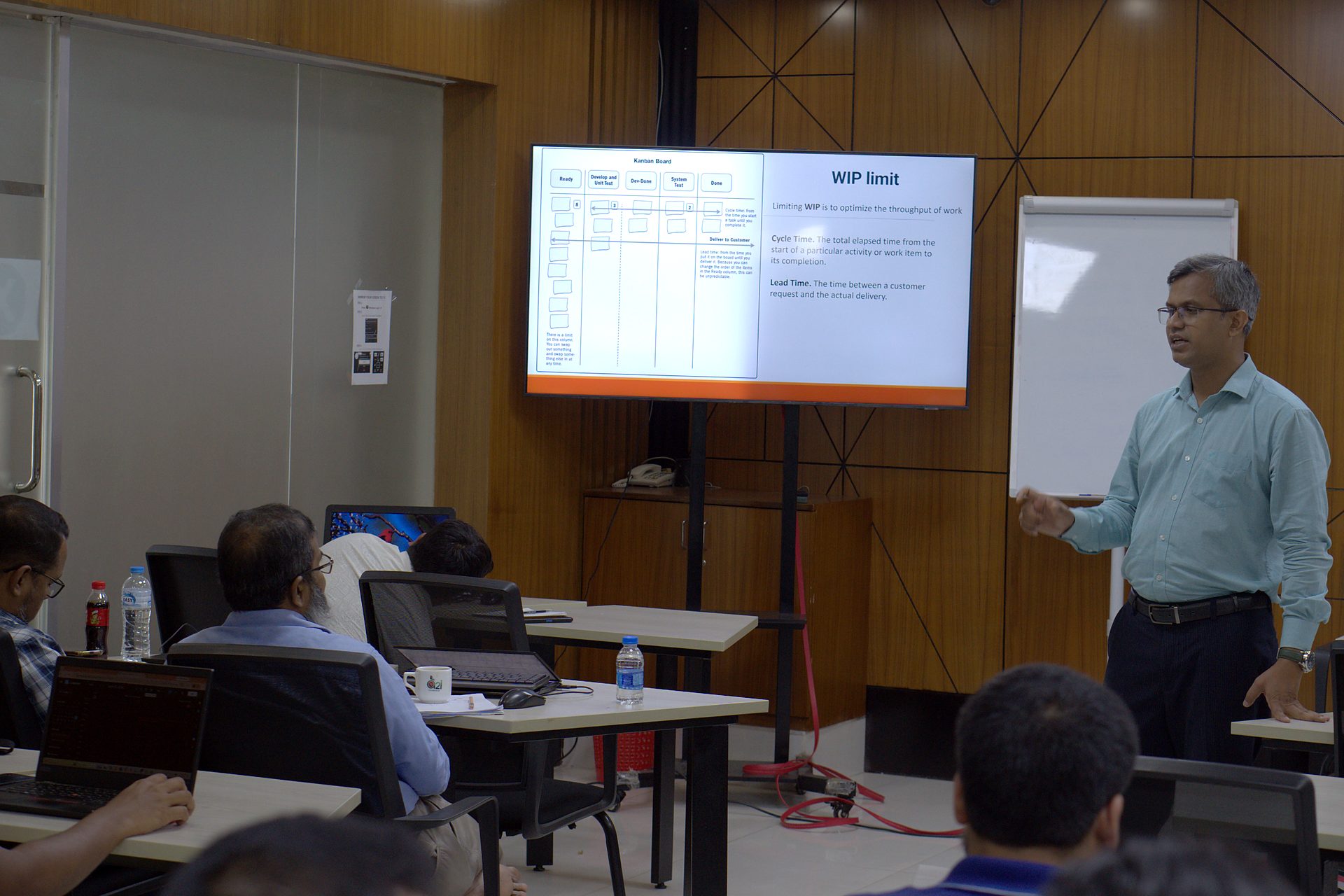
The final day was about making agile work day to day. Breaking Down the Product walked from big to small with a worked example: a product (an online store) breaks into features (a shopping cart), features into user stories (“user can add item to cart”), and stories into tasks (design the “Add to Cart” button; code the button’s functionality). The day then turned to Kanban: the board, the reason for a work-in-progress (WIP) limit — to optimise the throughput of work — and the two flow measures that go with it, cycle time (the time from the start of an activity to its completion) and lead time (the time between a customer request and its delivery).
Three Days at a Glance
Foundations
- The PMI-ACP credential and course
- Agile values and mindset
- Agile in a government programme context
Life Cycles & Scrum
- Iteration-based vs flow-based agile
- Adaptive life-cycle selection
- Product and sprint backlogs
- Sprints, daily scrum and increments
Delivery Practices
- Product → feature → story → task
- Kanban boards
- WIP limits
- Cycle time and lead time
Trainer Panel
The PMI-ACP course was delivered by MTI Ltd.’s panel of PMI-credentialed trainers. Md. Mosta Gausul Hoque, PMP, opened the course on Day 1.
Former Secretary to the Government of Bangladesh
Ex-Principal Project Management Consultant, DIMAPP Project, CPTU, IMED, Ministry of Planning
Project Management Consultant
PMI Authorized Training Partner (ATP) Instructor
Deputy Secretary, Government of the People’s Republic of Bangladesh
MTI Ltd. Team
MTI Ltd. managed the course on site: registration and attendance, course materials and participant kits, the online classroom, logistics and coordination with a2i.
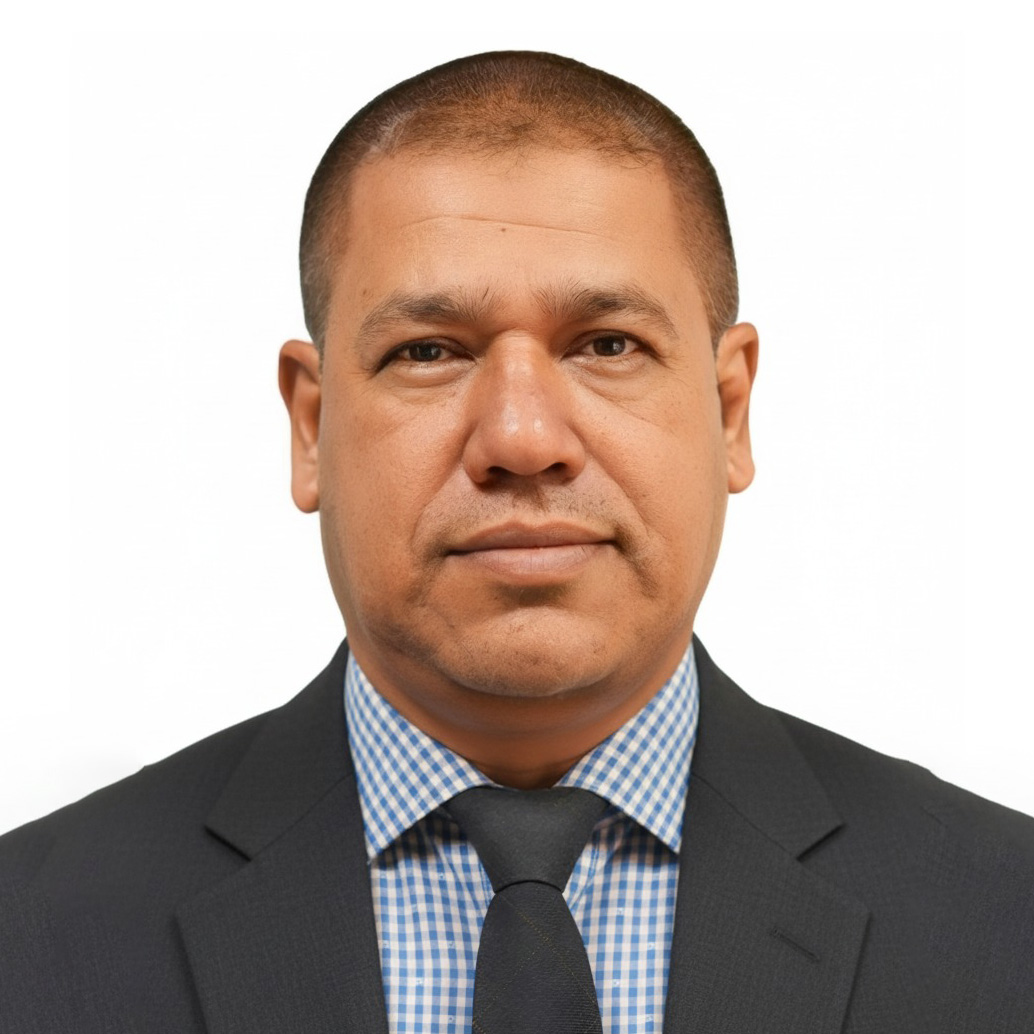
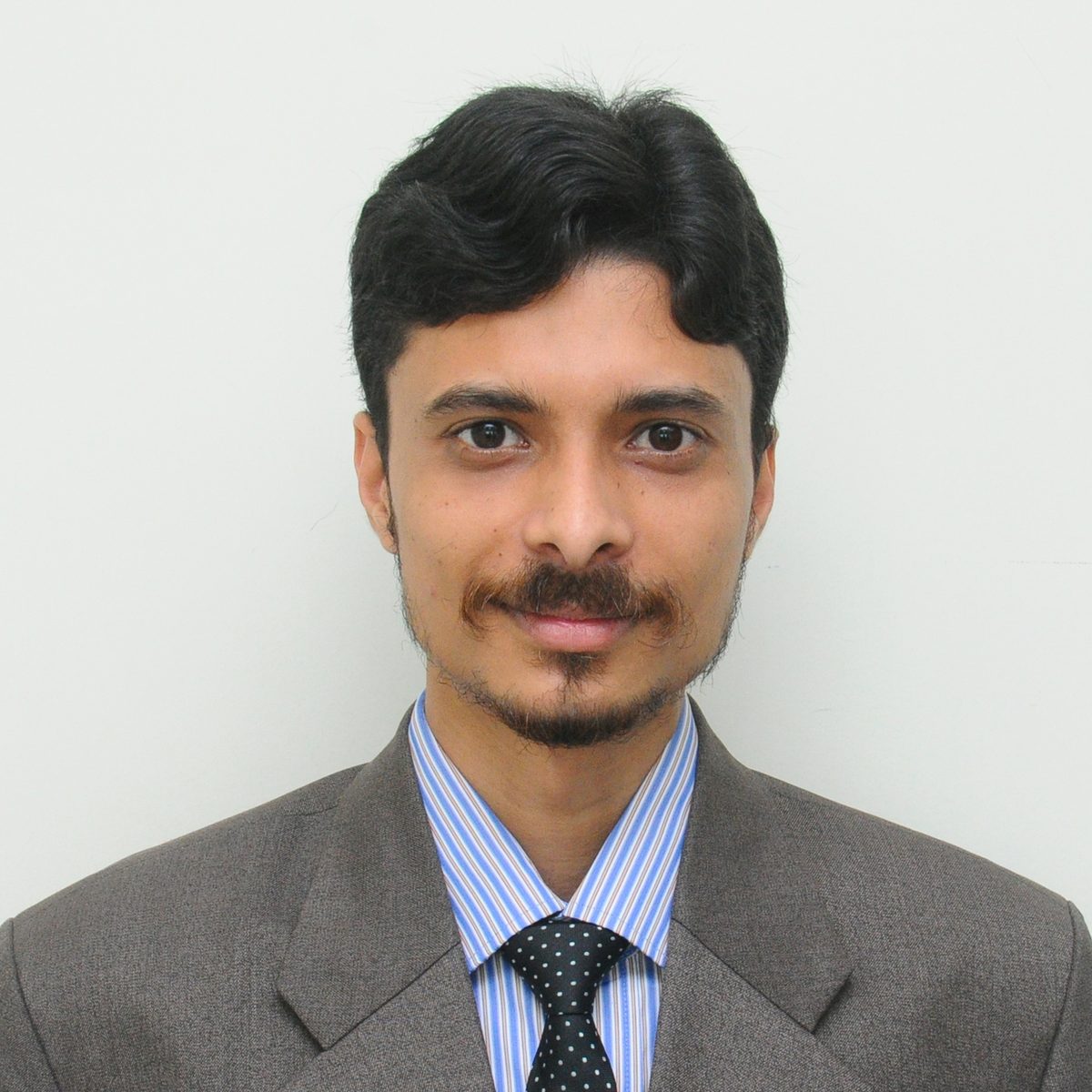
Deputy Programme Manager — Training


Manager, Admin
Marketing Executive
The Cohort: 34 a2i Officials
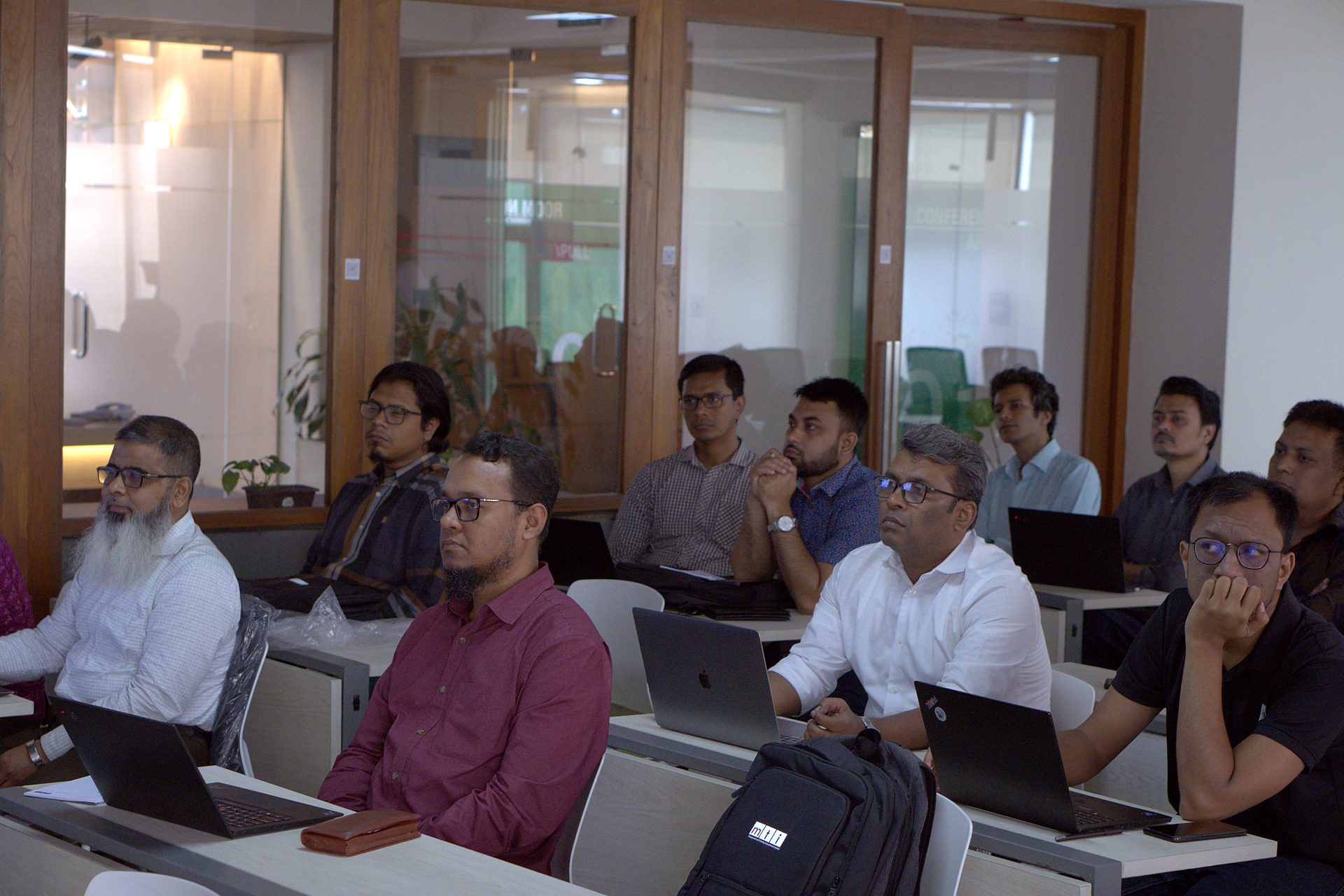
The batch was led by Md. Abdur Rofiq, Project Director (Additional Secretary) of a2i, who enrolled as a participant. Around him sat consultants and engineers from software engineering, DevOps, infrastructure and security, the National Portal, myGov, Nothi, the 333 national helpline, Data, Digital Payment and Digital Financial Services, eCourt implementation, procurement, the Innovation Lab, the a2i Innovation Fund, South-South Cooperation, Future of Work, Health Innovation and agency formation.
Project Director (Additional Secretary)
Project DirectorNational Consultant for Infrastructure Development
a2iConsultant (DevOps Engineer)
a2iConsultant (Infrastructure Management)
a2iConsultant (Software Engineer)
a2iConsultant (Health Innovation)
a2iConsultant (National Portal)
a2iConsultant (333)
a2iConsultant (Software Engineer)
a2iConsultant (Digital Financial Services)
a2iConsultant (Future of Work)
a2iSecurity Expert
a2iJr. Consultant (333)
a2iJr. Consultant (myGov)
a2iJunior Consultant (Data)
a2iJunior Consultant (Nothi)
a2iJr. Consultant (National Portal)
a2iJr. Consultant (eCourt Implementation)
a2iJunior Consultant (Nothi)
a2iJr. Consultant (Nothi)
a2iJr. Consultant (Digital Payment)
a2iJr. Consultant (Procurement)
a2iJunior Consultant (Nothi)
a2iJunior Consultant (DevOps Engineer)
a2iJr. Consultant (Innovation Lab)
a2iJr. Consultant (333)
a2iJr. Consultant (Procurement)
a2iSecurity Engineer
a2iYoung Professional
a2iConsultant (Software Engineer)
a2iJunior Consultant (a2i Innovation Fund)
a2iJunior Consultant (South-South Cooperation)
a2iJunior Consultant (Nothi)
Also in PMP cohortJunior Consultant (Agency Formation)
a2iThe Course in Pictures
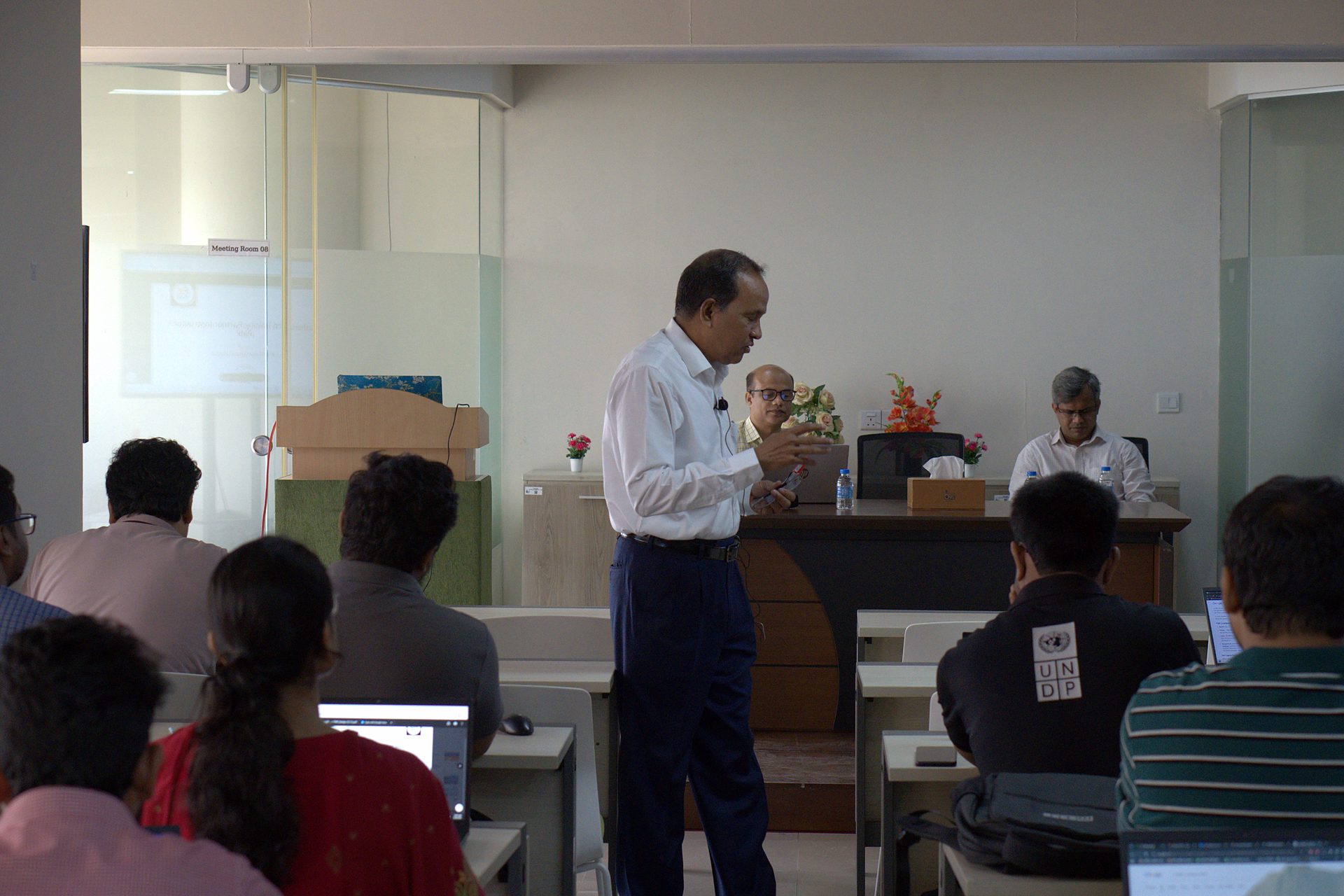
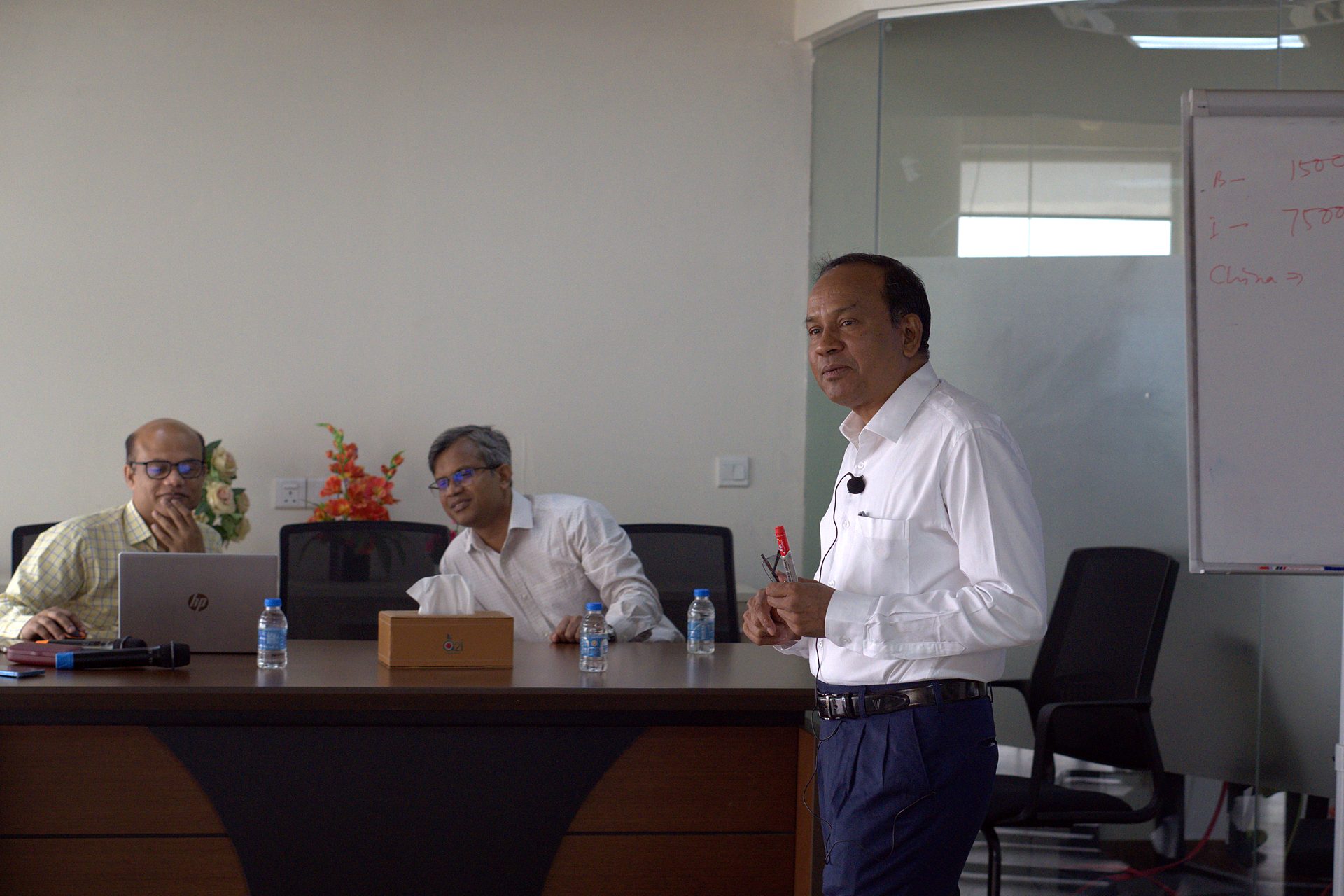
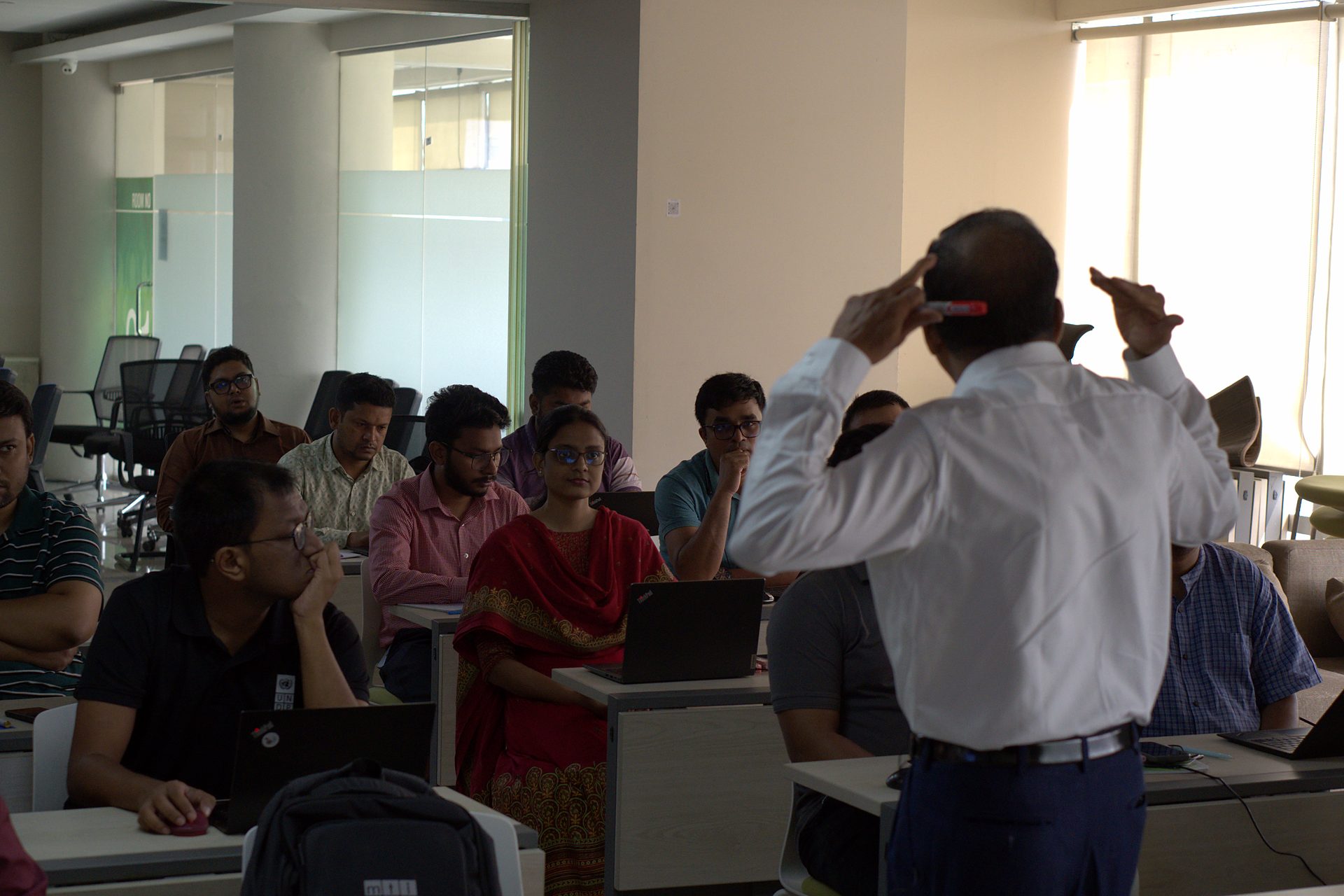
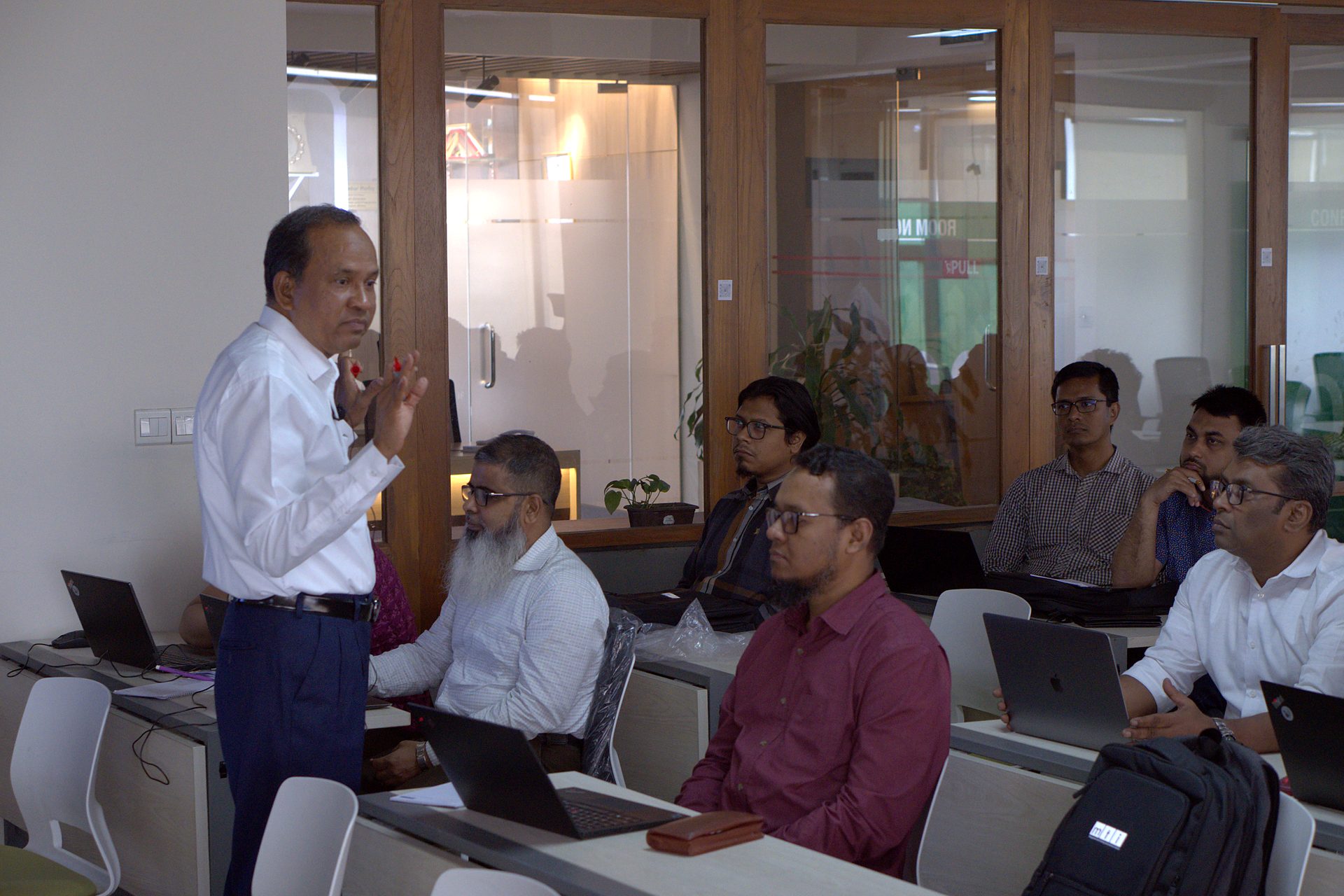
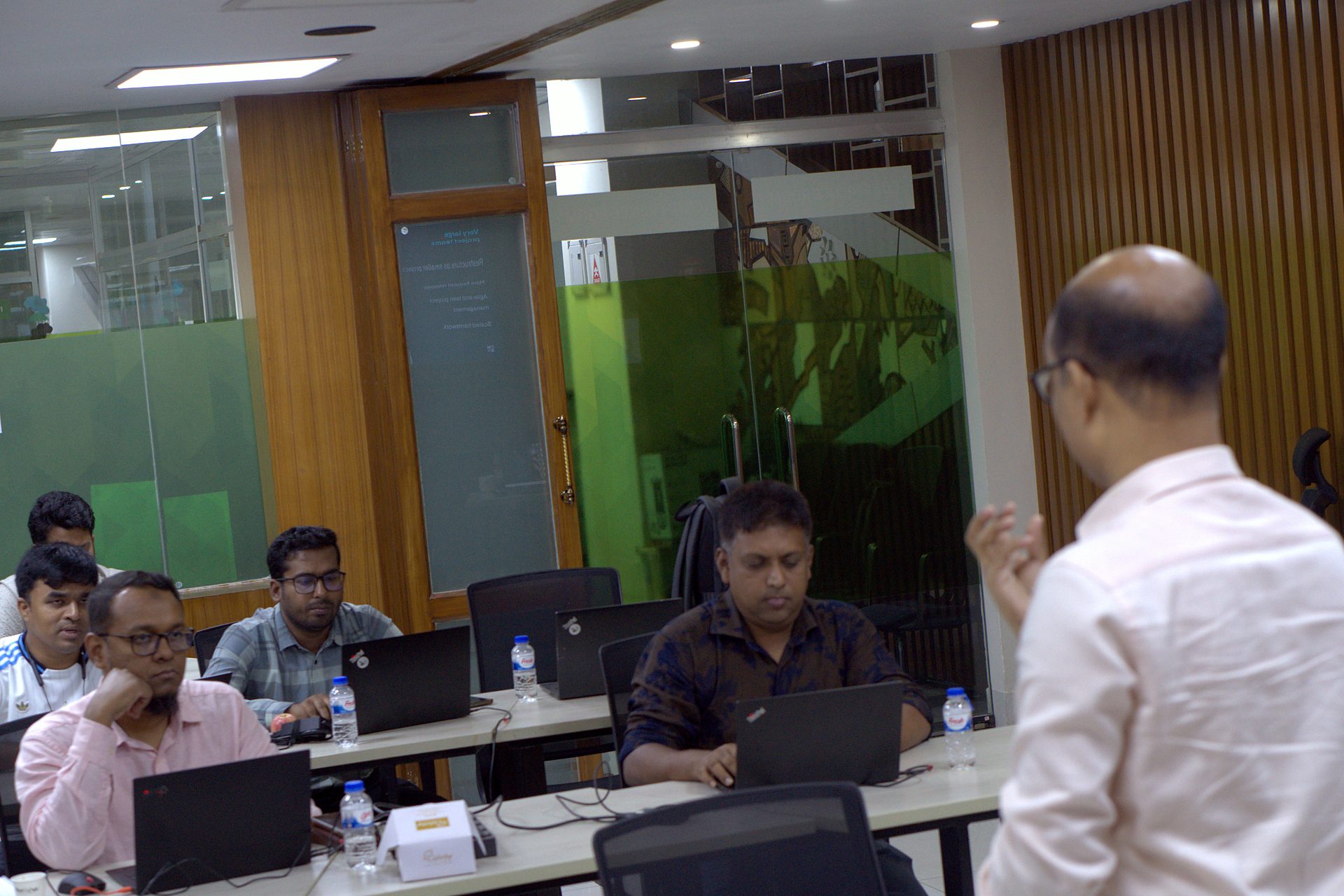
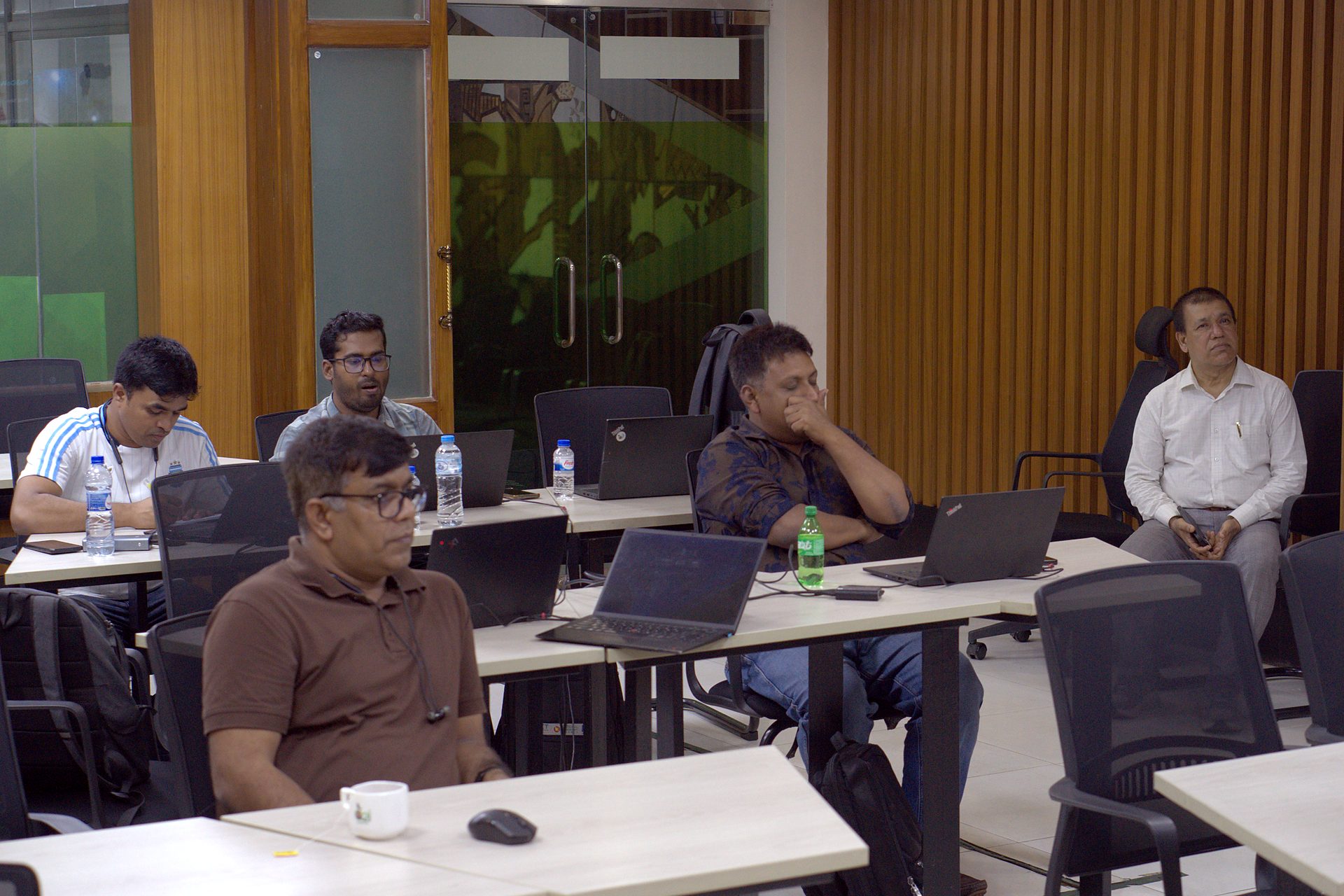
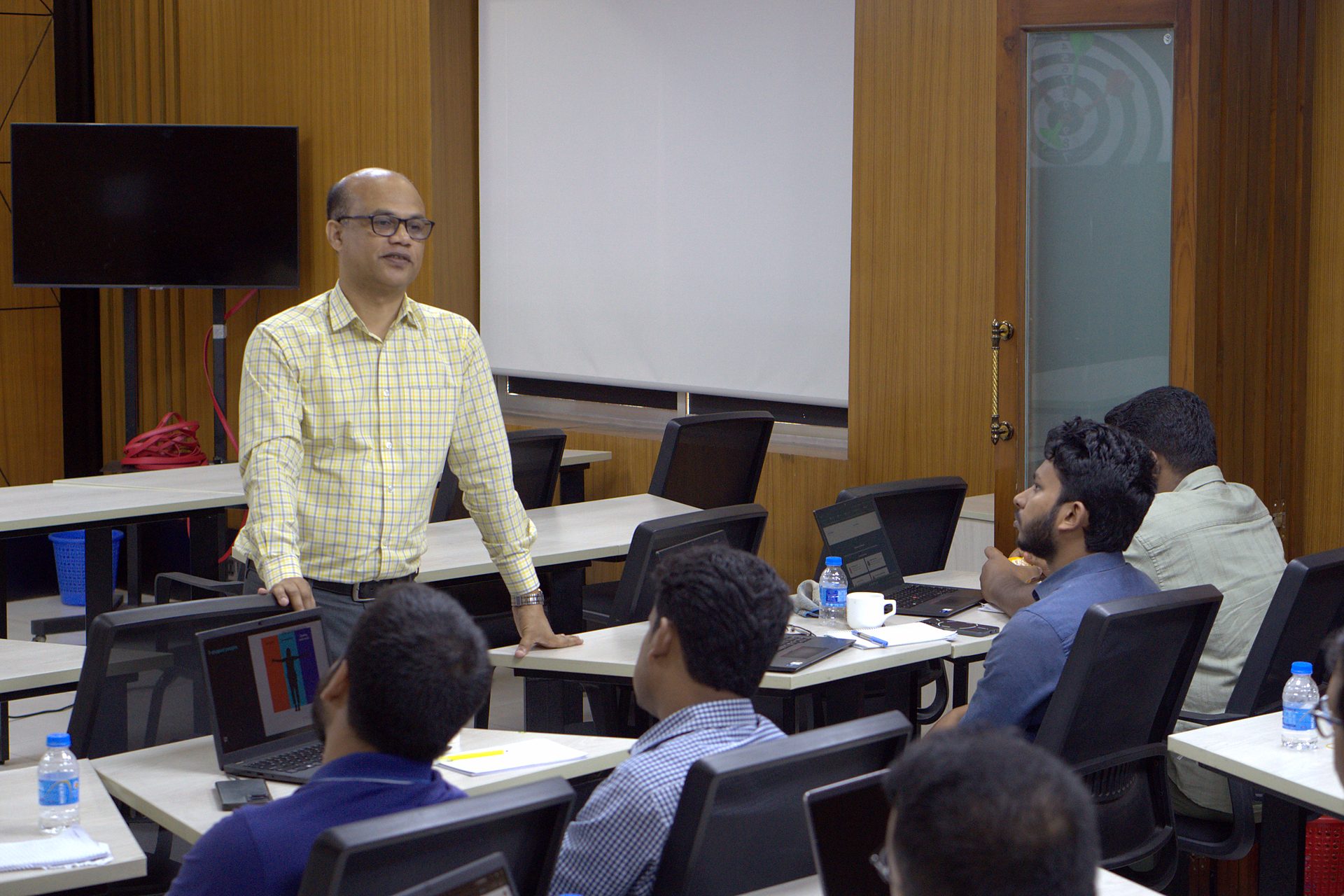
Fifteen further photographs from the three days of the PMI-ACP course.
Related Training
Programme Snapshot
| Field | Detail |
|---|---|
| Name of the Service | Hiring a Consulting Firm for Project Implementation Support at a2i |
| Training Topic | PMI Agile Certified Practitioner (PMI-ACP) |
| Dates | 16 May, 13 June & 20 June 2026 (3 day-long sessions) |
| Venue | a2i Conference Room, ICT Tower, Agargaon, Dhaka-1207 |
| Participants | 34 a2i officials and consultants |
| Implemented by | Aspire to Innovate (a2i), Information and Communication Technology Division, Government of Bangladesh |
| Organised by | Management and Training International Ltd. (MTI Ltd.) |
| Trainer Panel | Md. Mosta Gausul Hoque, PMP · Md. Mamunur Rahman · Dewan Muhammad Tajul Islam, MCIPS, PMP |
| Course Materials | Bag, notebook, pen, pencil, sharpener, eraser, programme schedule and lecture materials for every participant |
Frequently Asked Questions
What is PMI-ACP?
PMI Agile Certified Practitioner (PMI-ACP) is the Project Management Institute’s certification for practitioners of agile approaches, covering agile principles and mindset, Scrum, Kanban and other agile practices.
When and where was the Agile training held?
Over three day-long sessions on 16 May, 13 June and 20 June 2026, at a2i, ICT Tower, Agargaon, Dhaka.
Who attended?
Thirty-four officials and consultants of the Aspire to Innovate (a2i) Programme, led by its Project Director, Md. Abdur Rofiq — including software, DevOps, infrastructure and security engineers and consultants from the National Portal, myGov, Nothi, 333, Data, Digital Payment, eCourt, procurement and the Innovation Lab.
Who were the trainers?
MTI Ltd.’s PMI-credentialed panel: Md. Mosta Gausul Hoque, PMP, former Secretary to the Government of Bangladesh and PMI Authorized Training Partner Instructor, who opened the course; Md. Mamunur Rahman, Project Management Consultant and PMI Authorized Training Partner Instructor; and Dewan Muhammad Tajul Islam, MCIPS, PMP, Deputy Secretary.
What did the course cover?
The PMI-ACP credential and agile mindset (Day 1); iteration-based and flow-based agile life cycles, life-cycle selection and the Scrum cycle (Day 2); and breaking a product down into features, user stories and tasks, Kanban boards, WIP limits, cycle time and lead time (Day 3).