BWDB Officials Trained on Operation & Maintenance of FCD/FCDI Projects — Exit Strategy and Post-Transfer Sustainability
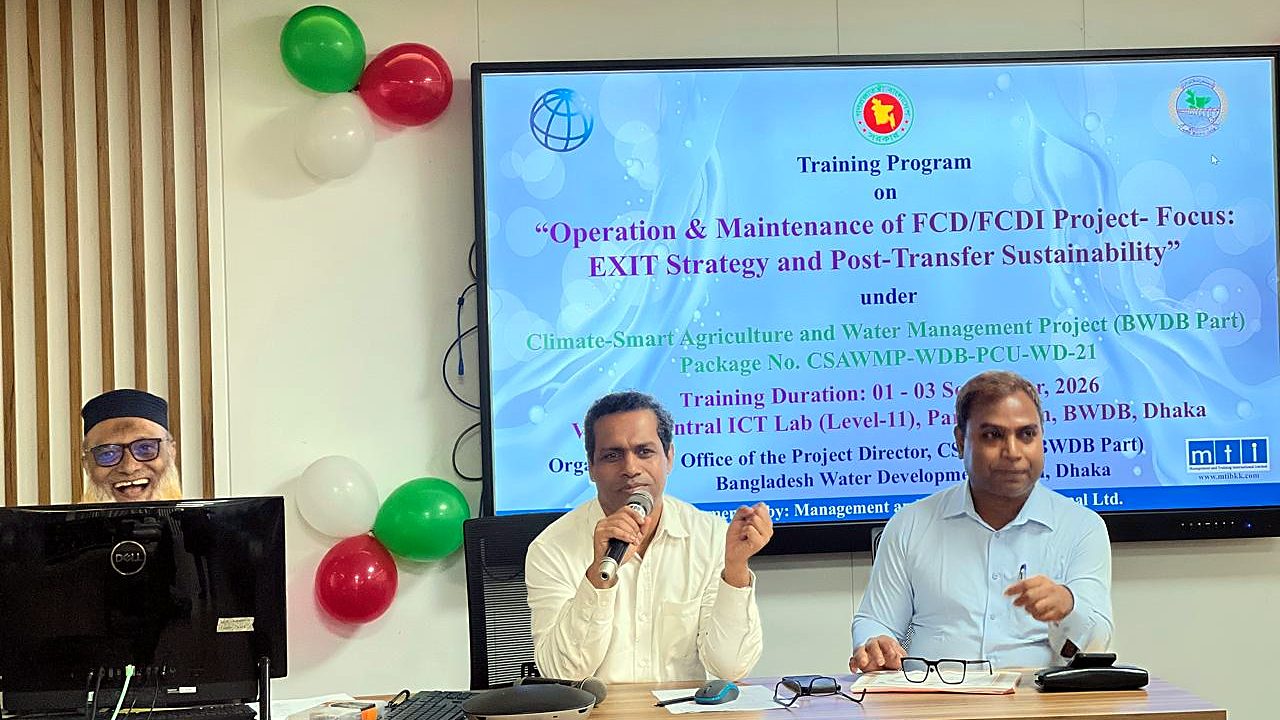
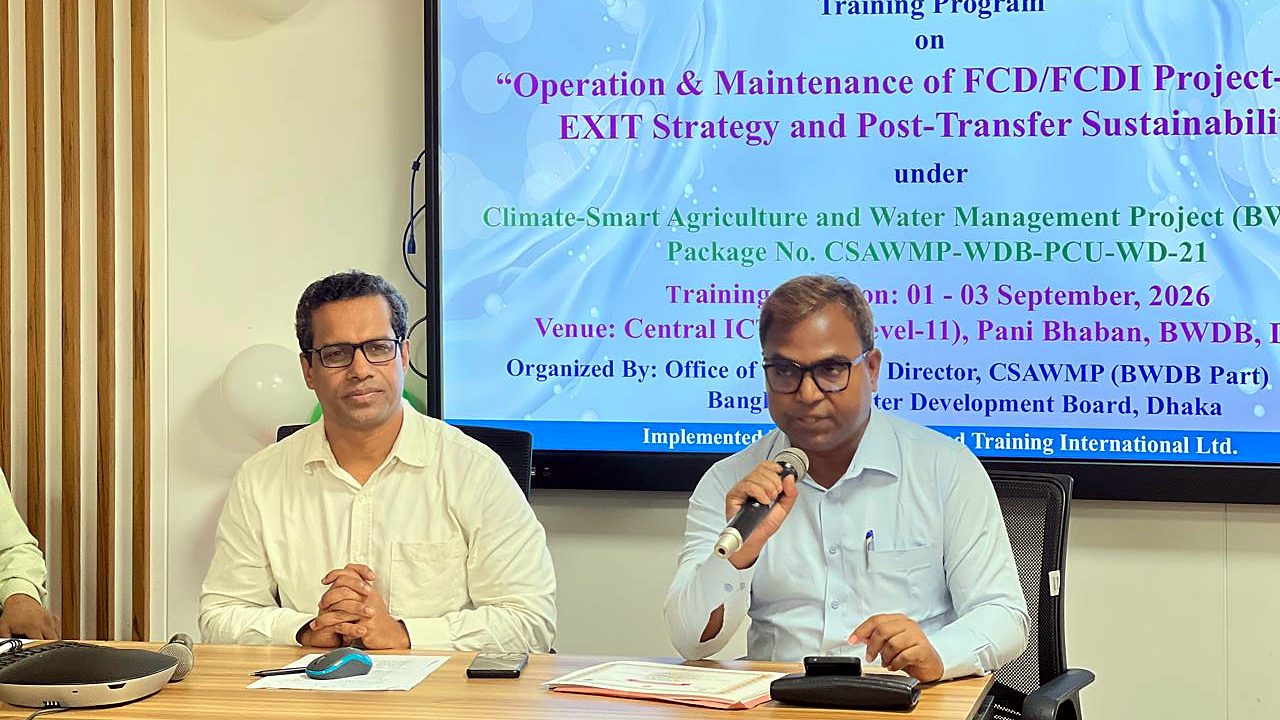
Management and Training International (MTI) Ltd. conducted the three-day training course on Operation & Maintenance of FCD/FCDI Projects, with a focus on the Exit Strategy and Post-Transfer Sustainability, from 1 to 3 September 2026 at the Central ICT Lab, Level-11, Pani Bhaban, BWDB, Dhaka. Twenty-five officials of the Bangladesh Water Development Board (BWDB), under the Ministry of Water Resources, took part — the fourth batch under Package 21 of the Climate-Smart Agriculture and Water Management Project (CSAWM Project), BWDB Part.
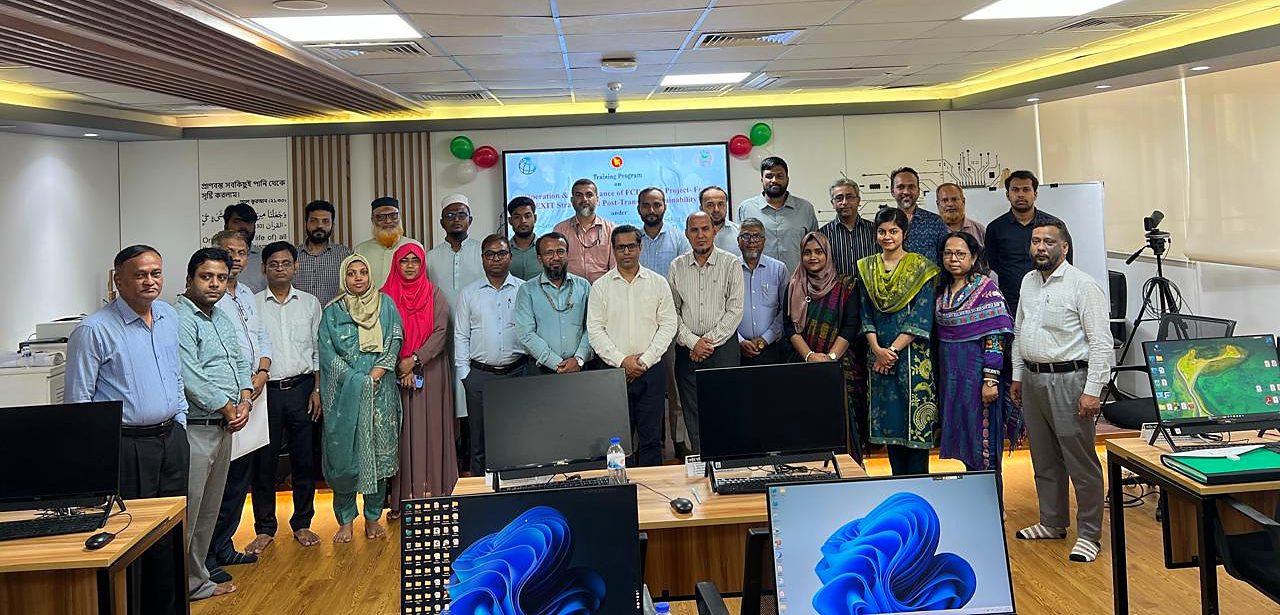
About the engagement: Under reference CSAWMP-WDB-PCU-WD-21-4-OM-01 (Course ID CSAWMP-WDB-PCU-WD-21/O&M-01), MTI Ltd. is delivering the Package 21 training programme for the Climate-Smart Agriculture and Water Management Project (BWDB Part), implemented by the Bangladesh Water Development Board under the Ministry of Water Resources. The course was authorised by Office Order Memo Nos. 42.01.0000.000.647.25.0009.26-261 (participants) and 26-262 (course module), both dated 30 August 2026, issued by the Office of the Project Director, CSAWM Project (BWDB Part), Pani Bhaban.
The Day After the Project Ends
Bangladesh has built thousands of kilometres of embankment, and hundreds of regulators, sluices and drainage canals, under Flood Control and Drainage (FCD) and Flood Control, Drainage and Irrigation (FCDI) schemes. The engineering is rarely what fails. What fails is the decade after commissioning — when a gate is left jammed, a drainage channel silts up, a cut in the embankment is never closed, and nobody is quite sure whose job it was.
This course was built around that decade. Its subtitle — Exit Strategy and Post-Transfer Sustainability — names the question every session returned to: when BWDB hands a scheme to the Water Management Association that will run it, what has to be true on the day of transfer for the scheme still to be working ten years later? The three days moved from what the structures need (Day 1), to who pays and who decides (Day 2), to what can go wrong and how to watch for it (Day 3).
Ten Resource Persons, Twelve Sessions
No other Package 21 course has drawn on as wide a panel. Ten senior professionals delivered the twelve sessions: three Superintending Engineers from the planning directorates and the Surface Water Hydrology Circle on strategy, monitoring and risk; three Deputy Chief Extension Officers on the institutions and money behind O&M; an Executive Engineer on hands-on maintenance practice; the Director of the BPDB-BWDB Engineering Academy at Kaptai on the handover itself; and the Board’s Chief Water Management (PRL) on gender and leadership. The Project Director opened the course by explaining where O&M sits inside the CSAWM Project.
Additional Chief Engineer (Civil) & Project Director
CSAWM Project (BWDB Part)
Superintending Engineer (Civil)
Directorate of Planning-1, BWDB
Executive Engineer (Civil)
CSAWM Project (BWDB Part)
Deputy Chief Extension Officer
CSAWM Project (BWDB Part)
Deputy Chief Extension Officer
Office of the Addl. Chief Engineer, Central Zone
Deputy Chief Extension Officer
Office of the DCEO, BWDB
Director
Engineering Academy, BPDB-BWDB, Kaptai
Superintending Engineer (Civil)
Directorate of Planning-2, BWDB
Superintending Engineer (Civil)
Surface Water Hydrology Circle, BWDB
Chief Water Management (PRL)
Bangladesh Water Development Board
Course Leadership
System Analyst
Directorate of Central ICT
Deputy Director (FA&A)
CSAWM Project (BWDB Part)
Executive Engineer (Civil)
CSAWM Project (BWDB Part)
Managing Director
Management and Training International Ltd.
Six Conditions for a Scheme That Outlives Its Project
Taken together, the sessions set out what has to be in place before BWDB can step back from a scheme.
A Maintenance Regime
Routine, periodic and emergency maintenance defined for each embankment, regulator and canal — and the repairs and disaster preparedness that sit behind them.
A Written Exit Plan
The purpose and scope of the exit plan: who is responsible for what, and by when, from commissioning to transfer.
A Capable Institution
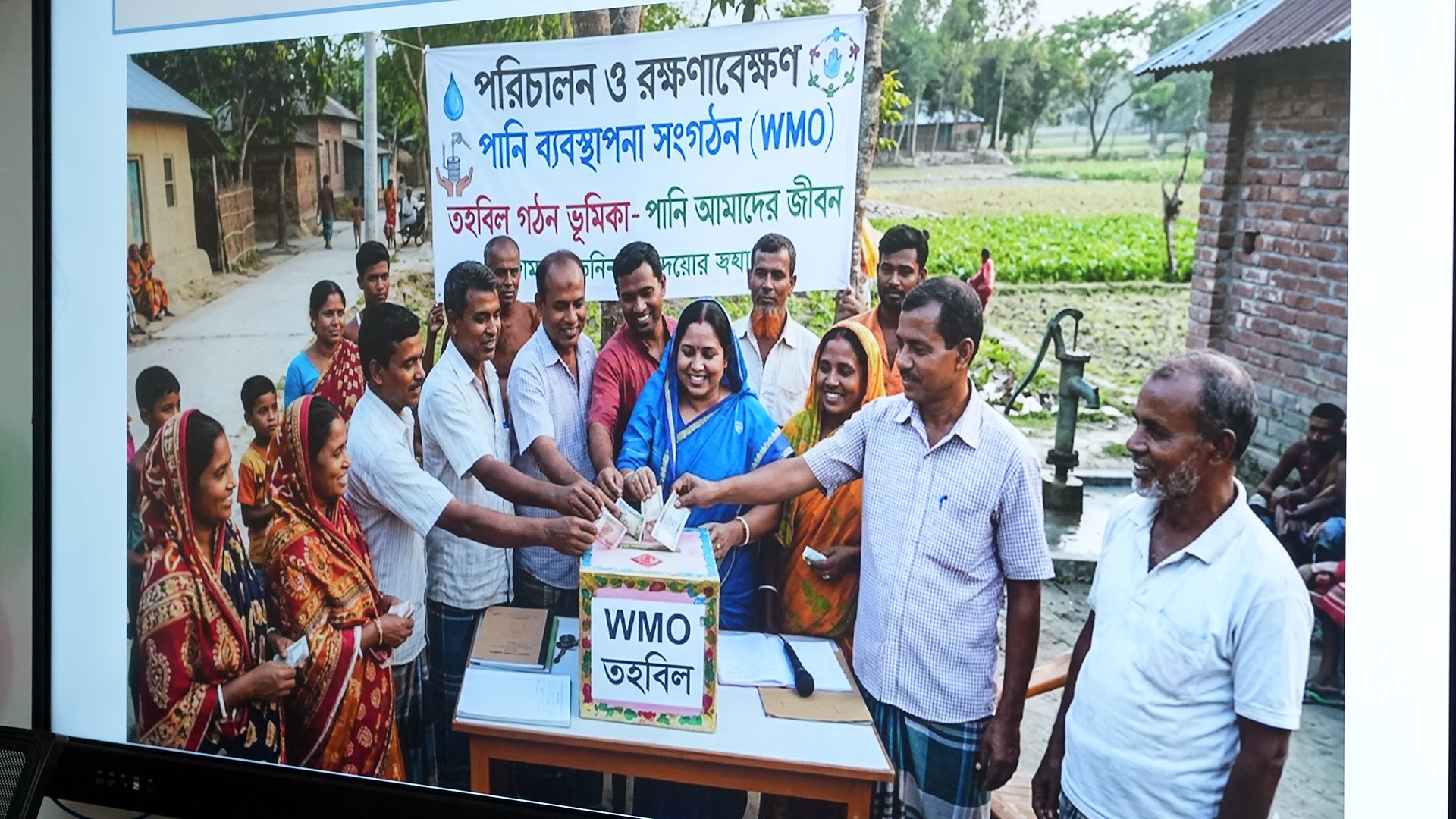
Water Management Associations, Groups and an O&M sub-committee trained in maintenance, water management and book-keeping, with clear duties.
A Funding Stream
User fees, leasing of water bodies, partnerships and local sources, with budgets and fund management that hold up after project money stops.
A Formal Handover
An O&M agreement signed with the WMA, files and documents transferred, and a timeline with milestones.
Monitoring, Risk & Leadership
Performance indicators and periodic review, a contingency plan for funding, technical and leadership failures, and women in WMO leadership.
Day-by-Day Course Schedule
Participants reported to the Central ICT Lab at 08:30 on the first morning and at 09:00 on the following two days. Each day ran four sessions and closed at 16:00.
- 08:30–09:20 Inauguration of the Training Course Registration and breakfast; introduction of participants; objectives and detailed agenda; participants’ expectations; pre-evaluation. Methods: self-introduction, questionnaire, lecture discussion. Pijush Krishna Kundu Project Director, CSAWM Project (BWDB Part), with the course management team
- 09:20–10:40 Session 1 — Introduction of the CSAWM Project Background, objectives and key activities of the project; its three components — BWDB, the Department of Agricultural Extension and the Department of Fisheries — and the areas where they collaborate; progress so far. Methods: Q&A, PowerPoint presentation. Pijush Krishna Kundu Project Director, CSAWM Project (BWDB Part)
- 10:40–10:50 Refreshment and tea break
- 10:50–12:10 Session 2 — Overview of FCD/FCDI Projects and O&M Requirements Types and functions of Flood Control and Drainage (FCD) and Flood Control, Drainage and Irrigation (FCDI) schemes; why operation and maintenance decide whether they last; the recurring challenges in O&M. Methods: experience sharing, lecture discussion. Dr. Md. Khairul Islam Superintending Engineer (Civil), Directorate of Planning-1, BWDB
- 12:10–13:30 Session 3 — Operation and Maintenance Strategy Routine, periodic and emergency maintenance; the purpose of an Exit Plan and why it matters for sustainability; the scope of the plan — roles, responsibilities and timelines. Methods: large group discussion, picture presentation. Dr. Md. Khairul Islam Superintending Engineer (Civil), Directorate of Planning-1, BWDB
- 13:30–14:20 Lunch and prayer break
- 14:20–15:40 Session 4 — Technical Maintenance Practices for FCD/FCDI Structures Maintenance of embankments, regulators and canals; routine versus periodic works; emergency repairs and disaster preparedness. Methods: lecture discussion, Q&A. Abdul Ahad Executive Engineer (Civil), CSAWM Project (BWDB Part)
- 15:40–16:00 Day review and refreshment
- 09:00–10:20 Session 1 — Institutional Capacity Development Community engagement in O&M; training and capacity building for WMO members in water management, maintenance and financial management; governance and accountability systems for monitoring and reporting O&M. Methods: large group discussion, Q&A. Md. Hafizur Rahman Deputy Chief Extension Officer, CSAWM Project (BWDB Part)
- 10:20–10:40 Refreshment and tea break
- 10:40–12:00 Session 2 — Financial Sustainability Plan Revenue generation — water user fees, public-private partnerships, leasing of water bodies and other local sources; budgeting and fund management for the long term; subsidy and grant mechanisms; the WMO’s role in collecting funds. Methods: large group discussion, Q&A. Dr. Md. Zahidul Islam Deputy Chief Extension Officer, Office of the Additional Chief Engineer, Central Zone
- 12:00–13:20 Session 3 — Duties and Responsibilities of the WMA, WMG and O&M Sub-Committee Forming an O&M sub-committee; identifying regular and periodic maintenance needs; preparing a regular and periodic O&M plan; funding O&M through user fees; resolving conflict between water users and illegal users. Methods: VIPP, large group discussion. Muhammad Monirul Alam Deputy Chief Extension Officer, Office of the DCEO, BWDB
- 13:20–14:20 Lunch and prayer break
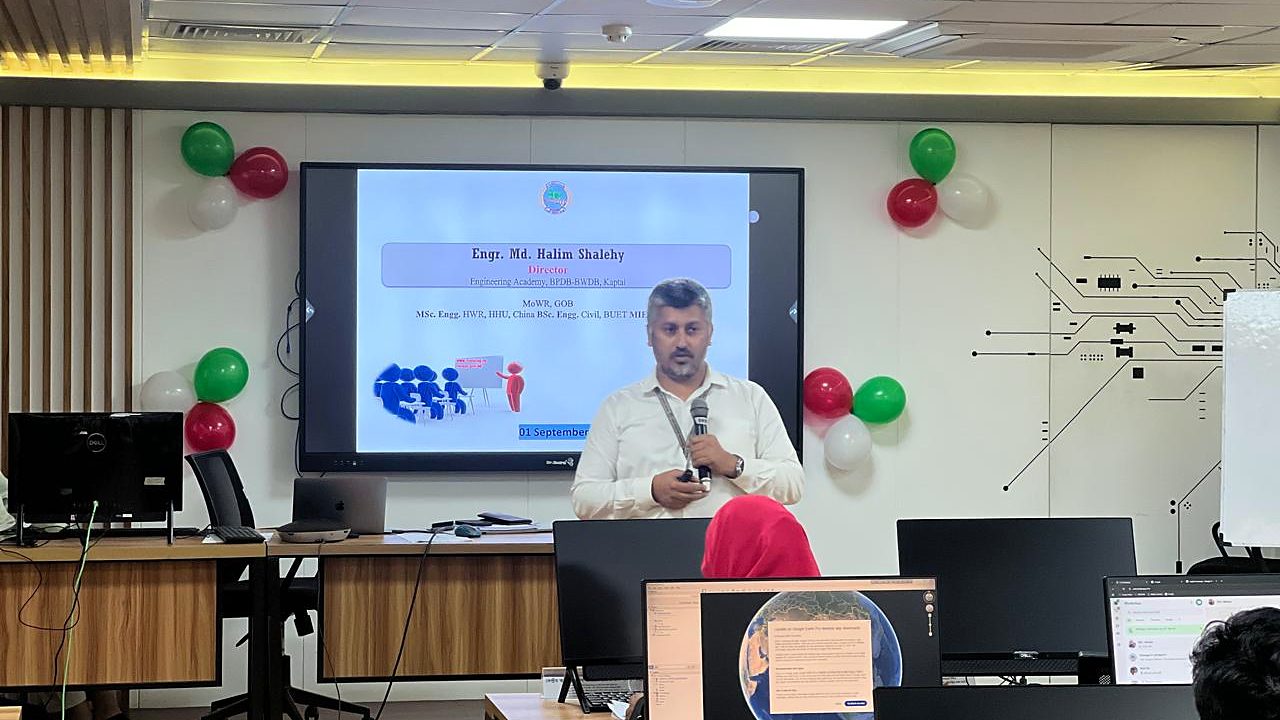
- 14:20–15:40 Session 4 — Handover and Exit Strategy The transition strategy: transferring O&M responsibility to the Water Management Association by signing an O&M agreement; handover of files and documents; the timeline and milestones of the exit. Methods: lecture discussion, Q&A. Md. Halim Shalehy Director, Engineering Academy, BPDB-BWDB, Kaptai
- 15:40–16:00 Day review and refreshment
- 09:00–10:20 Session 1 — Monitoring and Evaluation of O&M Works Performance indicators for O&M; feedback mechanisms; periodic review. Methods: poster demonstration, large group discussion. Dr. Mohammad Mahtab Hossain Superintending Engineer (Civil), Directorate of Planning-2, BWDB
- 10:20–10:40 Refreshment and tea break
- 10:40–12:00 Session 2 — Risk Management and Contingency Plan Identifying the risks that undo a handover — funding shortages, technical failures, lack of supervision and weak WMG leadership. Methods: large and small group discussion. A.B.M. Khan Mozahedy Superintending Engineer (Civil), Surface Water Hydrology Circle, BWDB
- 12:00–13:20 Session 3 — Risk Management and Contingency Plan (continued) Mitigation strategies for each risk; preparing an emergency response plan for natural disasters. Methods: small group work, poster demonstration. A.B.M. Khan Mozahedy Superintending Engineer (Civil), Surface Water Hydrology Circle, BWDB
- 13:20–14:20 Lunch and prayer break
- 14:20–15:40 Session 4 — Gender and Leadership Development Women’s role in water management; gender roles in society and in the WMO; how WMOs can build women’s leadership. Methods: VIPP, open discussion. Md. Enamur Rahman Chief Water Management (PRL), BWDB
- 15:40–16:00 Closing ceremony — post-evaluation, course evaluation and certificate distribution Pijush Krishna Kundu Project Director, CSAWM Project (BWDB Part), with the course management team
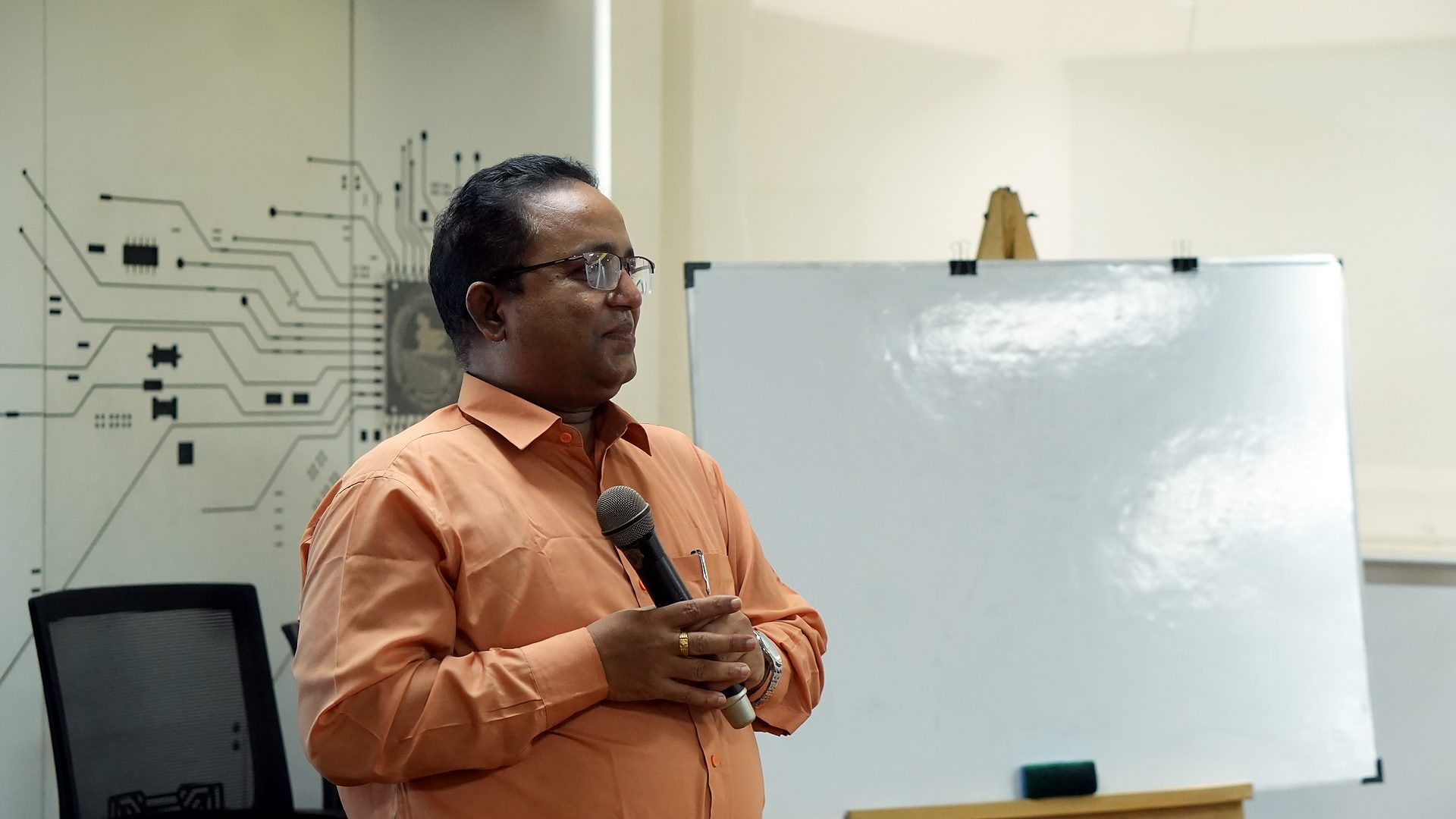
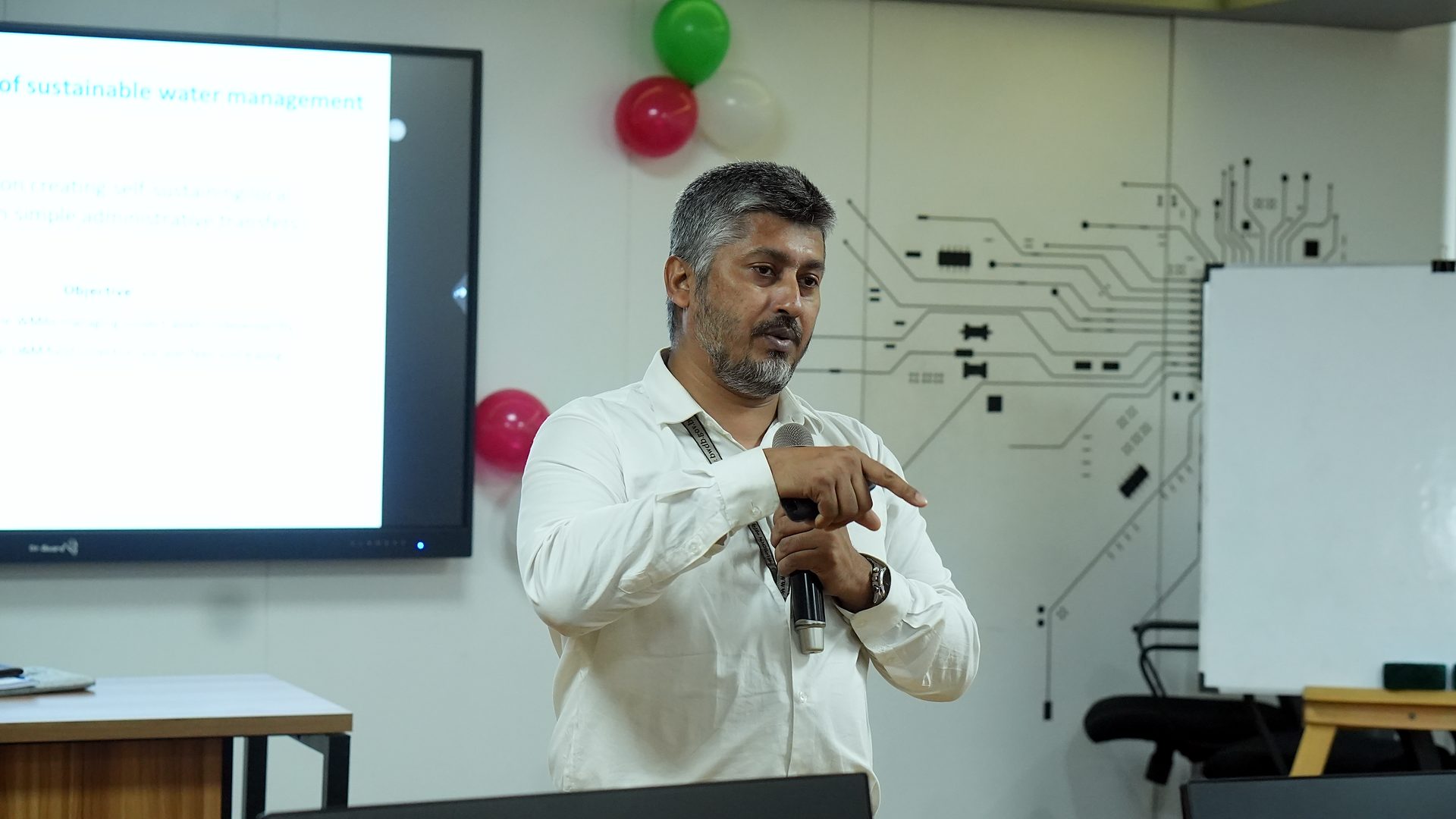
Training Methodology
The course module paired each topic with a method suited to it. Strategy and handover were taught by lecture and experience sharing; the WMA, WMG and O&M sub-committee session used VIPP cards so participants could map duties themselves; monitoring and risk used poster demonstrations and small groups; and gender and leadership closed with open discussion.
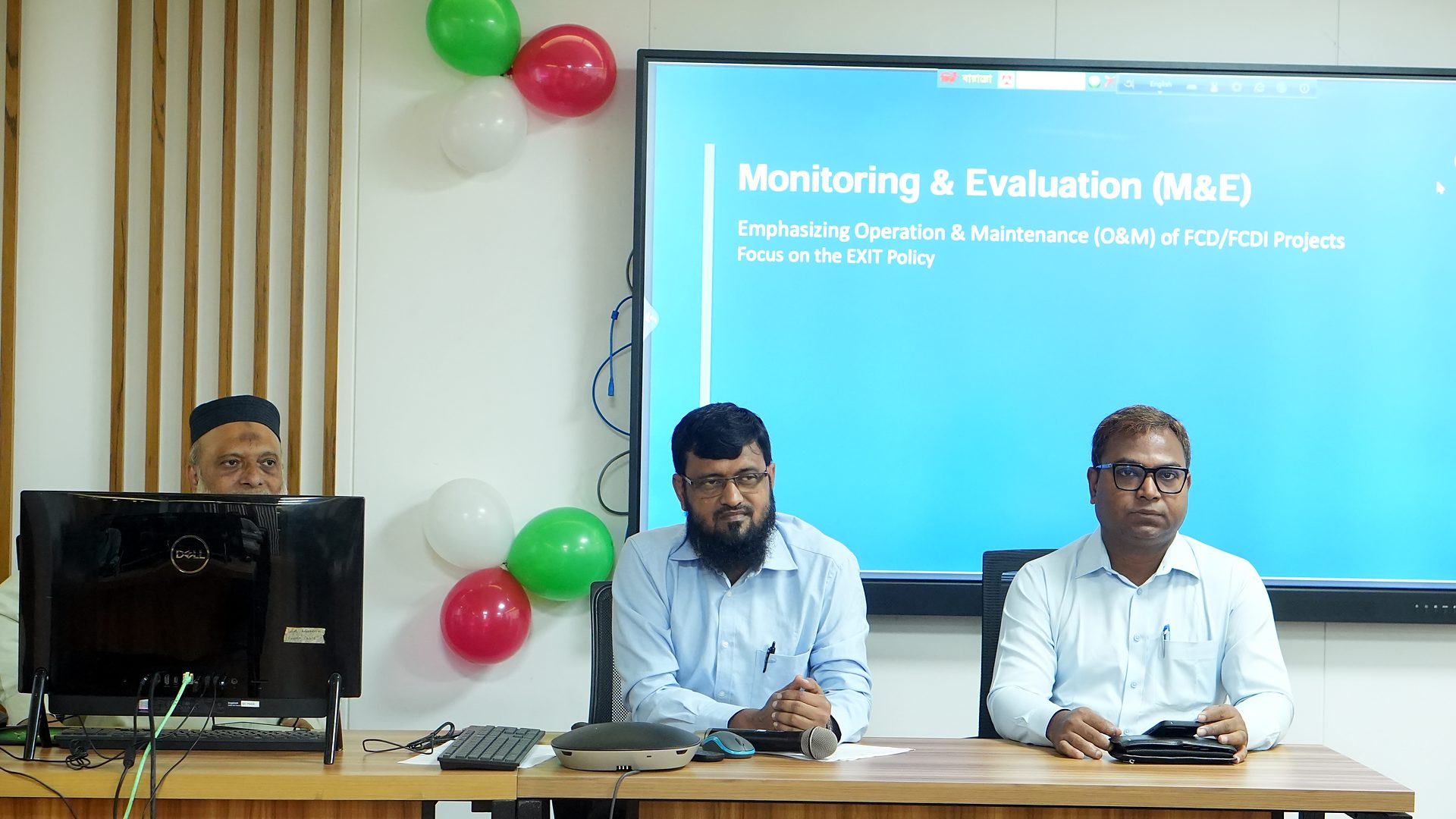
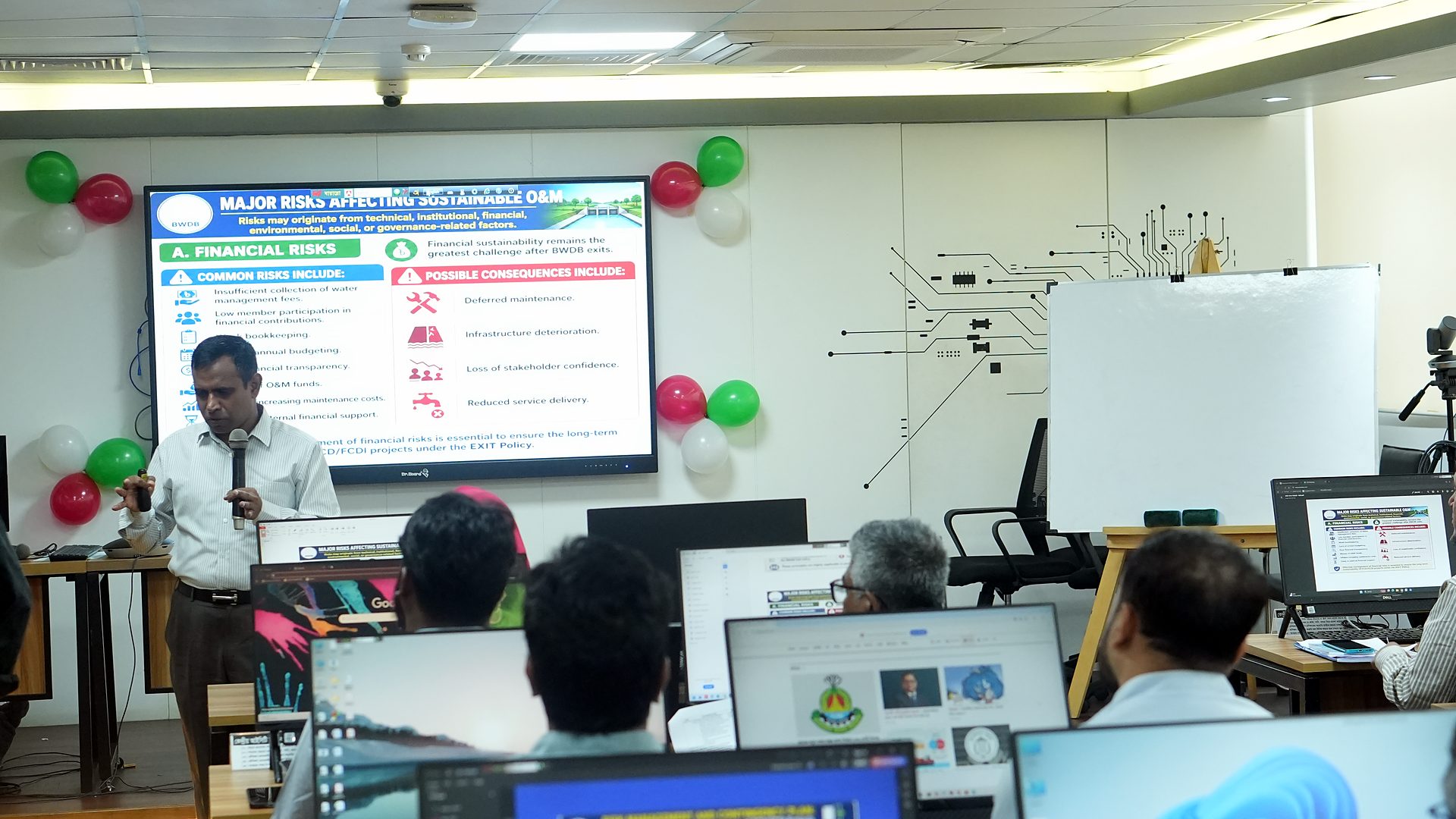
Group Presentations
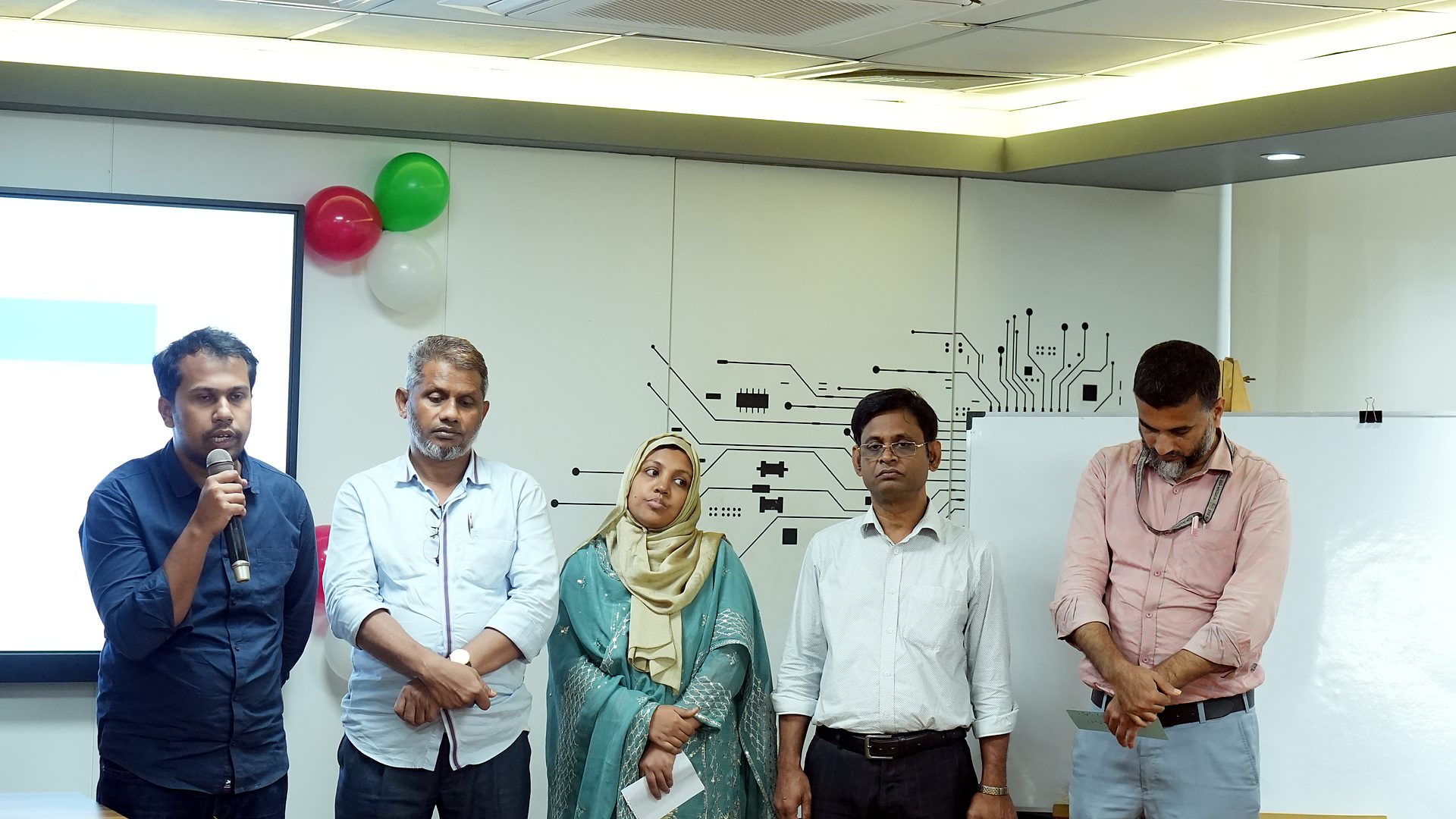
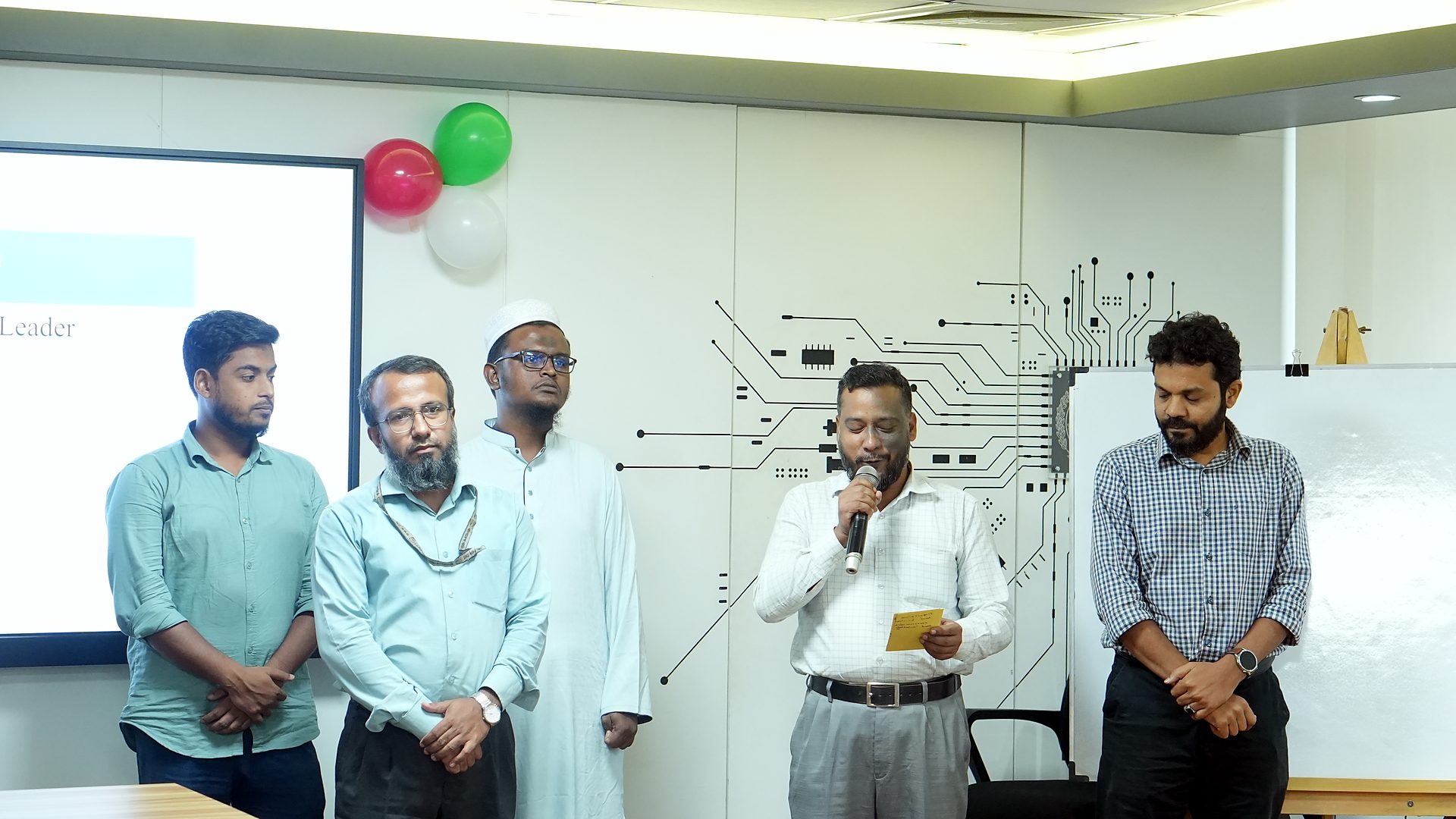
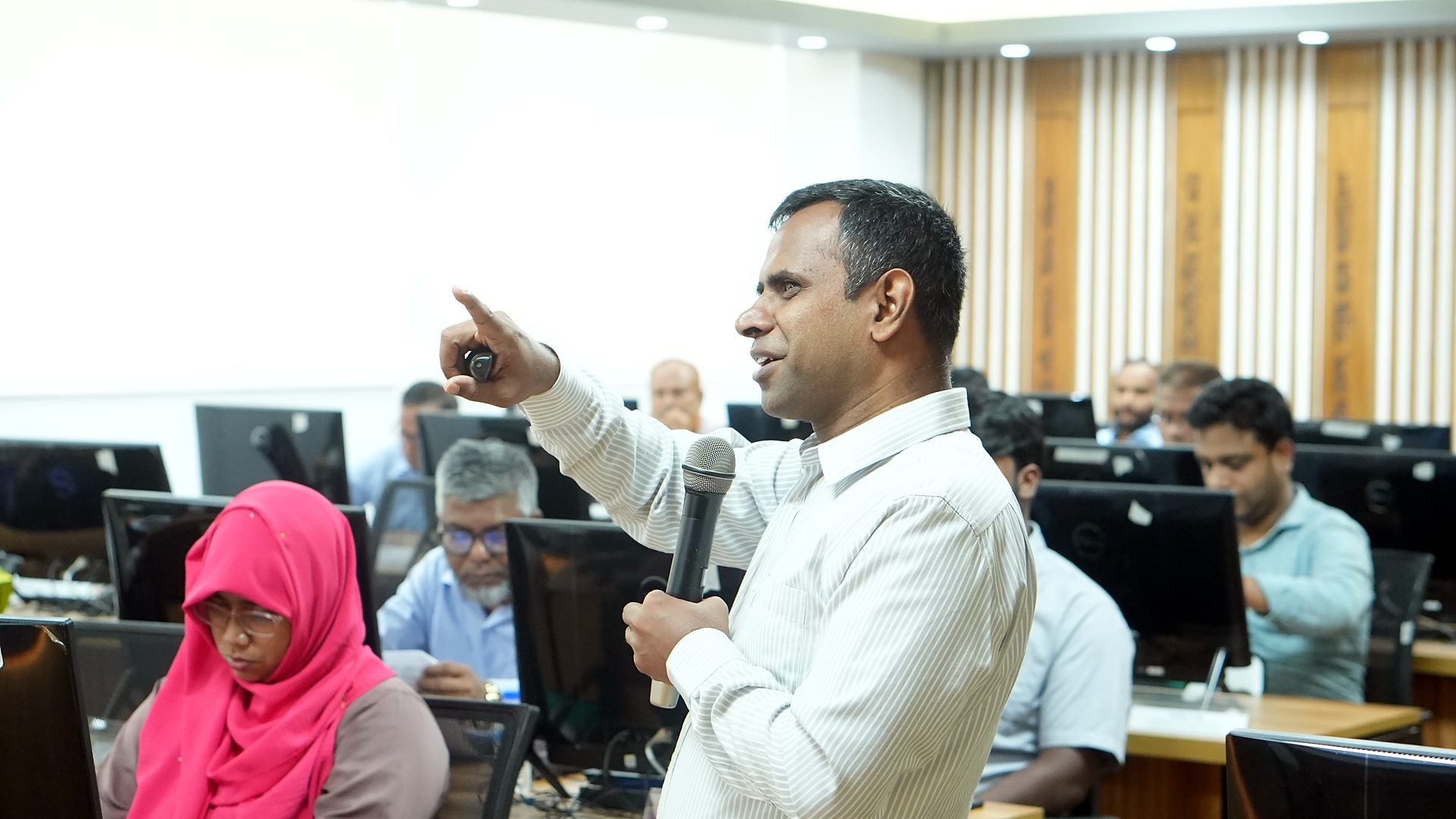
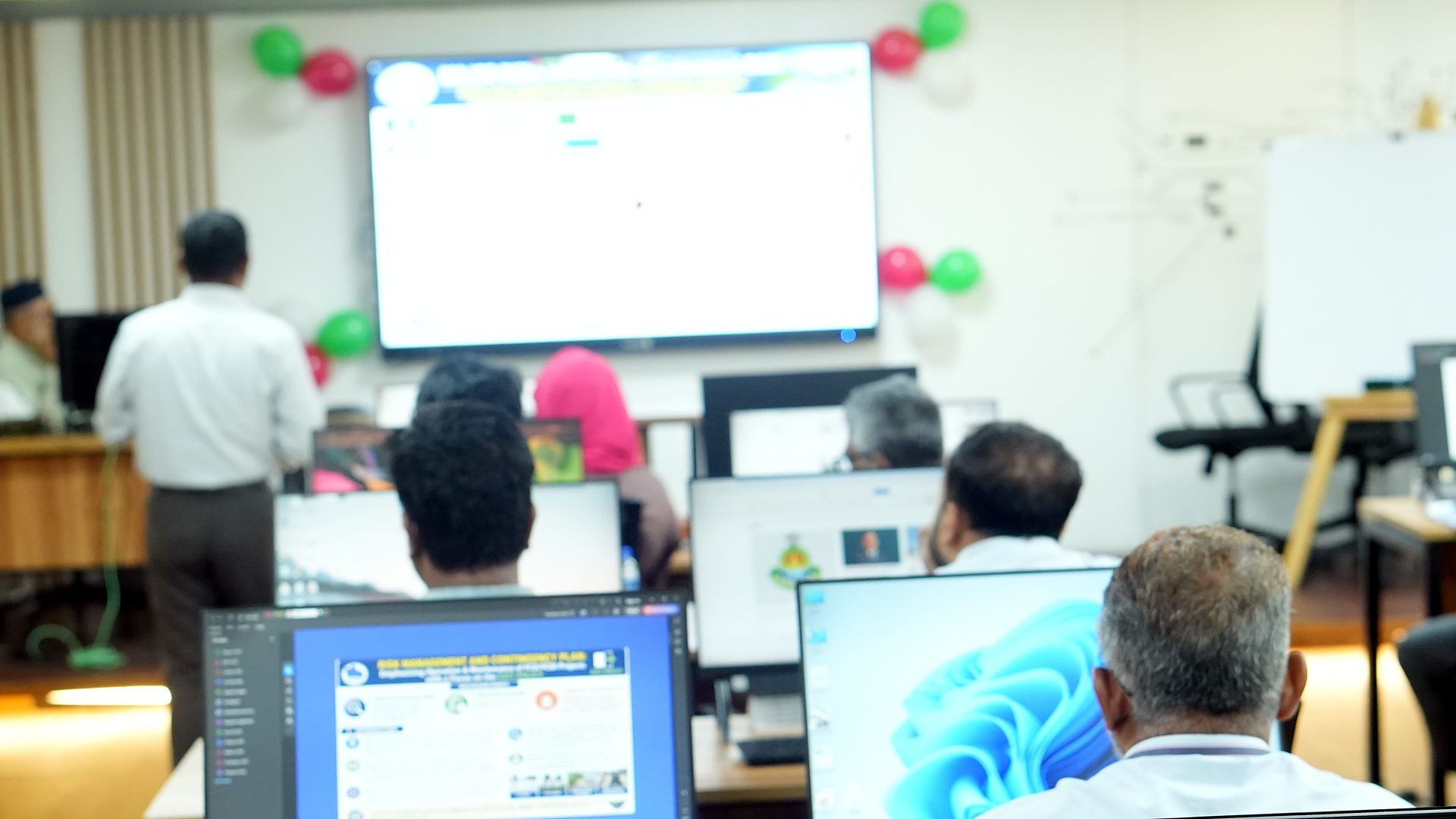
Participants worked in groups and presented their findings back to the class during the course. The groups mixed Executive Engineers from the design circles with Sub-Assistant Engineers, Extension Overseers and a Work Assistant who carry out O&M in the field — so the exit plans they presented were tested by the people who would actually have to run them.
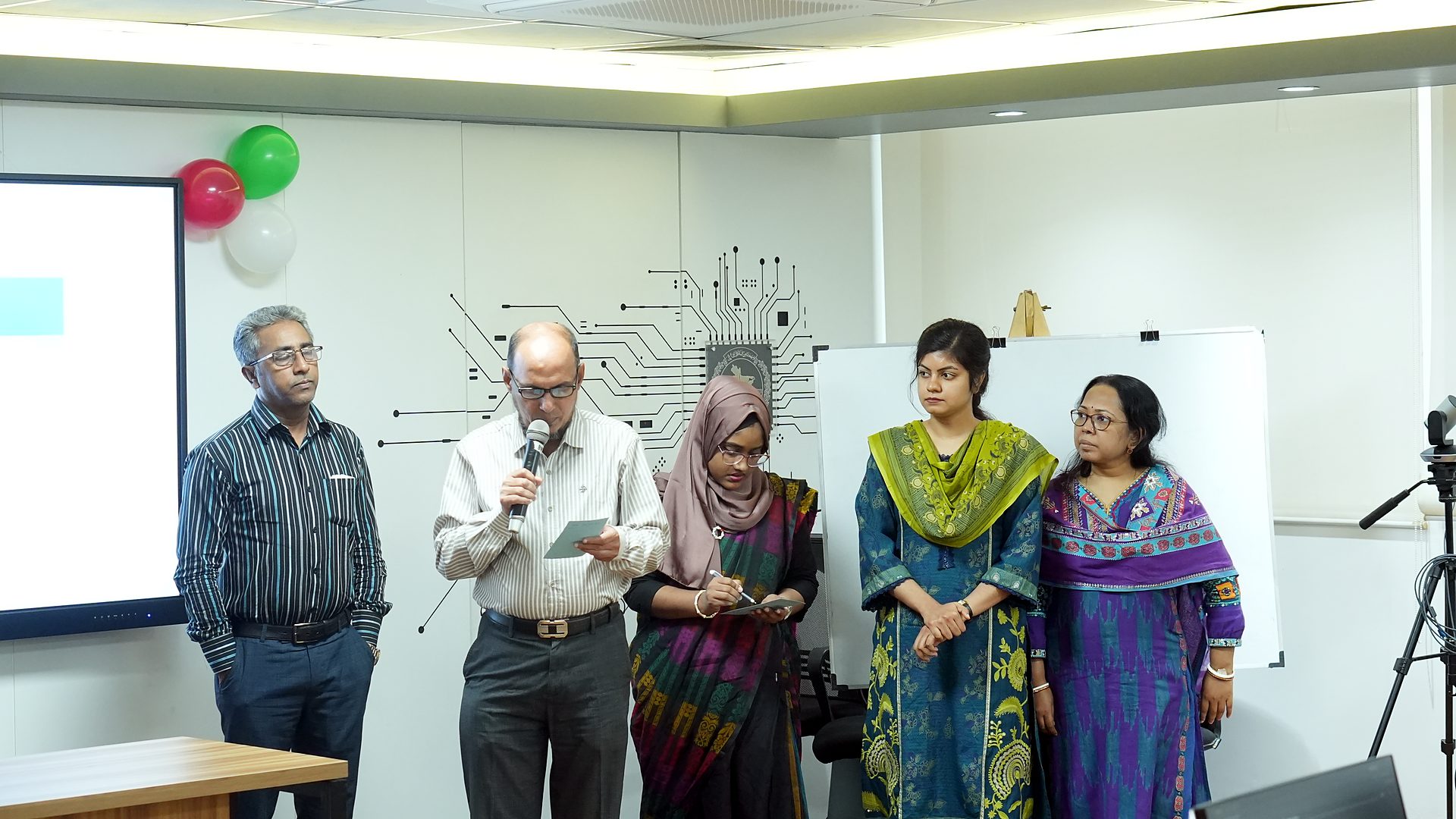
Who Was in the Room
This was the most field-facing cohort in Package 21 so far. Alongside two Executive Engineers, six Sub-Divisional and Assistant Engineers and a System Analyst from headquarters sat four Sub-Assistant Engineers, three Extension Overseers and an Assistant Extension Officer, and a Work Assistant — the cadre who actually walk the embankments and operate the gates. Seven participants travelled in from field offices in Narsingdi, Chandpur, Moulvibazar, Feni, Chattogram and Cumilla. In all, twenty-one offices were represented.
Full Participant Roster
Executive Engineer (Civil)
Design Circle-2, BWDB, DhakaSystem Analyst
Directorate of Human Resource Development, BWDB, DhakaExecutive Engineer (Civil)
Design Circle-7, BWDB, DhakaSub-Divisional Engineer (Civil)
Office of the Chief Engineer (Civil), Planning, BWDB, DhakaSub-Divisional Engineer (Civil)
Narsingdi WD Division, BWDB, NarsingdiSub-Divisional Engineer (Civil)
Design Circle-7, BWDB, DhakaSenior Assistant Director (Admin)
Legal Division, Board Secretarait, BWDB, DhakaAssistant Engineer (Civil)
Design Circle-5, BWDB, DhakaAssistant Engineer (Civil)
Design Circle-2, BWDB, DhakaAssistant Engineer (Civil)
Design Circle-6, BWDB, DhakaAssistant Programmer
Directorate of Central GIS, BWDB, DhakaResearch Officer (Sociology)
Directorate of Planning-2, BWDB, DhakaAssistant Chief (Soil)
Office of the Chief Engineer, Planning, BWDB, DhakaAssistant Extension Officer (AEO)
Office of the AEO, BWDB, ChandpurResearch Officer (Sociology)
Directorate of Planning-3, BWDB, DhakaAssistant Director (Admin)
Directorate of Ground Water Hydrology, BWDB, DhakaAssistant Director (FA&A)
Directorate of Accounts, BWDB, DhakaSub-Assistant Engineer (Civil)
Dhaka WD Division, BWDB, DhakaSub-Assistant Engineer (Civil)
Moulvibazar Water Development Circle, BWDB, MoulvibazarSub-Assistant Engineer (M/E)
Construction & Instrumentation Division, BWDB, DhakaSub-Assistant Engineer (Mechanical)
Workshop Division, BWDB, DhakaExtension Overseer-A
Office of the DCEO, BWDB, FeniExtension Overseer-A
Office of the AEO, BWDB, ChattogramExtension Overseer-A
Office of the PEO, BWDB, Cumilla.Work Assistant
Narsingdi WD Division, BWDB, NarsinghdiContinuity across the programme: Md. Mahbubul Alam Pranto, Sub-Divisional Engineer, and Shafiqul Islam, Assistant Extension Officer, had already attended Package 22 Project Management courses. Several members of this cohort — among them Bilasi Akter, Farzana Afsari, Zulfikar Ali, Nilufar Yasmin, Md. Humayun Kabir and Md. Dulal Miah — went on to the second IWRM and second PWMR batches in September, building a thread from O&M into water governance.
Closing Ceremony & Certification
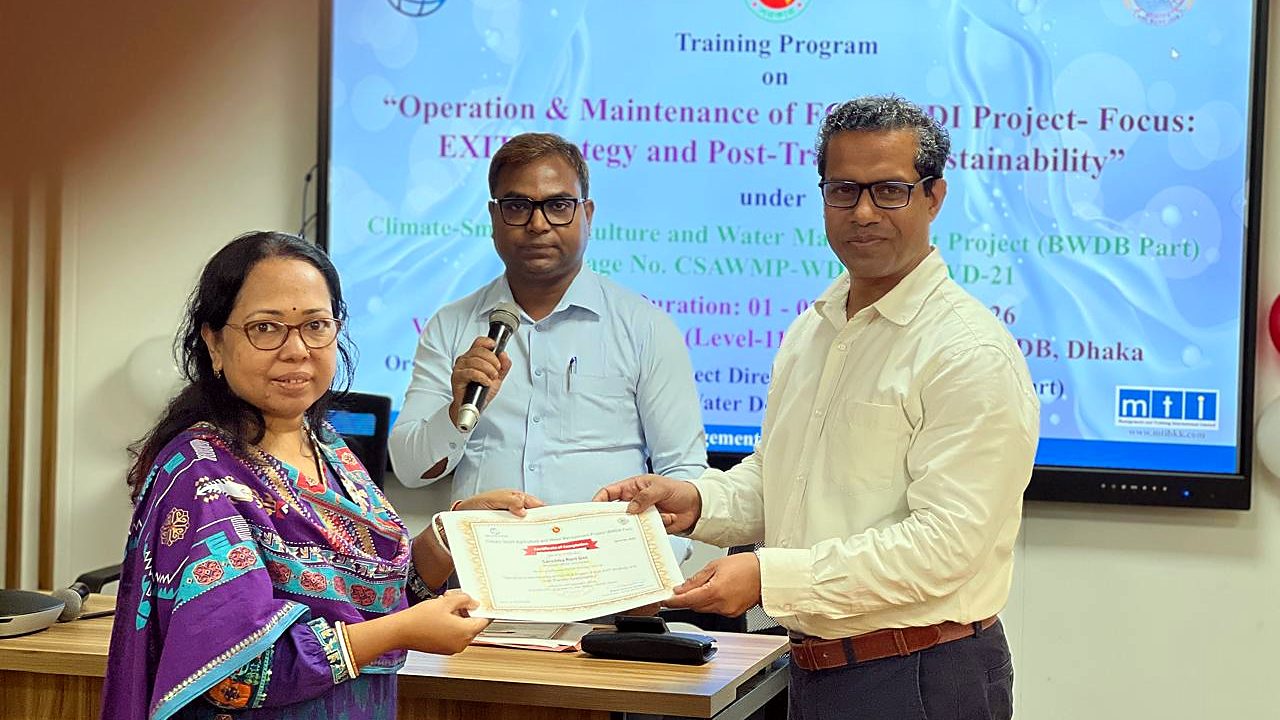
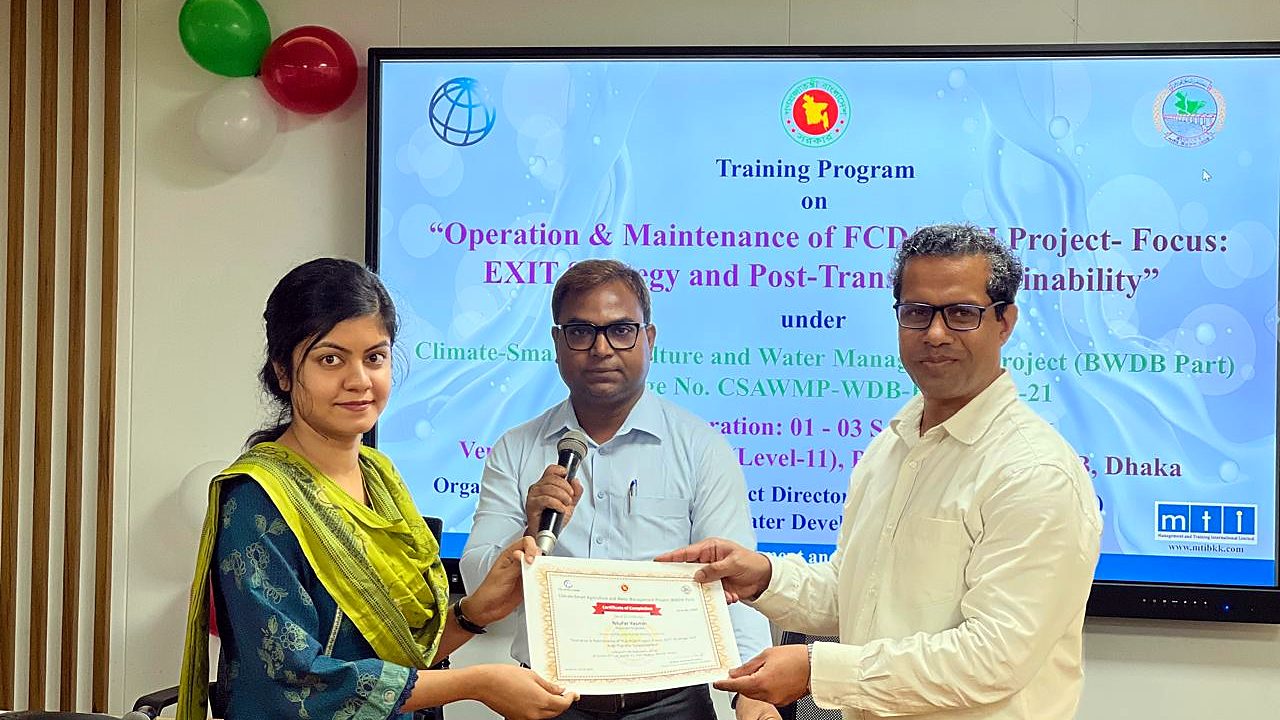
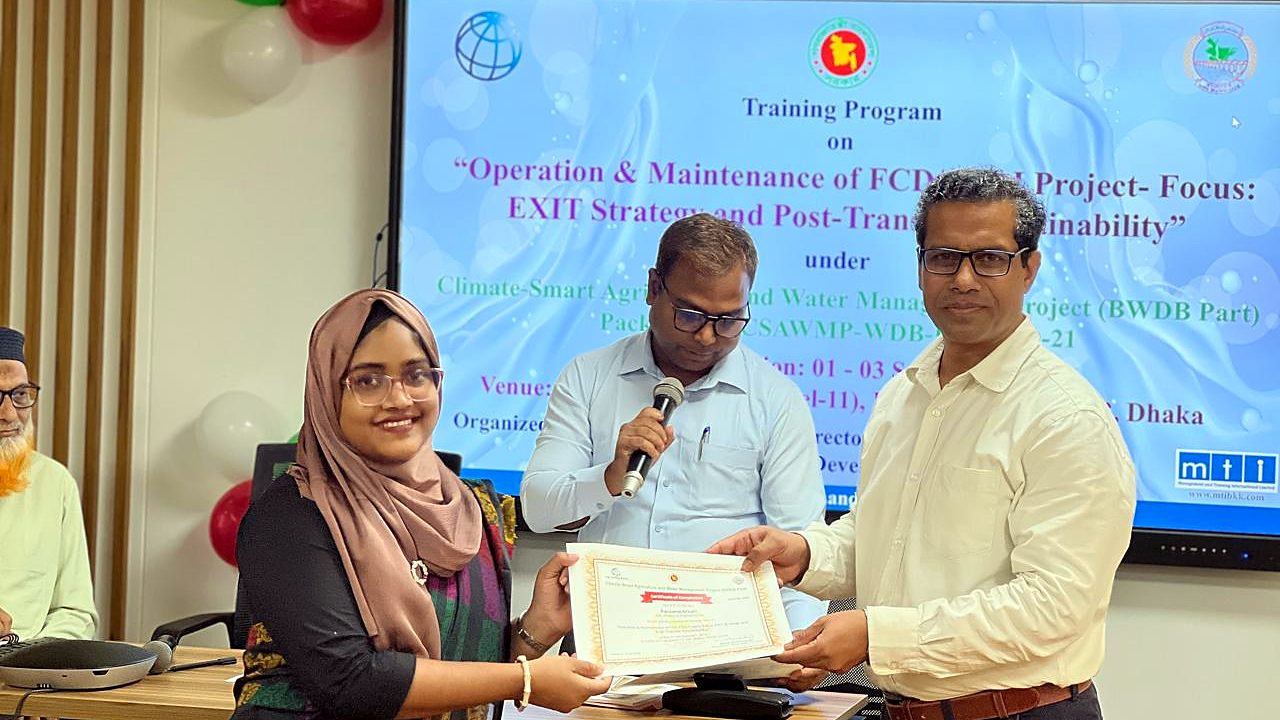
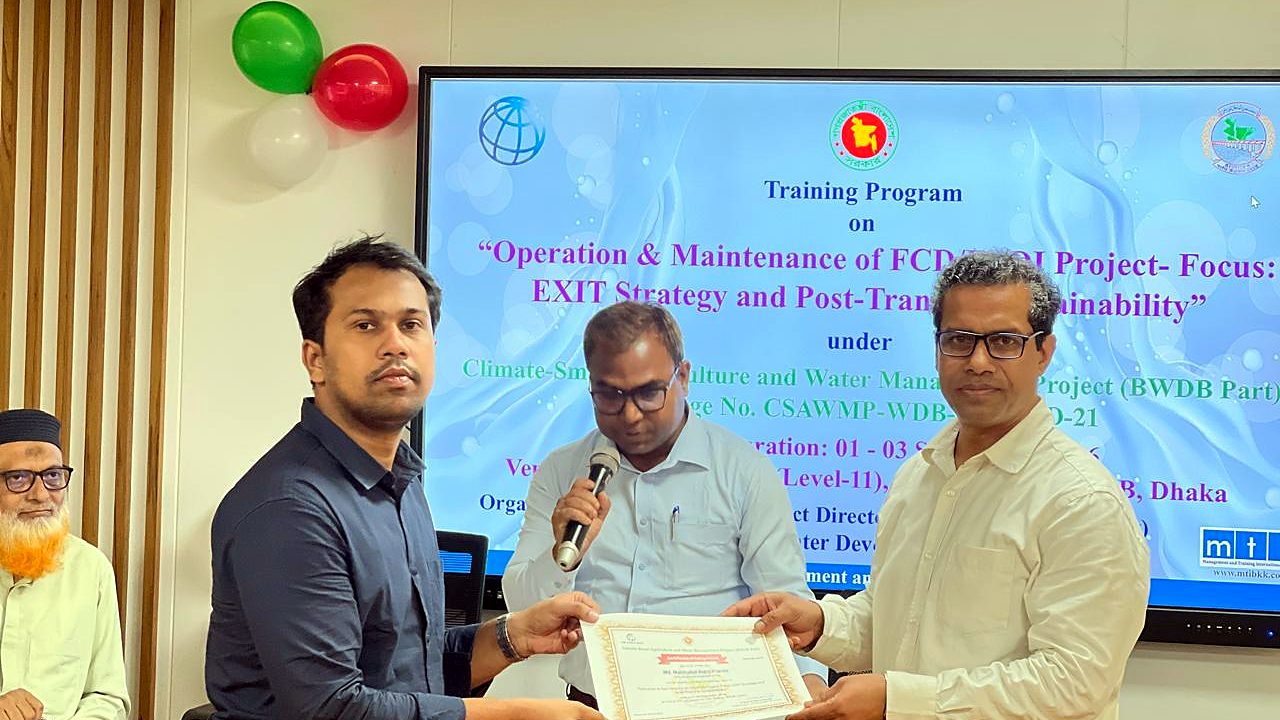
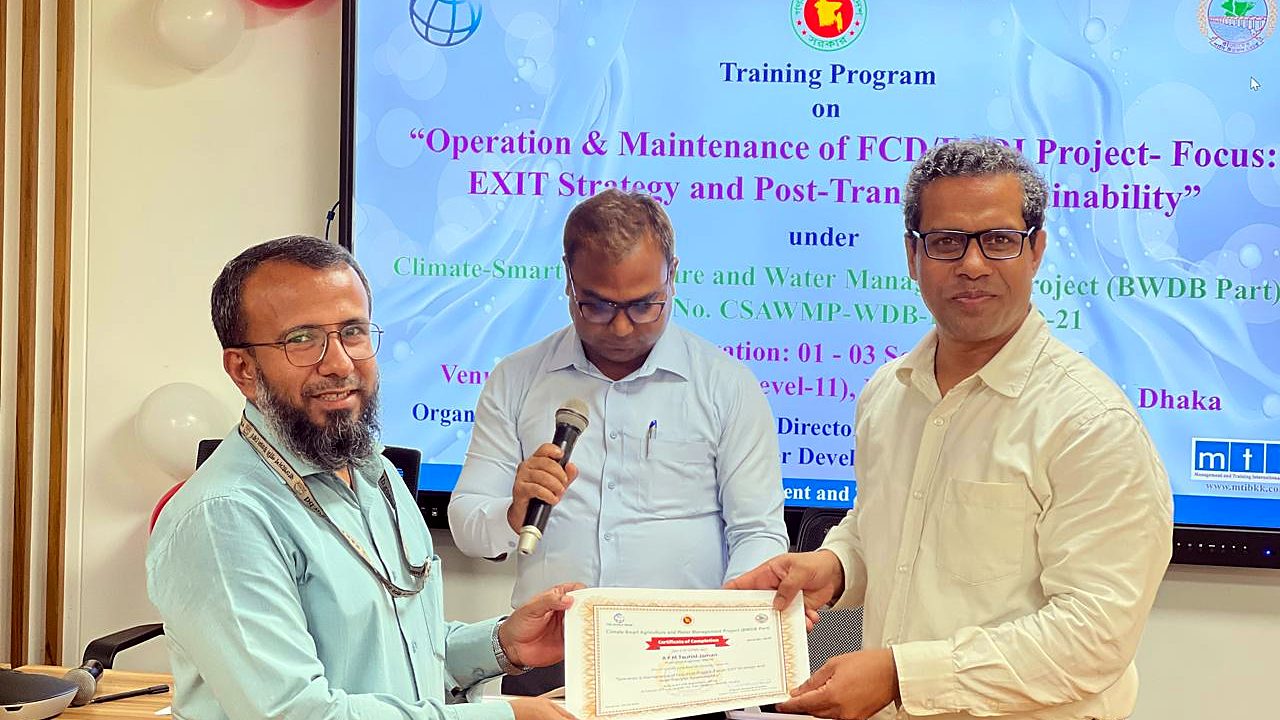
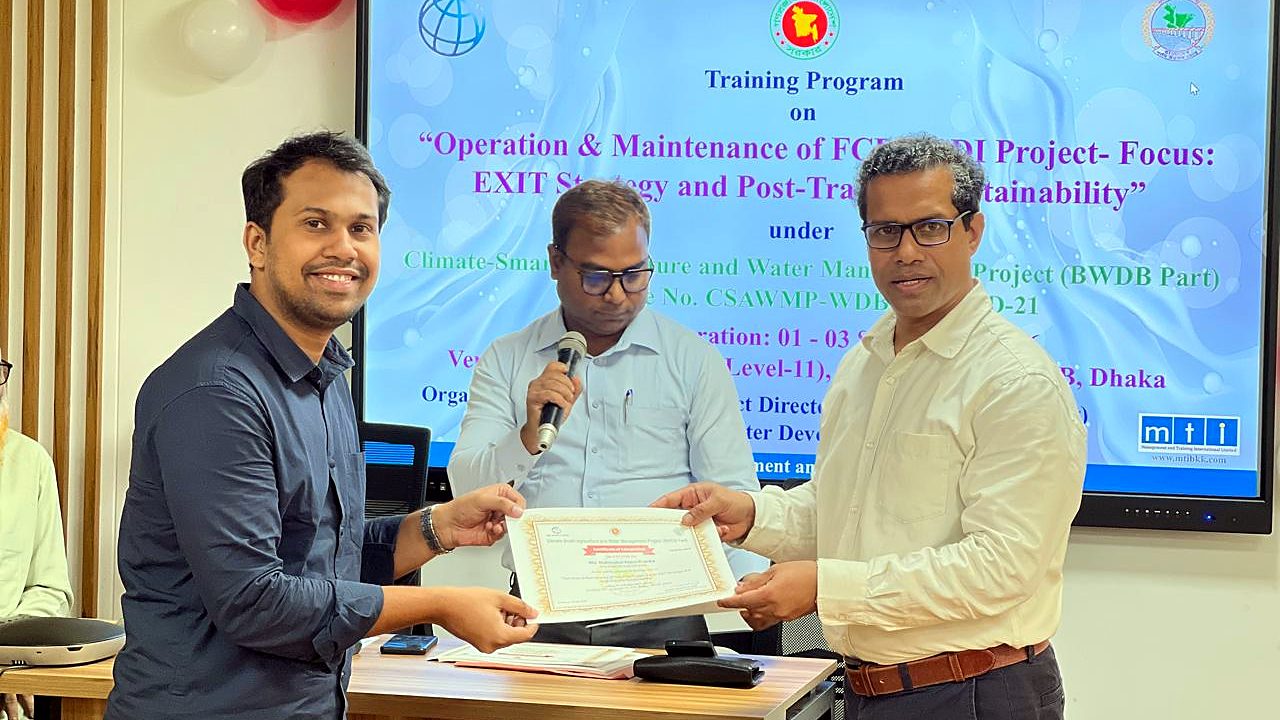
The Project Director closed the course on the afternoon of 3 September 2026. After the post-evaluation and the participants’ course evaluation, certificates were handed to each participant at the dais.
The Course in Pictures
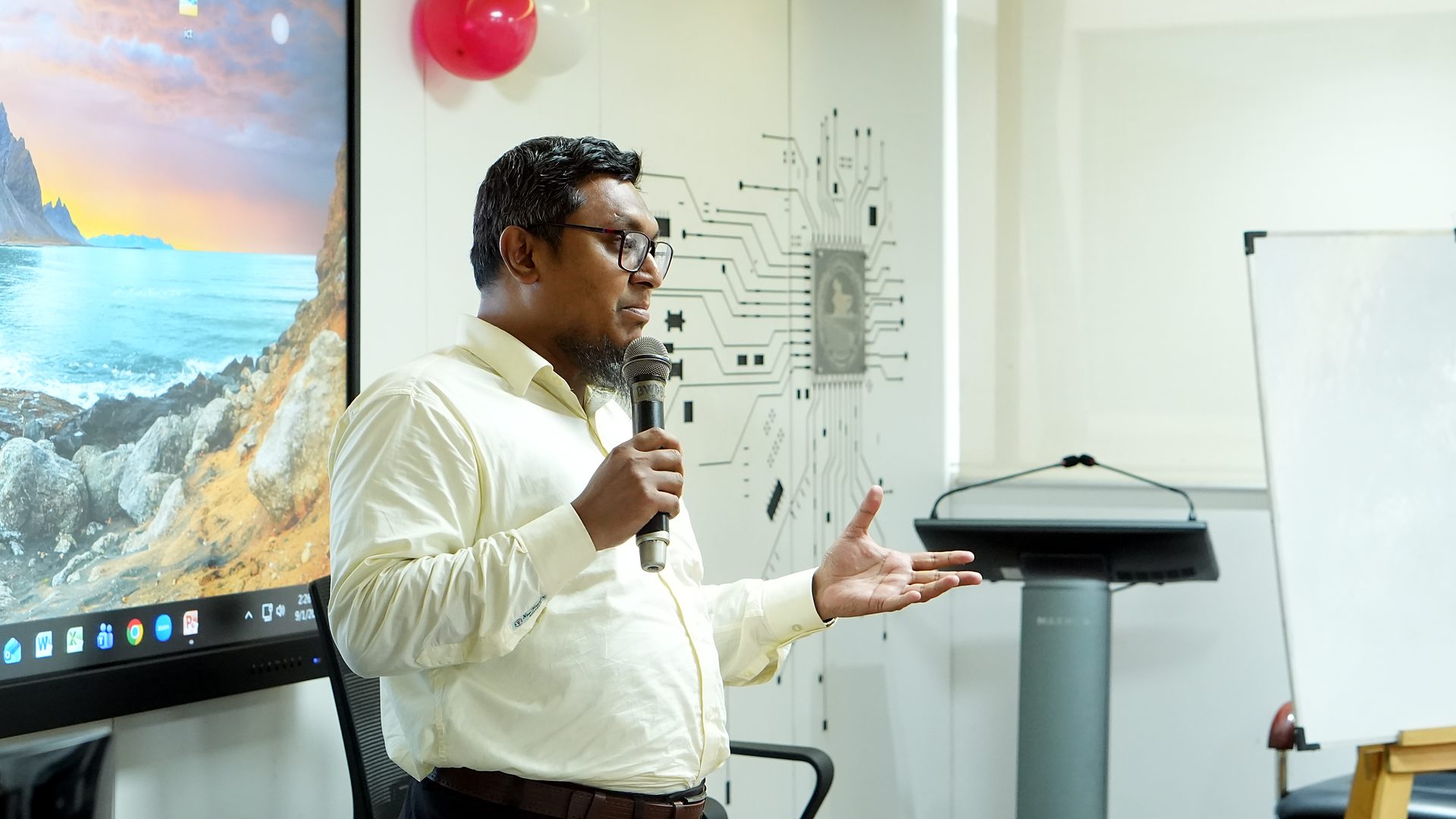
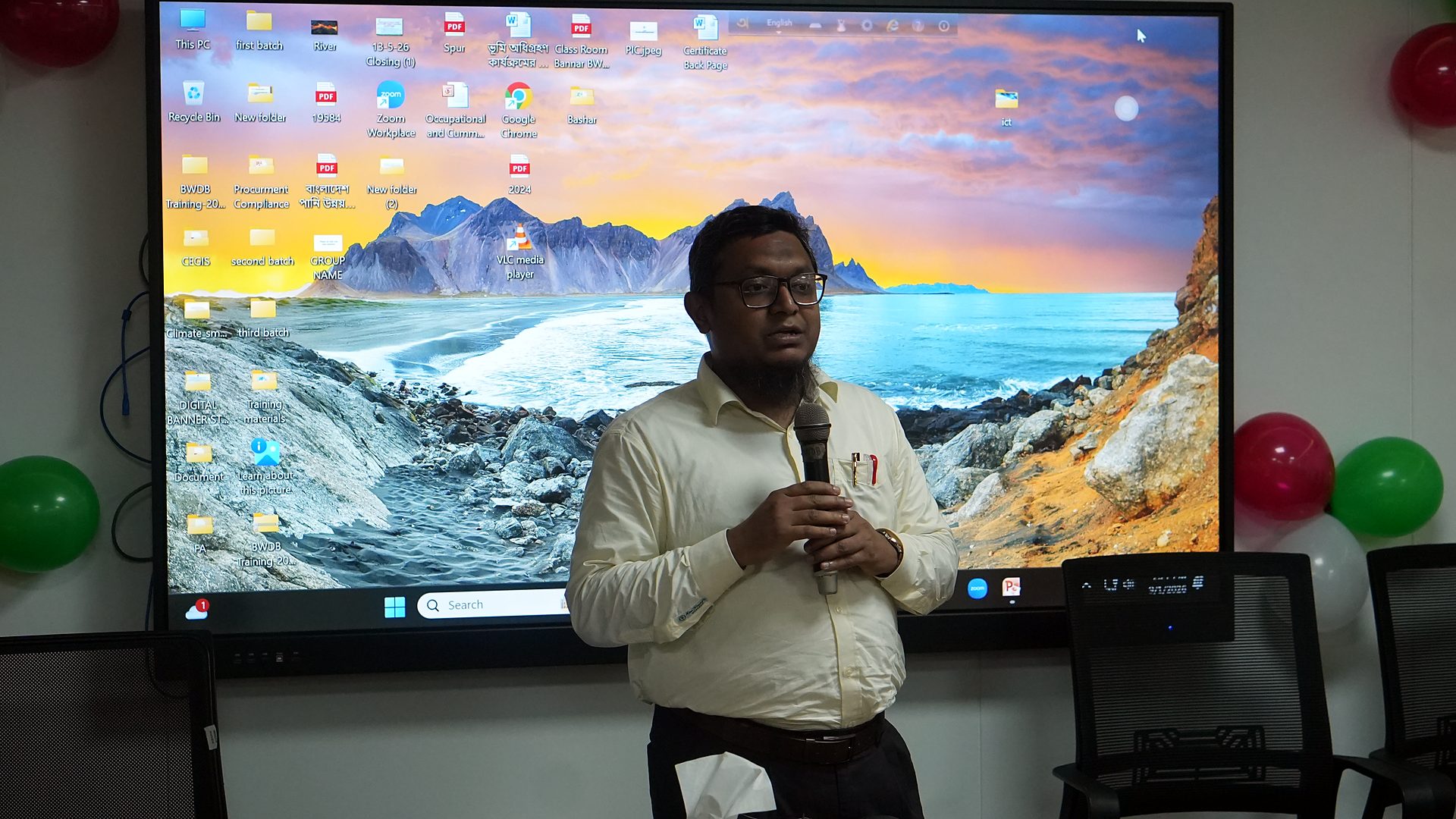
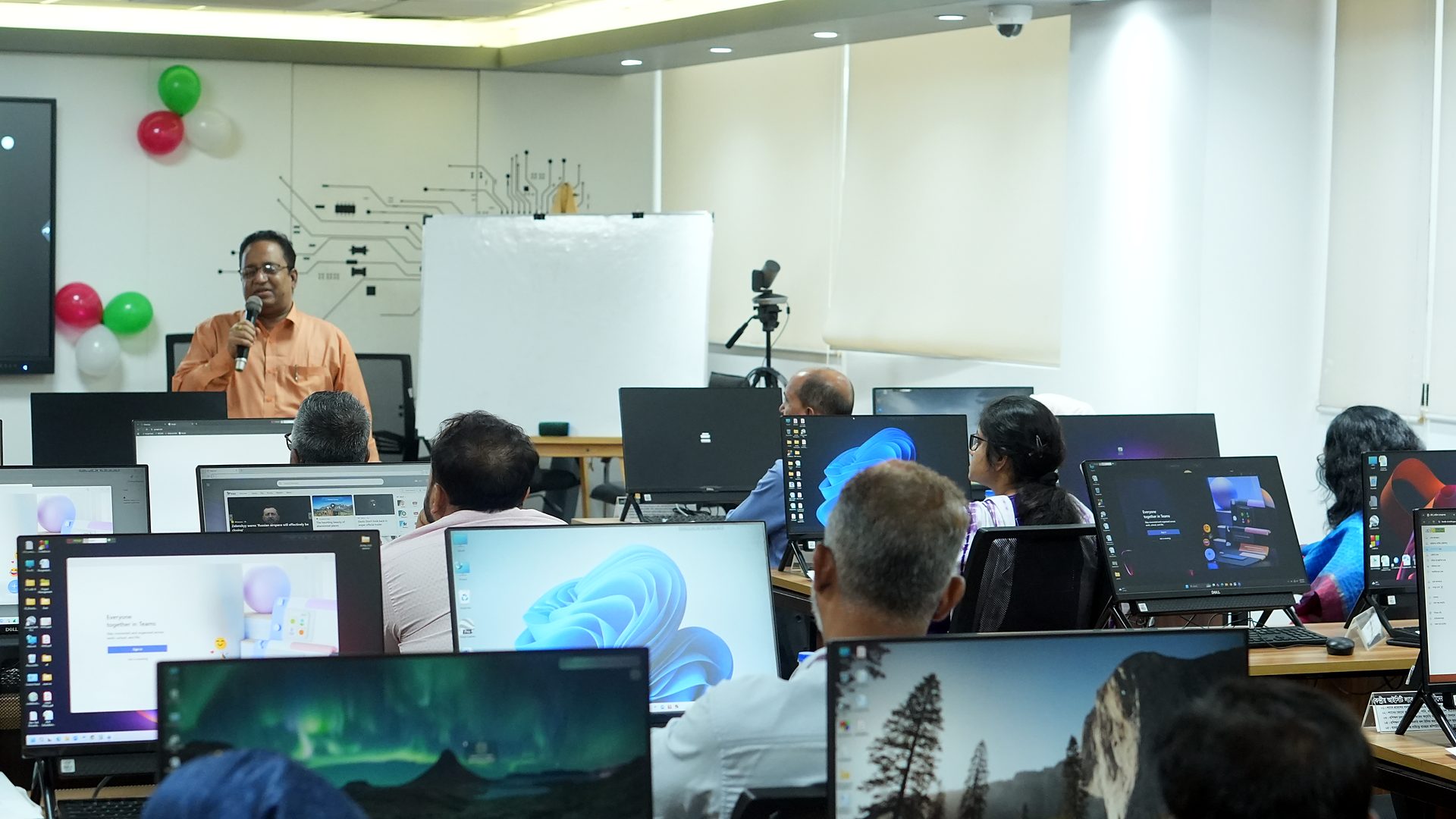
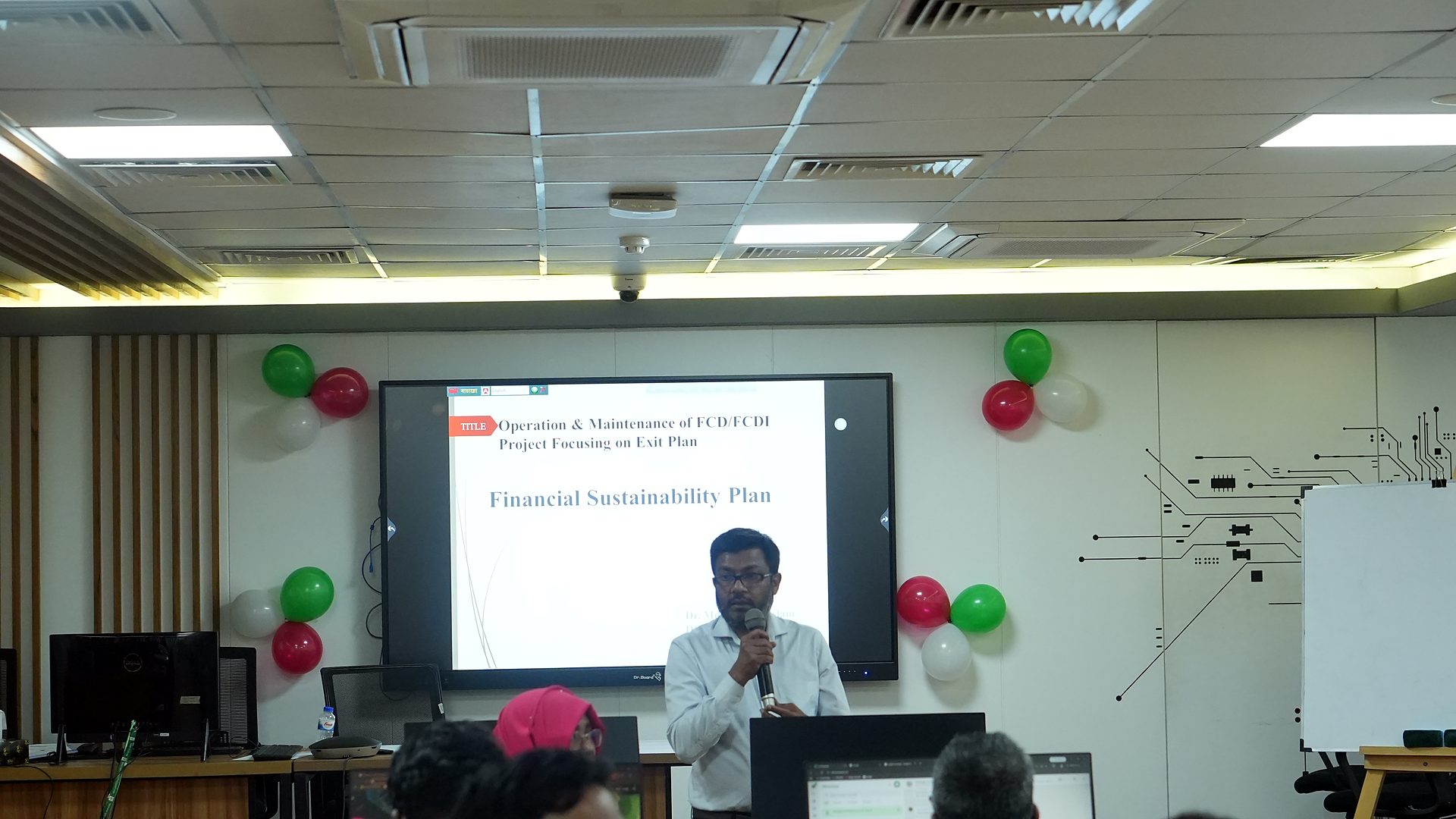
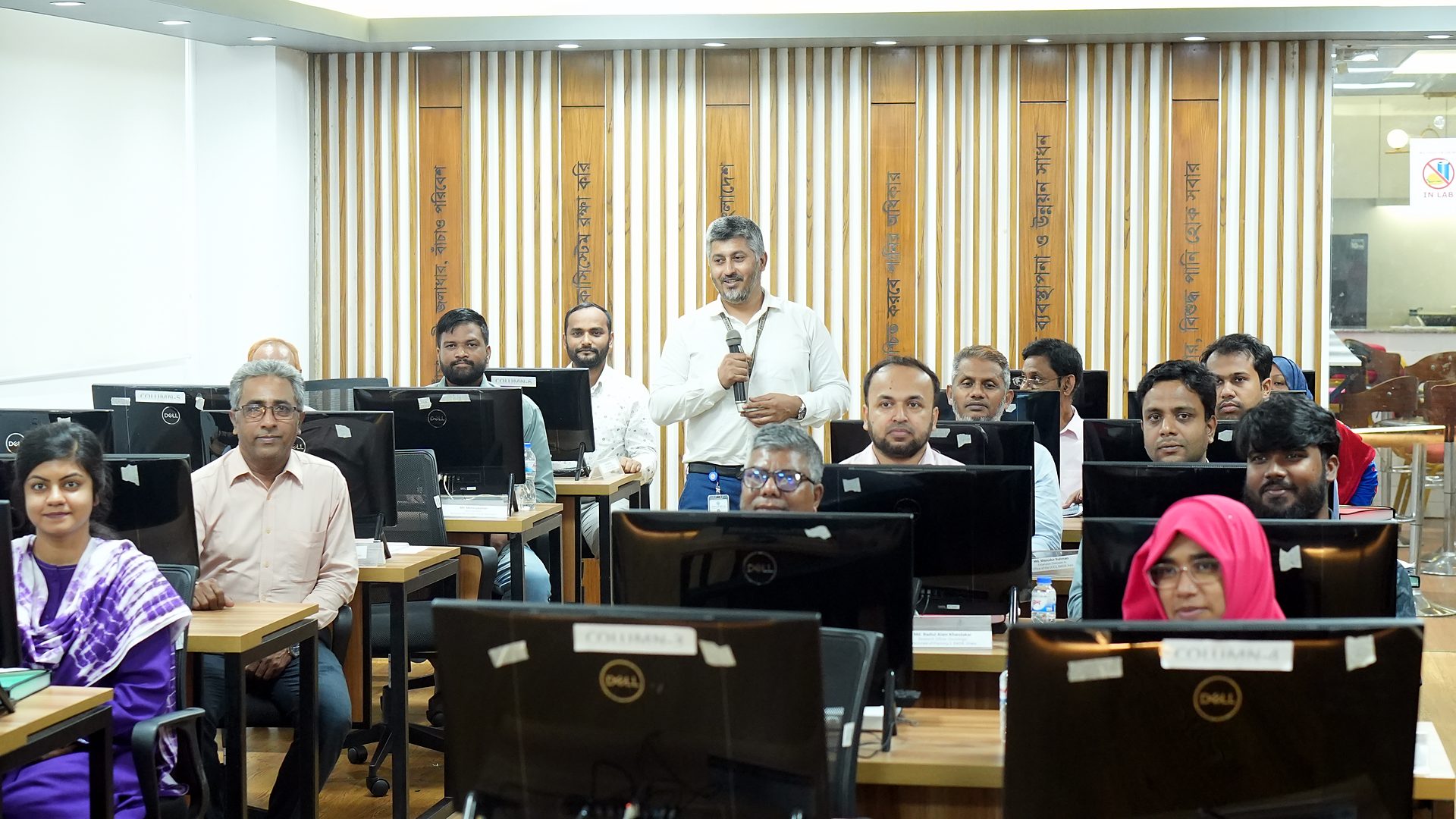
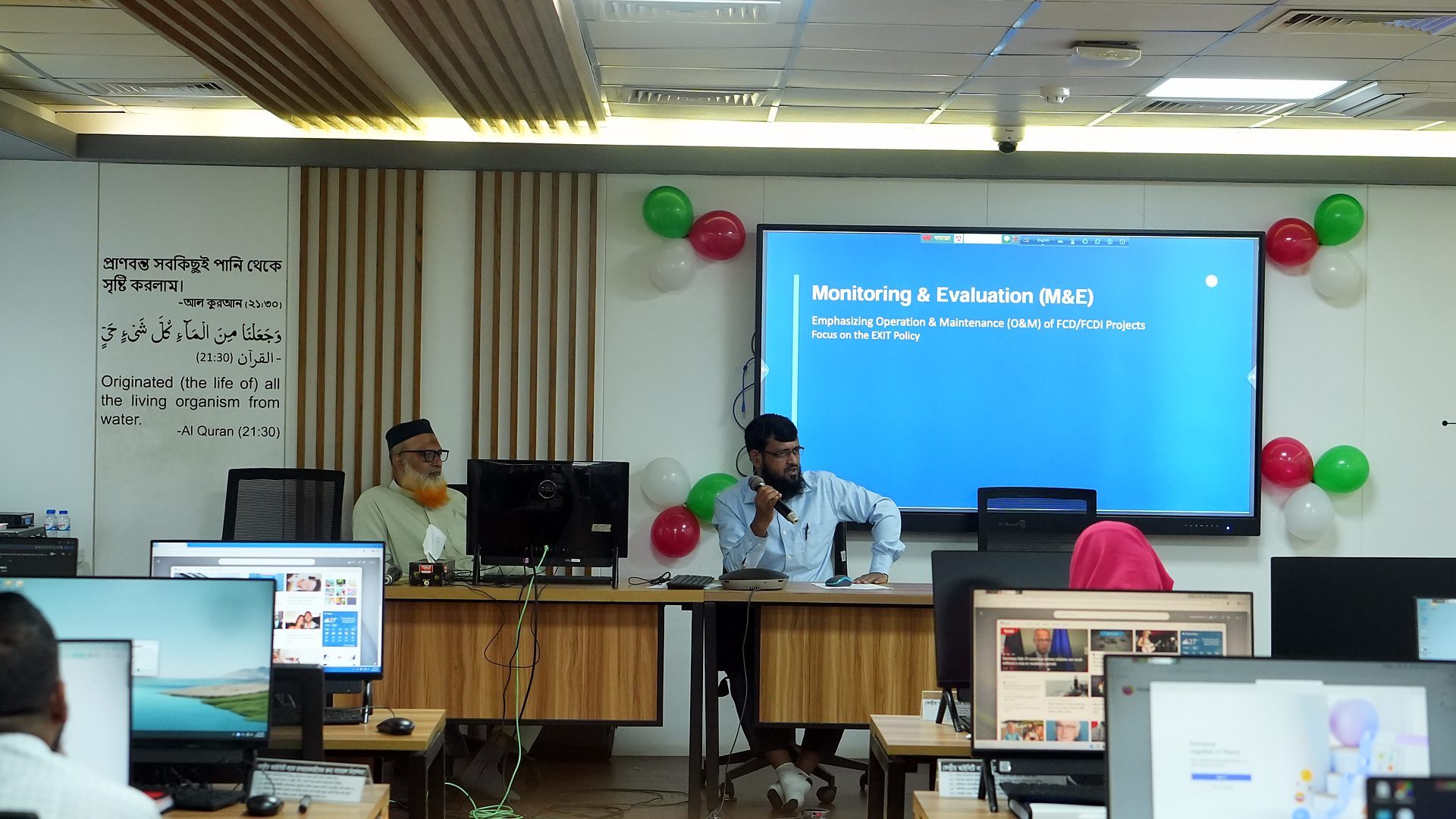
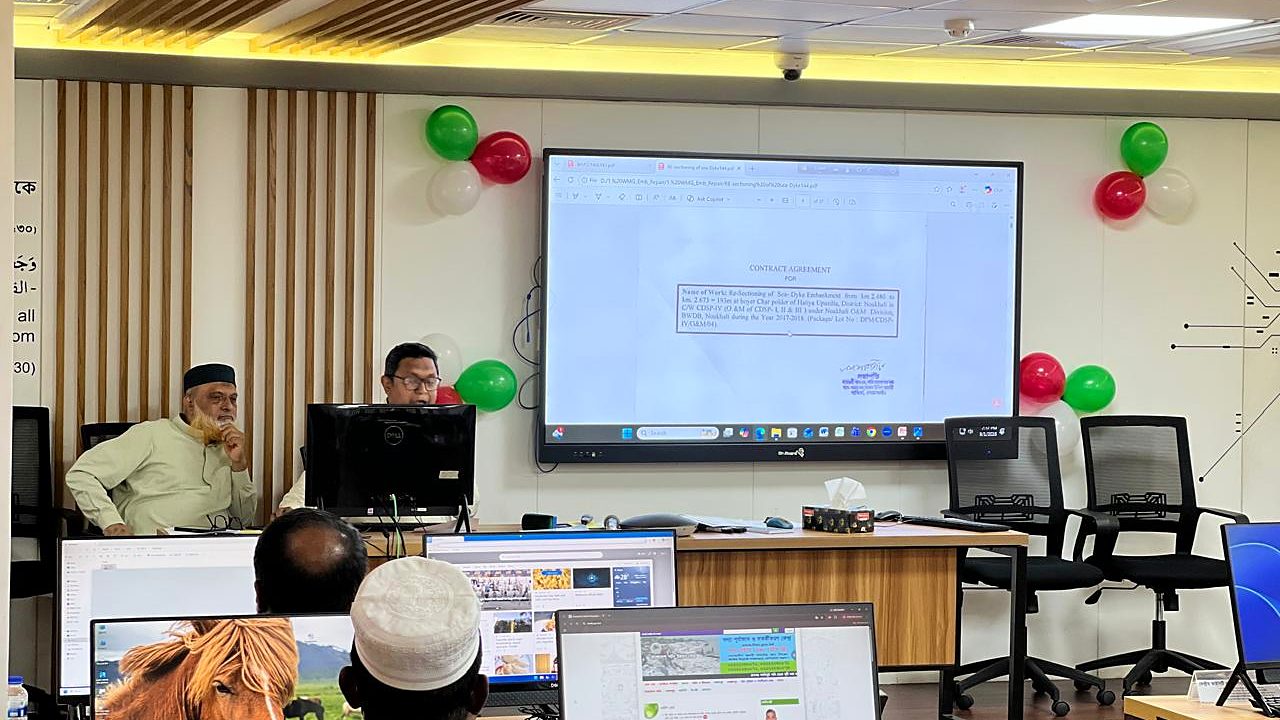
Thirteen further photographs from the three days at the Central ICT Lab, Pani Bhaban.
Why This Matters
Every scheme the Climate-Smart Agriculture and Water Management Project builds or rehabilitates will eventually be handed over. If the handover is a ceremony and a signature, the scheme starts to decline the following monsoon. If it is the end of a plan — a trained Water Management Association, a fund that does not depend on the project, an agreed maintenance calendar and someone watching the indicators — the investment keeps paying for itself.
By bringing the engineers who design FCD/FCDI structures into the same room as the Sub-Assistant Engineers, Extension Overseers and Work Assistants who maintain them, and teaching the exit strategy as a sequence rather than an event, this course worked on the part of water infrastructure that a construction contract cannot buy.
More from this Programme
Programme Snapshot
| Field | Detail |
|---|---|
| Course Title | Operation & Maintenance of FCD/FCDI Project — Focus: EXIT Strategy and Post-Transfer Sustainability |
| Reference | CSAWMP-WDB-PCU-WD-21-4-OM-01 — Package 21, Batch 4 (Course ID O&M-01) |
| Duration | 3 days — 1 to 3 September 2026 |
| Venue | Central ICT Lab (Level-11), Pani Bhaban, BWDB, 72 Green Road, Dhaka-1205 |
| Participants | 25 officials of the Bangladesh Water Development Board |
| Ministry | Ministry of Water Resources, Government of the People’s Republic of Bangladesh |
| Implementing Agency | Bangladesh Water Development Board (BWDB) |
| Project | Climate-Smart Agriculture and Water Management Project (CSAWM Project), BWDB Part |
| Project Director | Pijush Krishna Kundu, Additional Chief Engineer (Civil) |
| Course Coordinator | Muhammad Shahid Shikdar, System Analyst, Directorate of Central ICT |
| Sessions | 12 technical sessions across 3 days, four sessions per day |
| Resource Persons | 10 senior BWDB and BPDB-BWDB Engineering Academy professionals |
| Training Service Provider | Management and Training International Ltd. (MTI Ltd.) |
Frequently Asked Questions
What are FCD and FCDI projects?
Flood Control and Drainage (FCD) and Flood Control, Drainage and Irrigation (FCDI) schemes are the embankments, regulators, sluices and canals the Bangladesh Water Development Board builds to protect land from flooding, drain it, and in FCDI schemes supply irrigation water. Their long-term performance depends on operation and maintenance after construction.
What does “exit strategy” mean in this course?
It is the plan by which BWDB transfers operation and maintenance of a completed scheme to the Water Management Association that will run it — including an O&M agreement, handover of files and documents, a timeline with milestones, and the institutional and financial arrangements that let the scheme keep working after project support ends.
Who attended the training?
Twenty-five BWDB officials from twenty-one offices: Executive, Sub-Divisional and Assistant Engineers, Sub-Assistant Engineers, Extension Overseers, an Assistant Extension Officer, research and administrative officers and a Work Assistant. Seven came from field offices in Narsingdi, Chandpur, Moulvibazar, Feni, Chattogram and Cumilla.
Who were the resource persons?
Ten senior professionals, including the Project Director Pijush Krishna Kundu; Superintending Engineers Dr. Md. Khairul Islam, Dr. Mohammad Mahtab Hossain and A.B.M. Khan Mozahedy; Deputy Chief Extension Officers Md. Hafizur Rahman, Dr. Md. Zahidul Islam and Muhammad Monirul Alam; Executive Engineer Abdul Ahad; Md. Halim Shalehy, Director of the BPDB-BWDB Engineering Academy, Kaptai; and Md. Enamur Rahman, Chief Water Management (PRL).
Where and when was the training held?
At the Central ICT Lab, Level-11, Pani Bhaban, 72 Green Road, Dhaka, from 1 to 3 September 2026.
Who funded and organised the course?
The course was funded by the Climate-Smart Agriculture and Water Management Project (CSAWM Project), BWDB Part, under the Bangladesh Water Development Board, Ministry of Water Resources. MTI Ltd. served as the training service provider under reference CSAWMP-WDB-PCU-WD-21-4-OM-01.