BWDB Engineers Trained on Quality Control and Construction Management — QA/QC Standards, Material Testing and NDT
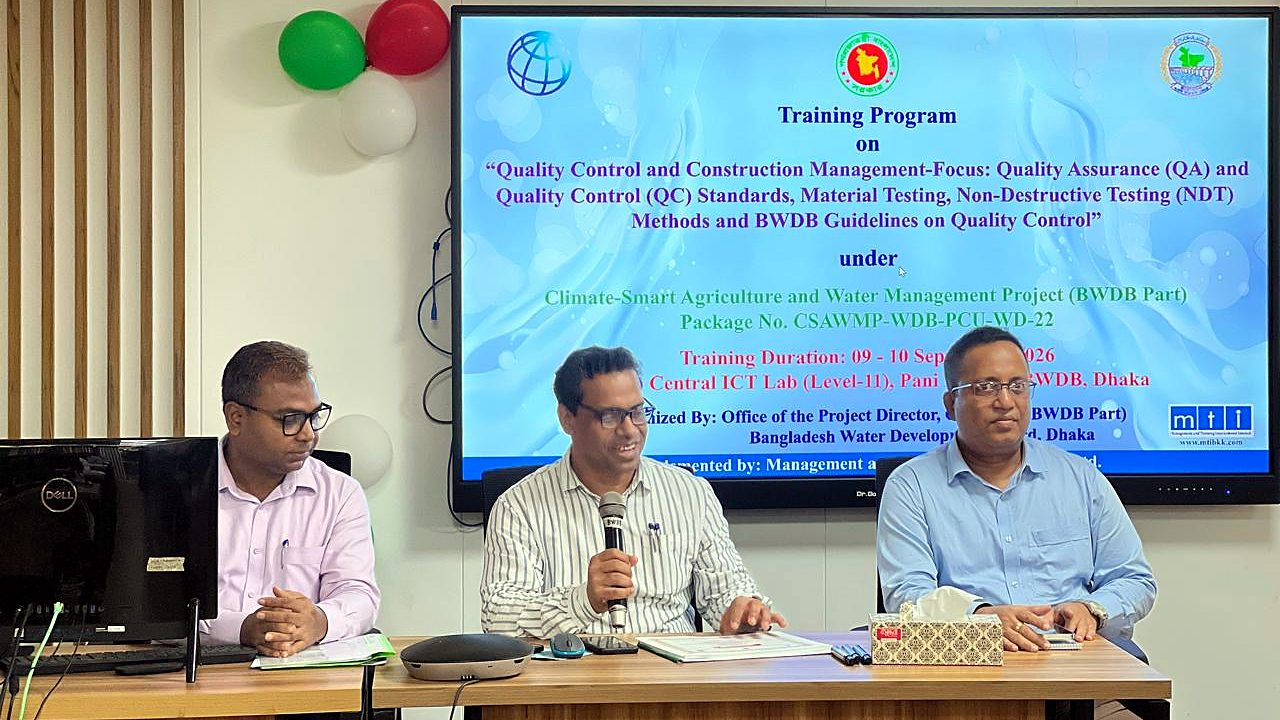
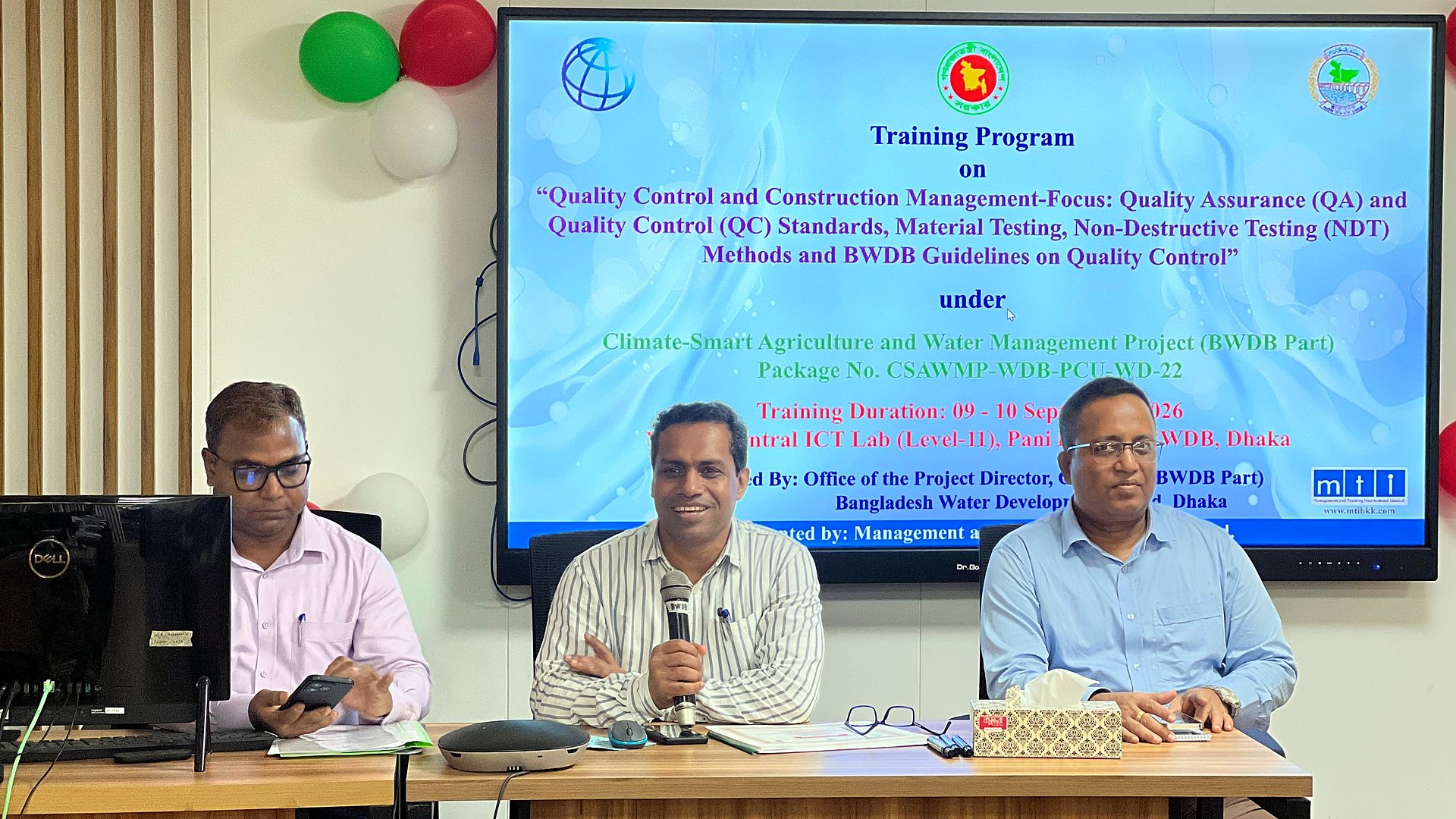
Management and Training International (MTI) Ltd. conducted the two-day training course on Quality Control and Construction Management — Quality Assurance (QA) and Quality Control (QC) Standards, Material Testing, Non-Destructive Testing (NDT) Methods and BWDB Guidelines on Quality Control on 9 and 10 September 2026 at the Central ICT Lab, Level-11, Pani Bhaban, BWDB, Dhaka. Twenty-five officials of the Bangladesh Water Development Board (BWDB), under the Ministry of Water Resources, took part — the sixth batch under Package 22 of the Climate-Smart Agriculture and Water Management Project (CSAWM Project), BWDB Part, and the first in the programme’s quality-control discipline.
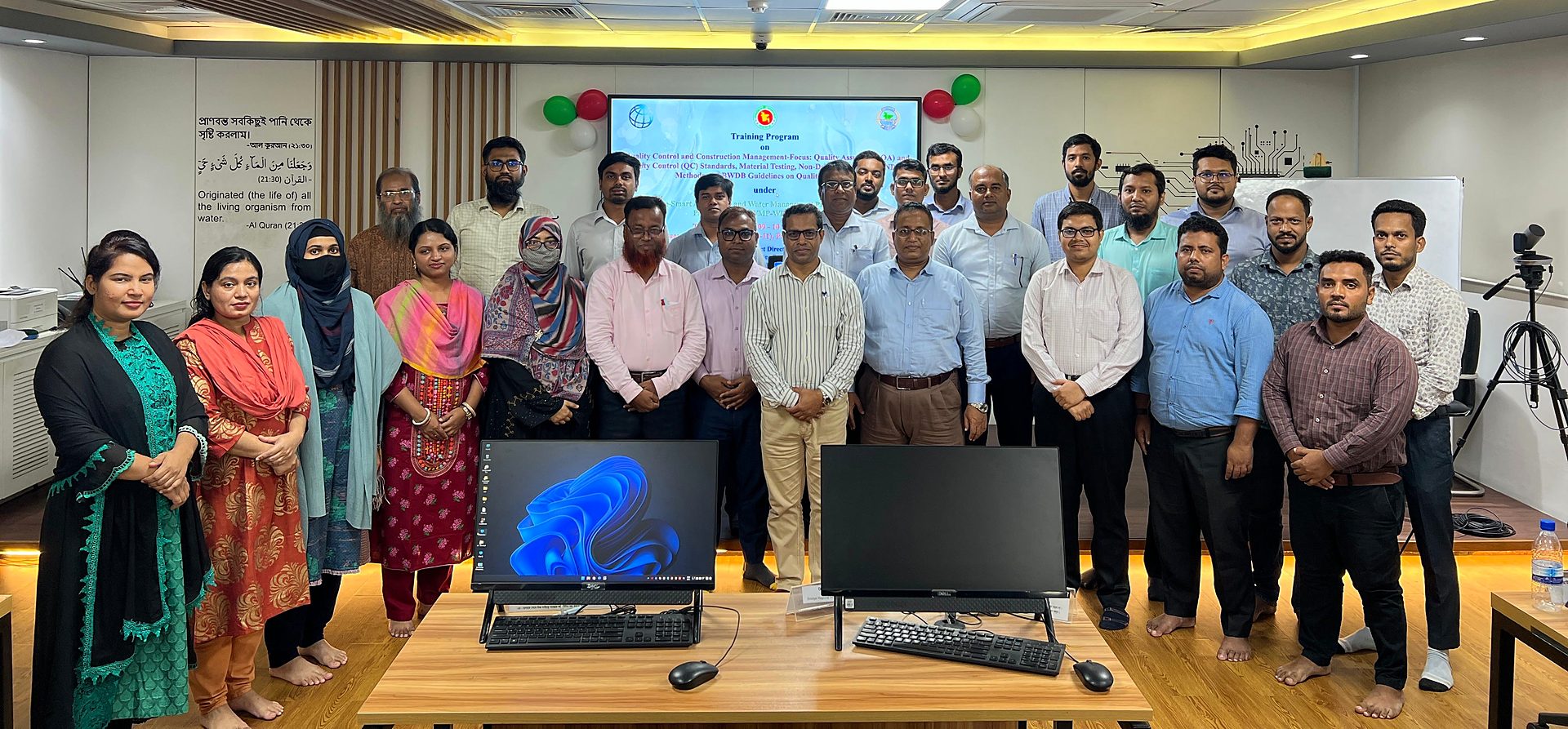
About the engagement: Under reference CSAWMP-WDB-PCU-WD-22-6-QC_CM-01 (Course ID CSAWMP-WDB-PCU-WD-22/QC&CM-01), MTI Ltd. is delivering the Package 22 training programme for the Climate-Smart Agriculture and Water Management Project (BWDB Part), implemented by the Bangladesh Water Development Board under the Ministry of Water Resources. The course was authorised by Office Order Memo Nos. 42.01.0000.000.647.25.0010.26-314 (course module) and 26-315 (participants), both dated 7 September 2026, following the Director General’s D-Nothi approval (Para 6.3) of 6 September 2026.
Quality Is Decided on Site, Not in the Drawing
An embankment designed to a safe slope fails if its soil was placed too wet and never compacted to design density. A regulator’s concrete specified for 25 MPa may reach half that if the aggregate was dirty or the curing was skipped. Reinforcement that looks right on delivery can hide laminations a magnetic-particle test would have found. Most of what goes wrong with BWDB structures is decided in the weeks of construction, by whether someone tested what they were told to test.
This course was built around that inspection discipline. Day 1 set out what quality means and how it is proved — QA versus QC, ISO, ASTM and BSTI standards, documentation, then testing of soil, concrete, steel, aggregate and bitumen. Day 2 went to what can be tested in place — ultrasonic pulse velocity, the rebound hammer, radiography, magnetic particles and thermography — and closed on BWDB’s own quality-control guidelines for earthwork, concrete, welding, safety and the environment.
Resource Persons
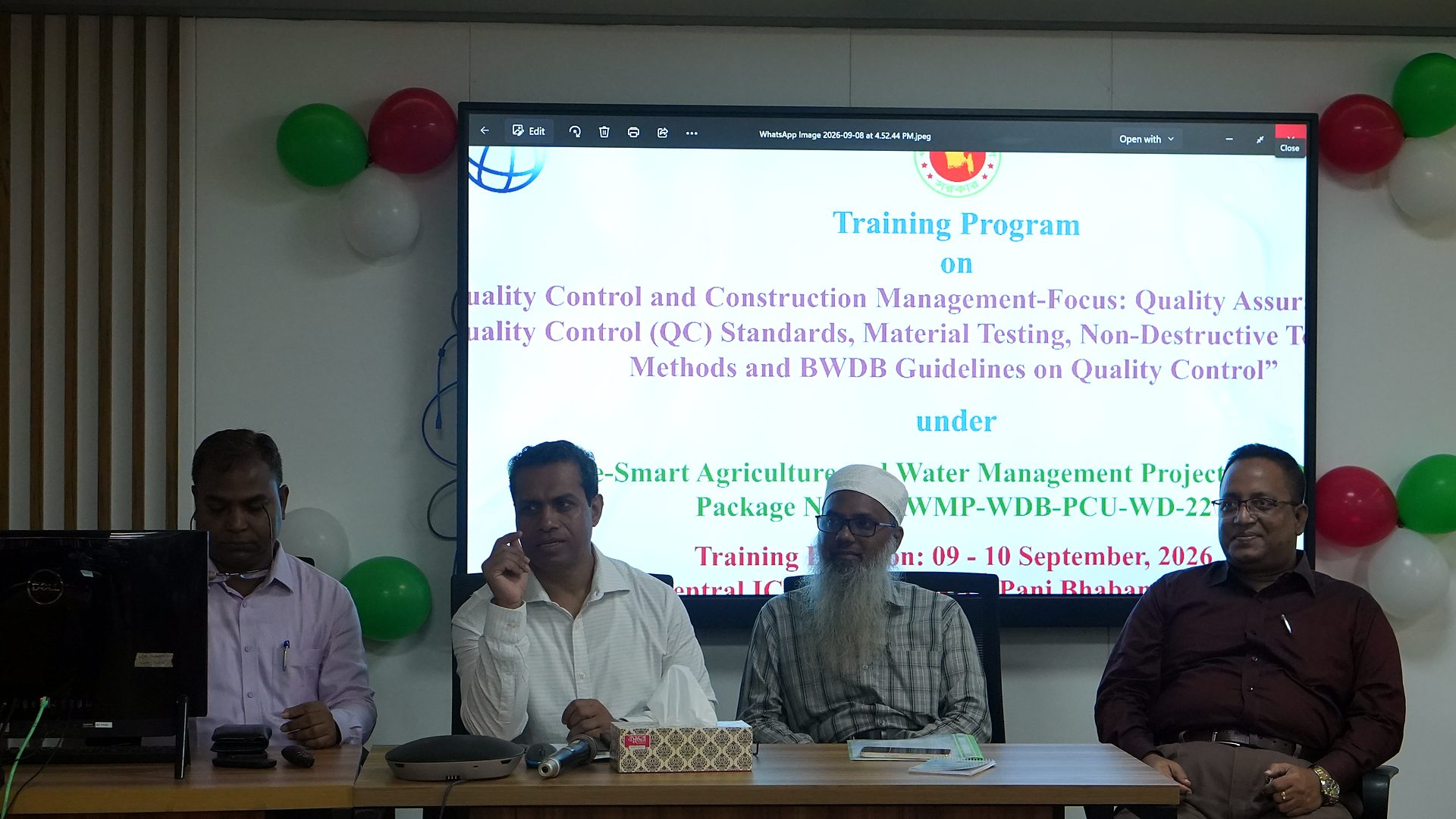
Four senior BWDB engineers delivered the eight sessions in pairs, each taking one block. Two Superintending Engineers from the Design & Research Circles took QA/QC standards and the BWDB guidelines; the Additional Chief Engineer for Dam & Barrage took non-destructive testing; and an Executive Engineer from Design & Research Circle-2 took material testing. That last resource person, A F M Tauhid Jaman, had been a participant in the Package 21 O&M and Exit Strategy course only a week earlier — a small sign of the programme building a cadre that teaches as well as learns.
Additional Chief Engineer (Civil) & Project Director
CSAWM Project (BWDB Part)
Superintending Engineer (Civil)
Design & Research Circle-5, BWDB
Executive Engineer (Civil)
Design & Research Circle-2, BWDB
Additional Chief Engineer (Civil)
Office of the Addl. Chief Engineer, Dam & Barrage
Superintending Engineer (Civil)
Design & Research Circle-2, BWDB
Course Leadership
Deputy Chief Extension Officer
CSAWM Project (BWDB Part)
Assistant Director (FA&A)
CSAWM Project (BWDB Part)
Executive Engineer
CSAWM Project (BWDB Part)
Managing Director
Management and Training International Ltd.
Eight Sessions, Four Lines of Defence
Process: Quality Assurance
QA as the process that prevents defects — ISO 9001, ASTM and BSTI standards, checklists, test reports, compliance logs and traceability.
Product: Quality Control
QC as the checks that find them — the risks of poor materials and workmanship, and the preventive and corrective measures that follow.
Material Testing
Soil for hydraulic structures; concrete strength and durability under water; steel reinforcement; aggregate and bitumen for roads and embankments.
Non-Destructive Testing
Ultrasonic pulse velocity, rebound hammer, radiographic and magnetic particle testing, and infrared thermography in BWDB projects.
Earthwork & Concrete
BWDB guidelines on compaction standards and equipment, soil density, and concrete placement and curing.
Welding, Safety & Environment
Welding standards and fabricated components; site safety measures and minimising environmental impacts during construction.
Day-by-Day Course Schedule
Participants reported to the Central ICT Lab at 08:30 on the first morning and at 09:00 on the second. Each day ran four sessions and closed at 16:00.
- 08:30–09:20 Inauguration and Opening of the Training Course Registration and breakfast; introduction of participants; objectives and detailed agenda; a brief introduction to the CSAWM Project (BWDB Part); pre-evaluation. Methods: self-introduction, questionnaire, lecture discussion. Pijush Krishna Kundu Project Director, CSAWM Project (BWDB Part), with the course management team
- 09:20–10:40 Session 1 — Quality Assurance (QA) vs. Quality Control (QC) Standards Distinction between QA and QC: QA as process-oriented and QC as product-oriented, and how the two complement each other in project delivery. International and national standards: ISO 9001, ASTM testing standards and BSTI codes, applied to project documentation and compliance. Methods: plenary discussion with PPP, experience sharing, Q&A. A.K.M. Anisur Rahman Siddiquee Superintending Engineer (Civil), Design & Research Circle-5, BWDB
- 10:40–10:50 Refreshment and tea break
- 10:50–12:10 Session 2 — Quality Assurance (QA) vs. Quality Control (QC) Standards Documentation and reporting systems: preparing checklists, test reports and compliance logs; ensuring the traceability of quality processes. Risk management in QA/QC: recognising common risks such as poor materials and workmanship errors; preventive and corrective measures. Methods: interactive discussion, experience sharing, Q&A. A.K.M. Anisur Rahman Siddiquee Superintending Engineer (Civil), Design & Research Circle-5, BWDB
- 12:10–13:30 Session 3 — Material Testing Soil testing for hydraulic structures: field and laboratory methods, and interpreting results for design suitability. Concrete strength and durability: standard concrete tests and durability under water exposure. Methods: plenary discussion with PPP, VIPP, Q&A. A F M Tauhid Jaman Executive Engineer (Civil), Design & Research Circle-2, BWDB
- 13:30–14:20 Lunch and prayer break
- 14:20–15:40 Session 4 — Material Testing Steel reinforcement testing: verifying steel quality before use and compliance with design specifications. Aggregate and bitumen testing: suitability for road and embankment surfacing, and durability under flood conditions. Methods: plenary discussion with PPP, VIPP, Q&A. A F M Tauhid Jaman Executive Engineer (Civil), Design & Research Circle-2, BWDB
- 15:40–16:00 Day review and refreshment
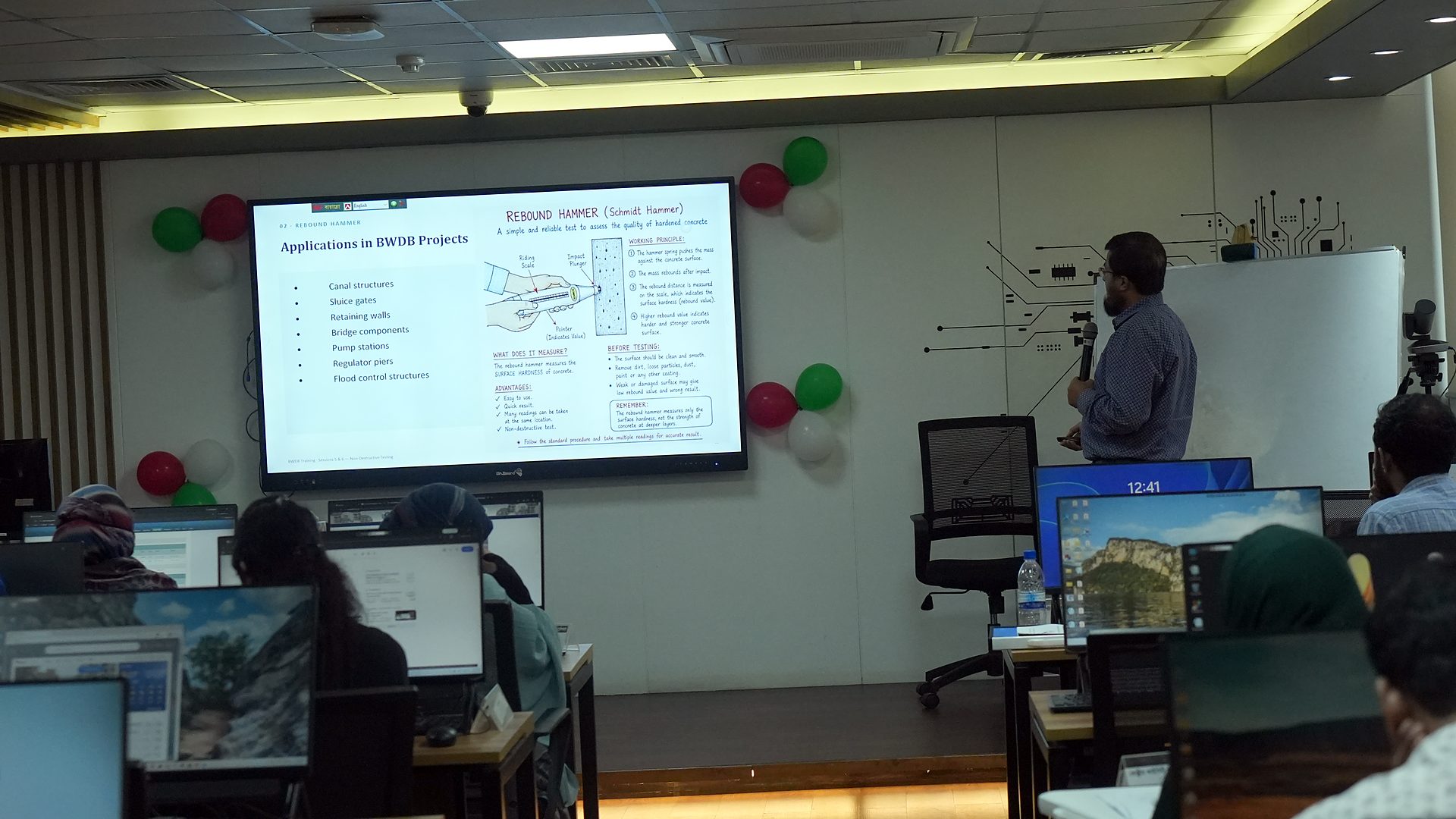
- 09:00–10:20 Session 1 — Non-Destructive Testing (NDT) Methods in BWDB Projects Ultrasonic Pulse Velocity (UPV): operating UPV equipment and interpreting velocity readings. Rebound hammer test: conducting the test and correlating readings with compressive strength. Methods: interactive discussion, brainstorming, experience sharing. Dr. Muhammad Masood Additional Chief Engineer (Civil), Office of the Addl. Chief Engineer, Dam & Barrage, BWDB
- 10:20–10:40 Refreshment and tea break
- 10:40–12:00 Session 2 — Non-Destructive Testing (NDT) Methods in BWDB Projects Radiographic and magnetic particle testing: identifying cracks and voids in steel reinforcement. Infrared thermography: operating thermography equipment and analysing thermal patterns for defects. Methods: interactive discussion, brainstorming, experience sharing. Dr. Muhammad Masood Additional Chief Engineer (Civil), Office of the Addl. Chief Engineer, Dam & Barrage, BWDB
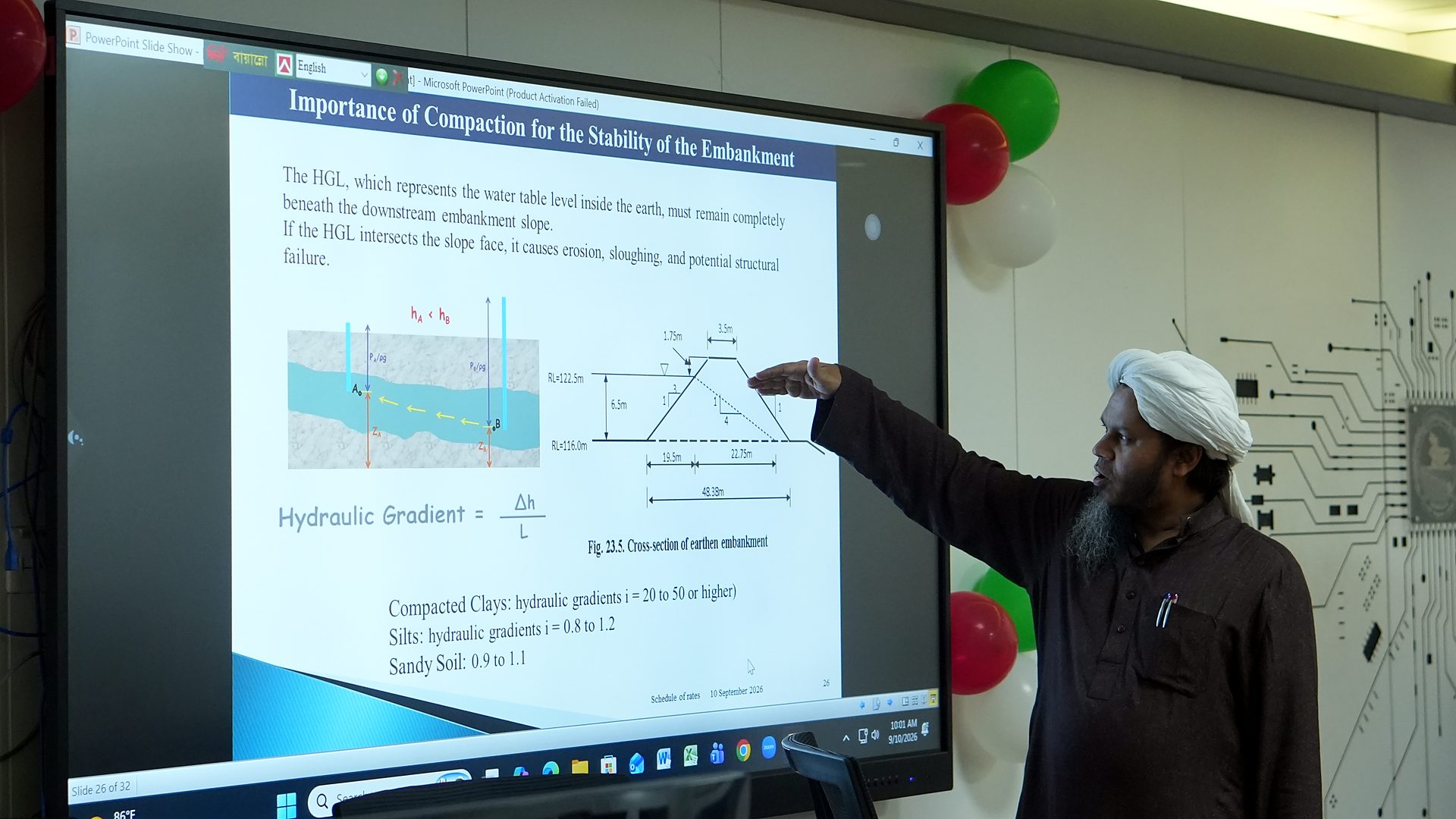
- 12:00–13:20 Session 3 — BWDB Guidelines on Quality Control Earthwork and compaction: compaction standards and equipment, and ensuring soil density meets design requirements. Concrete placement and curing: correct placement techniques that prevent cracking and ensure durability. Methods: plenary discussion, large group discussion with PPP. Md. Abdullah Al Mamun Superintending Engineer (Civil), Design & Research Circle-2, BWDB
- 13:20–14:20 Lunch and prayer break
- 14:20–15:40 Session 4 — BWDB Guidelines on Quality Control Structural welding and fabrication: welding standards, safety and the structural integrity of fabricated components. Safety and environmental management: site safety measures and minimising environmental impacts during construction. Methods: Q&A, large group discussion with PPP, case study. Md. Abdullah Al Mamun Superintending Engineer (Civil), Design & Research Circle-2, BWDB
- 15:40–16:00 Closing ceremony — post-evaluation, certificate distribution and course evaluation Pijush Krishna Kundu Project Director, CSAWM Project (BWDB Part), with the course management team
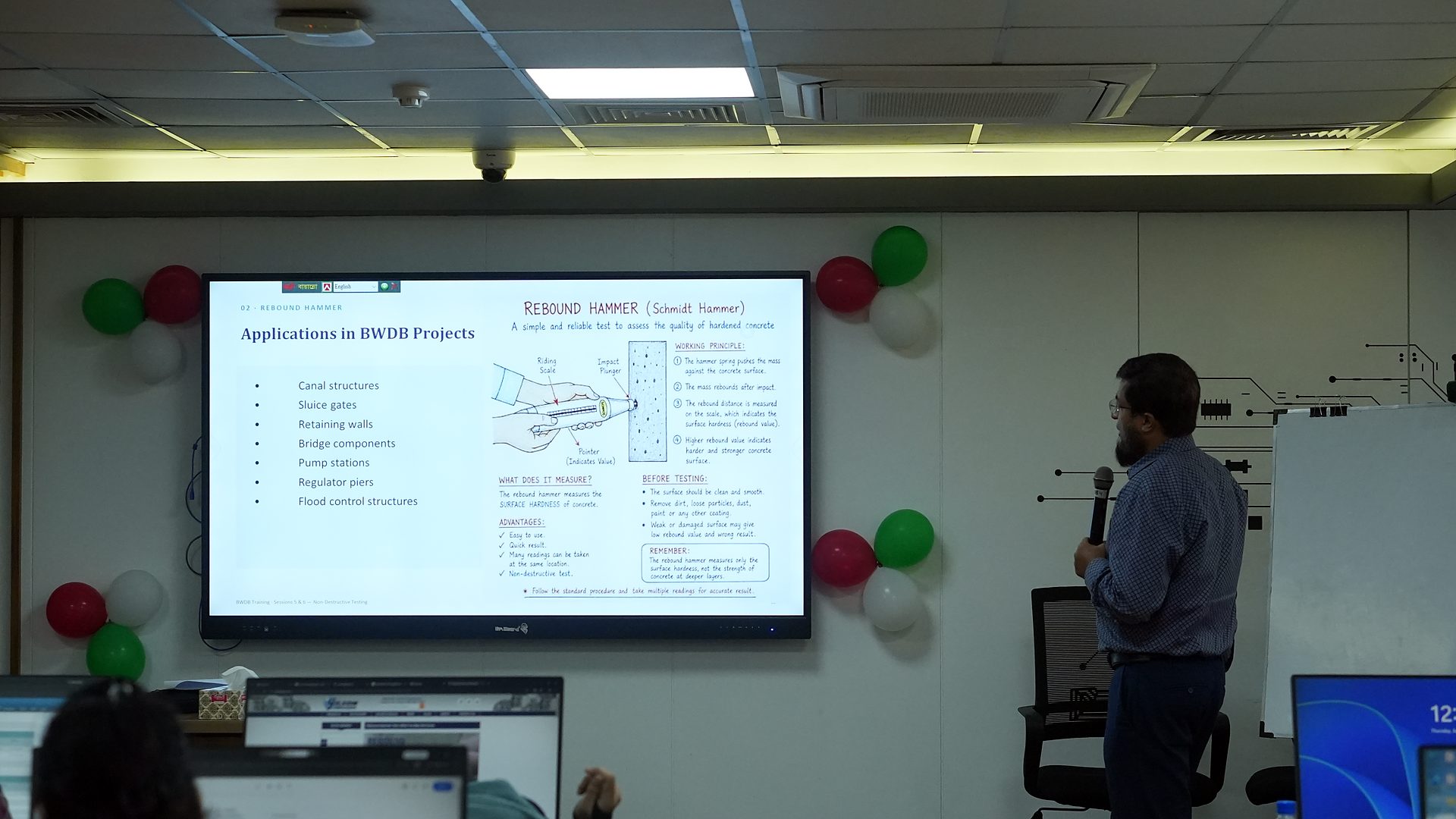
Training Methodology
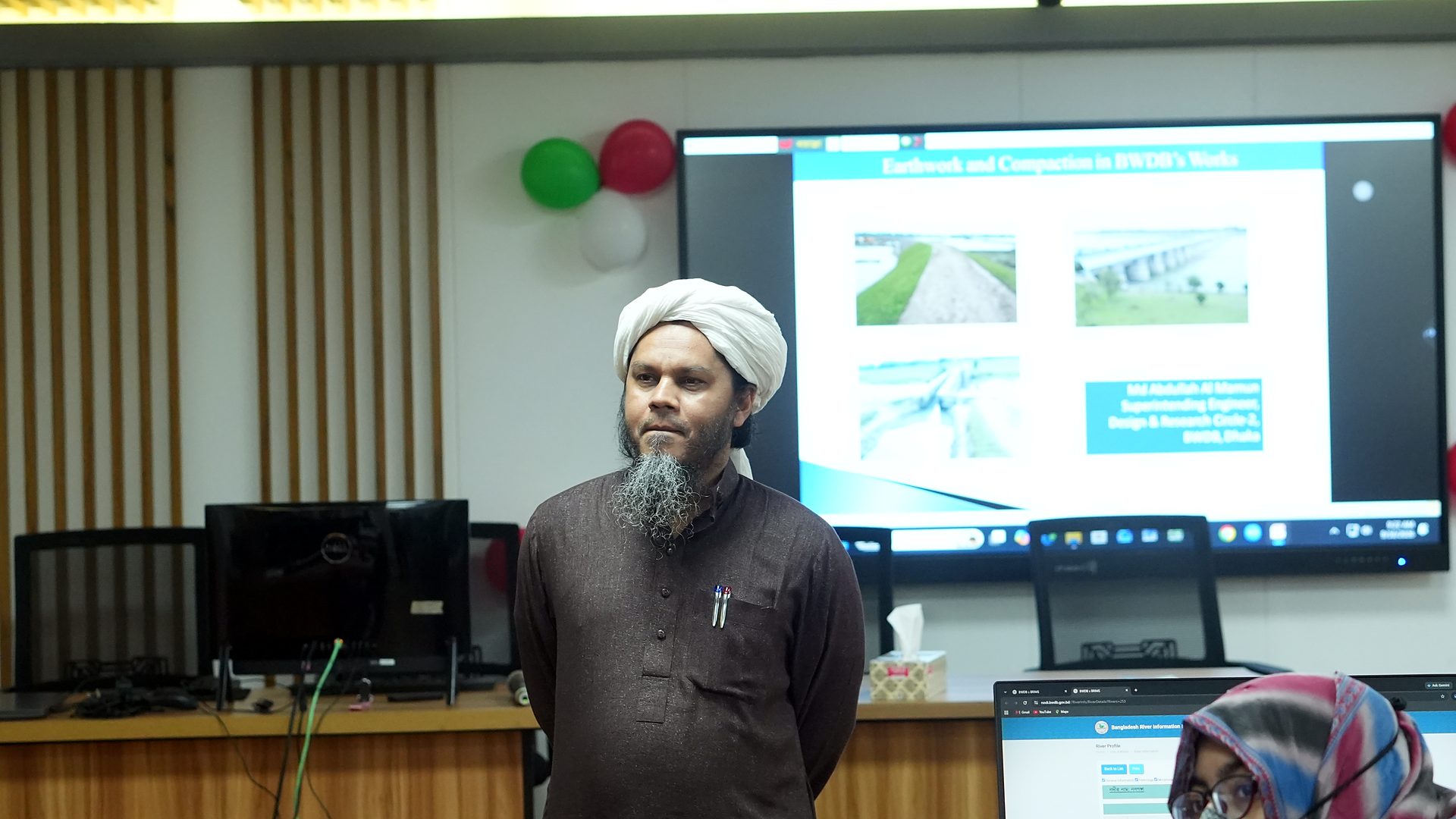
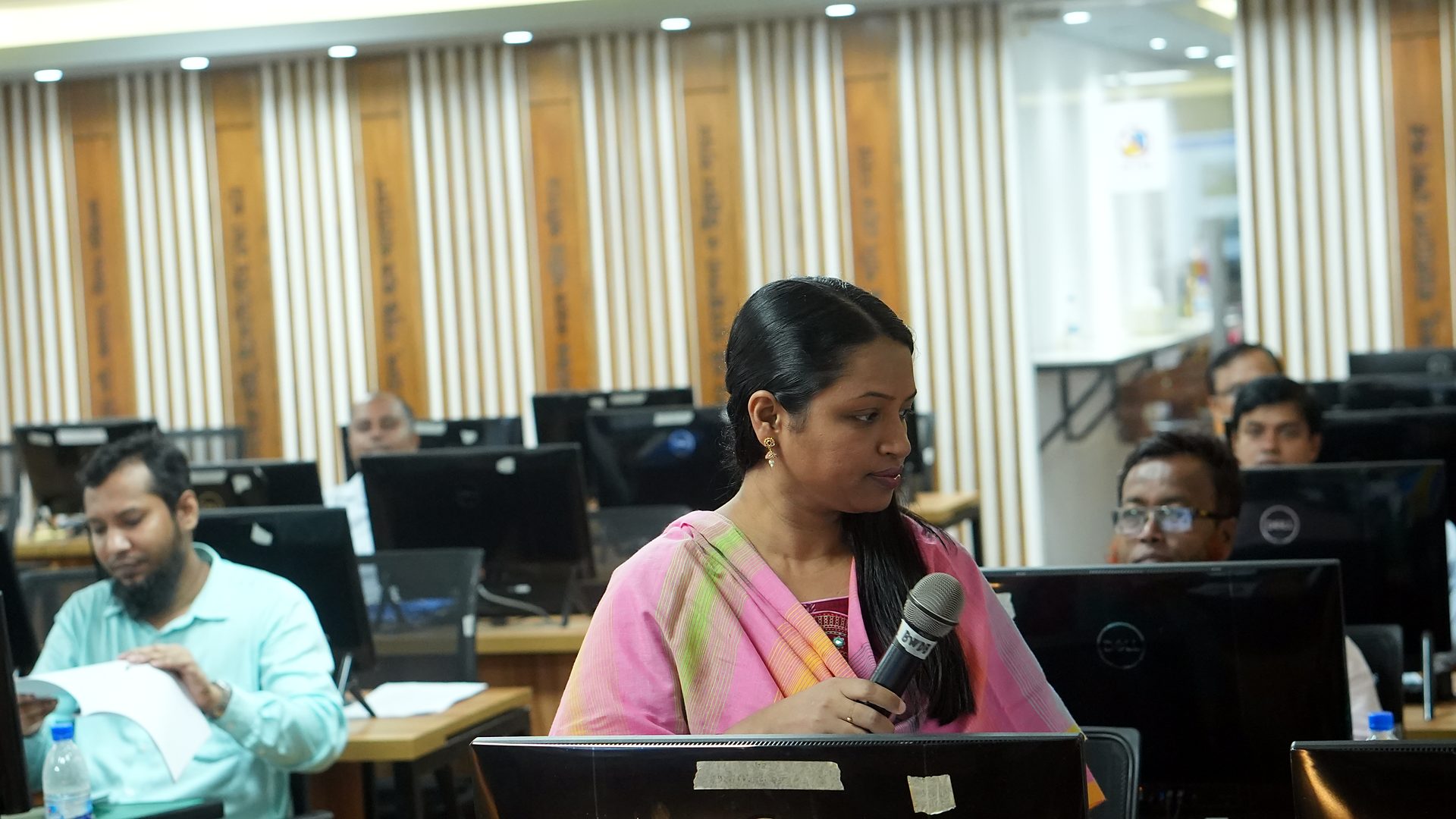
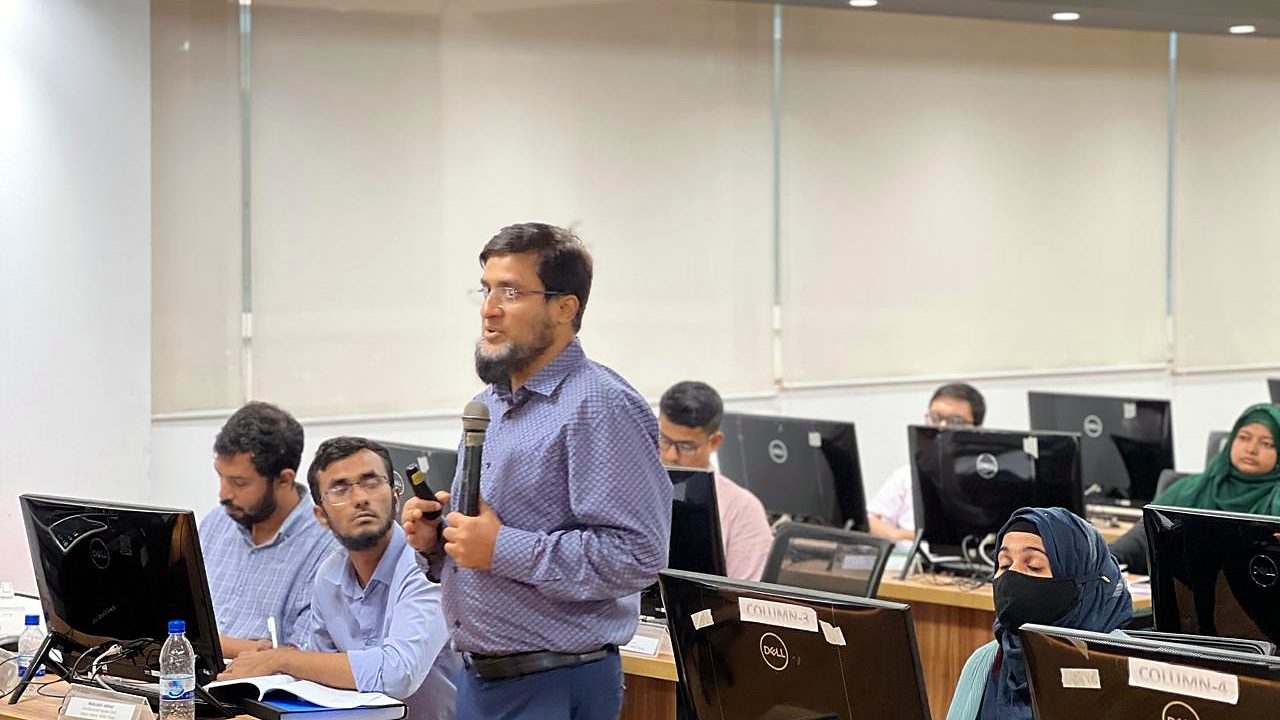
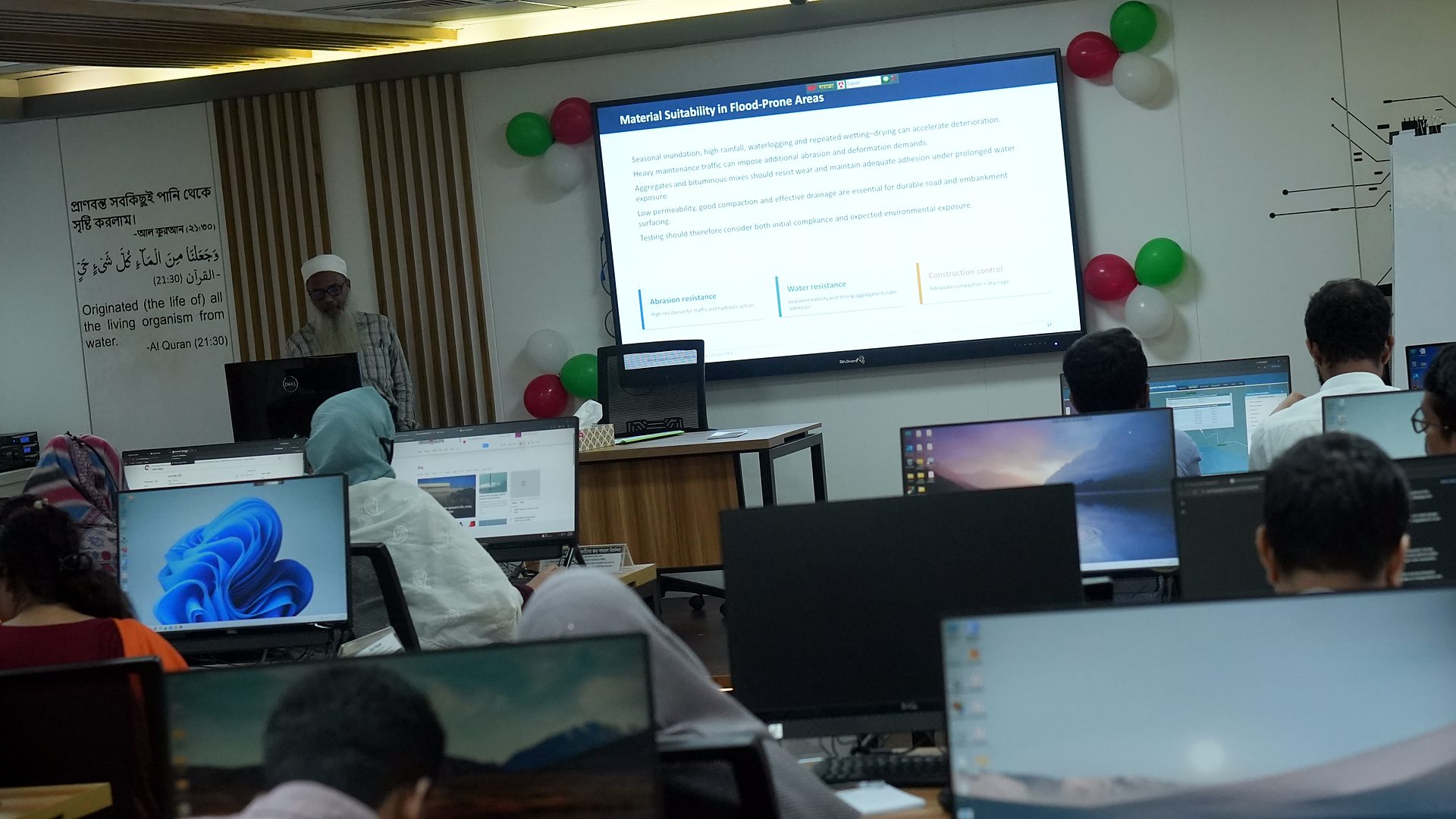
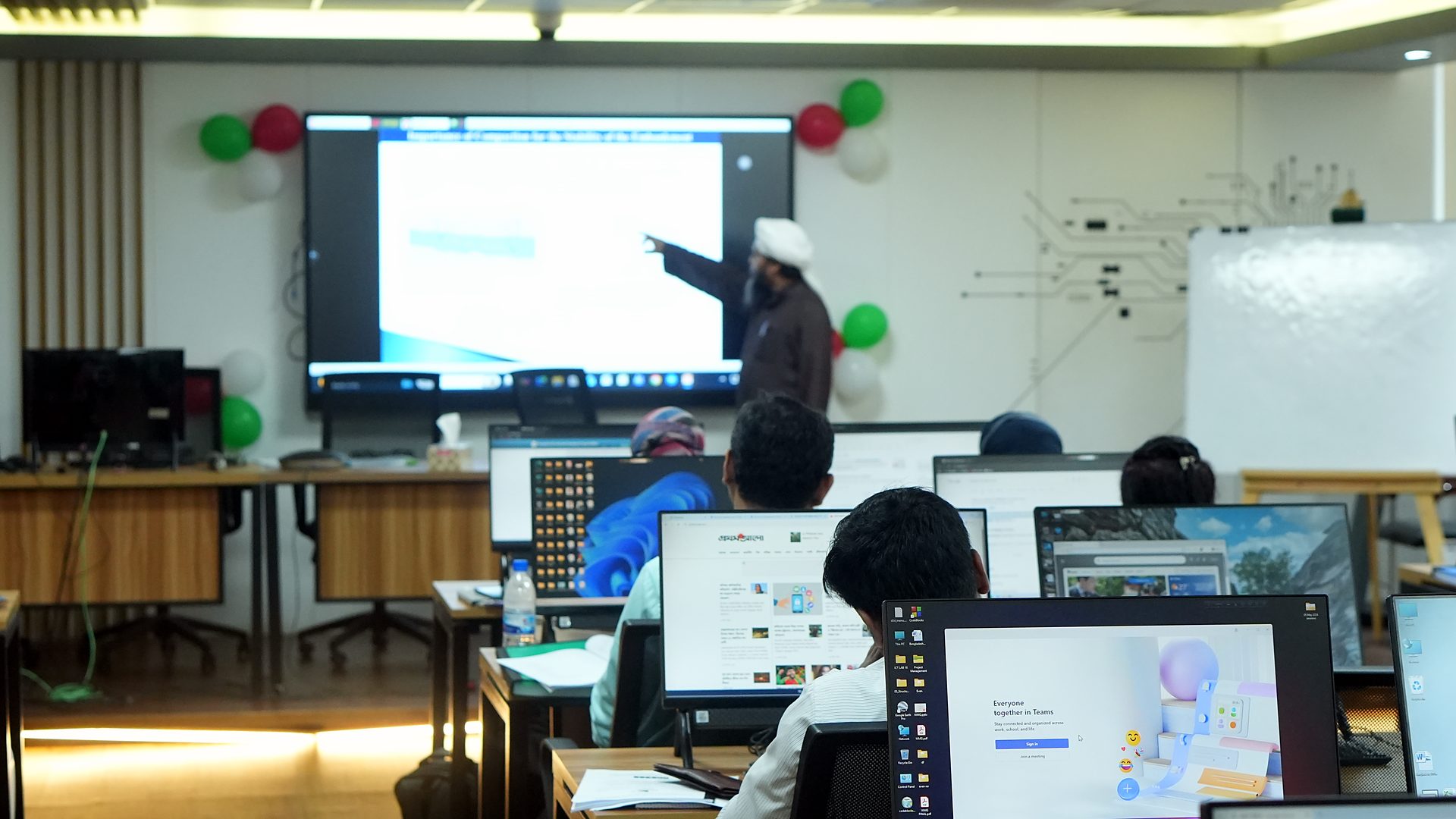
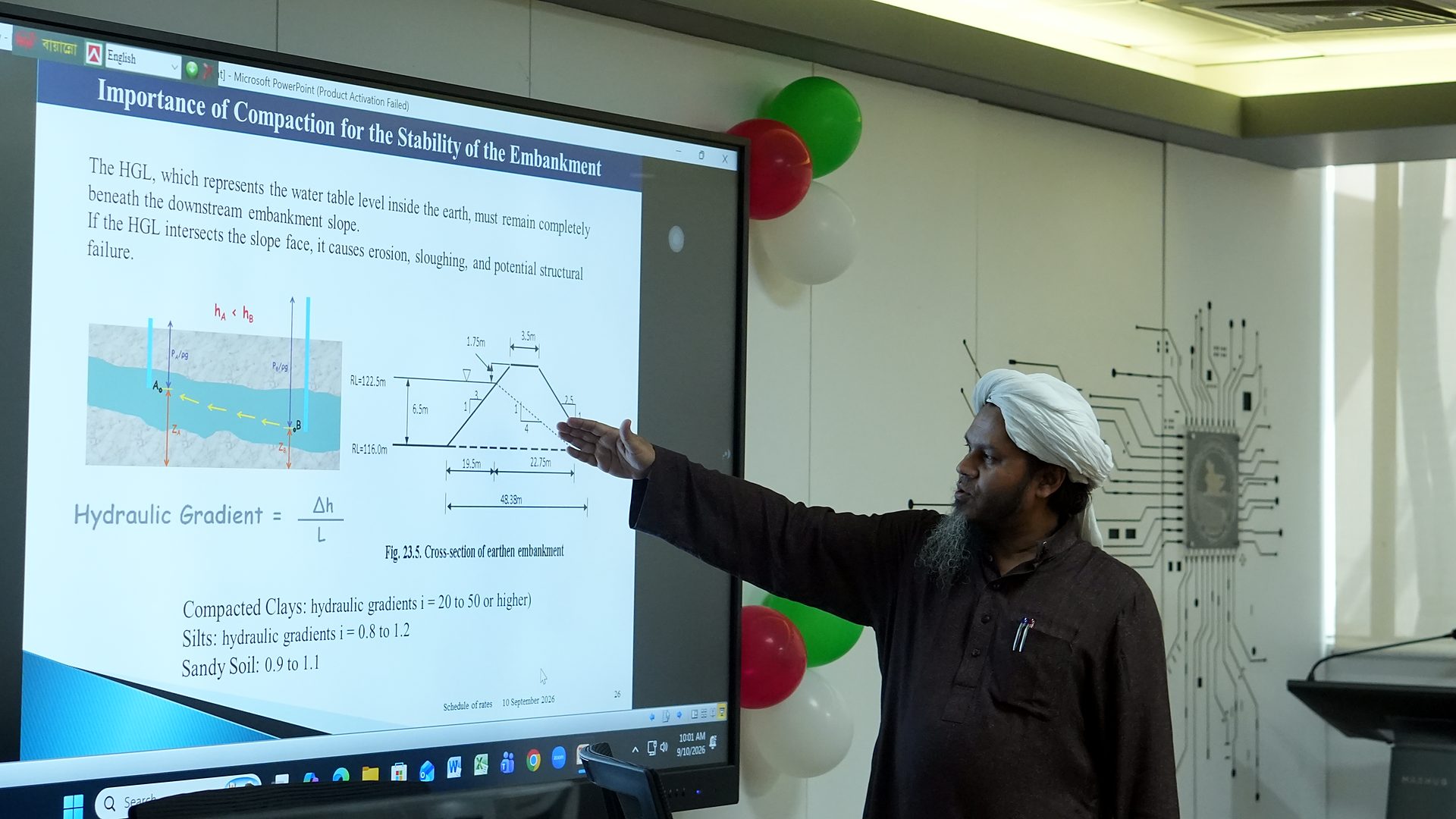
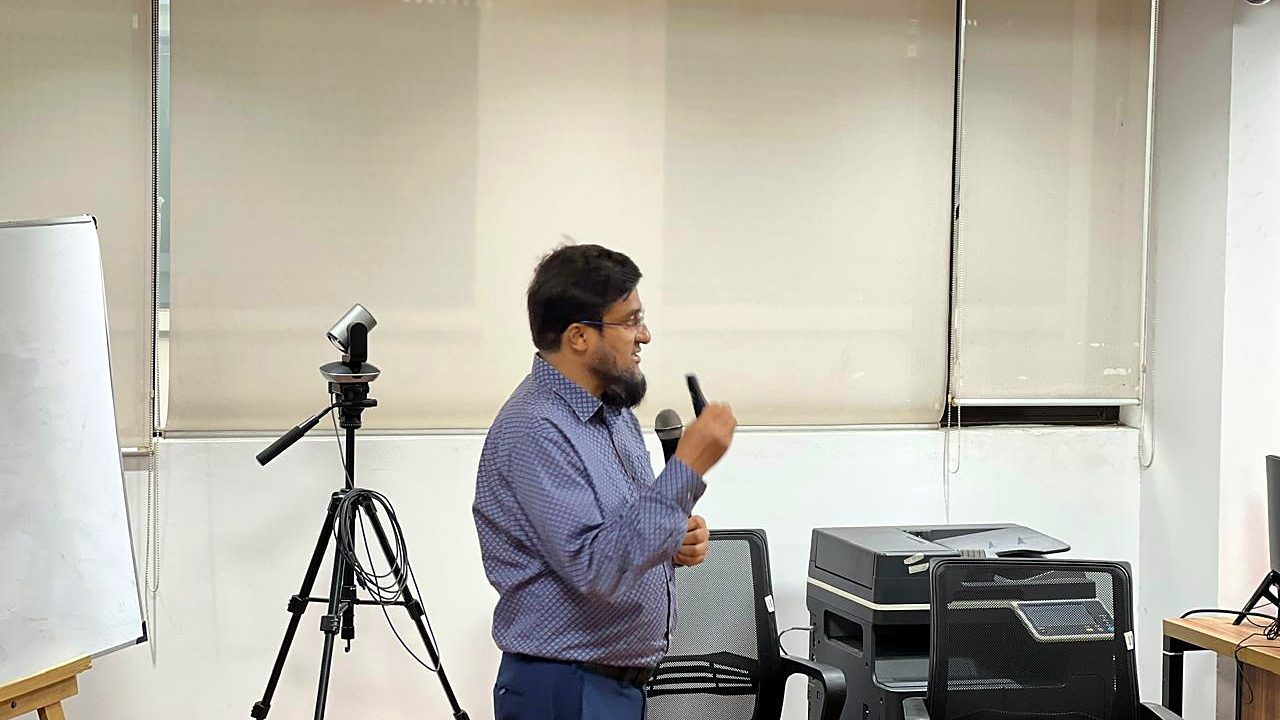
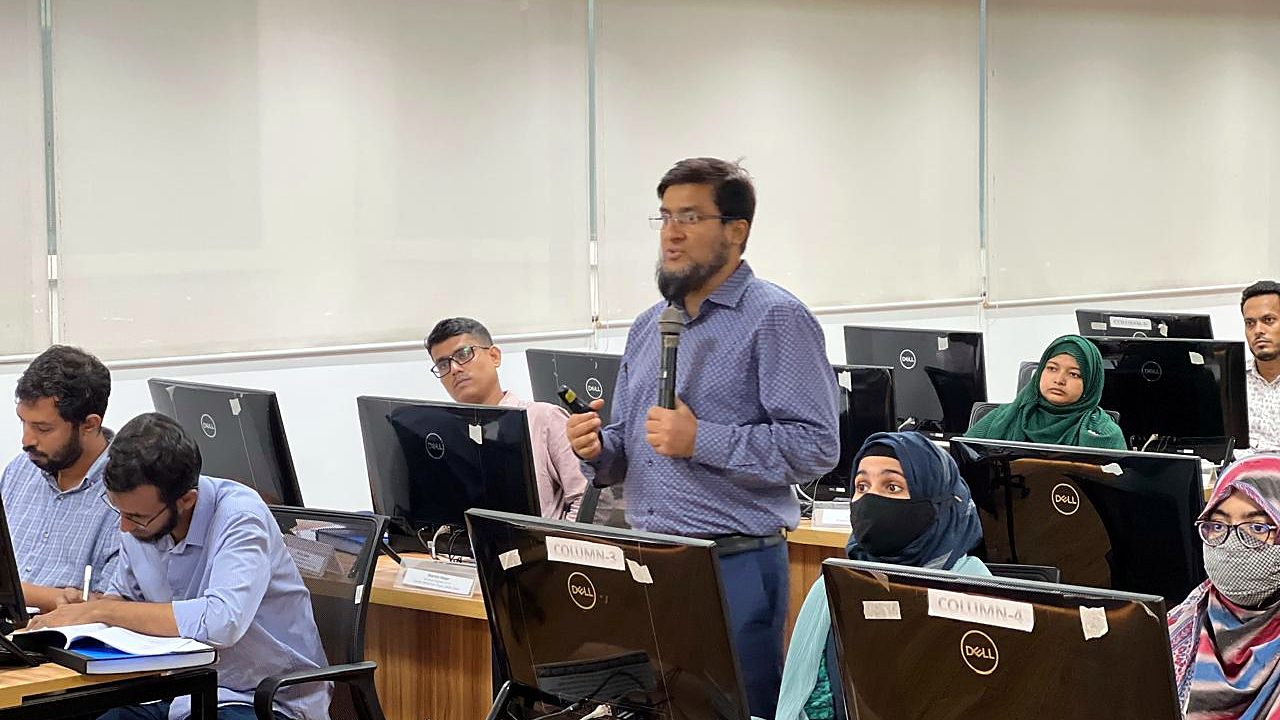
The sessions combined presentation with field photographs and worked cross-sections on the lab screen, and set aside time in every block for experience sharing — most of the cohort supervise construction and had their own examples of tests that were skipped or results that were ignored. The guidelines sessions closed with a case study.
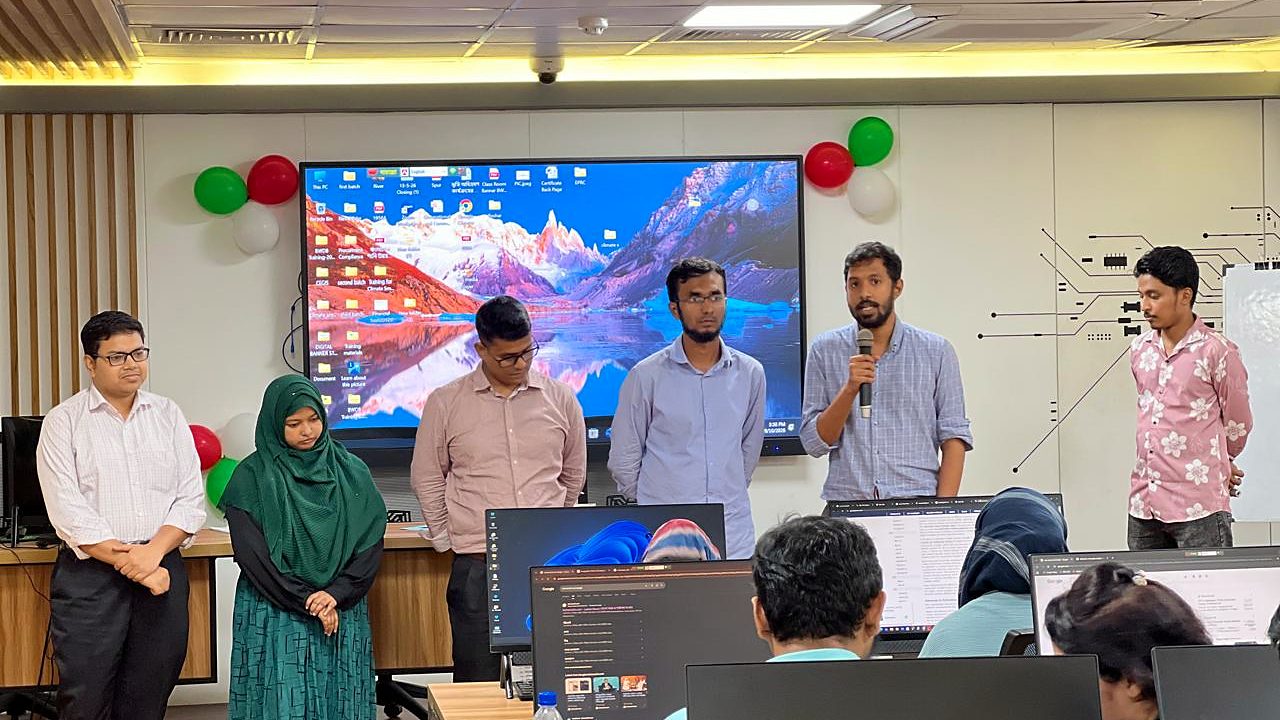
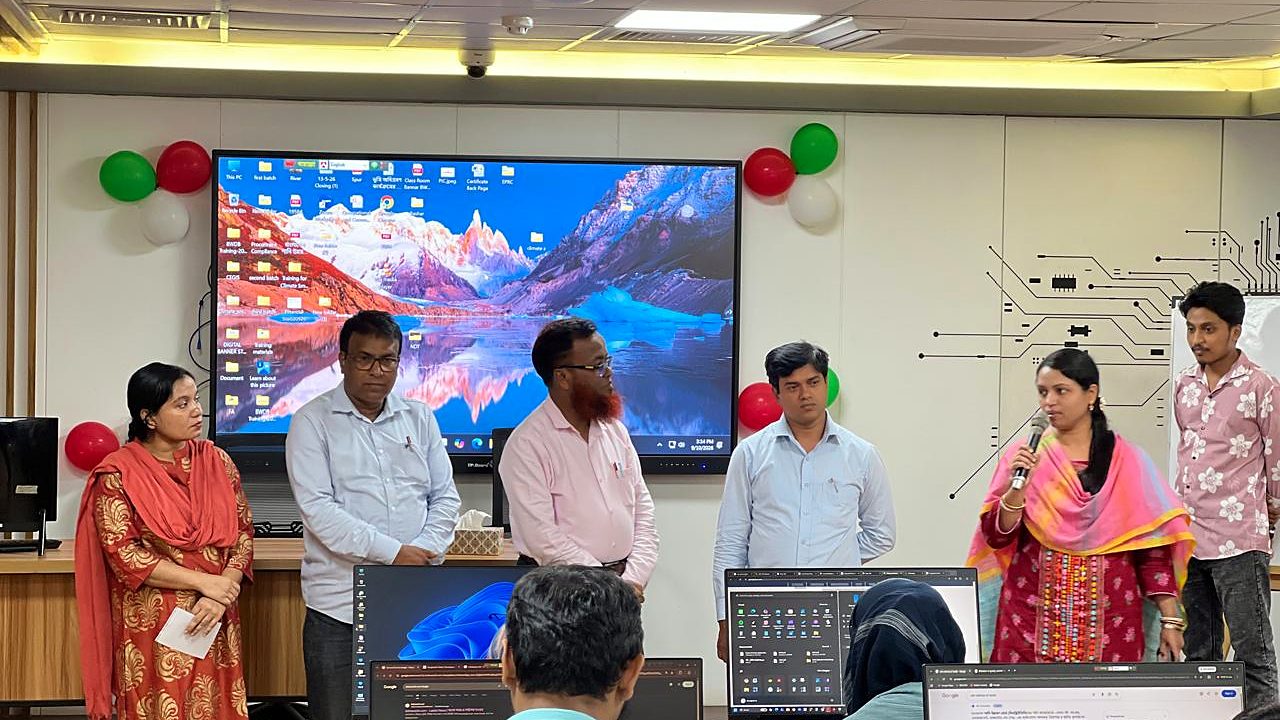
Group Presentations
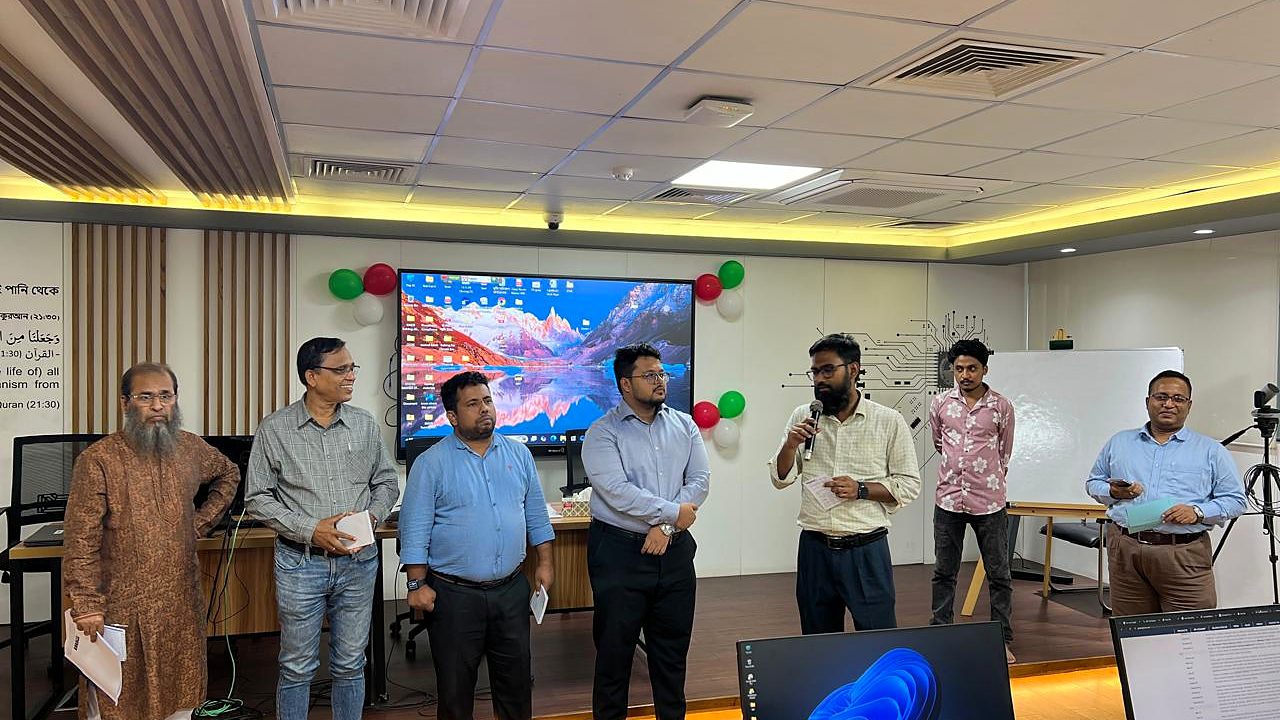
On the closing afternoon participants presented in groups at the front of the lab, reporting back on the standards, tests and guidelines covered in the two days.
Who Was in the Room
Seventeen of the twenty-five participants were engineers — three Executive Engineers, five Sub-Divisional Engineers and nine Assistant Engineers — drawn from Design Circles 4, 5 and 7, the Contract and Procurement Cell, the Ganges Barrage Study Project, the Directorates of Processing and Planning-3, the Office of the Chief Engineer, Monitoring, the Joint Rivers Commission and the CSAWM Project itself. Four finance and audit officers, two Assistant Directors (Admin), a Sub-Assistant Engineer and a Work Assistant completed the cohort; five travelled in from Narayanganj, Chandpur, Rajshahi and Narsingdi. Nineteen offices were represented in all.
Full Participant Roster
Executive Engineer (Civil)
Design Circle-7, BWDB, DhakaExecutive Engineer (Civil)
Design Circle-5, BWDB, DhakaExecutive Engineer (Civil)
Design Circle-7, BWDB, DhakaDeputy Director (FA&A)
Dredger Regional Accounting Centre, BWDB, NarayanganjSub-Divisional Engineer (Civil)
Directorate of Processing, BWDB, DhakaSub-Divisional Engineer (Civil)
Design Circle-4, BWDB, DhakaSub- Divisional Engineer (Civil)
Ganges Barrage Study Project, BWDB, DhakaSub- Divisional Engineer (Civil)
Ganges Barrage Study Project, BWDB, DhakaSub-Divisional Engineer (Civil)
Meghna-Dhonagoda WD Division, BWDB, ChandpurSenior Assistant Director (FA&A)
Rajshahi RAC, BWDB, RajshahiSenior Assistant Director (FA&A)
Directorate of Audit, BWDB, DhakaAssistant Engineer (Civil)
Joint Rivers Commission, BangladeshAssistant Engineer (Civil)
Design Circle-7, BWDB, DhakaAssistant Engineer (Civil)
Contract and Procurement Cell, BWDB, DhakaAssistant Engineer (Civil)
Contract and Procurement Cell, BWDB, DhakaAssistant Engineer (Civil)
Dhaka WD Division, BWDB, DhakaAssistant Engineer (Civil)
Dhaka WD Division, BWDB, DhakaAssistant Engineer (Civil)
Directorate of Planning-3, BWDB, DhakaAssistant Engineer (Civil)
CSAWM (BWDB Part) Project, BWDB, DhakaAssistant Engineer (Civil)
Office of the Chief Engineer, Monitoring, BWDB, DhakaAssistant Director (Admin)
Office of the Additional Chief Engineer, Training & Human Resources Development, BWDB, DhakaAssistant Director (Admin)
Directorate of Security & Intelligence BWDB, DhakaSub-Assistant Engineer (Civil)
Narsingdi WD Division, BWDB, NarsingdiSenior Account Assistant (SAA)
Directorate of Finance, BWDB, DhakaWork Assistant
Narsingdi WD Division, BWDB, NarsingdiContinuity across the programme: 12 of the twenty-five had attended an earlier course in the series — the highest share of any batch so far. Sharmin Haque, Assistant Engineer with the CSAWM Project, had attended four (IWRM, PWMR, Project Management and DPP); Laily Akter and Eshita Akter came from the first Financial Management course; and Md. Masud Rana and Md. Sumon Mia of the Dhaka Water Development Division from the first Climate-Smart Agriculture and Water Management course.
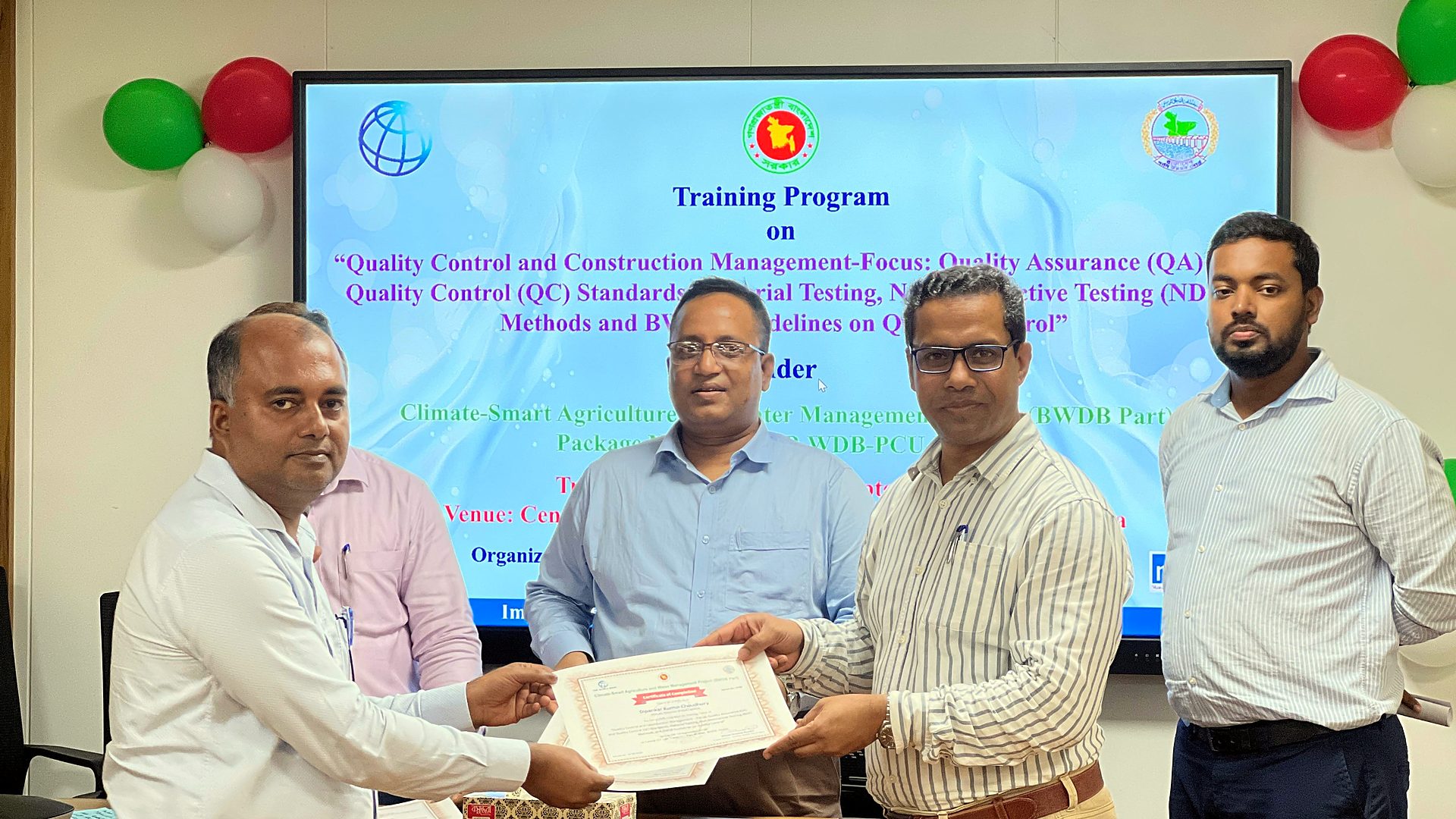
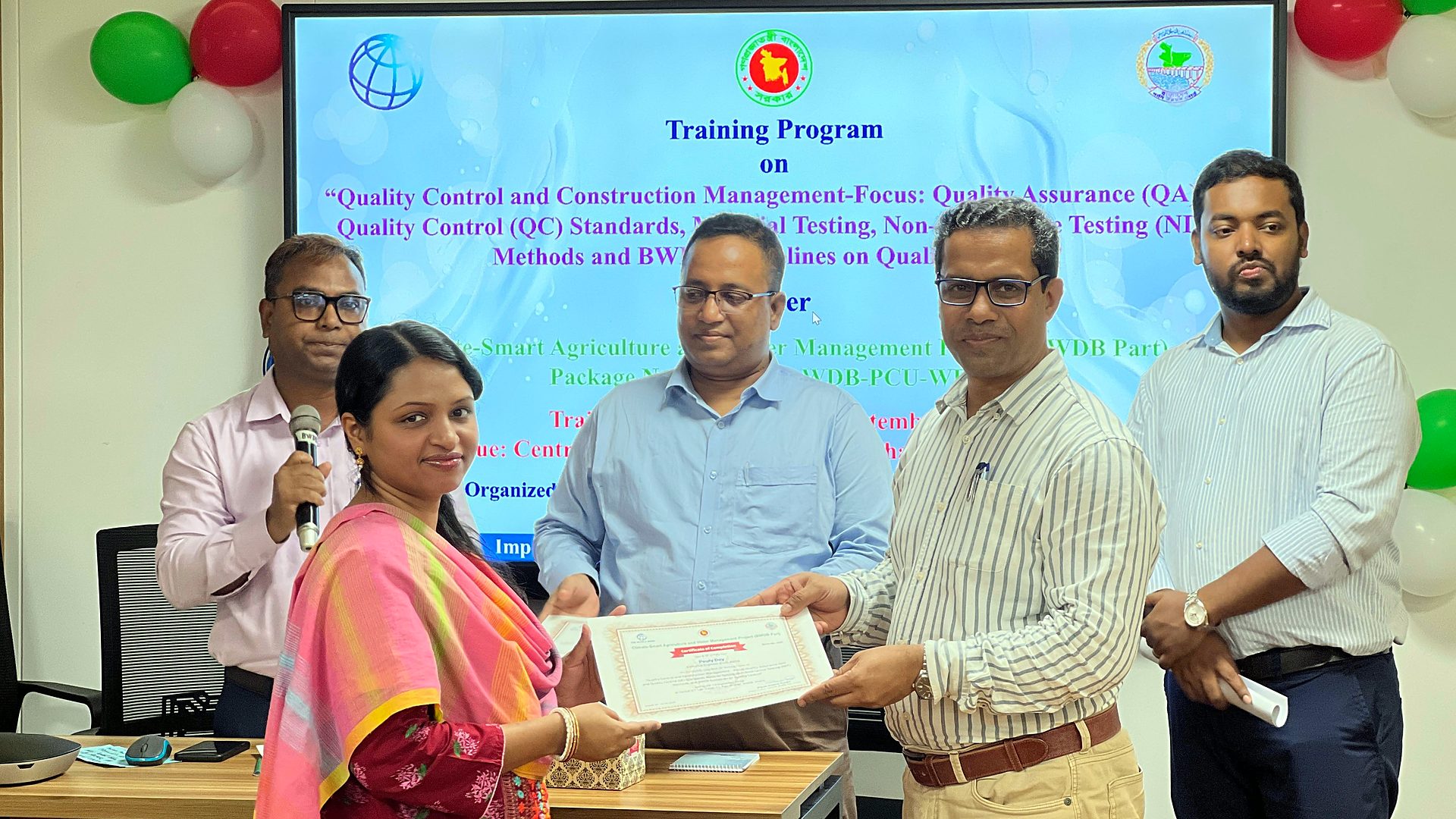
Closing Ceremony & Certification
The Project Director closed the course on the afternoon of 10 September 2026. After the post-evaluation and course evaluation, certificates were presented to the participants at the dais.
The Course in Pictures
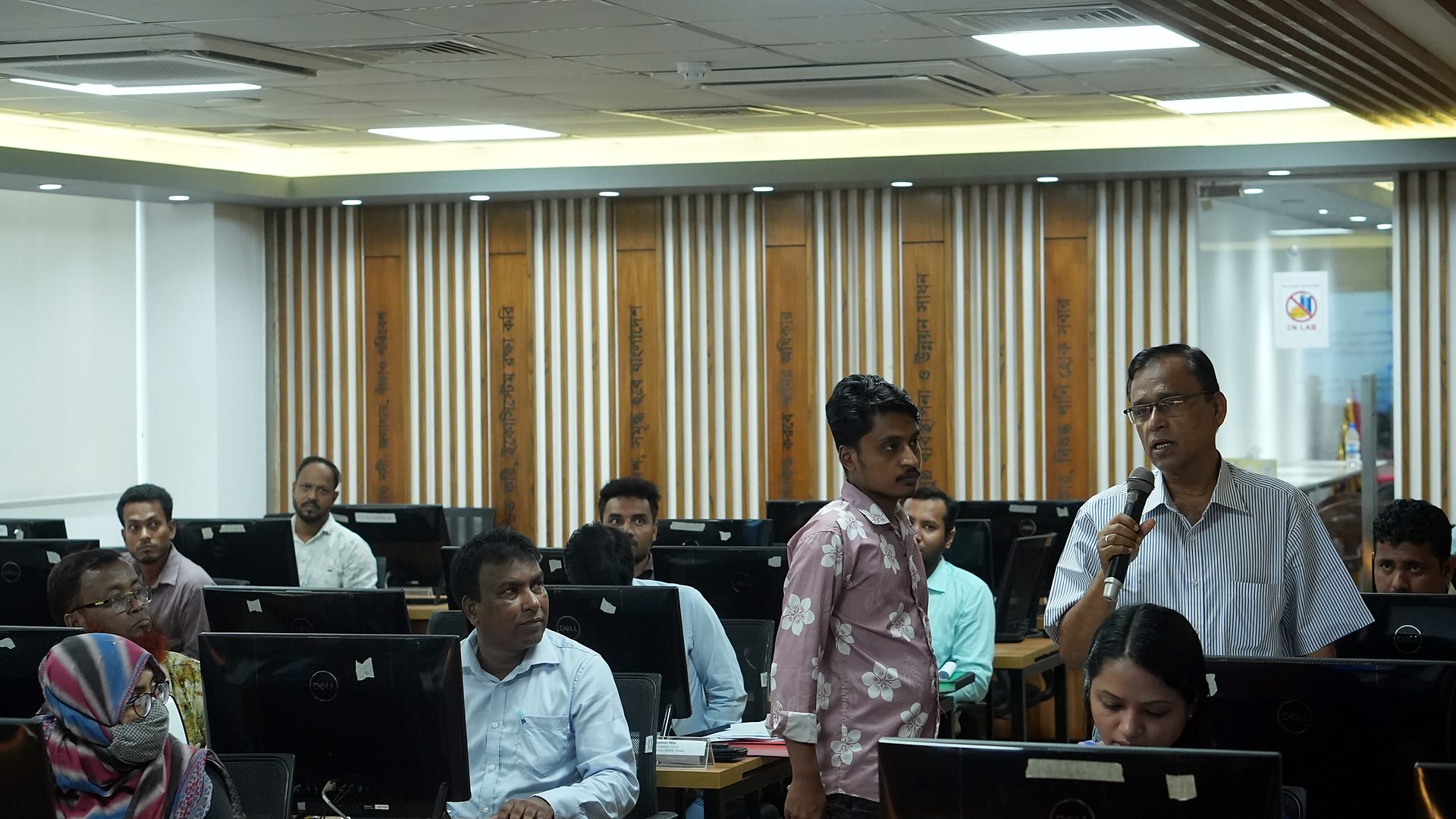
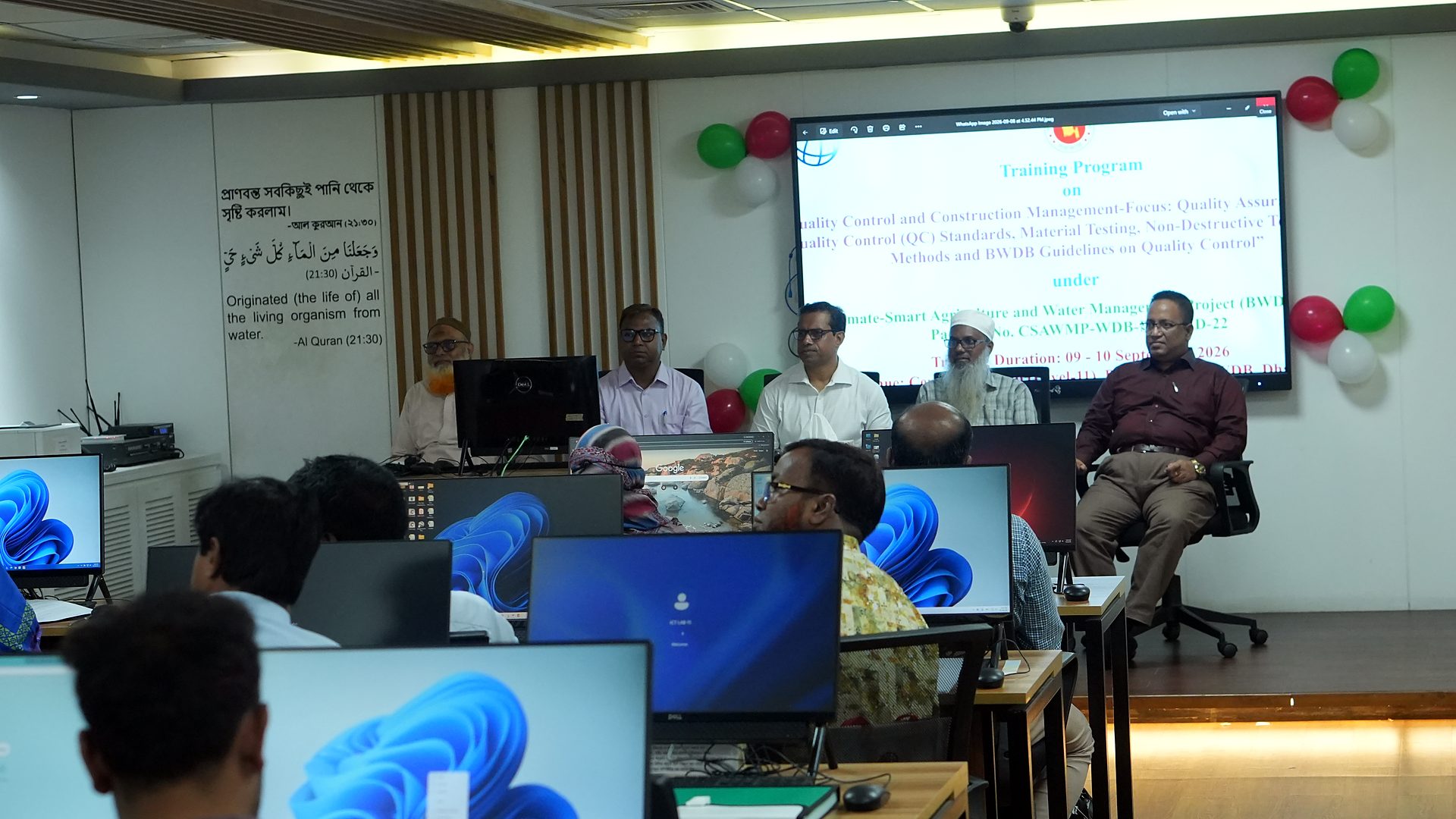
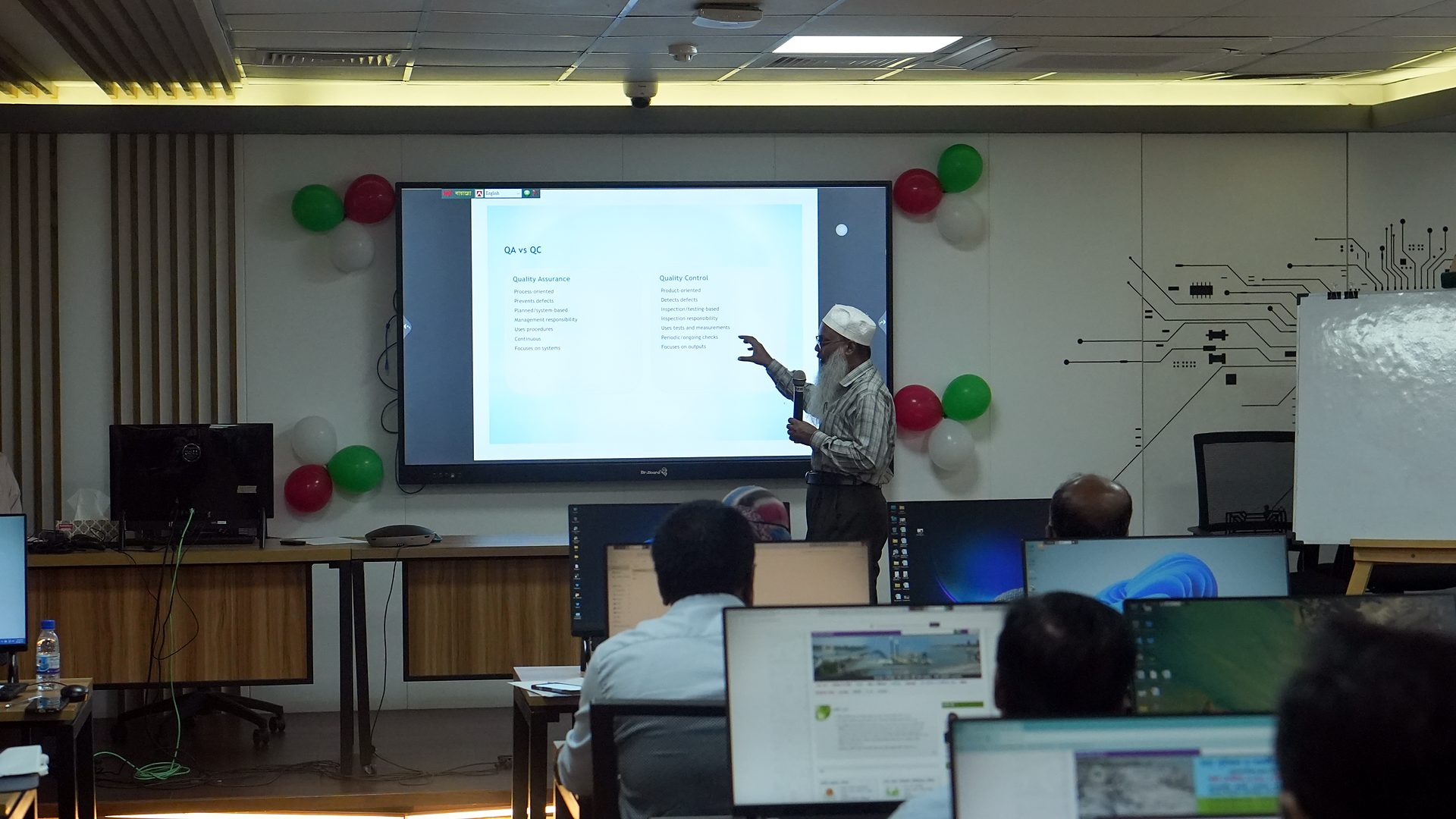
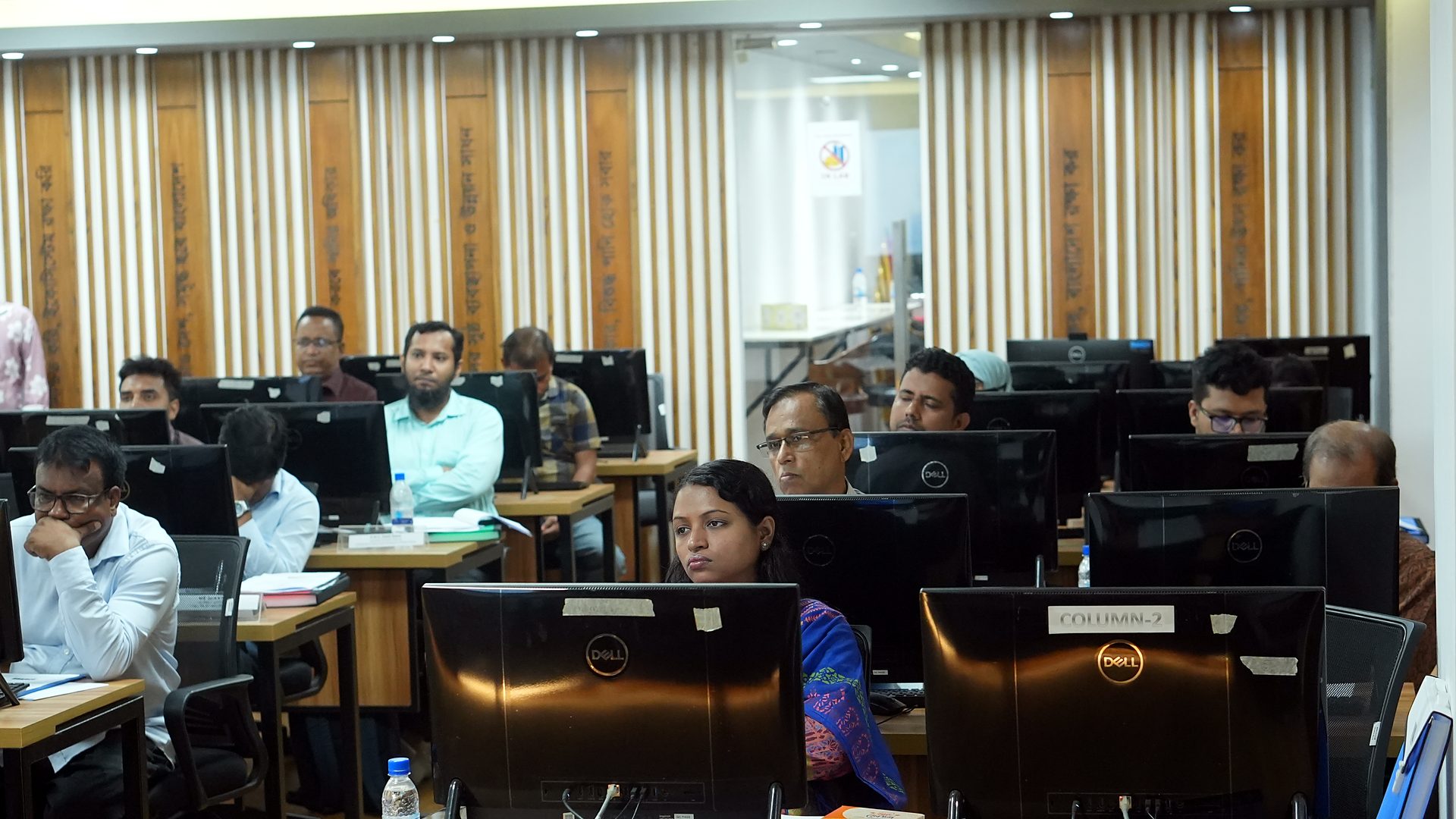
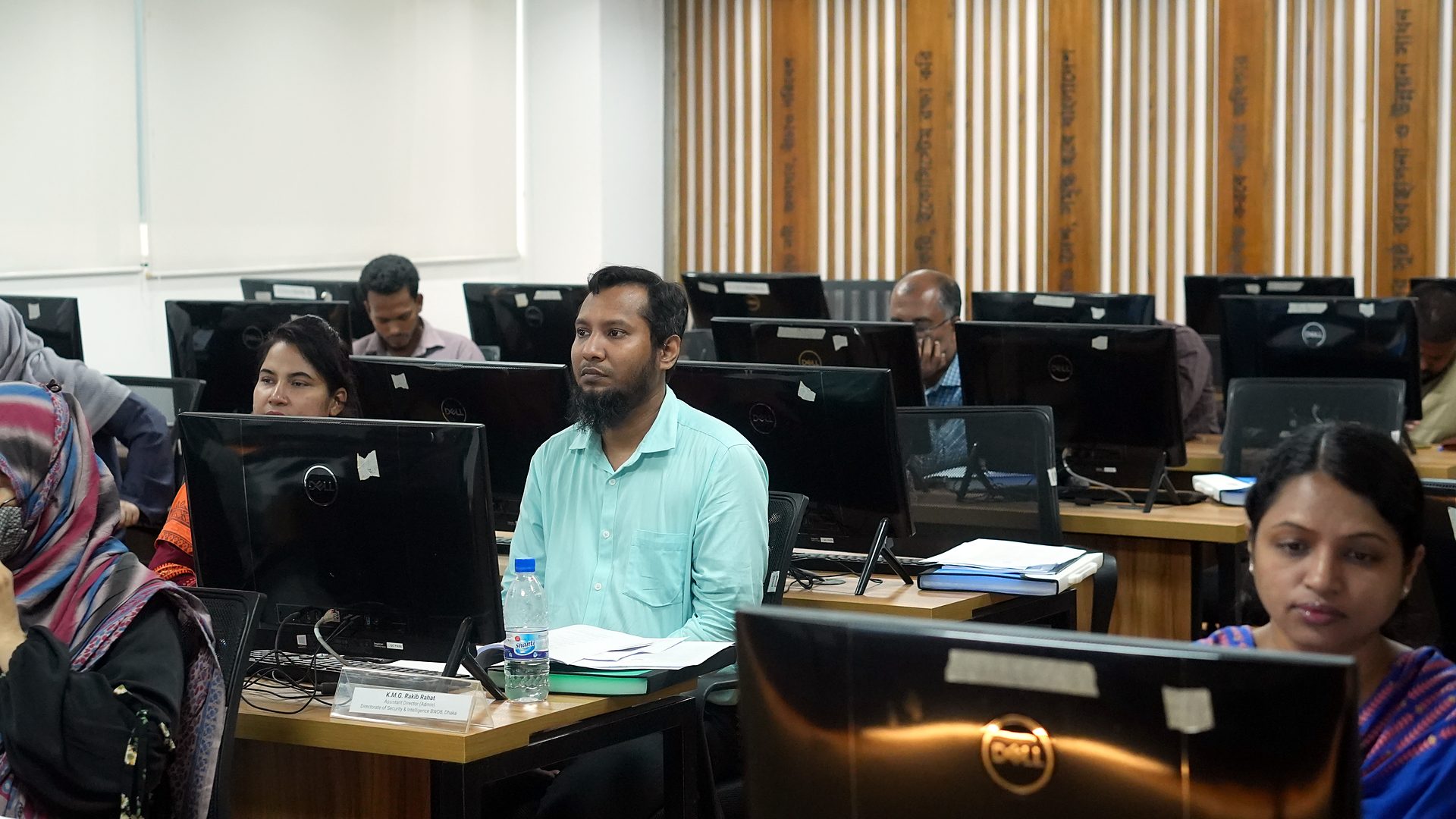
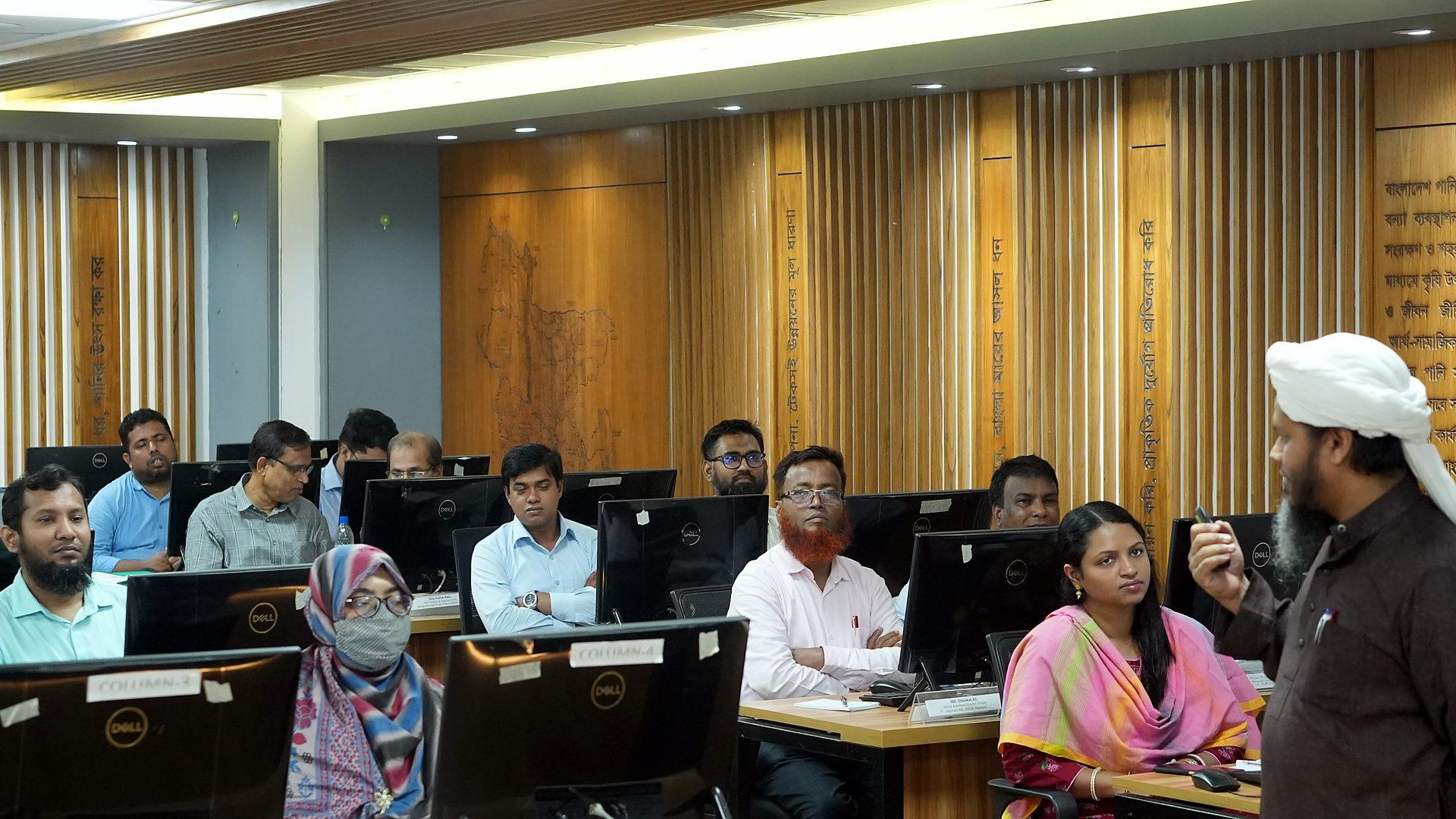
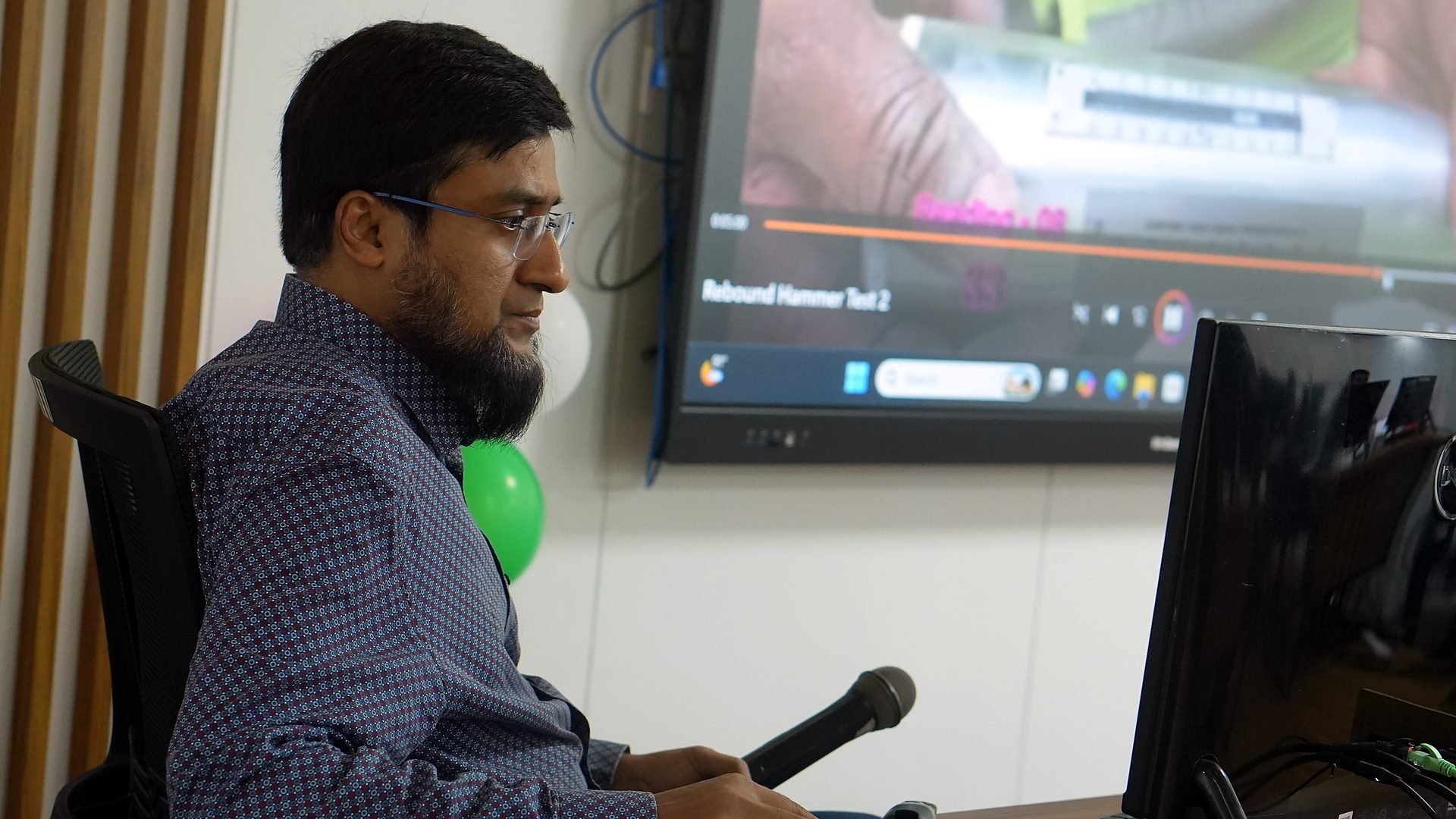
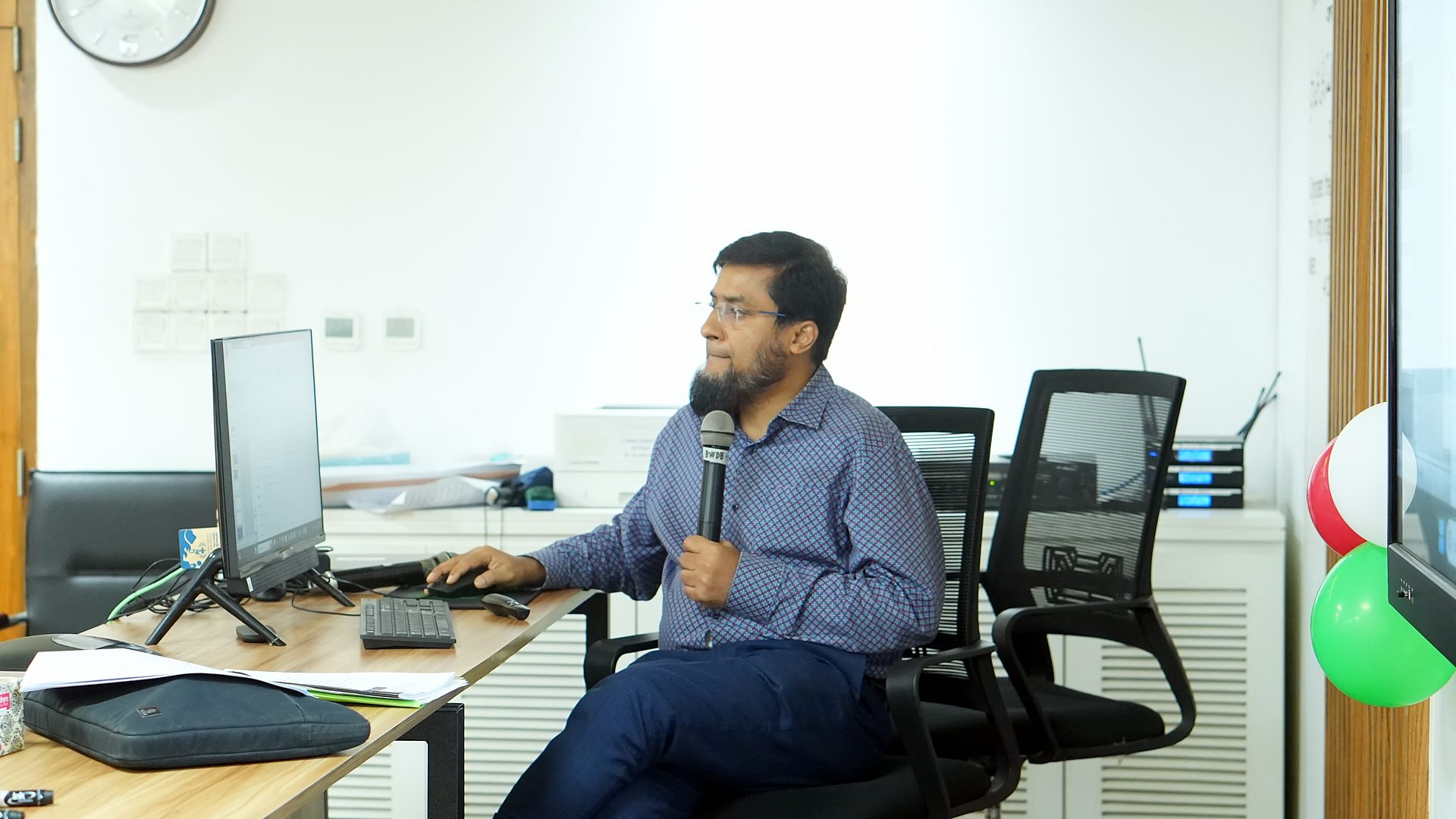
Sixteen further photographs from the two days at the Central ICT Lab, Pani Bhaban.
Why This Matters
Climate-resilient infrastructure is only resilient if it is built to specification. A polder rehabilitated under the Climate-Smart Agriculture and Water Management Project will be judged by how it stands up to a surge or a flood season, and that depends on compaction tests, concrete cubes and steel certificates that nobody outside the project will ever see.
By teaching QA and QC as a system — standards, documentation, laboratory testing, in-place testing and BWDB’s own guidelines — to the design and field engineers who sign off construction, and by putting finance and audit staff in the same room, the course strengthens the part of project delivery that decides whether the investment lasts.
More from this Programme
Programme Snapshot
| Field | Detail |
|---|---|
| Course Title | Quality Control and Construction Management — Focus: QA and QC Standards, Material Testing, NDT Methods and BWDB Guidelines on Quality Control |
| Reference | CSAWMP-WDB-PCU-WD-22-6-QC_CM-01 — Package 22, Batch 6 (Course ID QC&CM-01) |
| Duration | 2 days — 9 and 10 September 2026 |
| Venue | Central ICT Lab (Level-11), Pani Bhaban, BWDB, 72 Green Road, Dhaka-1205 |
| Participants | 25 officials of the Bangladesh Water Development Board |
| Ministry | Ministry of Water Resources, Government of the People’s Republic of Bangladesh |
| Implementing Agency | Bangladesh Water Development Board (BWDB) |
| Project | Climate-Smart Agriculture and Water Management Project (CSAWM Project), BWDB Part |
| Project Director | Pijush Krishna Kundu, Additional Chief Engineer (Civil) |
| Course Coordinator | Md. Hafizur Rahman, Deputy Chief Extension Officer, CSAWM Project (BWDB Part) |
| Sessions | 8 technical sessions across 2 days, four sessions per day |
| Resource Persons | 4 senior BWDB engineers |
| Training Service Provider | Management and Training International Ltd. (MTI Ltd.) |
Frequently Asked Questions
What is the difference between quality assurance and quality control?
Quality assurance (QA) is process-oriented: the standards, procedures, documentation and traceability that prevent defects. Quality control (QC) is product-oriented: the inspections and tests that find defects in materials and finished work. The course taught both and how they complement each other in BWDB project delivery.
Which testing methods did the course cover?
Laboratory and field testing of soil for hydraulic structures, concrete strength and durability, steel reinforcement, and aggregate and bitumen; and non-destructive testing by ultrasonic pulse velocity, rebound hammer, radiographic and magnetic particle testing, and infrared thermography.
Who were the resource persons?
A.K.M. Anisur Rahman Siddiquee, Superintending Engineer, Design & Research Circle-5 (QA/QC standards); A F M Tauhid Jaman, Executive Engineer, Design & Research Circle-2 (material testing); Dr. Muhammad Masood, Additional Chief Engineer, Dam & Barrage (NDT methods); and Md. Abdullah Al Mamun, Superintending Engineer, Design & Research Circle-2 (BWDB guidelines on quality control).
Where and when was the training held?
At the Central ICT Lab, Level-11, Pani Bhaban, 72 Green Road, Dhaka, on 9 and 10 September 2026.
Who funded and organised the course?
The course was funded by the Climate-Smart Agriculture and Water Management Project (CSAWM Project), BWDB Part, under the Bangladesh Water Development Board, Ministry of Water Resources. MTI Ltd. served as the training service provider under reference CSAWMP-WDB-PCU-WD-22-6-QC_CM-01.
How many batches are planned under Package 21 and Package 22?
75 batches in total: 40 under Package 21 and 35 under Package 22. Five of the Package 22 batches are Quality Control and Construction Management courses; this was the first.