BWDB Officials Trained on Participatory Water Management Rules 2014 for Sustainable Water Management Organisations
Management and Training International (MTI) Ltd. conducted the three-day training course on the Participatory Water Management Rules 2014, focusing on sustainable Water Management Organisations (WMOs), from 19 to 21 July 2026 at the Central ICT Lab, Level-11, Pani Bhaban, BWDB, Dhaka. Twenty-five officials of the Bangladesh Water Development Board (BWDB), under the Ministry of Water Resources, took part — the second batch under Package 21 of the Climate-Smart Agriculture and Water Management Project (CSAWM Project), BWDB Part.
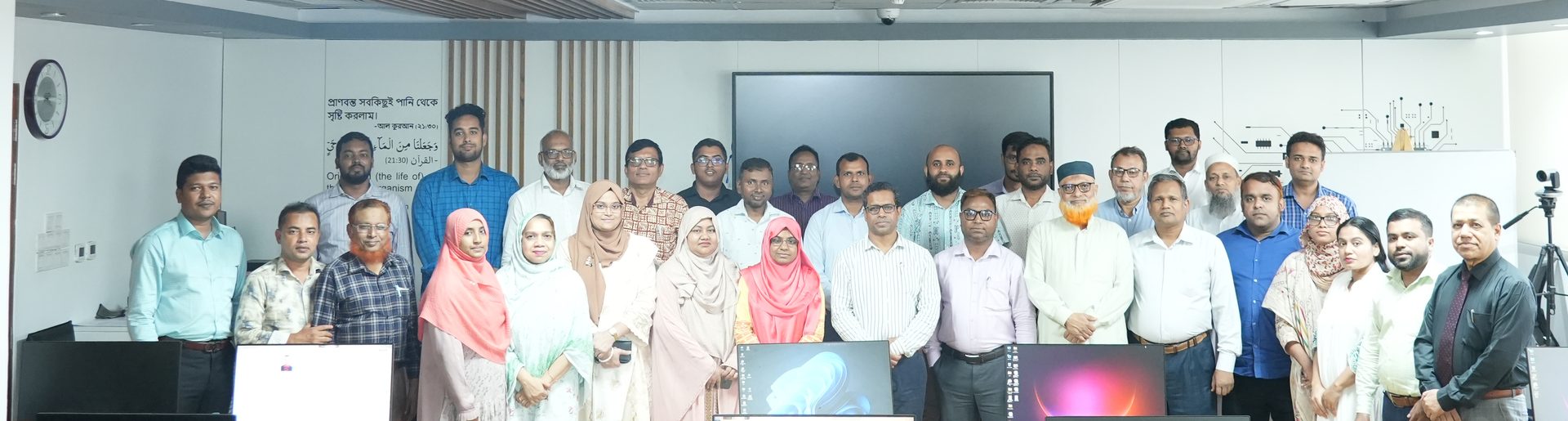
About the engagement: Under reference CSAWMP-WDB-PCU-WD-21-2-PWMR-01, MTI Ltd. is delivering the training package for the Climate-Smart Agriculture and Water Management Project (BWDB Part), implemented by the Bangladesh Water Development Board under the Ministry of Water Resources, Government of the People's Republic of Bangladesh. The course was authorised by Office Order Memo No. 42.01.0000.000.647.25.0010.26-62 & -63, dated 16 July 2026, issued by the Office of the Project Director, CSAWM Project (BWDB Part), Pani Bhaban, 72 Green Road, Dhaka, following the Director General's D-Nothi approval (Para 4.3) of the same date.
The Problem This Course Exists to Solve
Bangladesh built its participatory water management framework on a simple premise: the people who farm inside a polder, fish in a beel or depend on an irrigation canal will look after the infrastructure better than a distant agency can. The Participatory Water Management Rules 2014 gave that premise legal form — a route for water users to organise into registered Water Management Organisations with defined powers, responsibilities and a formal relationship to the Board.
The recurring difficulty is not formation. It is survival. A WMO is comparatively easy to constitute while a project is running and support is flowing; the hard part is keeping it solvent, governed and trusted after the project office closes. That is the gap this course was designed around — which is why its three days moved deliberately from rules and structure (Day 1) to community development and money (Day 2) to conflict, obstacles and measurement (Day 3).
Inauguration & Course Leadership
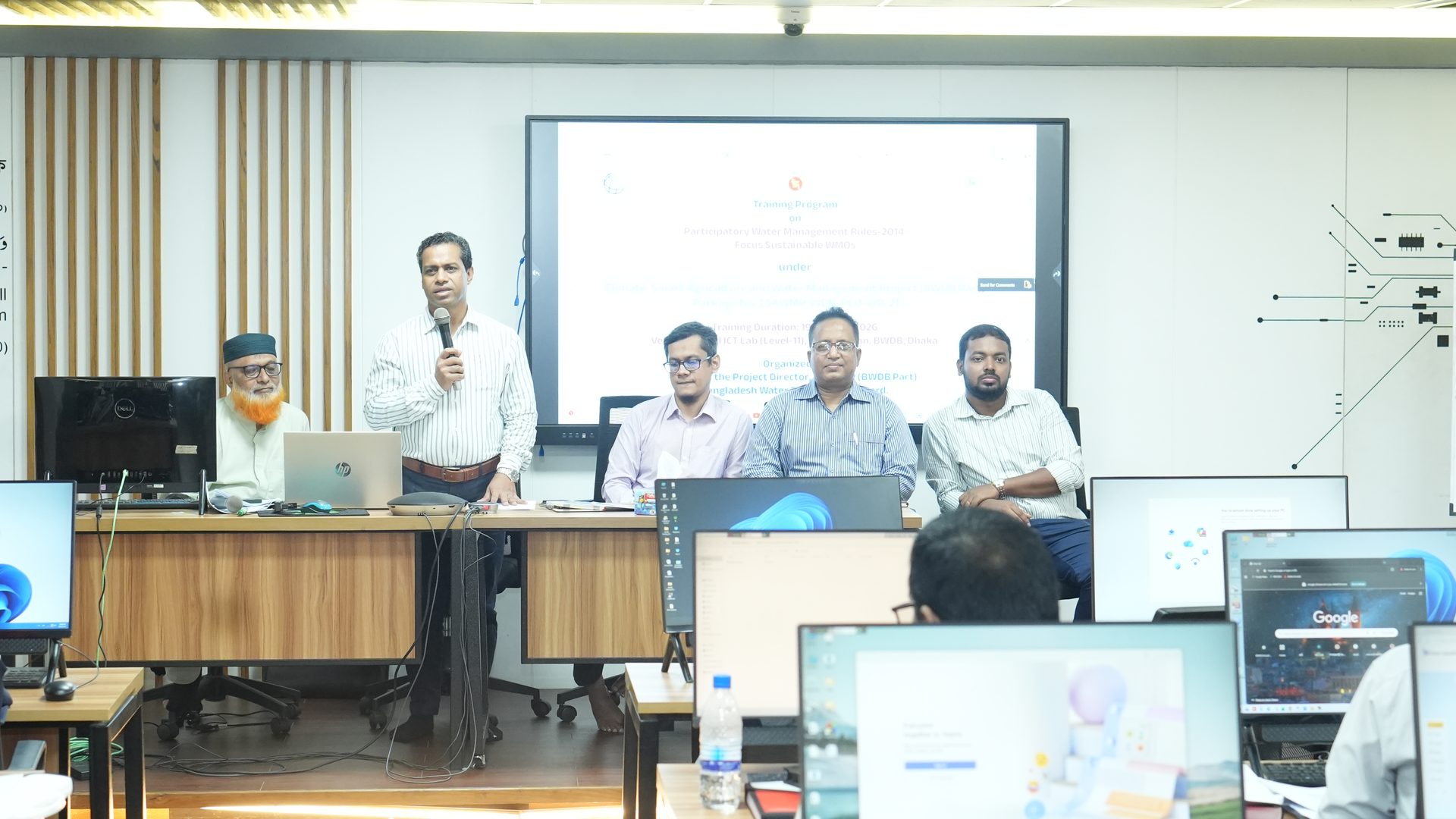
Pijush Krishna Kundu, Additional Chief Engineer (Civil) and Project Director of the CSAWM Project (BWDB Part), opened the course, led the first substantive session on the concept and features of participatory water management, returned on the final afternoon to chair the course review, and closed the programme. Having the Project Director both open the course and personally deliver Session 1 set the tone: participatory water management was framed as a delivery obligation of the Board, not a community-relations exercise bolted onto engineering work.
Additional Chief Engineer (Civil) & Project Director
CSAWM Project (BWDB Part)
Executive Engineer
CSAWMP (BWDB Part)
Programmer
Directorate of Central ICT
Sub-Divisional Engineer
CSAWM Project (BWDB Part)
Managing Director
Management and Training International Ltd.
Resource Persons
Five senior BWDB professionals delivered the twelve sessions. Between them they covered the policy end (Project Director), the extension and community-development end (two Deputy Chief Extension Officers), and the water-management and evaluation end (the Chief Water Management, PRL) — so participants heard the same framework described from the office that writes the rules, the office that applies them in the field, and the office that later has to assess whether they worked.
Additional Chief Engineer (Civil) & Project Director
CSAWMP (BWDB Part)
Deputy Chief Extension Officer (CD)
CSAWMP (BWDB Part)
Deputy Chief Extension Officer (CD)
Office of the Additional Chief Engineer, Central Zone
Chief Water Management (PRL)
Bangladesh Water Development Board
Deputy Chief Extension Officer (CD)
Office of the DCEO (CD)
Six Building Blocks of a Sustainable WMO
Read across the three days, the curriculum assembles a WMO from the ground up — each block useless without the ones beneath it.
Legal Foundation
The historical background of water management policy in Bangladesh, an overview of the PWM Rules 2014 and their legal basis, and the institutional roles and responsibilities of BWDB, WMOs and local government.
Formation & Structure
The organisational structure of Water Management Organisations, their formation, registration and operational guidelines, and the institutional linkage between BWDB, WMOs and other stakeholders.
Community Engagement
Techniques for effective community engagement, building trust and fostering communication and collaboration, and practical tools and methods for participatory planning and decision-making.
Governance & Capacity
Leadership, transparency and accountability inside WMOs; capacity-building approaches for effective operations; and community engagement and empowerment strategies.
Financial Sustainability
Revenue generation and fund management, accessing government and donor support, and best practices that keep a WMO solvent once project funding ends.
Conflict, Challenges & M&E
The dimensions and effects of conflict in water management projects, strategies for reaching consensus, institutional and technical barriers, and key indicators for monitoring and evaluating PWM projects.
Day-by-Day Course Schedule
The course ran four sessions a day, from a 09:00 start to a 16:00 close, with participants reporting to the Central ICT Lab at 08:30 each morning.
- 09:00–09:20 Inauguration and Opening of the Training Course Introduction of participants, objectives of the training course and detailed agenda, and the course pre-evaluation. Methods: self-introduction, questionnaire fill-out, lecture discussion. Pijush Krishna Kundu Project Director, CSAWMP (BWDB Part)
- 09:20–10:40 Session 1 — Understanding of Participatory Water Management Concept and features of participatory water management in the context of Bangladesh; benefits of involving communities in PWM; characteristics and benefits of participatory water management. Methods: large group discussion with PPP, brainstorming, VIPP. Pijush Krishna Kundu Project Director, CSAWMP (BWDB Part)
- 10:40–10:50 Refreshment and tea break
- 10:50–12:10 Session 2 — Policy and Legal Framework Historical background of water management policies in Bangladesh; overview of the PWM Rules 2014 and their legal basis; institutional roles and responsibilities of BWDB, Water Management Organisations and local government; roles and responsibilities of BWDB in participatory water management. Methods: large group discussion with PPP, small group work. Md. Hafizur Rahman Deputy Chief Extension Officer (CD), CSAWMP (BWDB Part)
- 12:10–13:30 Session 3 — Institutional Framework and WMO Formation Organisational structure of Water Management Organisations; formation, registration and operational guidelines for WMOs; institutional linkage between BWDB, WMOs and other stakeholders. Methods: interactive discussion, case analysis, large group discussion with PPP. Md. Hafizur Rahman Deputy Chief Extension Officer (CD), CSAWMP (BWDB Part)
- 13:20–14:20 Lunch and prayer break
- 14:20–15:40 Session 4 — Comparative Analysis of PWM Presentation of successful PWM initiatives in Bangladesh and globally; comparative analysis of PWM models — global versus local contexts; discussion on applicability in the Bangladesh context. Methods: experience sharing, brainstorming. Md. Hafizur Rahman Deputy Chief Extension Officer (CD), CSAWMP (BWDB Part)
- 15:40–16:00 Day review and refreshment
- 09:00–10:20 Session 1 — Community Engagement Strategies in PWM Techniques for effective community engagement; building trust and fostering communication and collaboration; tools and methods for participatory planning and decision-making. Methods: large group discussion with PPP, Q&A. Dr. Md. Zahidul Islam Deputy Chief Extension Officer (CD), Office of the Additional Chief Engineer, Central Zone
- 10:20–10:40 Refreshment and tea break
- 10:40–12:00 Session 2 — Networking with Private Organisations and GoB Line Agencies Key problems and challenges in PWM; identifying solutions and best practices; strategies to develop partnerships and linkages with Local Government Institutions and GoB line departments. Methods: brainstorming, small group work. Dr. Md. Zahidul Islam Deputy Chief Extension Officer (CD), Central Zone, BWDB
- 12:00–13:20 Session 3 — Governance and Capacity Development of WMOs Leadership, transparency and accountability in WMOs; capacity-building approaches for effective WMO operations; community engagement and empowerment strategies. Methods: small group work, interactive discussion. Dr. Md. Zahidul Islam Deputy Chief Extension Officer (CD), Central Zone, BWDB
- 13:20–14:20 Lunch and prayer break
- 14:20–15:40 Session 4 — Financial Sustainability of WMOs Revenue generation and fund management; accessing government and donor support; best practices in financial sustainability for WMOs. Methods: interactive discussion, large group discussion with PPP. Md. Enamur Rahman Chief Water Management (PRL), BWDB
- 15:40–16:00 Refreshment and tea break
- 09:00–10:20 Session 1 — Conflict Resolution Concept and dimensions of conflict in water management projects; effects of conflict on project delivery; strategies for resolving conflicts and reaching consensus. Methods: interactive discussion, story telling, large group discussion with PPP. Muhammad Monirul Alam Sarker Deputy Chief Extension Officer (CD), Office of the DCEO (CD), BWDB
- 10:20–10:40 Refreshment and tea break
- 10:40–12:00 Session 2 — Challenges and Solutions in Participatory Water Management Common challenges faced by WMOs; strategies to overcome institutional, financial and technical barriers; case studies and best practices in participatory water management. Methods: VIPP, story telling, large group discussion with PPP. Muhammad Monirul Alam Sarker Deputy Chief Extension Officer (CD), Office of the DCEO (CD), BWDB
- 12:00–13:20 Session 3 — Monitoring and Evaluation of PWM Projects Importance of monitoring and evaluation in participatory water management; key indicators and methods for assessing project impact and success. Methods: interactive discussion, story telling, large group discussion with PPP. Md. Enamur Rahman Chief Water Management (PRL), BWDB
- 13:20–14:20 Lunch and prayer break
- 14:20–15:40 Session 4 — Review of the Training Course Structured review of the three-day course and identification of the key learnings from each day, presented back by participant groups. Methods: game and group discussion. Pijush Krishna Kundu Project Director, CSAWMP (BWDB Part)
- 15:40–16:00 Closing ceremony, certificate distribution and refreshment Pijush Krishna Kundu Project Director, CSAWMP (BWDB Part)
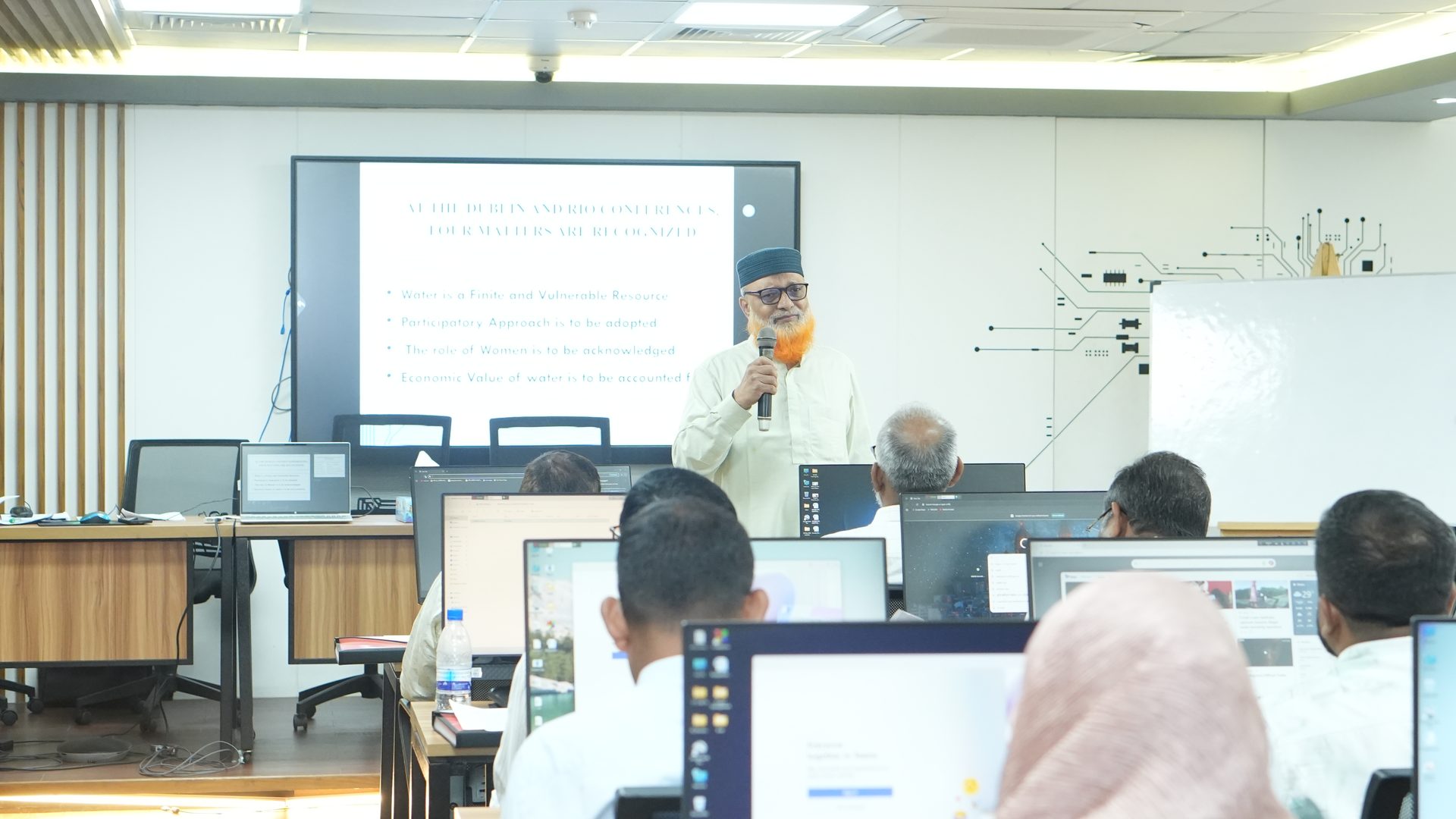
Training Methodology
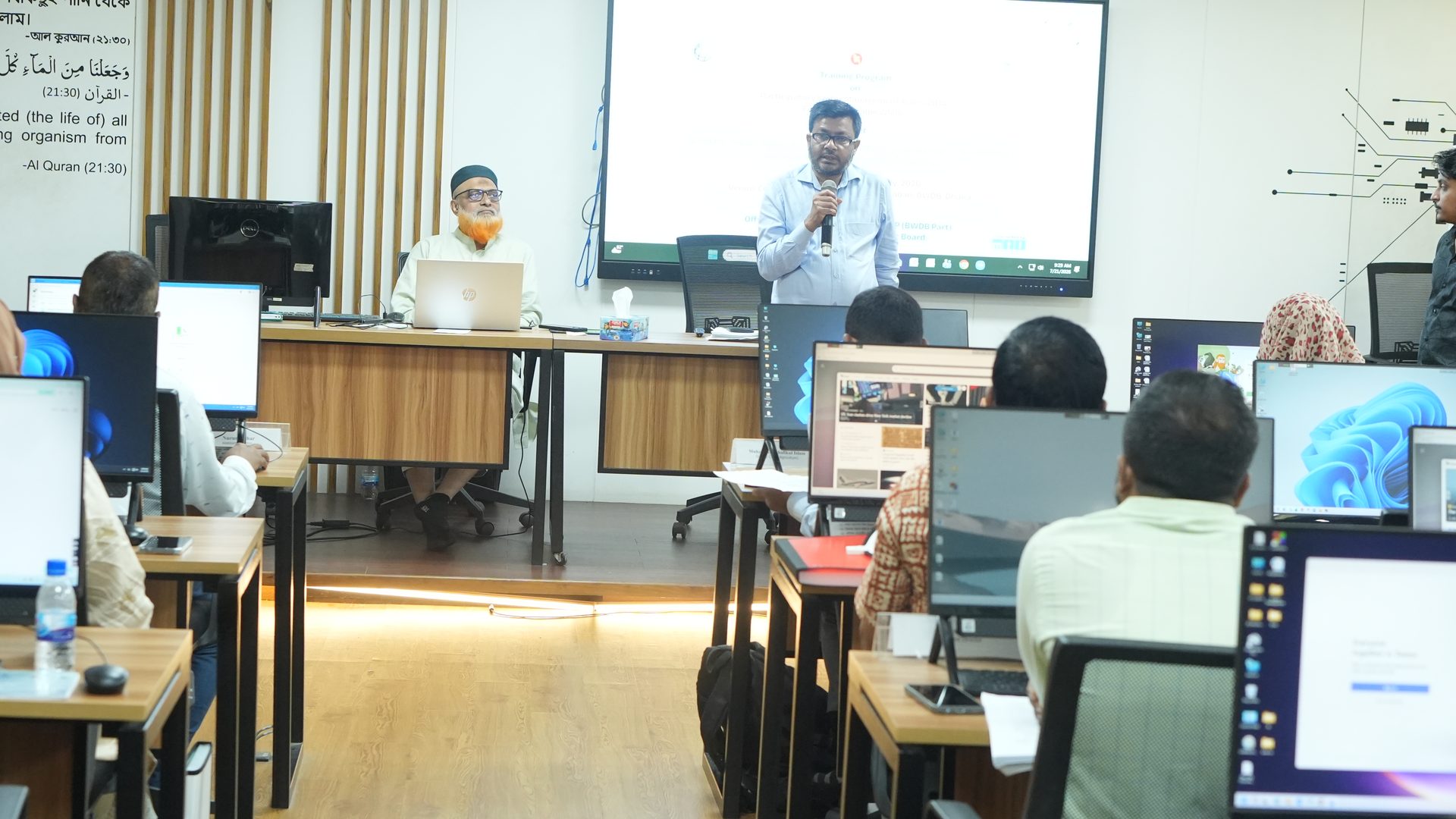
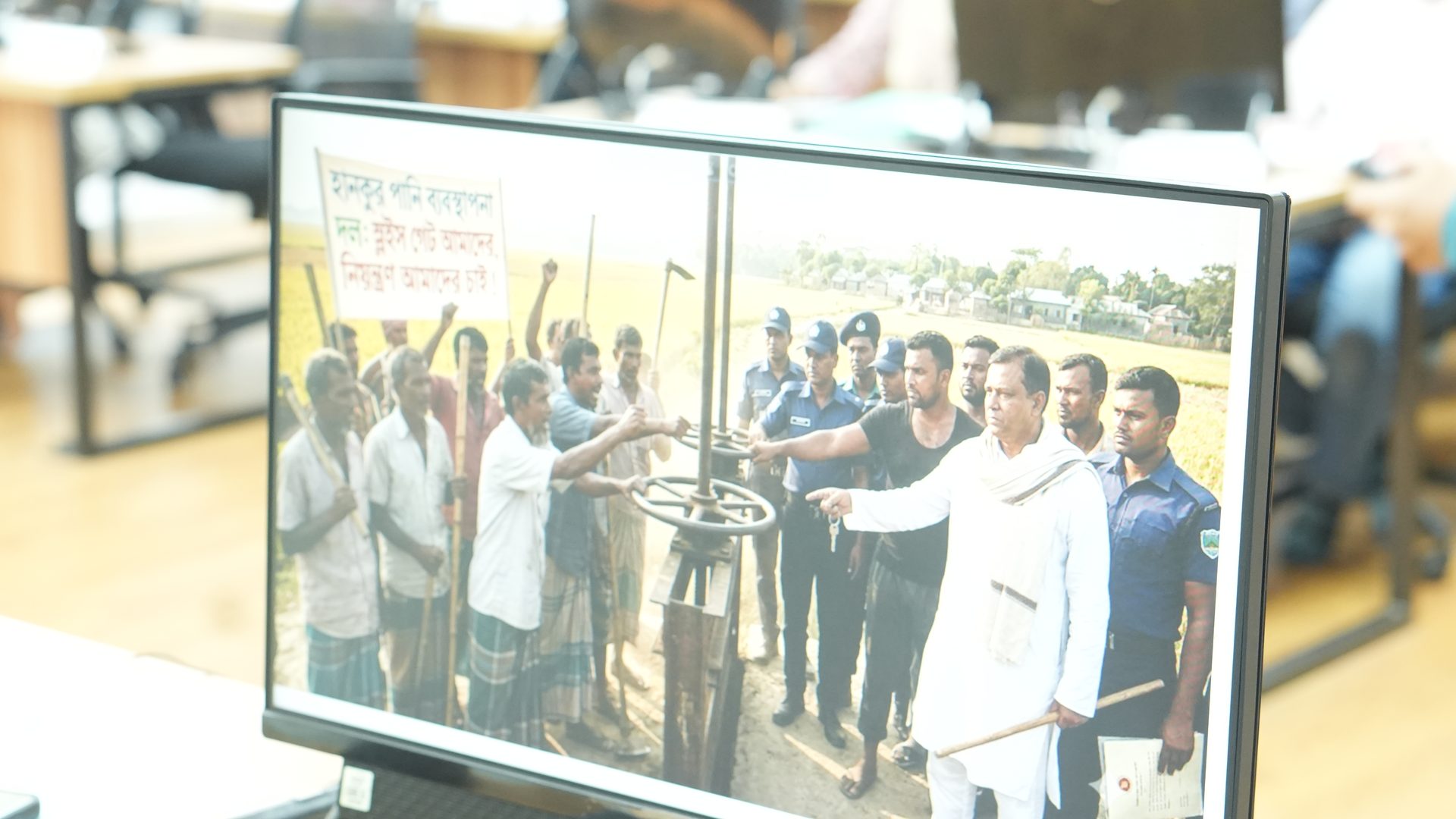
No session on the schedule was a lecture alone. Every one of the twelve paired its technical content with an interactive method, and three of them — conflict resolution, challenges and solutions, and monitoring and evaluation — used story telling, which is the honest instrument for this subject: participatory water management fails and succeeds in specific villages, over specific disputes, and those cases transfer better as narrative than as bullet points.
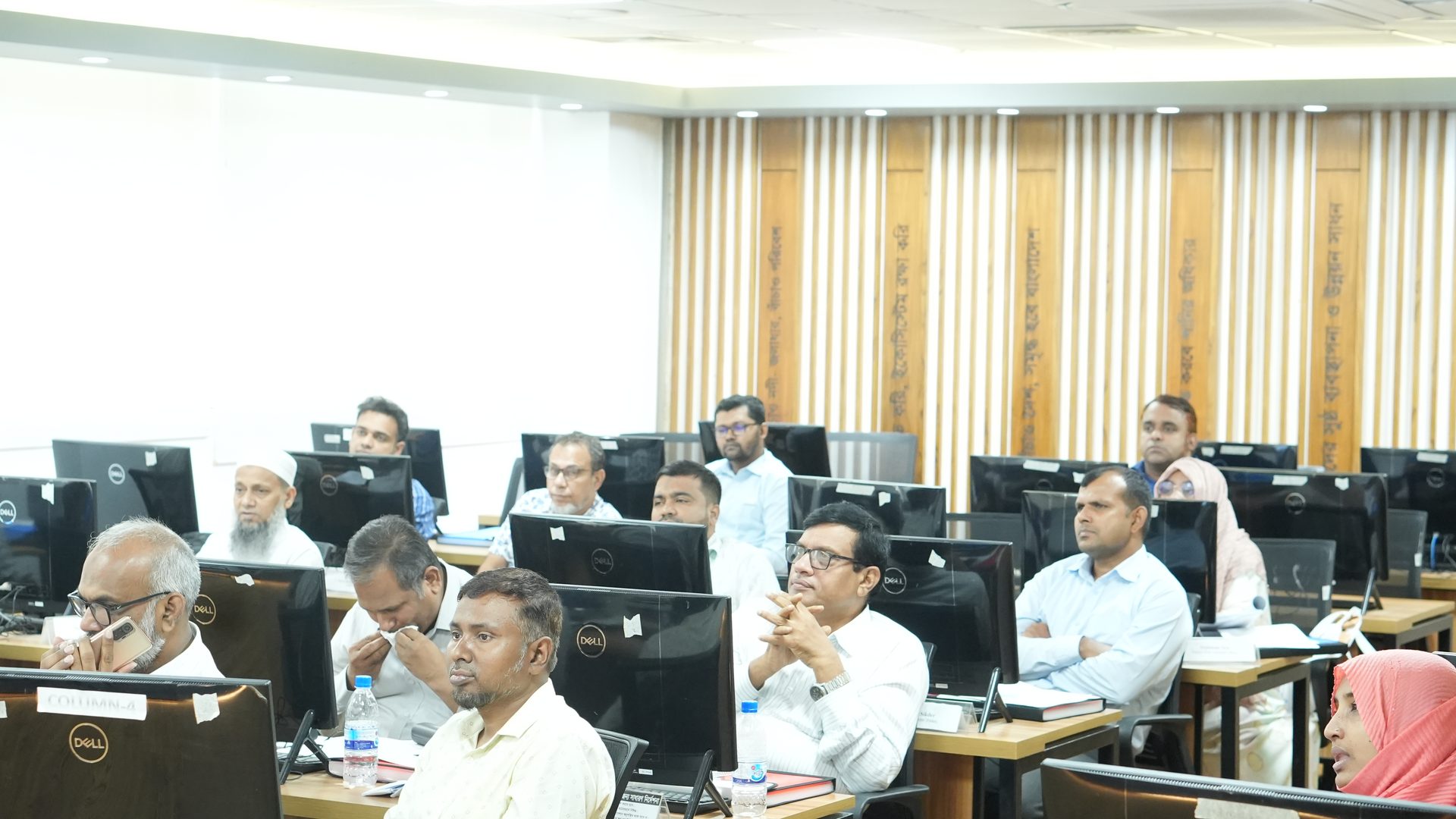
Group Presentations & Course Review
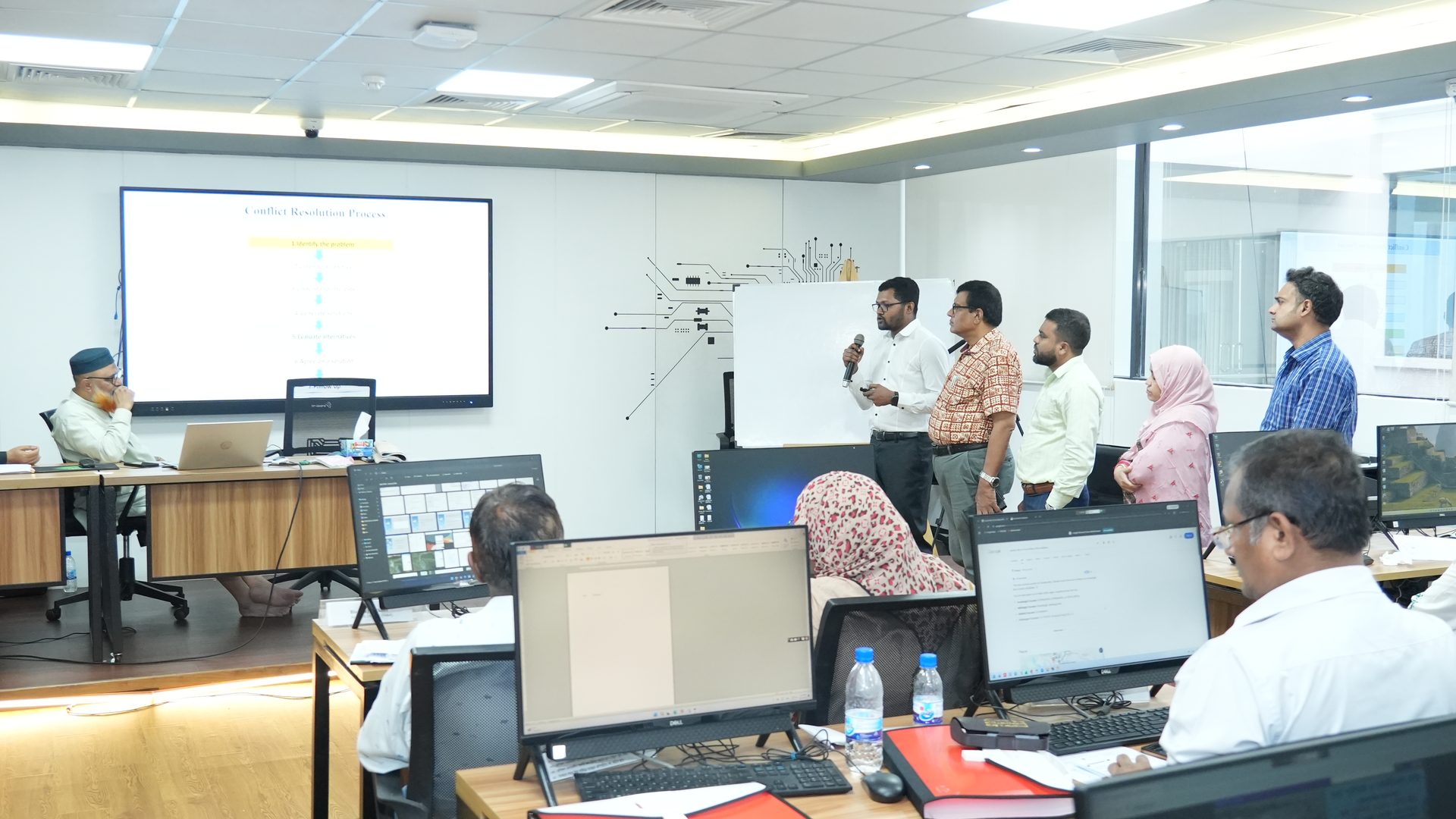
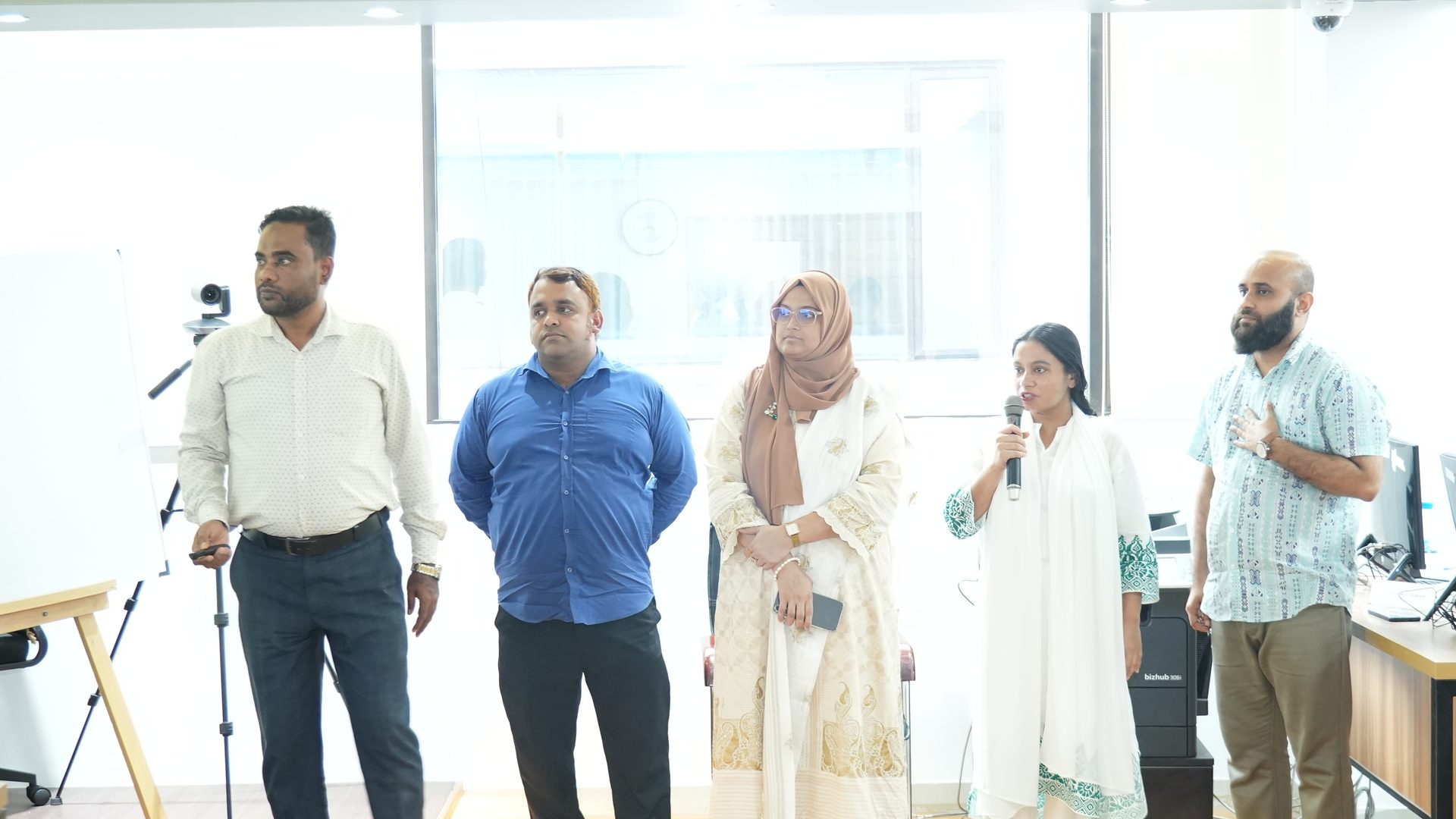
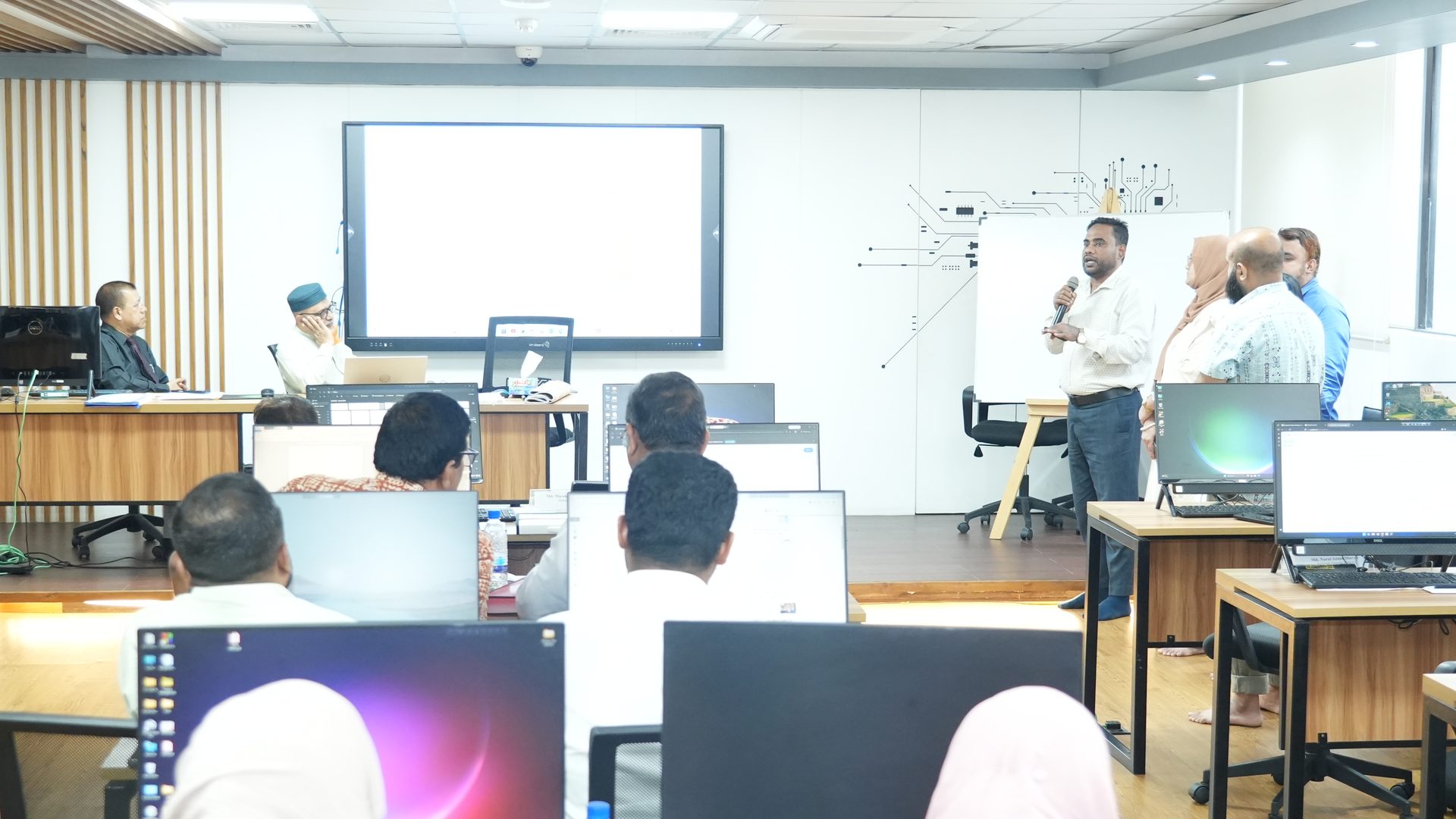
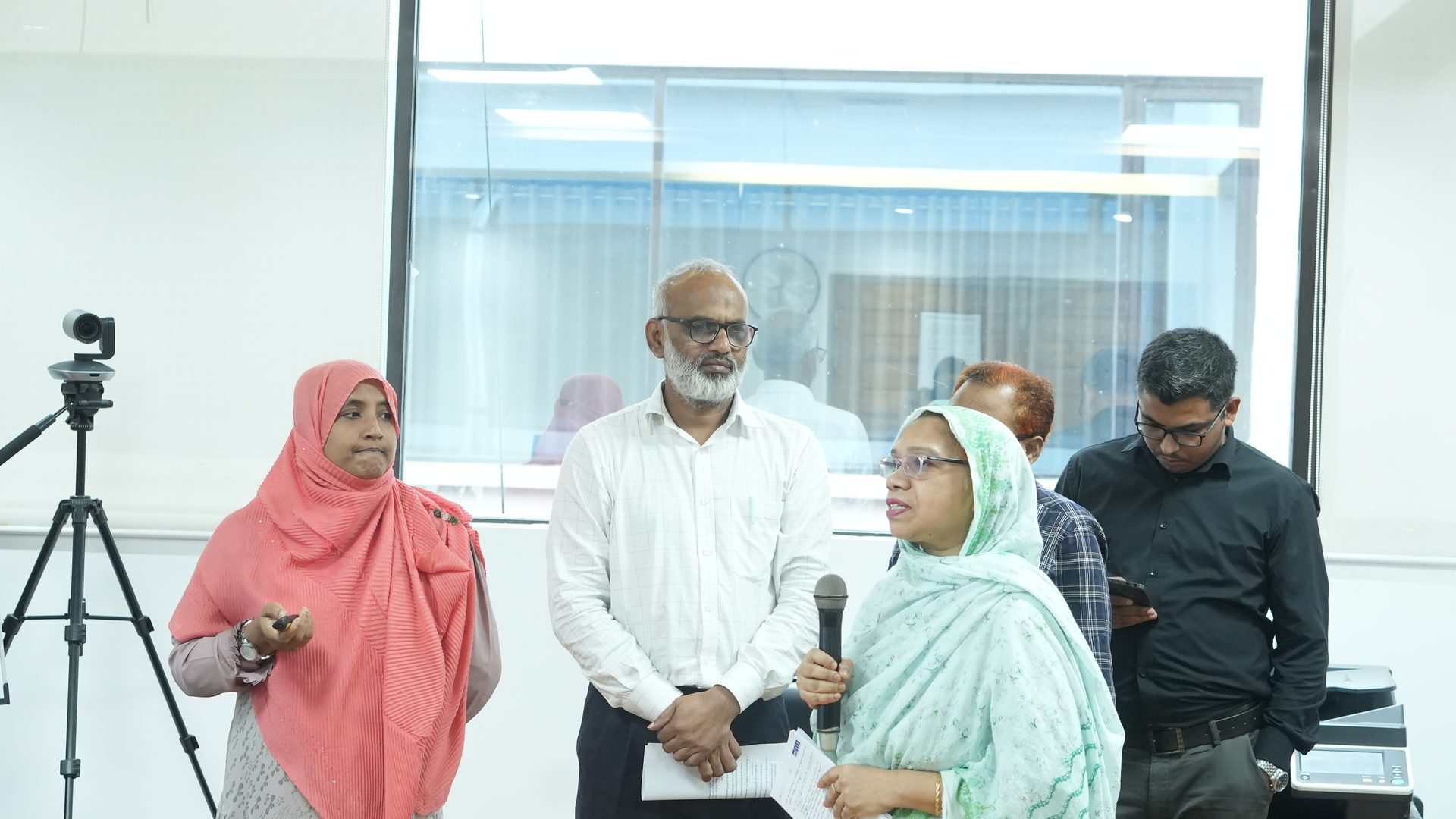
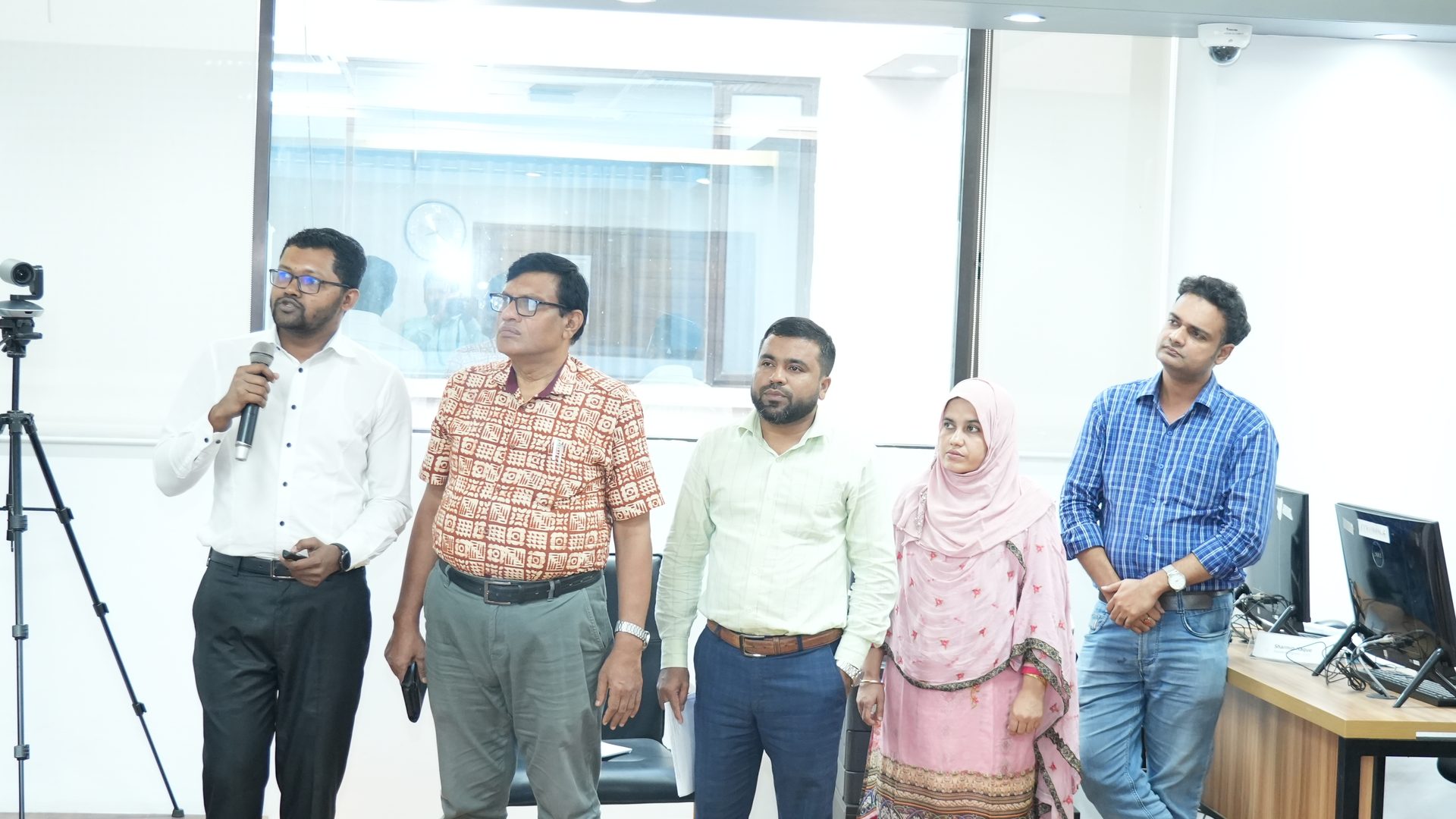
The final afternoon belonged to the participants. Working in groups, they reconstructed the three days themselves — presenting back the key learnings from each day to the Project Director and their peers. The screens carried the groups' own syntheses, including a worked conflict resolution process distilled from the Day 3 session. It is a deceptively demanding format: a group that has not genuinely followed the material cannot summarise it in front of the officer who taught it.
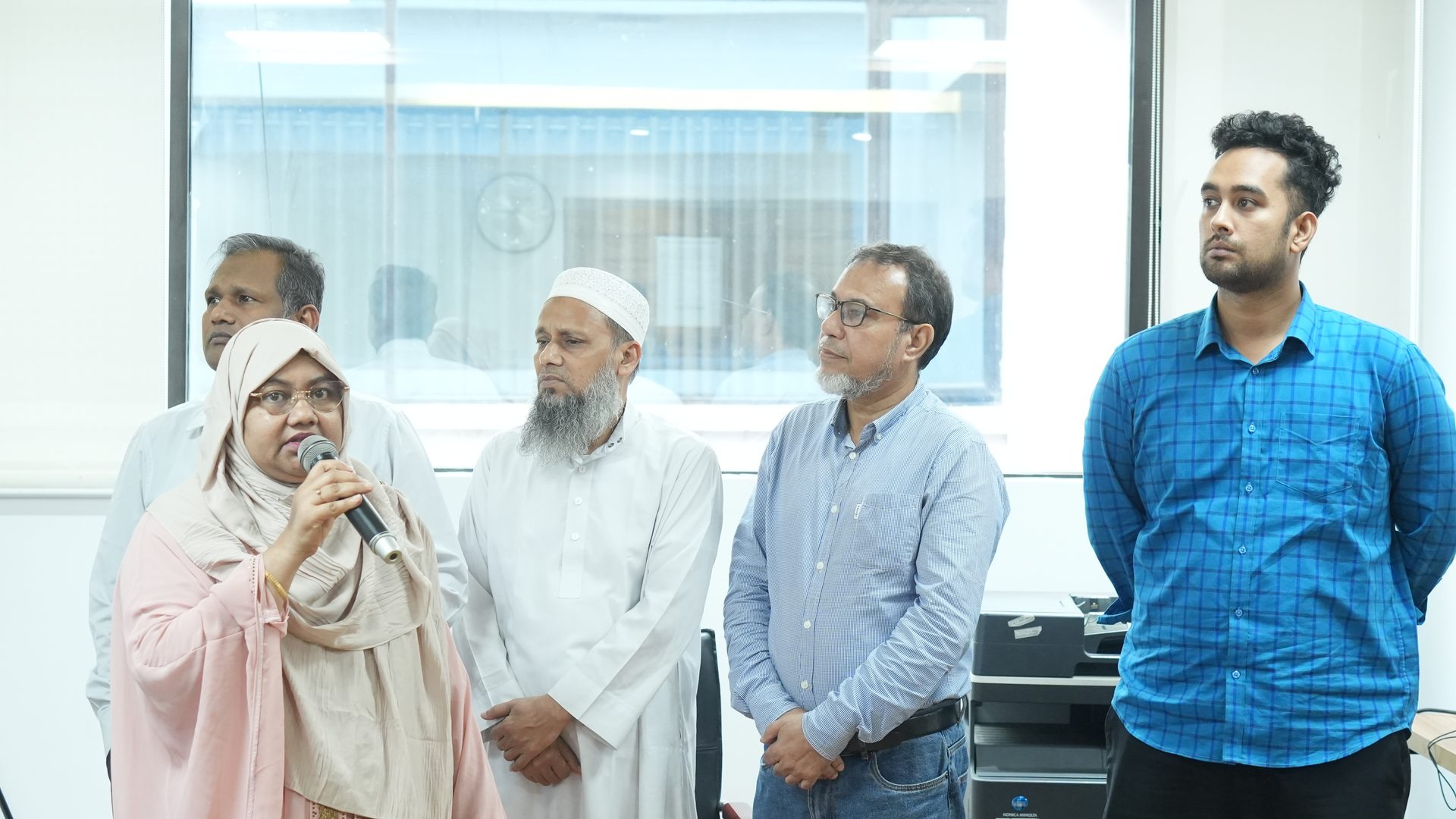
Who Was in the Room — and Why the Mix Matters
The most telling feature of this cohort is where it came from. Nine of the twenty-five participants work in BWDB's finance, audit and accounts functions — the Directorate of Finance, the Directorate of Audit, the Directorate of Accountant and the Green Road Regional Accounting Centre. On a course whose central problem is keeping community organisations solvent, the Board put its money people in the room alongside its engineers and extension officers rather than sending community-development staff alone.
Around them sat three Deputy Chiefs from sociology, agriculture and extension, two research officers, six civil and mechanical engineers from the design circles and field divisions, and officers from Training, Personnel, Ground Water Processing and the B-Strong project — seventeen distinct directorates and offices in total, from Dhaka headquarters out to Rajbari and Gopalganj.
Full Participant Roster
Deputy Chief (Sociology)
Chief Water Management Office, BWDB, DhakaDeputy Chief (Agriculture)
Directorate of Planning-1, BWDB, DhakaDeputy Chief Extension Officer
PEO Office, BWDB, DhakaResearch Officer (Agriculture)
Directorate of Planning-1, BWDB, DhakaDeputy Director (Admin)
Directorate of Training, BWDB, DhakaAssistant Director (Admin)
Directorate of Training, BWDB, DhakaDeputy Director (Geology)
Ground Water Processing Branch, BWDB, DhakaAssistant Director (FA&A)
Directorate of Finance, BWDB, DhakaSub-Divisional Engineer (Civil)
Rajbari WD Division, BWDB, RajbariSub-Divisional Engineer (Civil)
Design Circle-5, BWDB, DhakaAssistant Director (Admin)
CRISP-WRM, BWDB, GopalganjAssistant Engineer (Civil)
CSAWMP (BWDB Part), DhakaAssistant Engineer (Mechanical)
Design Circle-3 (Mech), BWDB, DhakaAssistant Engineer (Mechanical)
Design Circle-3 (Mech), BWDB, DhakaAssistant Engineer (Civil)
Design Circle-5, BWDB, DhakaResearch Officer (Agriculture)
Directorate of Planning-2, BWDB, DhakaDeputy Director (FA&A)
B-Strong Project (BWDB Part), DhakaAssistant Director (FA&A)
Directorate of Finance, BWDB, DhakaAssistant Director (FA&A)
Directorate of Finance, BWDB, DhakaAssistant Director (FA&A)
Directorate of Audit, BWDB, DhakaAssistant Director (Admin)
Directorate of Personnel, BWDB, DhakaAssistant Director (FA&A)
Green Road RAC, BWDB, DhakaAssistant Director (FA&A)
Directorate of Audit, BWDB, DhakaAccountant
Directorate of Accountant, BWDB, DhakaAccountant
Directorate of Accountant, BWDB, DhakaContinuity across the programme: two participants — Salma Begum, Deputy Chief (Sociology), and Sharmin Haque, Assistant Engineer (Civil) — also attended the Batch 1 IWRM course in June. Sujoy Karmakar, a Batch 1 participant, returned as Course Evaluator for this batch, and Dr. Md. Zahidul Islam served as a resource person in both. The Package 21 programme is deliberately building a connected cadre rather than twenty-five isolated cohorts.
Closing Ceremony & Certification
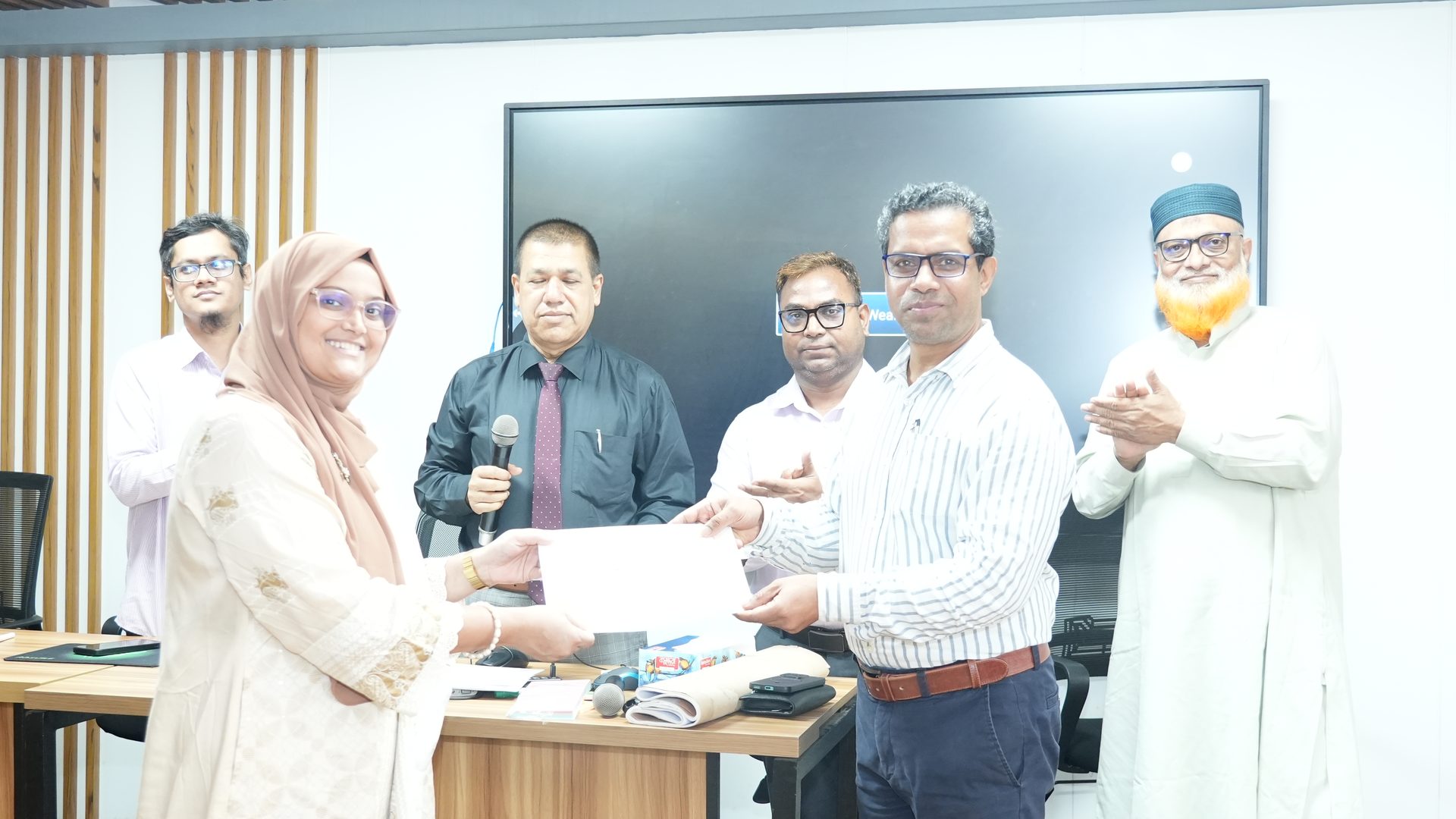
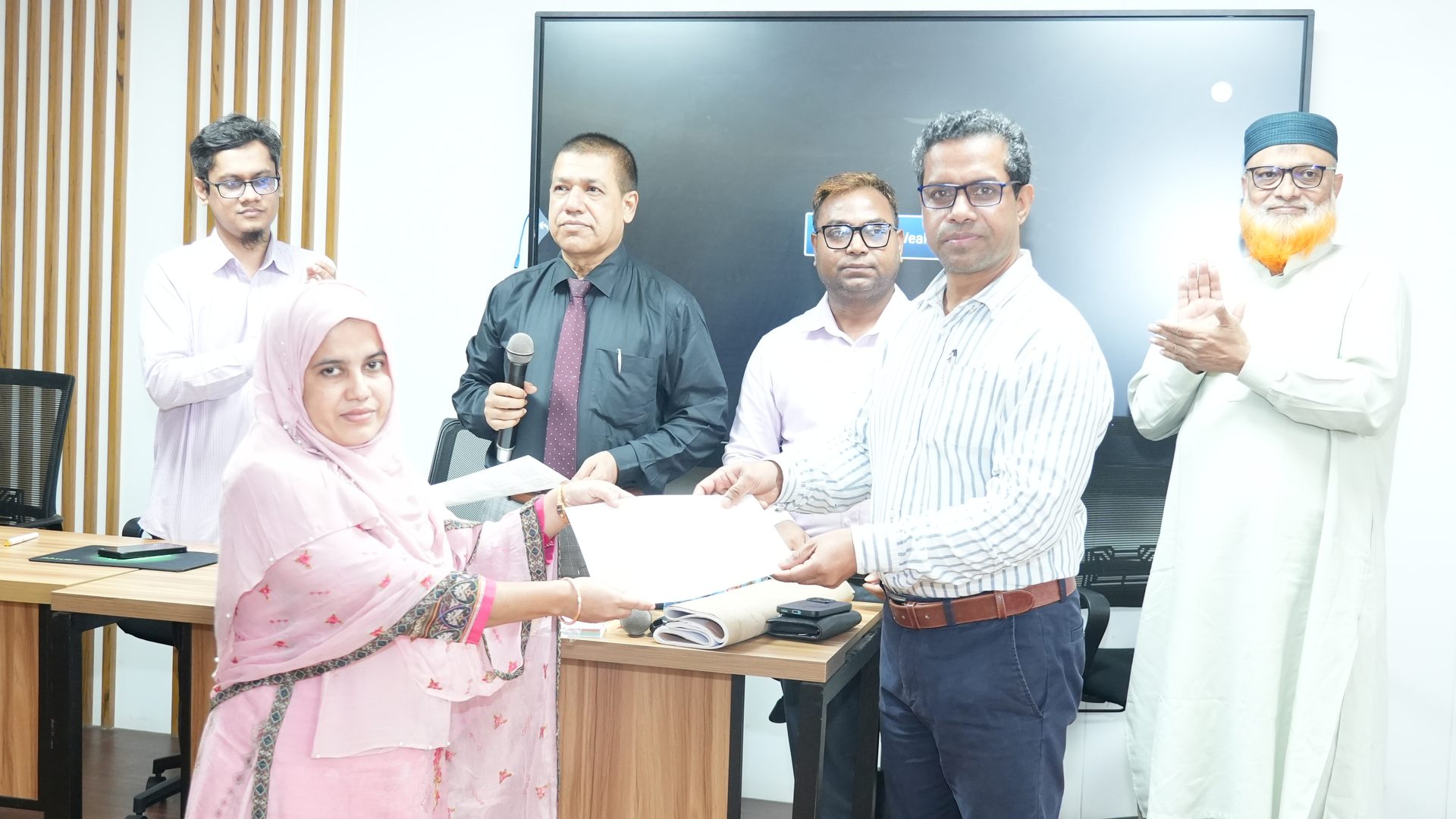
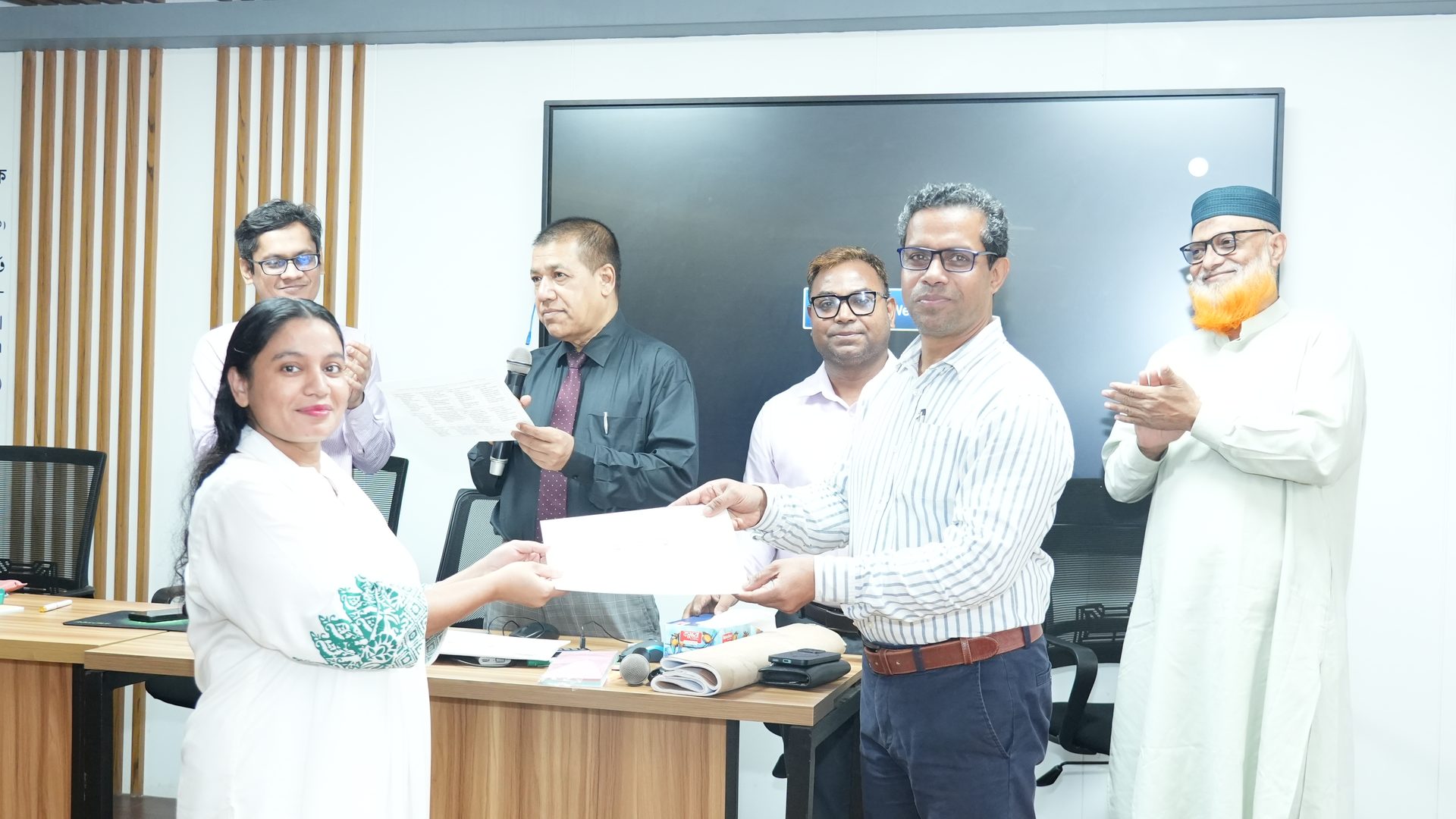
The Project Director closed the course on the afternoon of 21 July 2026 and distributed certificates to the participants. The closing followed directly from the group review session, so the certificates were handed over against work the cohort had just presented rather than against attendance alone.
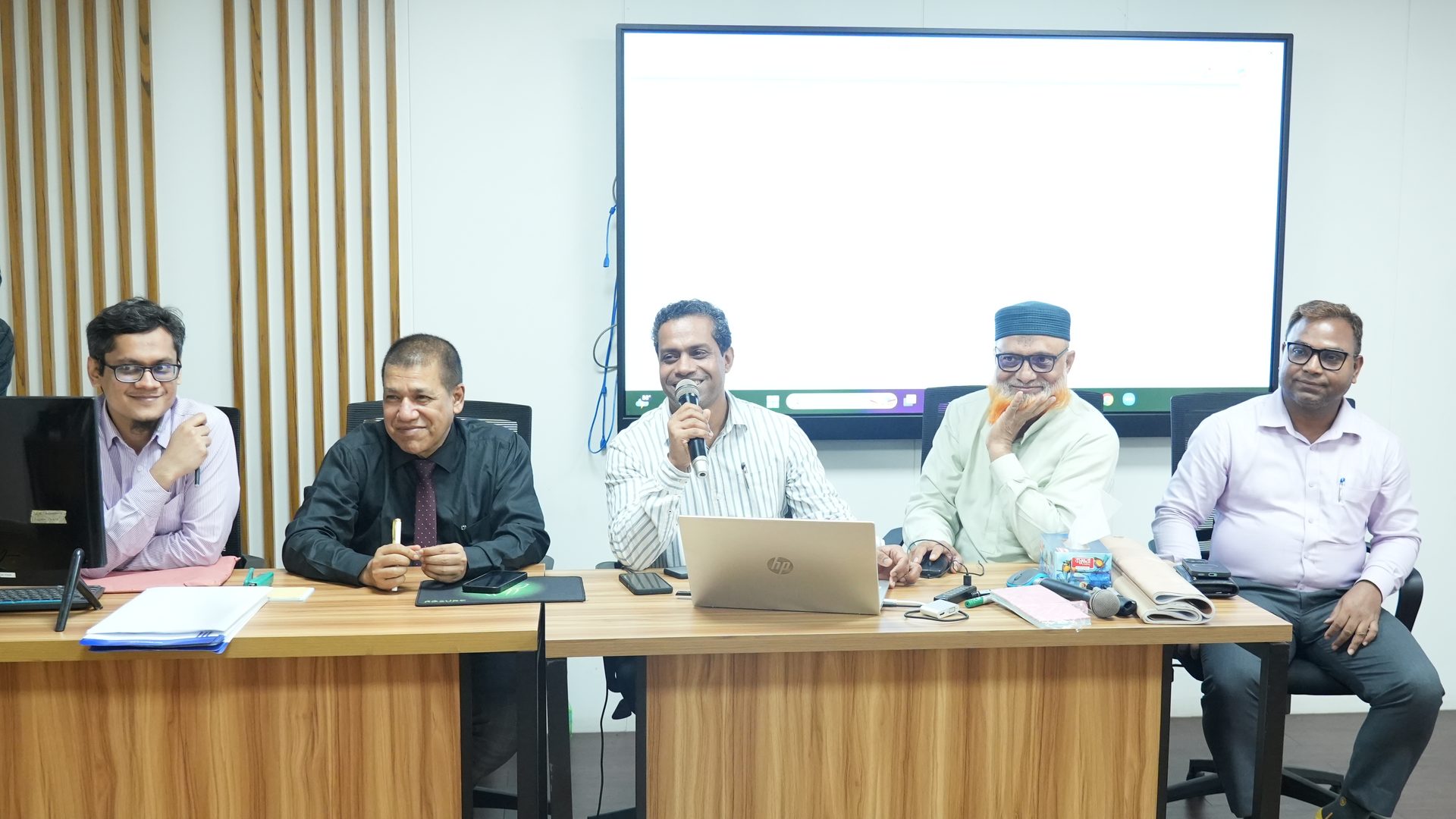
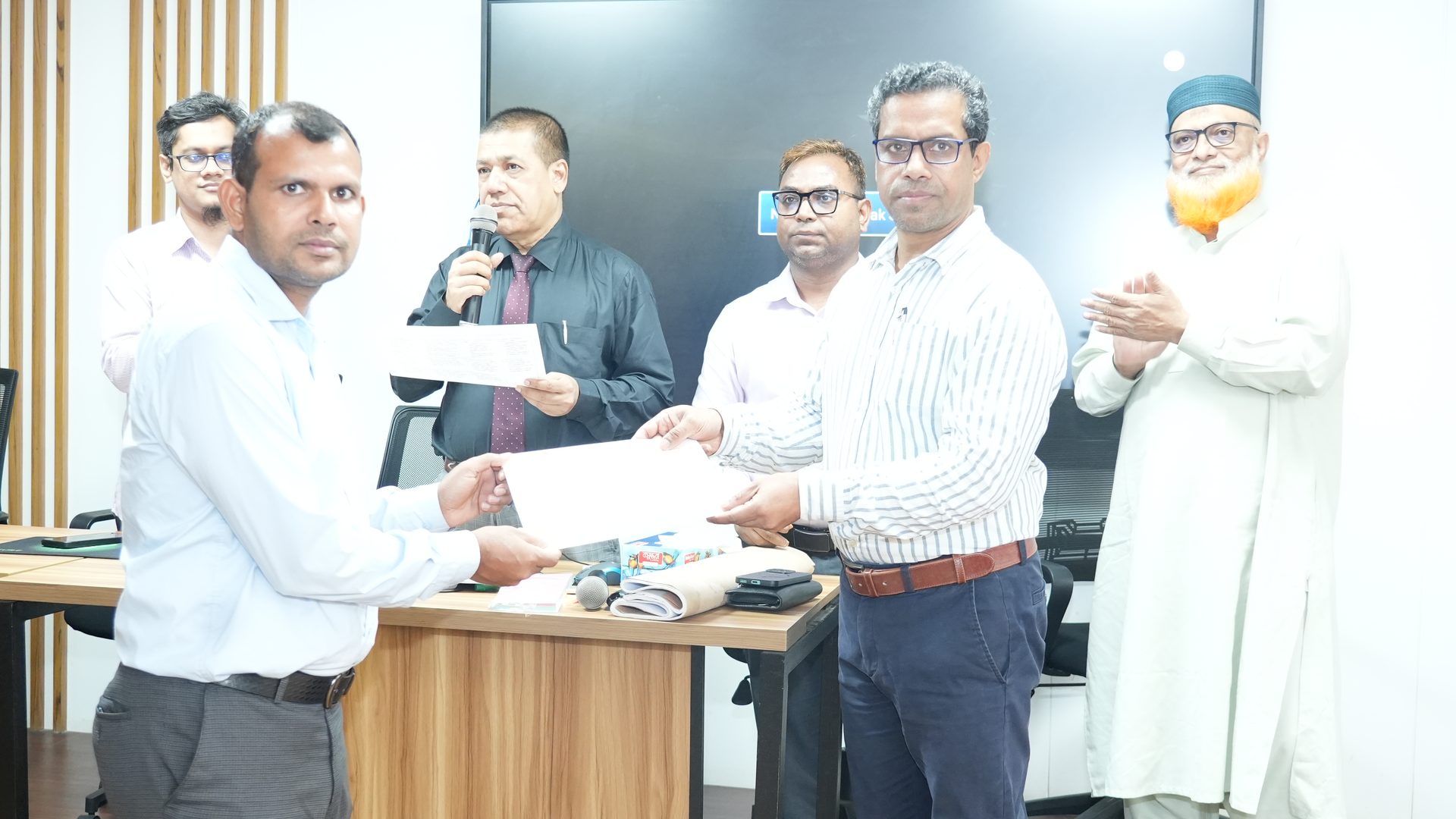
The Course in Pictures
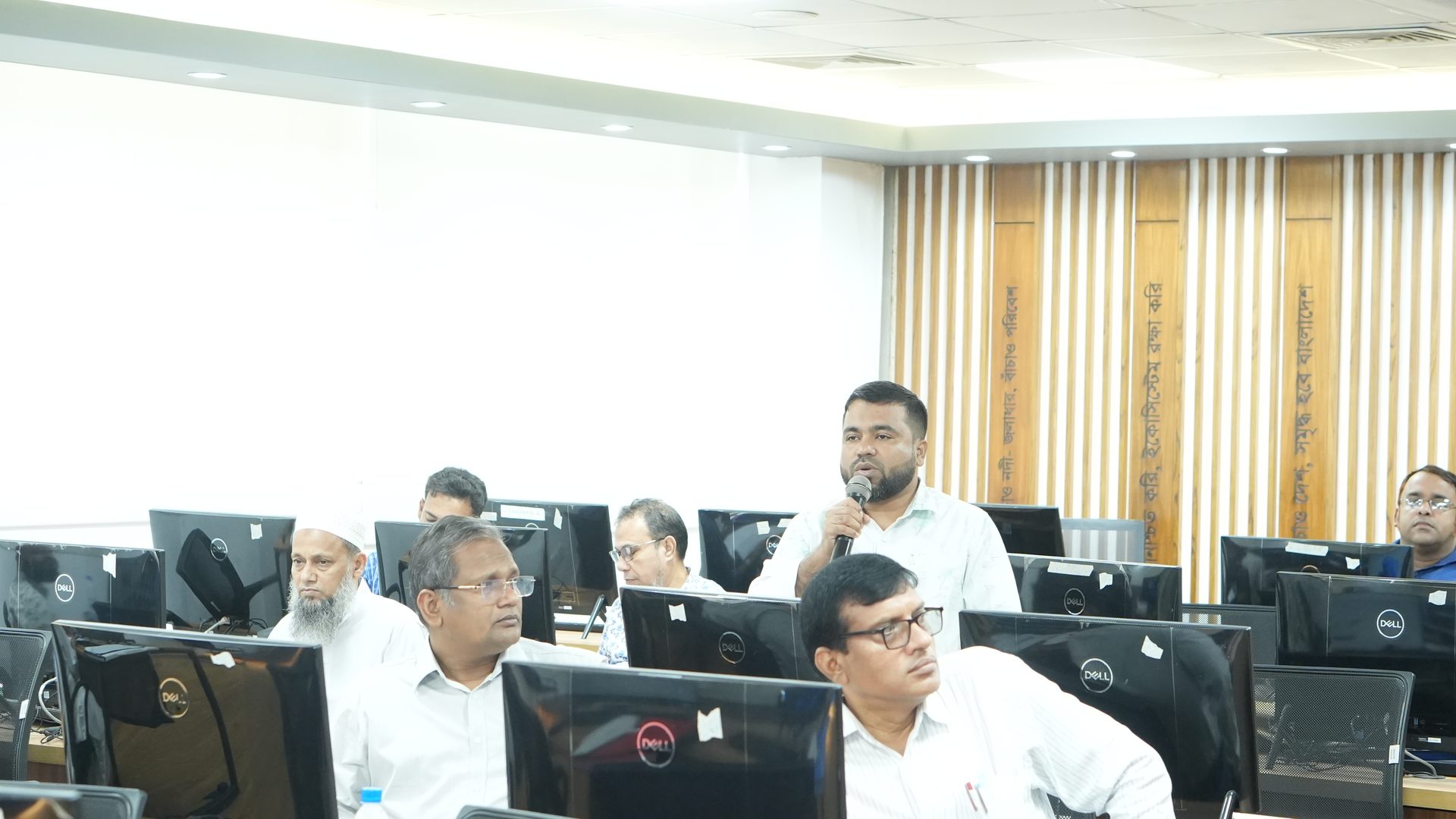
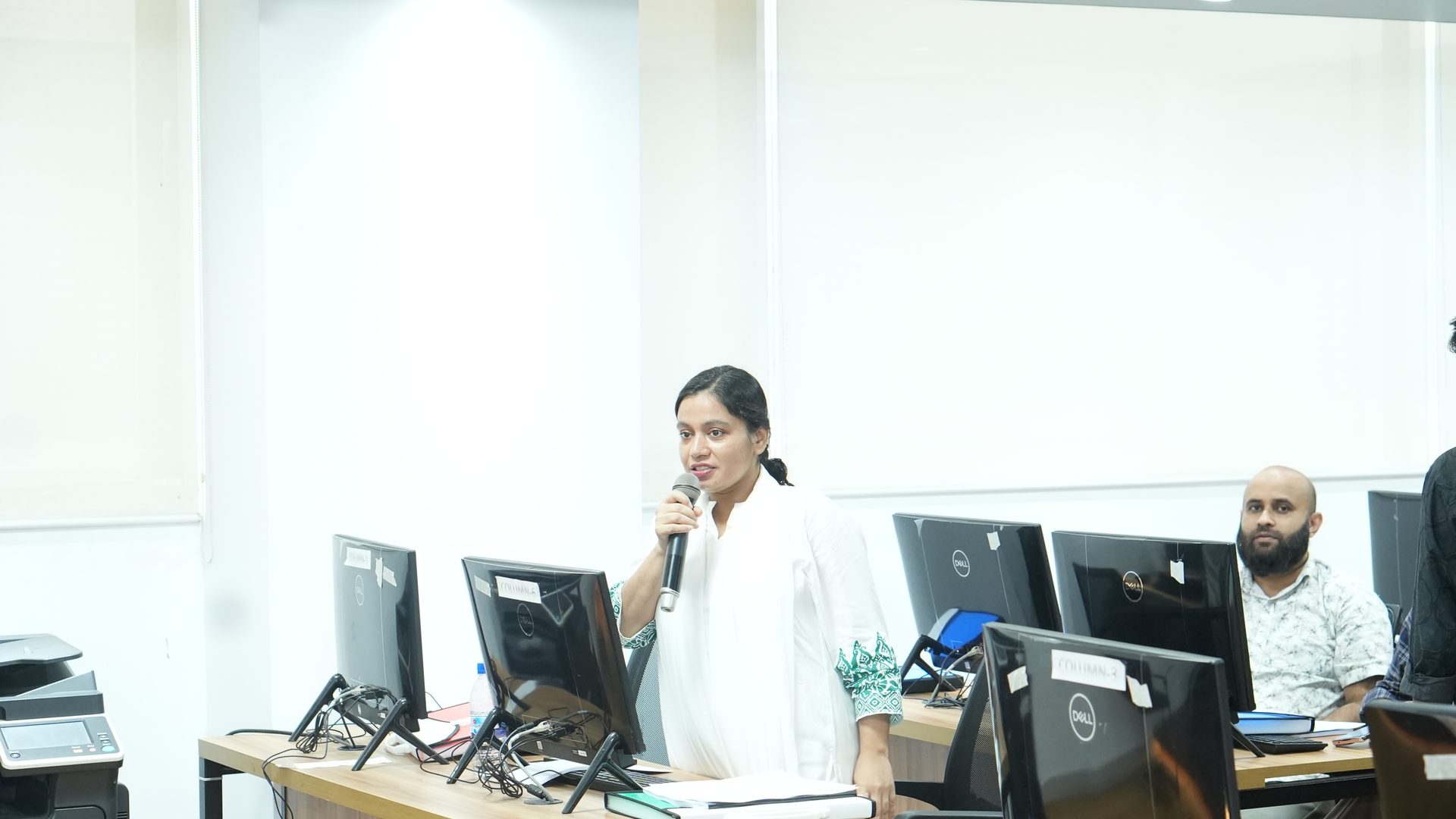
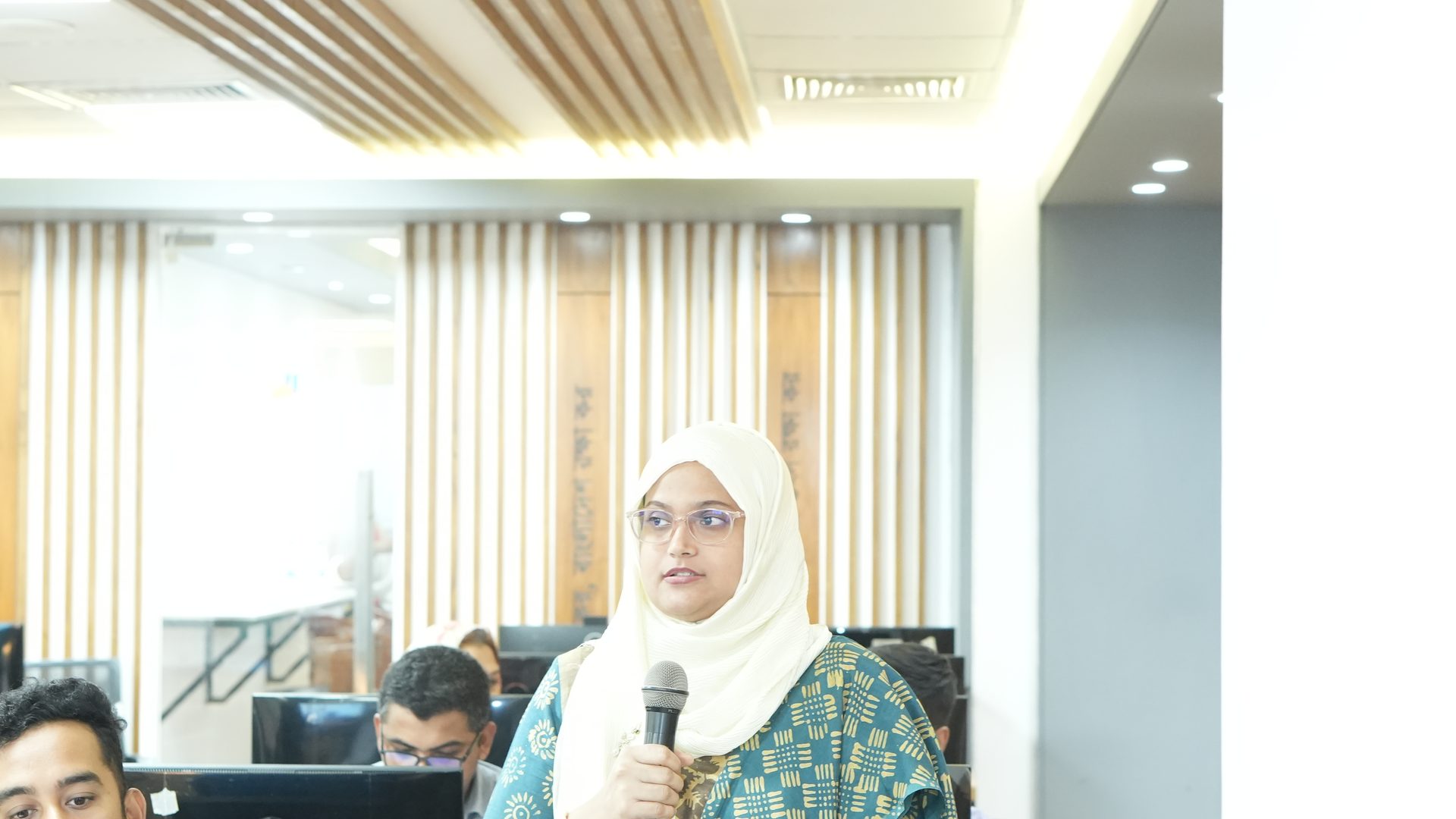
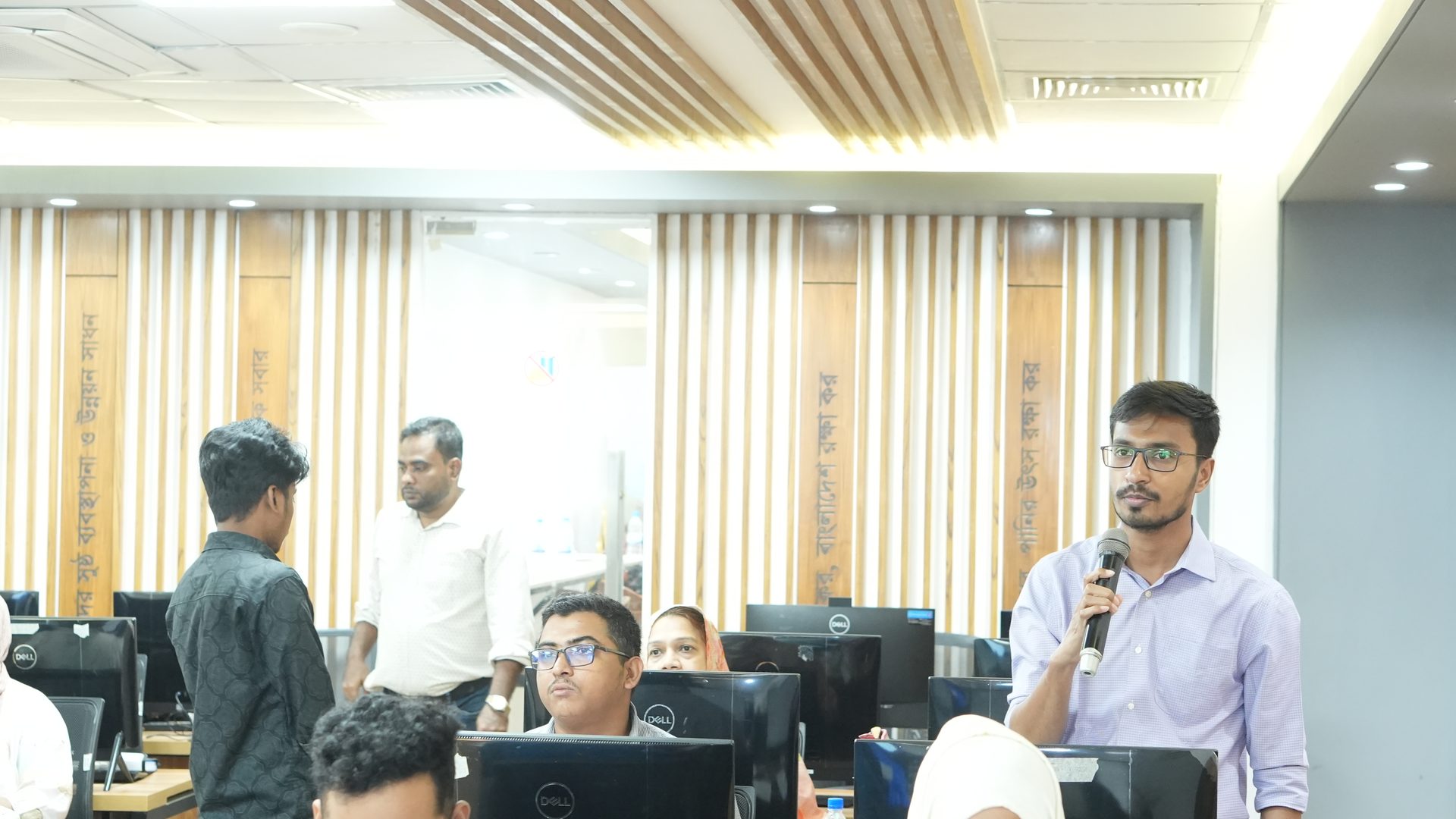
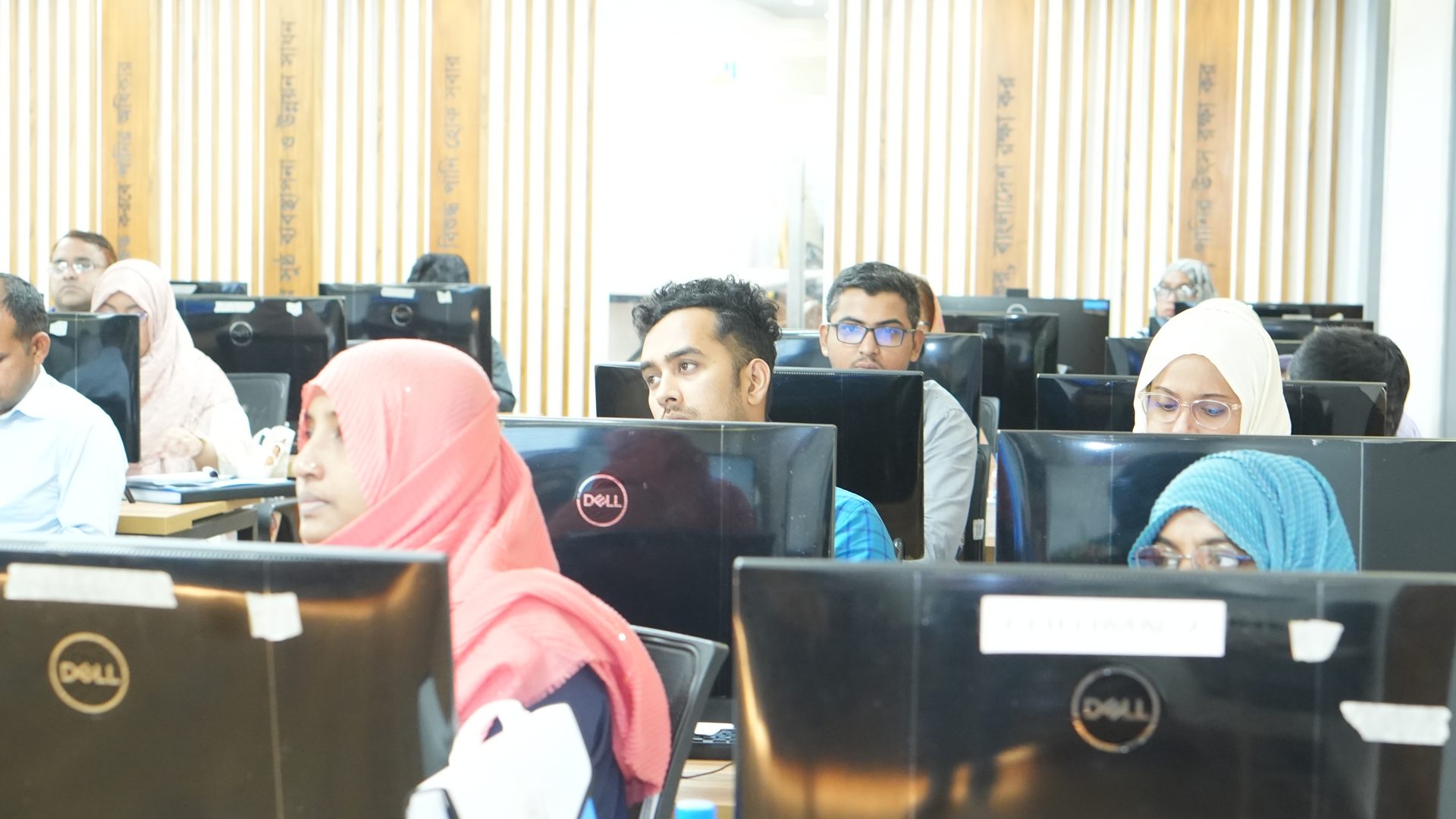
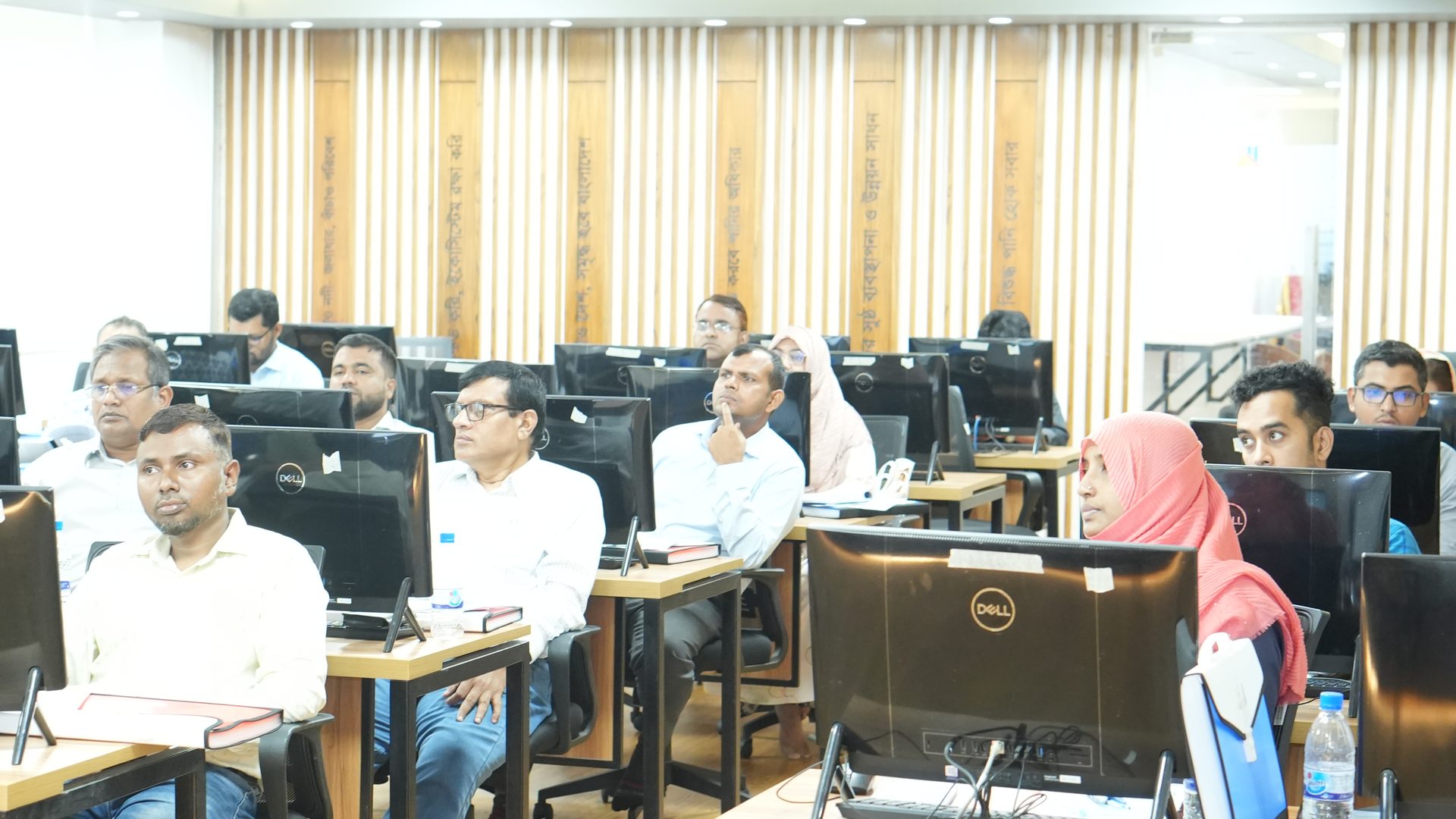
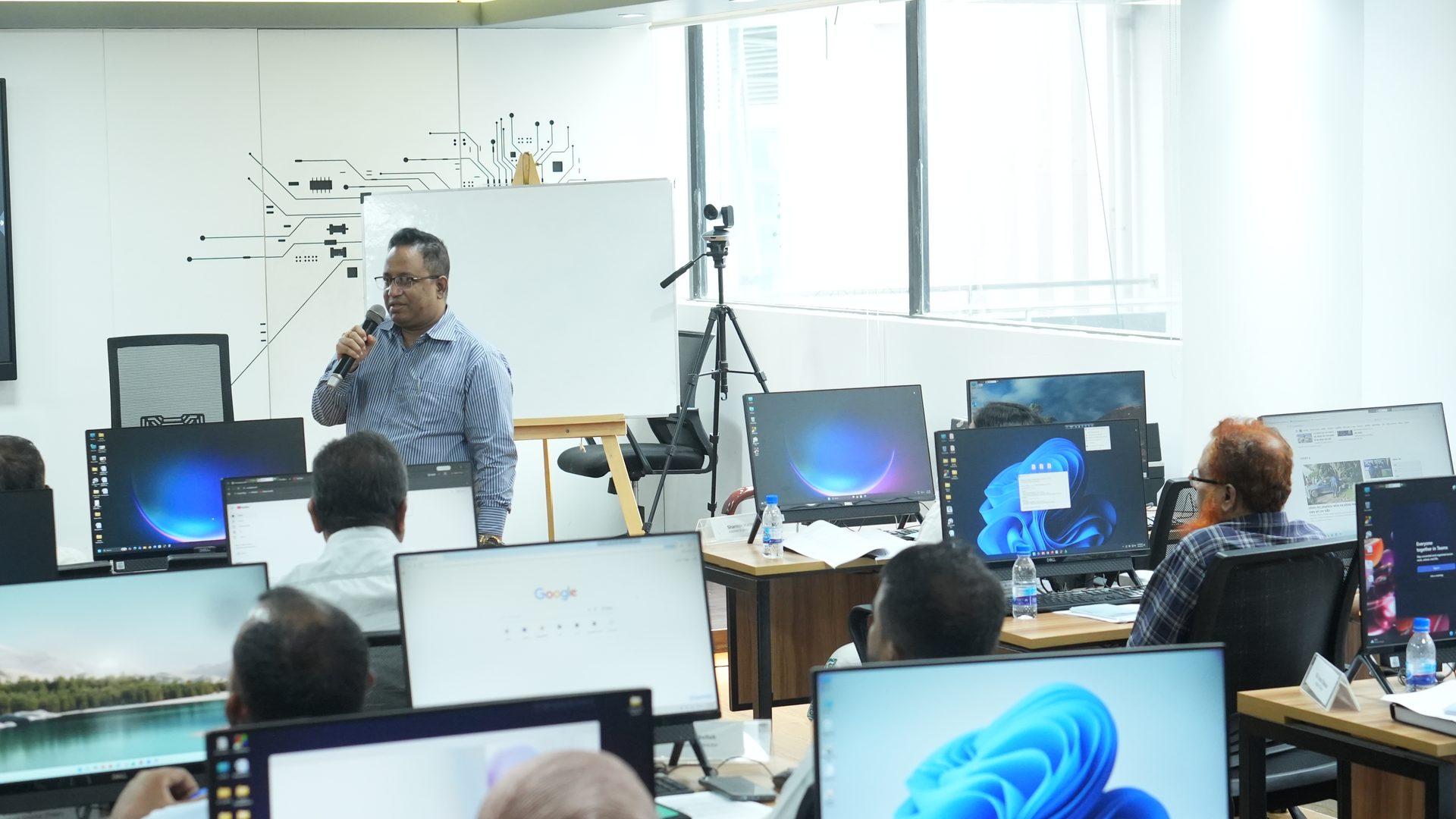
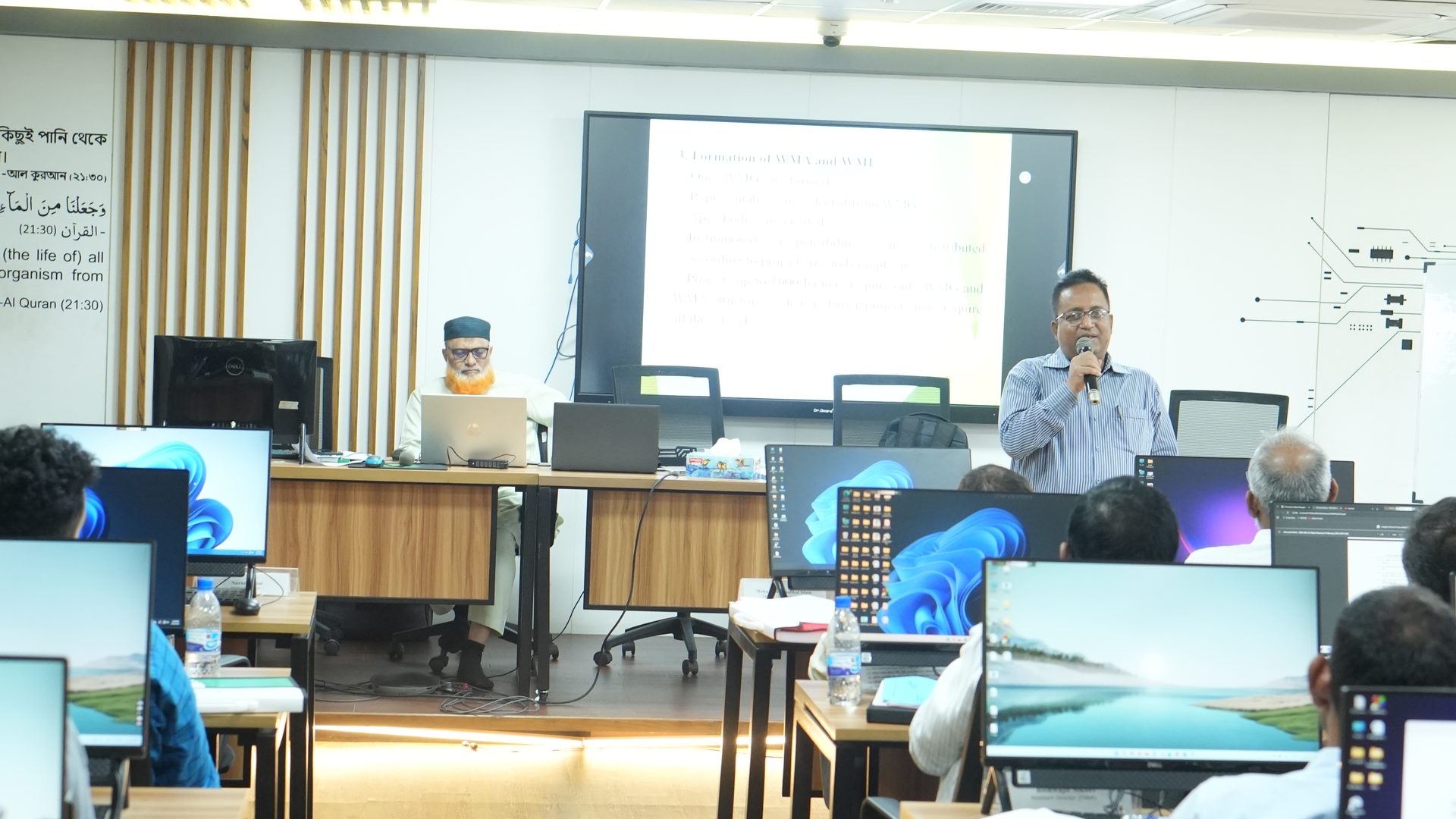
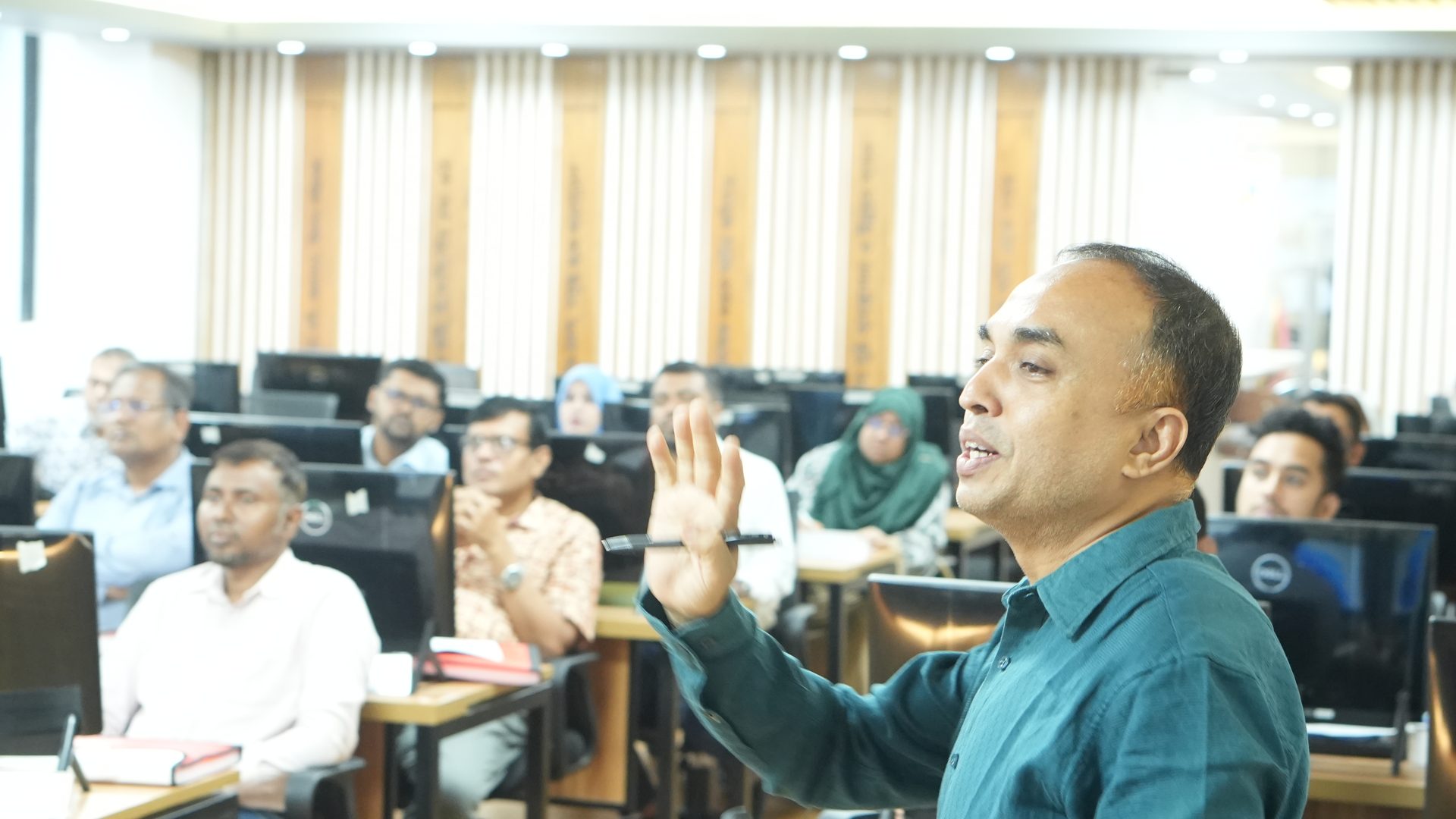
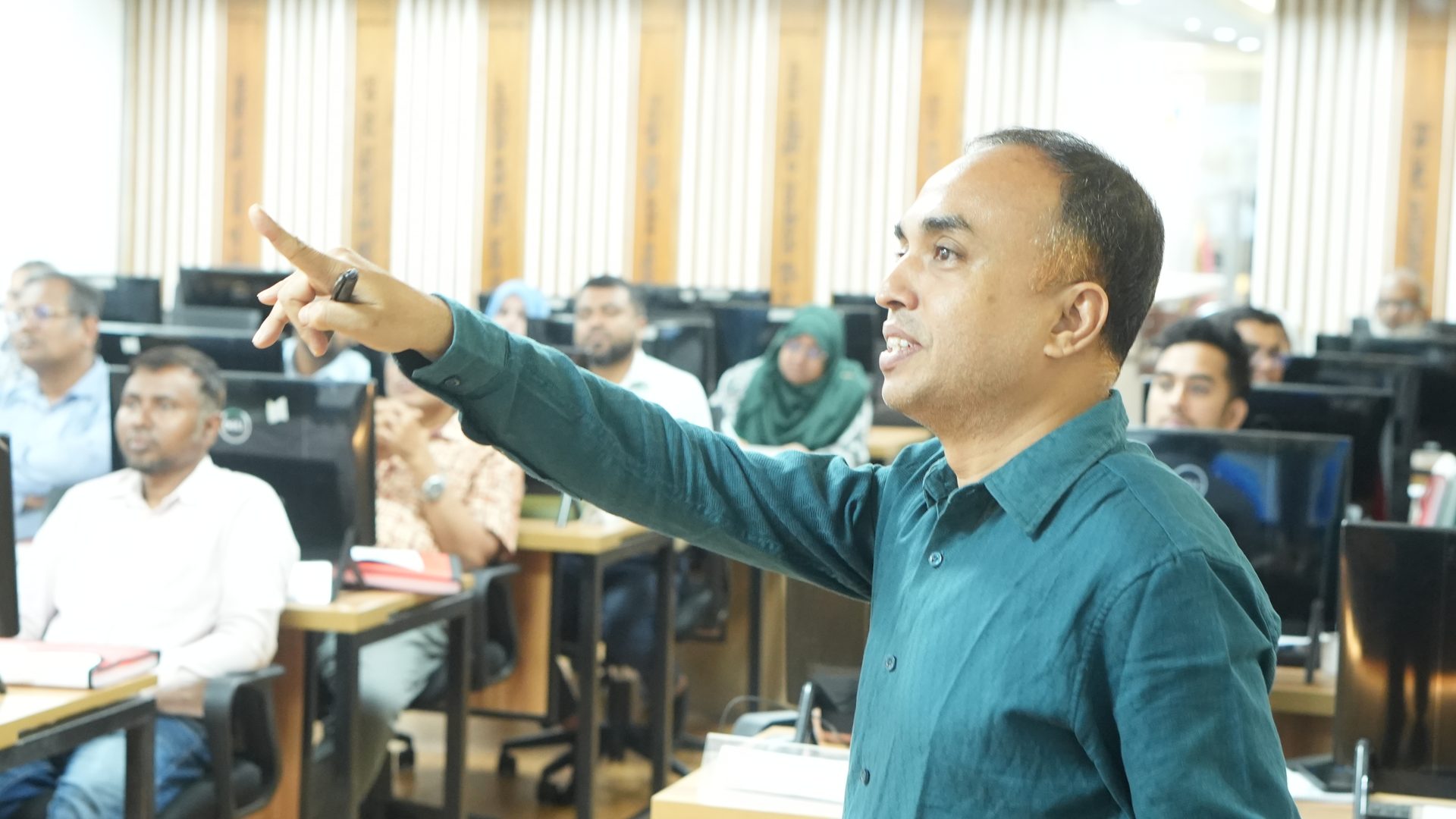
Sixteen further photographs from the three days at the Central ICT Lab, Pani Bhaban — the opening introductions, the lecture and group-work sessions, the Day 3 group presentations and the certificate ceremony.
Why This Matters
Every polder, regulator and irrigation canal BWDB builds is handed, sooner or later, to people who did not design it. Whether that handover holds depends on an organisation that has to elect leaders, keep books, collect contributions, settle disputes between upstream and downstream users, and still be functioning in a decade. The Participatory Water Management Rules 2014 describe what that organisation should look like. They cannot, by themselves, make one durable.
What makes this course consequential is that it treated WMO sustainability as an institutional and financial problem rather than a social one, and staffed the room accordingly. When an Assistant Director from the Directorate of Audit and a Sub-Divisional Engineer from Rajbari work through the same session on revenue generation and fund management, the resulting scheme design is likelier to include a WMO that can actually pay for its own operation and maintenance. Under the Climate-Smart Agriculture and Water Management Project, that durability is the entire point: climate adaptation in the delta is delivered by community institutions that outlast the projects which created them.
More from this Programme
Programme Snapshot
| Field | Detail |
|---|---|
| Course Title | Participatory Water Management Rules-2014, focus Sustainable WMOs |
| Reference | CSAWMP-WDB-PCU-WD-21-2-PWMR-01 — Package 21, Batch 2 |
| Duration | 3 days — 19 to 21 July 2026 |
| Venue | Central ICT Lab (Level-11), Pani Bhaban, BWDB, 72 Green Road, Dhaka-1205 |
| Participants | 25 officials of the Bangladesh Water Development Board |
| Ministry | Ministry of Water Resources, Government of the People's Republic of Bangladesh |
| Implementing Agency | Bangladesh Water Development Board (BWDB) |
| Project | Climate-Smart Agriculture and Water Management Project (CSAWM Project), BWDB Part |
| Source of Fund | CSAWM Project (BWDB Part) |
| Project Director | Pijush Krishna Kundu, Additional Chief Engineer (Civil) |
| Course Coordinator | A. Z. M. Ridwan, Executive Engineer, CSAWMP (BWDB Part) |
| Sessions | 12 technical sessions across 3 days, four sessions per day |
| Resource Persons | 5 senior BWDB officials |
| Training Service Provider | Management and Training International Ltd. (MTI Ltd.) |
| Country | Bangladesh |
Frequently Asked Questions
What were the Participatory Water Management Rules 2014 training under Package 21 about?
It was a three-day course on the Participatory Water Management Rules 2014 with a focus on making Water Management Organisations sustainable — covering the concept and legal framework of participatory water management, WMO formation and registration, community engagement, governance and capacity development, financial sustainability, conflict resolution, and monitoring and evaluation.
Who attended the training and where was it held?
Twenty-five officials of the Bangladesh Water Development Board — deputy chiefs, deputy and assistant directors, engineers, research officers and accountants drawn from seventeen directorates and field offices — attended at the Central ICT Lab, Level-11, Pani Bhaban, 72 Green Road, Dhaka, from 19 to 21 July 2026.
What is a Water Management Organisation (WMO)?
A Water Management Organisation is the community body through which local water users participate in planning, operating and maintaining a water management scheme. The course covered the organisational structure of WMOs, their formation, registration and operational guidelines, and the institutional linkage between BWDB, WMOs and other stakeholders including local government institutions.
Why did the course emphasise financial sustainability?
A WMO that cannot fund its own operation and maintenance stops functioning once project support ends. A dedicated session covered revenue generation and fund management, accessing government and donor support, and best practices in financial sustainability for WMOs. Nine of the twenty-five participants came from BWDB's finance, audit and accounts directorates.
Who funded and organised the course?
The course was funded by the Climate-Smart Agriculture and Water Management Project (CSAWM Project), BWDB Part, under the Bangladesh Water Development Board, Ministry of Water Resources. Management and Training International Ltd. (MTI Ltd.) served as the training service provider under reference CSAWMP-WDB-PCU-WD-21-2-PWMR-01.
How many batches will be delivered under Package 21 and Package 22?
75 training batches are planned across Package 21 (40 batches) and Package 22 (35 batches) of the CSAWM Project (BWDB Part). This was the second batch under Package 21, following the Integrated Water Resources Management course held in June 2026.