BWDB Officials Trained on Climate-Smart Agriculture and Water Management — IWRM, GIS/IoT and Climate-Resilient Irrigation
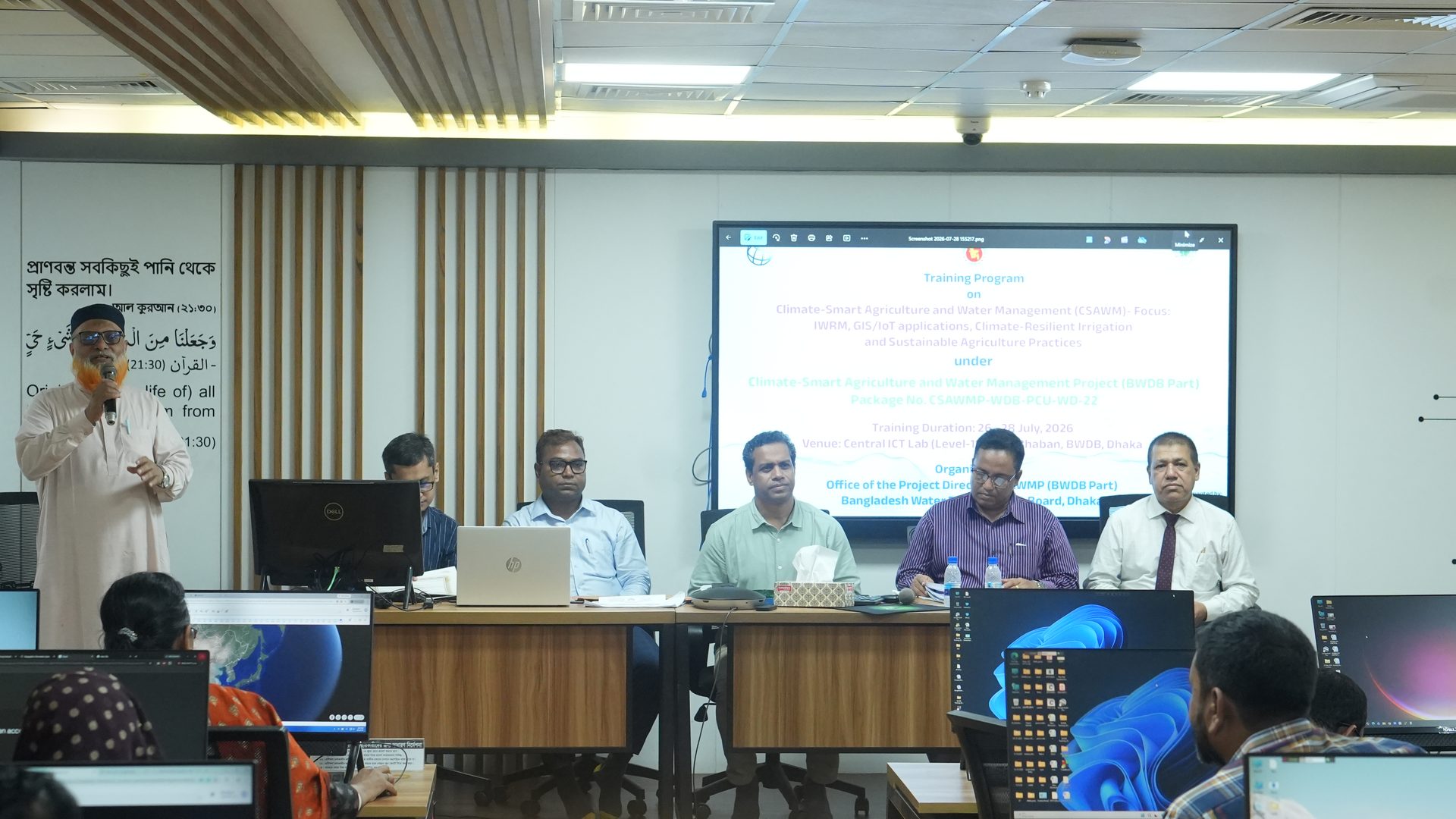
Management and Training International (MTI) Ltd. conducted the three-day training course on Climate-Smart Agriculture and Water Management (CSAWM) — focusing on IWRM, GIS/IoT applications, climate-resilient irrigation and sustainable agriculture practices from 26 to 28 July 2026 at the Central ICT Lab, Level-11, Pani Bhaban, BWDB, Dhaka. Twenty-five officials of the Bangladesh Water Development Board (BWDB), under the Ministry of Water Resources, took part — the fourth batch of Package 22 of the Climate-Smart Agriculture and Water Management Project (CSAWM Project), BWDB Part, and the sixth course delivered in the programme.
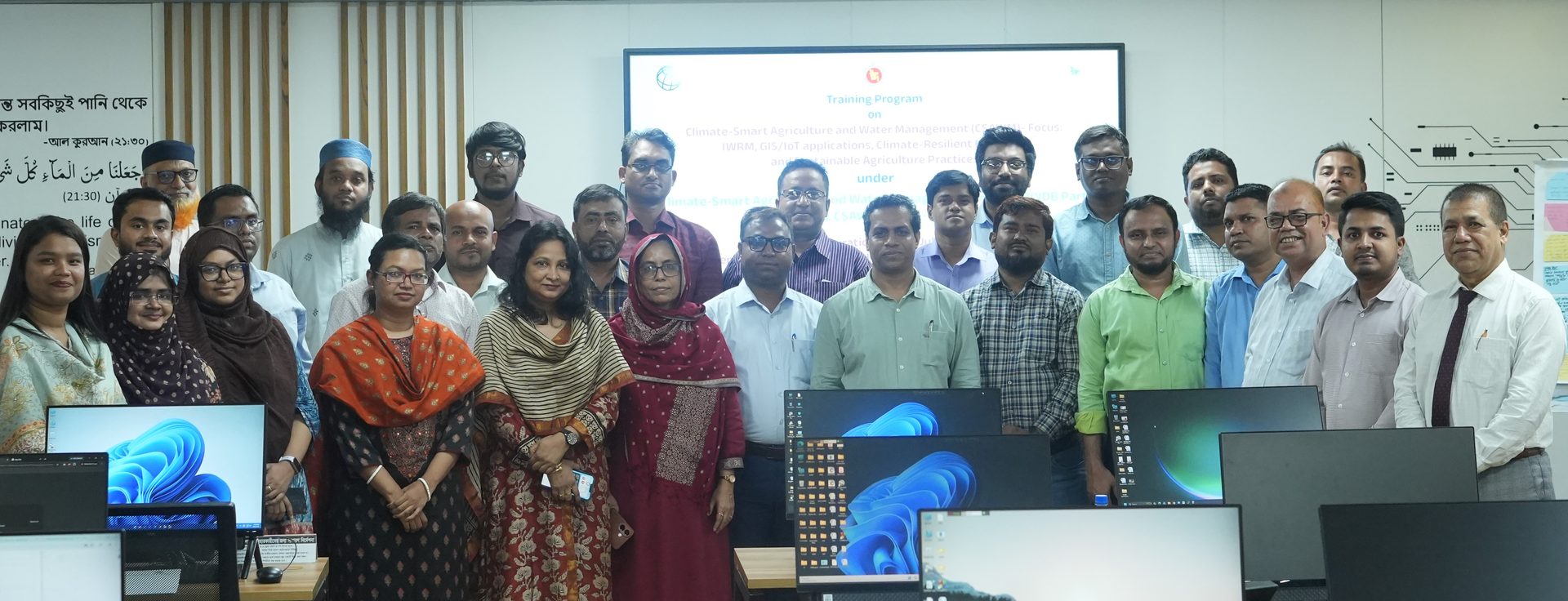
About the engagement: Under reference CSAWMP-WDB-PCU-WD-22-4-CSAWM-01 (module Course ID CSAWMP-WDB-PCU-WD-22/CSAWM-01), MTI Ltd. is delivering the training package for the Climate-Smart Agriculture and Water Management Project (BWDB Part), implemented by the Bangladesh Water Development Board under the Ministry of Water Resources, Government of the People's Republic of Bangladesh. The course was authorised by Office Order Memo No. 42.01.0000.000.647.25.0010.26-100 & -101, dated 23 July 2026, issued by the Office of the Project Director, CSAWM Project (BWDB Part), Pani Bhaban, 72 Green Road, Dhaka, following the Director General's D-Nothi approval (Para 4.3) of the same date.
The Course That Names the Project
Every batch so far has been a component of the Climate-Smart Agriculture and Water Management Project. This one is the project — the course that carries its full title, and the one that finally assembles the three things the name promises.
The arc across three days is unusually wide. Day 1 works at basin scale: integration across sectors, catchment analysis, allocation planning, inflow–outflow water accounting, aquifer sustainability, flood and drought response, environmental flow. Day 2 drops to the instrument layer: satellite imagery and change detection, watershed delineation and runoff simulation, sensor networks, telemetry, soil-moisture sensing and automated irrigation control, flood hazard zonation and early warning. Day 3 lands in the field: drip and sprinkler technique, crop-water requirement, drainage design against waterlogging, salinity control, conjunctive surface–groundwater use, crop diversification, resilient varieties, nutrient management and nature-based solutions.
Basin allocation to soil-moisture sensor to fertiliser balance, in seventy-two hours. No other course in the programme spans that range — and none of it makes sense in isolation, which is the point.
Where the Two Halves of CSAWMP Meet
The Climate-Smart Agriculture and Water Management Project is implemented in two halves: a BWDB Part under the Ministry of Water Resources, and a DAE Part under the Department of Agricultural Extension. Until this batch, every resource person had come from the water side.
Day 3 changed that. Engr. Mofazzal Hossain, Agricultural Engineer of CSAWMP (DAE Part), taught climate-resilient irrigation; Khandakar Mohammad Rashed Iftekher, Project Director of CSAWMP (DAE Part), taught sustainable agriculture practices. The counterpart project director came to Pani Bhaban to teach the Board's engineers what happens to the water after it leaves their infrastructure.
That is not a scheduling convenience. A polder is built to protect a cropping calendar; an irrigation canal exists to meet a crop-water requirement. When the agency that manages the water and the agency that advises the farmer are trained in the same room by each other, the seam between them — historically where climate adaptation projects lose their benefits — gets a little narrower.
Resource Persons
Five resource persons across the three days, each holding a full day or a defined half.
Additional Chief Engineer (Civil) & Project Director
CSAWM (BWDB Part) Project
Superintending Engineer (Civil)
Surface Water Hydrology Circle, BWDB
Executive Engineer (Civil)
Office of the Director General, BWDB
Agricultural Engineer
CSAWMP (DAE Part), Department of Agricultural Extension
Project Director
CSAWMP (DAE Part), Department of Agricultural Extension
Course Leadership
The programme's rotating core team continues. A. Z. M. Ridwan returns as Course Coordinator, and Md. Mohsin Patwary — who attended the Package 22 Project Management batch as a participant two weeks earlier — is Course Evaluator here. Trainee to evaluator inside a fortnight is a first for the series.
Executive Engineer
CSAWM (BWDB Part) Project
Assistant Programmer
Central ICT Directorate
Deputy Director (FA&A)
CSAWM (BWDB Part) Project
Managing Director
Management and Training International Ltd.
Twelve Blocks, Three Scales
Each session pairs two sub-topics. Read down the column, the course descends from the basin to the sensor to the soil.
Principles & Basin Planning
Cross-sector integration and policy alignment with national water governance; catchment analysis and watershed assessment; allocation planning as a water distribution strategy.
Participation & Water Budgeting
Community engagement through participatory planning and multi-agency institutional coordination; water accounting by inflow–outflow analysis and sectoral demand assessment.
Surface–Groundwater & Extremes
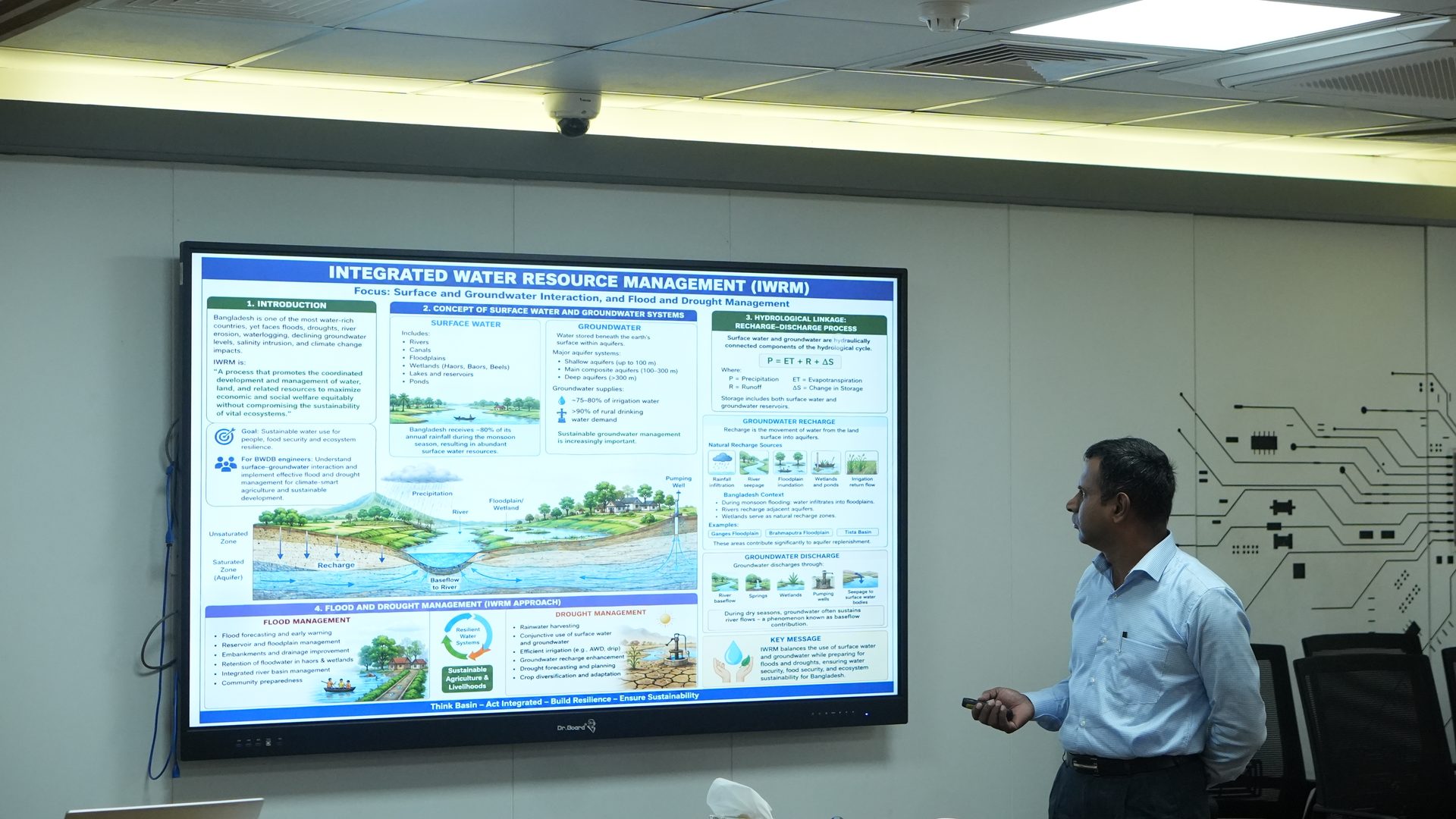
Hydrological linkage and the recharge–discharge process, aquifer management for sustainable abstraction, flood risk mitigation and drought planning for water scarcity.
Environmental Flow & Conflict
Ecological water needs and wetland conservation for biodiversity; conflict analysis over competing water uses and negotiation tools for dispute resolution.
GIS & Remote Sensing
Spatial data basics, layer analysis and thematic mapping; satellite imagery for land and water monitoring; change detection through temporal analysis.
Hydrological & Asset Mapping
Watershed delineation and catchment mapping, hydrological runoff simulation, asset inventory and structure mapping, condition assessment for maintenance planning.
IoT Monitoring & Smart Irrigation
Sensor networks for real-time data collection and telemetry for remote transmission; automated irrigation scheduling and soil-moisture sensing for efficient water use.
Decision Support & Disaster Risk
Multi-source data integration and planning support systems; GIS for flood mapping and hazard zonation, and early warning systems for risk communication.
Efficient Irrigation & Scheduling
Drip irrigation as a water-saving method and sprinkler systems for uniform distribution; crop-water requirement estimation and climate-based adaptive scheduling.
Salinity, Drainage & Conjunctive Use
Drainage design for excess water removal and salinity control through soil-water management; combined surface–groundwater utilisation and resource optimisation.
Sustainable Agriculture
Crop diversification for risk reduction, climate-tolerant resilient varieties, soil erosion control, water conservation, balanced nutrient management, eco-friendly pest control, ecosystem approach and nature-based green infrastructure.
Review & Post-Evaluation
Structured review of the three-day course, identification of key learnings from each day, and the written post-evaluation against the Day 1 baseline.
Day-by-Day Course Schedule
Participants reported to the Central ICT Lab at 08:30 each morning, with four sessions a day running to a 16:00 close.
- 09:00–09:20 Inauguration and Opening of the Training Course Introduction of participants; objectives of the training course and detailed agenda; brief introduction to the CSAWM (BWDB Part) Project; pre-evaluation. Methods: self-introduction, questionnaire fill-out, lecture discussion. Pijush Krishna Kundu Project Director, CSAWM (BWDB Part) Project
- 09:20–10:40 Session 1 — IWRM: Principles, Framework & Basin Planning IWRM Principles and Framework: integration concept — cross-sector coordination; policy alignment — national water governance. Basin and Sub-Basin Planning: catchment analysis — watershed assessment; allocation planning — water distribution strategy. Methods: case-based learning (Bangladesh context), group work and problem-solving exercises, expert sessions, experience sharing, interactive discussions. A. B. M. Khan Mozahedy Superintending Engineer (Civil), Surface Water Hydrology Circle, BWDB
- 10:40–10:50 Refreshment and tea break
- 10:50–12:10 Session 2 — IWRM: Stakeholder Participation & Water Balance Stakeholder Participation and Governance: community engagement — participatory planning; institutional coordination — multi-agency linkage. Water Balance and Budgeting: water accounting — inflow–outflow analysis; demand assessment — sectoral water needs. Methods: case-based learning, group work, expert sessions, experience sharing. A. B. M. Khan Mozahedy Superintending Engineer (Civil), Surface Water Hydrology Circle, BWDB
- 12:10–13:30 Session 3 — IWRM: Surface–Groundwater Interaction, Flood & Drought Surface and Groundwater Interaction: hydrological linkage — recharge-discharge process; aquifer management — sustainable abstraction. Flood and Drought Management: flood risk management — mitigation strategies; drought planning — water scarcity response. Methods: case-based learning, group work, expert sessions, interactive discussions. A. B. M. Khan Mozahedy Superintending Engineer (Civil), Surface Water Hydrology Circle, BWDB
- 13:30–14:20 Lunch and prayer break
- 14:20–15:40 Session 4 — IWRM: Environmental Flow & Conflict Resolution Environmental Flow and Ecosystem Protection: environmental flow — ecological water needs; wetland conservation — biodiversity protection. Conflict Resolution and Water Sharing: conflict analysis — competing water uses; negotiation tools — dispute resolution. Methods: case-based learning, group work and problem-solving exercises, experience sharing. A. B. M. Khan Mozahedy Superintending Engineer (Civil), Surface Water Hydrology Circle, BWDB
- 15:40–16:00 Day review and refreshment
- 09:00–10:20 Session 1 — GIS Fundamentals & Remote Sensing GIS Fundamentals for Water Management: spatial data basics — mapping concepts; layer analysis — thematic mapping. Remote Sensing Applications: satellite imagery — land and water monitoring; change detection — temporal analysis. Methods: hands-on technical sessions, group work and problem-solving exercises, with PPP and Q&A. Md. Manzur Rahman Executive Engineer (Civil), Office of the Director General, BWDB
- 10:20–10:40 Refreshment and tea break
- 10:40–12:00 Session 2 — Hydrological Mapping, Modelling & Asset Management Hydrological Mapping and Modeling: watershed delineation — catchment mapping; hydrological modelling — runoff simulation. Infrastructure Mapping and Asset Management: asset inventory — structure mapping; condition assessment — maintenance planning. Methods: hands-on technical sessions, group work and problem-solving exercises. Md. Manzur Rahman Executive Engineer (Civil), Office of the Director General, BWDB
- 12:00–13:20 Session 3 — IoT-Based Water Monitoring & Smart Irrigation IoT-Based Water Monitoring Systems: sensor networks — real-time data collection; telemetry systems — remote transmission. Smart Irrigation Systems: automated control — irrigation scheduling; soil moisture sensing — efficient water use. Methods: interactive discussion, large group discussion with PPP. Md. Manzur Rahman Executive Engineer (Civil), Office of the Director General, BWDB
- 13:20–14:20 Lunch and prayer break
- 14:20–15:40 Session 4 — Decision Support Systems & GIS for Disaster Risk Data Integration and Decision Support Systems: data integration — multi-source datasets; decision tools — planning support systems. GIS for Disaster Risk Management: flood mapping — hazard zonation; early warning systems — risk communication. Methods: interactive discussion, large group discussion with PPP. Md. Manzur Rahman Executive Engineer (Civil), Office of the Director General, BWDB
- 15:40–16:00 Day review and refreshment
- 09:00–10:20 Session 1 — Climate-Resilient Irrigation: Efficient Techniques & Scheduling Efficient Irrigation Techniques: drip irrigation — water saving method; sprinkler systems — uniform distribution. Irrigation Scheduling under Climate Variability: crop-water requirement — demand estimation; climate-based scheduling — adaptive timing. Methods: interactive discussion, story telling, large group discussion with PPP. Engr. Mofazzal Hossain Agricultural Engineer, CSAWMP (DAE Part), Department of Agricultural Extension
- 10:20–10:40 Refreshment and tea break
- 10:40–12:00 Session 2 — Climate-Resilient Irrigation: Salinity, Waterlogging & Conjunctive Use Salinity and Waterlogging Management: drainage design — excess water removal; salinity control — soil-water management. Conjunctive Water Use: surface-groundwater use — combined utilisation; resource optimisation — sustainable supply. Methods: VIPP, story telling, large group discussion with PPP. Engr. Mofazzal Hossain Agricultural Engineer, CSAWMP (DAE Part), DAE
- 12:00–13:20 Session 3 — Sustainable Agriculture Practices Crop diversification — risk reduction; resilient varieties — climate-tolerant crops; soil management — erosion control; water conservation — efficient use; nutrient management — balanced fertilisation; pest control — eco-friendly methods; ecosystem approach — sustainable farming; nature-based solutions — green infrastructure. Methods: interactive discussion, story telling, large group discussion with PPP. Khandakar Mohammad Rashed Iftekher Project Director, CSAWMP (DAE Part), DAE, Dhaka
- 13:20–14:20 Lunch and prayer break
- 14:20–15:40 Session 4 — Review of the Training Course Review of the three-day training course; identification of the key learnings from all three days; post-evaluation against the Day 1 baseline. Methods: game and group discussion. Pijush Krishna Kundu Project Director, CSAWM (BWDB Part) Project
- 15:40–16:00 Closing ceremony, certificate distribution and refreshment
Training Methodology
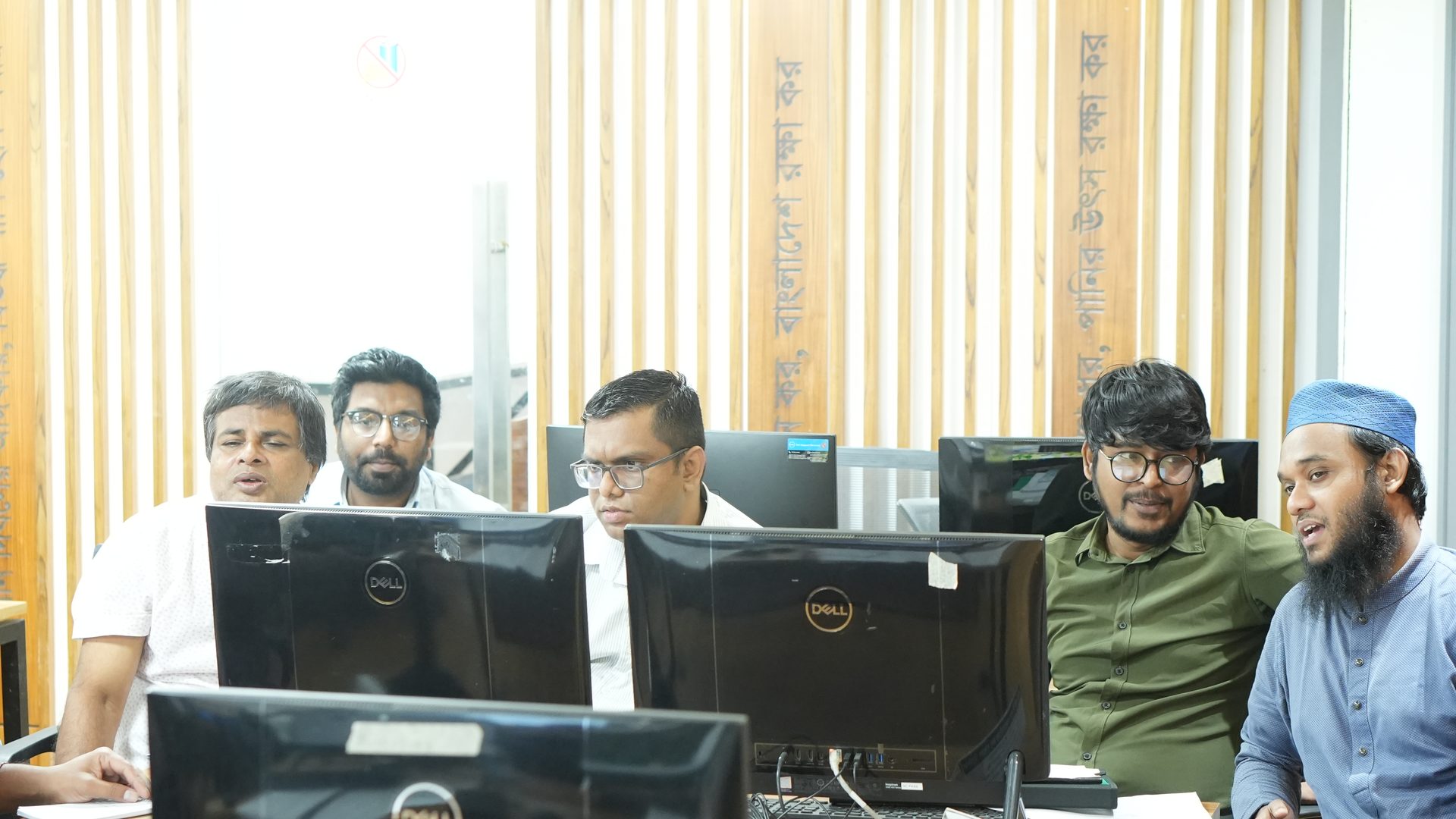
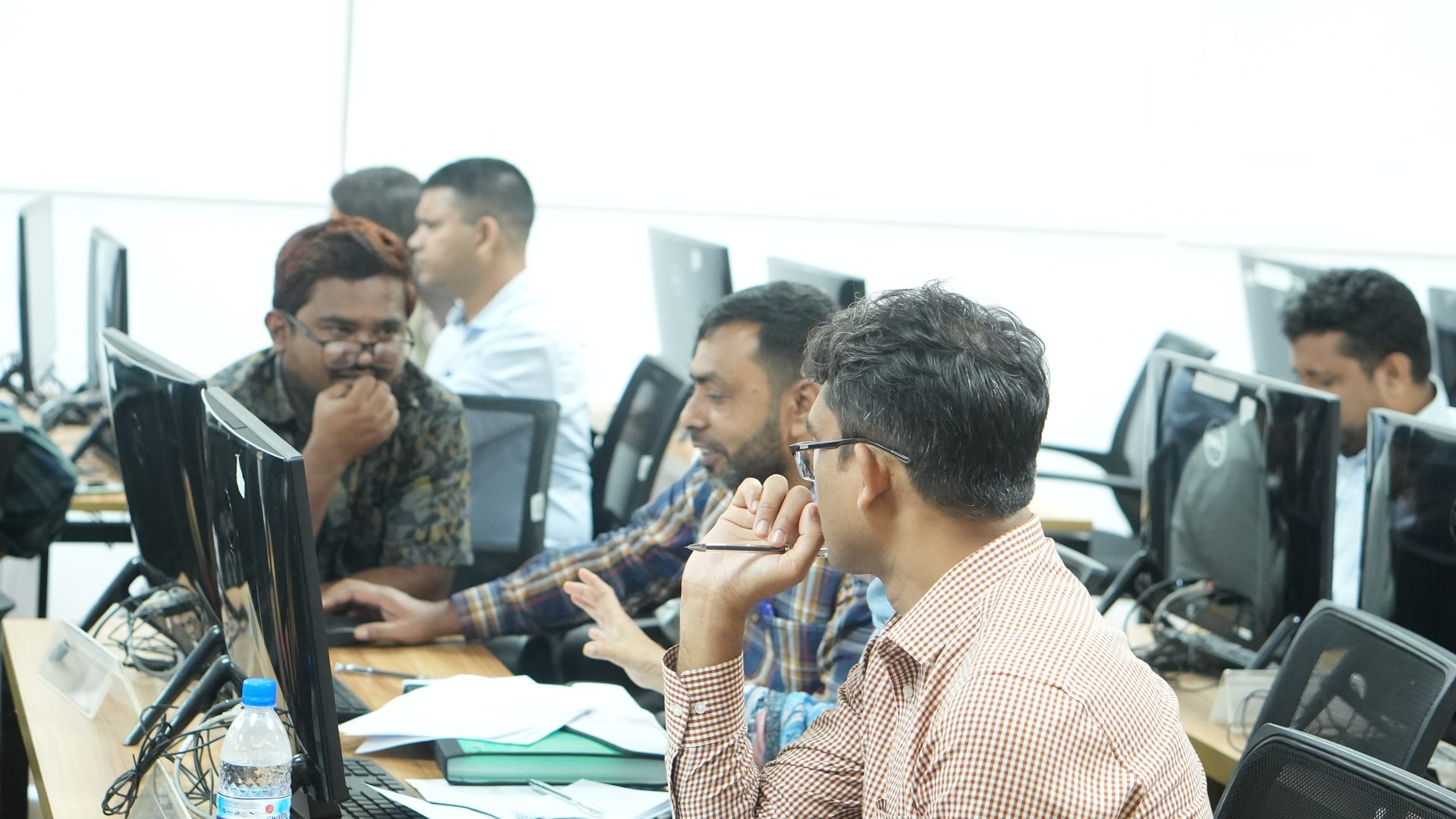
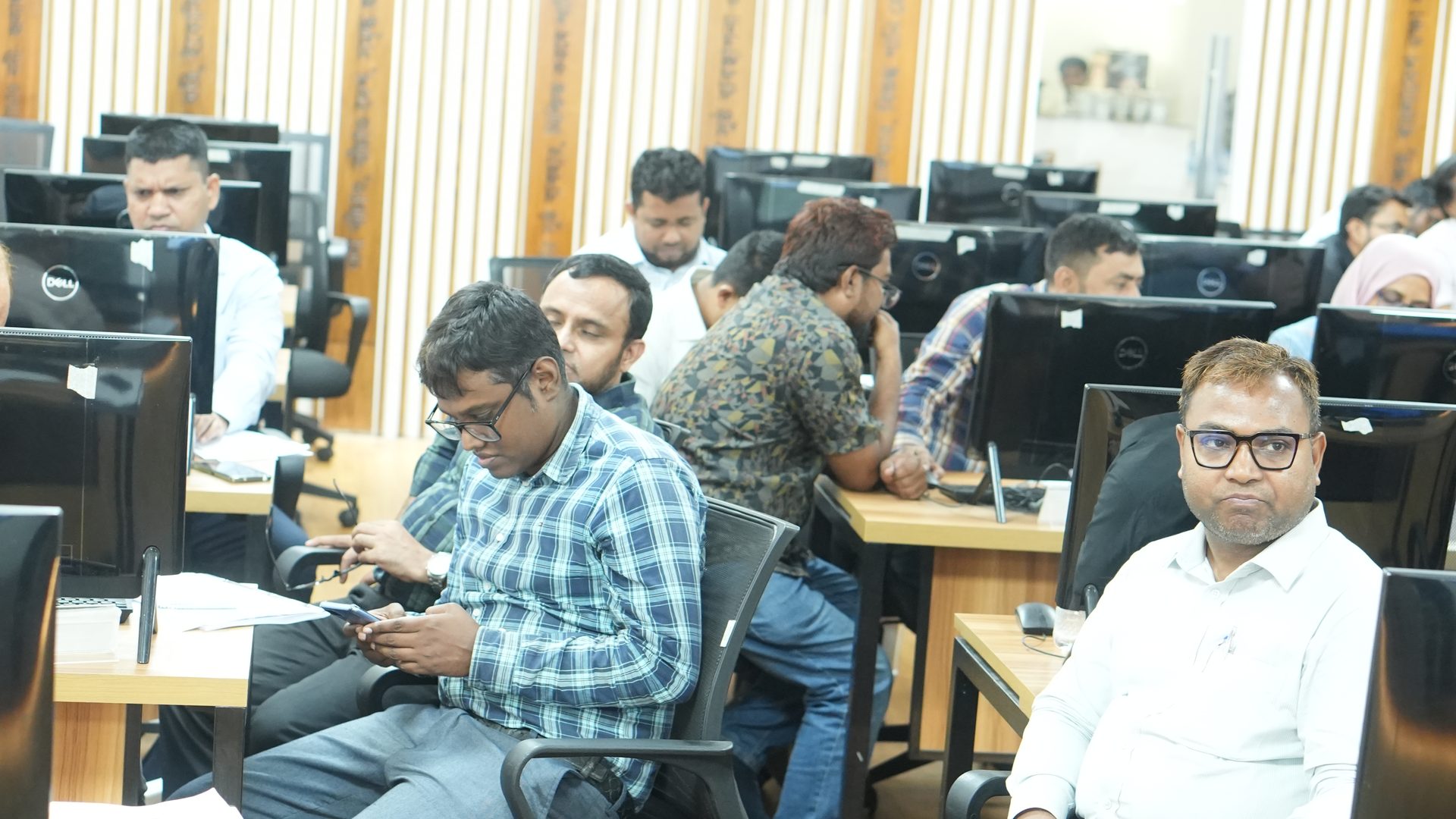
Three days, three distinct teaching registers. Day 1 ran on case-based learning in the Bangladesh context, group problem-solving and expert sessions. Day 2 was explicitly hands-on technical — the reason the course sat in a working computer lab rather than a seminar room. Day 3 leaned on story telling and VIPP card work, which is the right instrument for agronomy: a salinity problem is a place, a season and a farmer's decision before it is a principle.
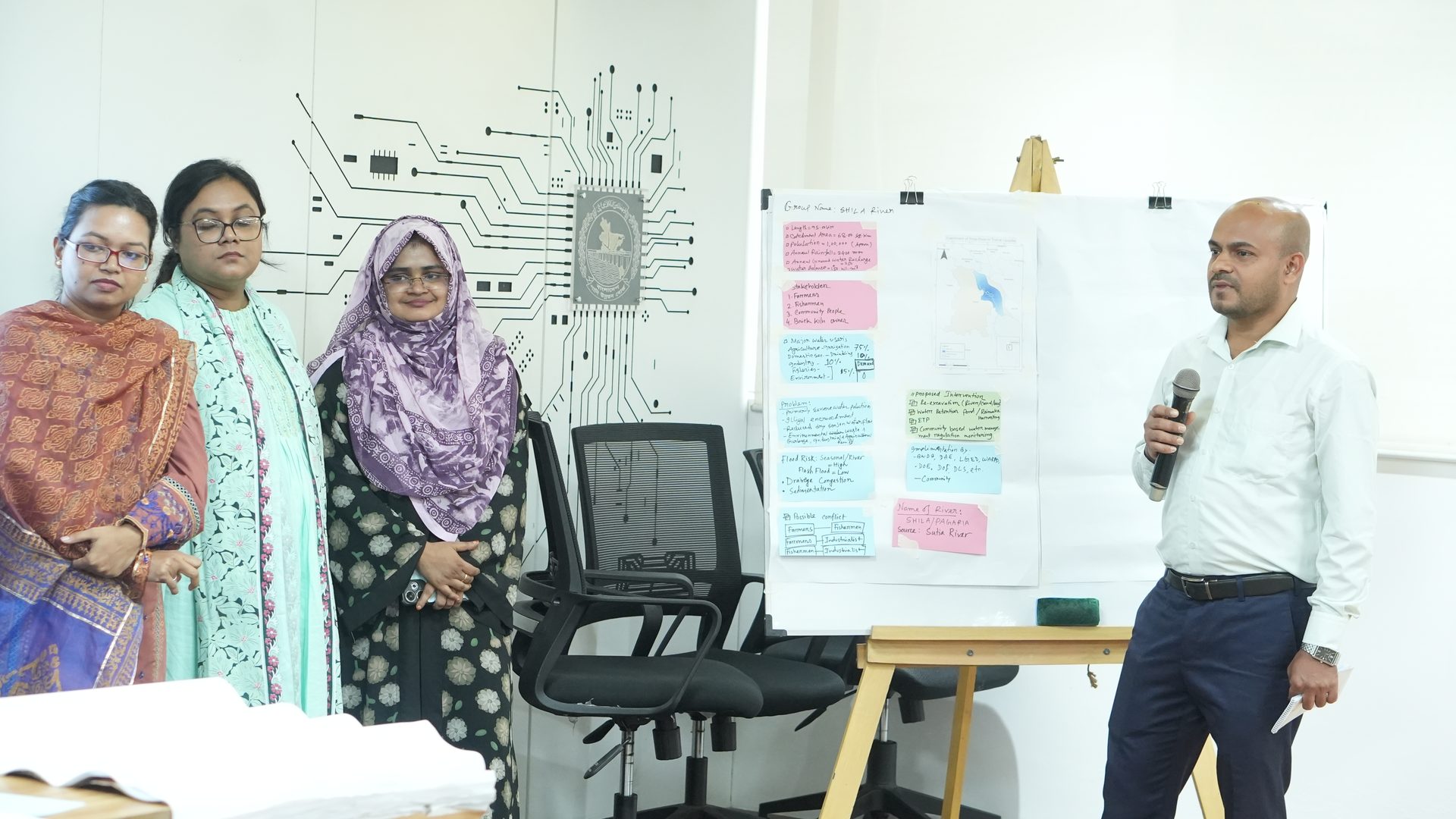
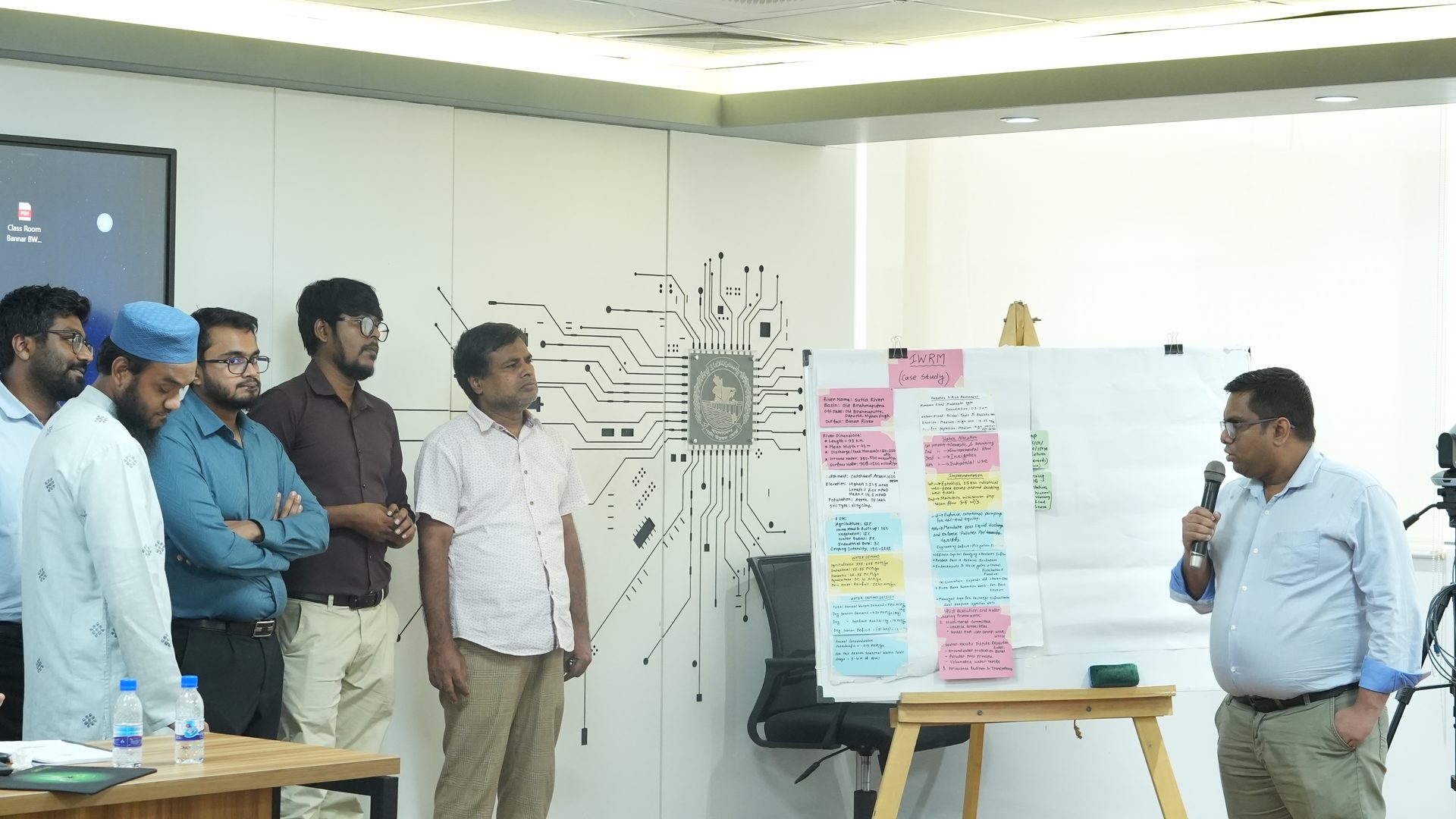
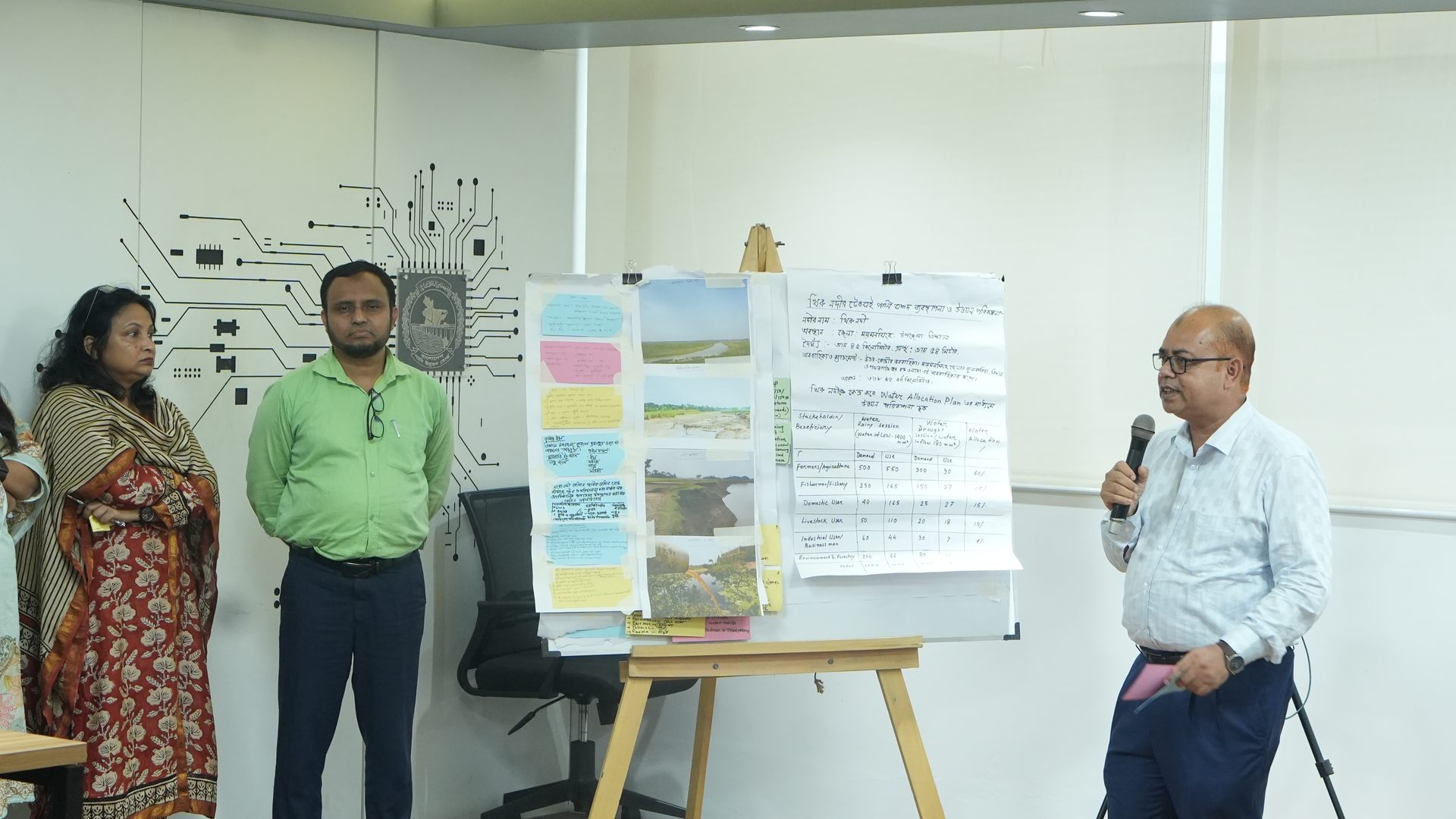
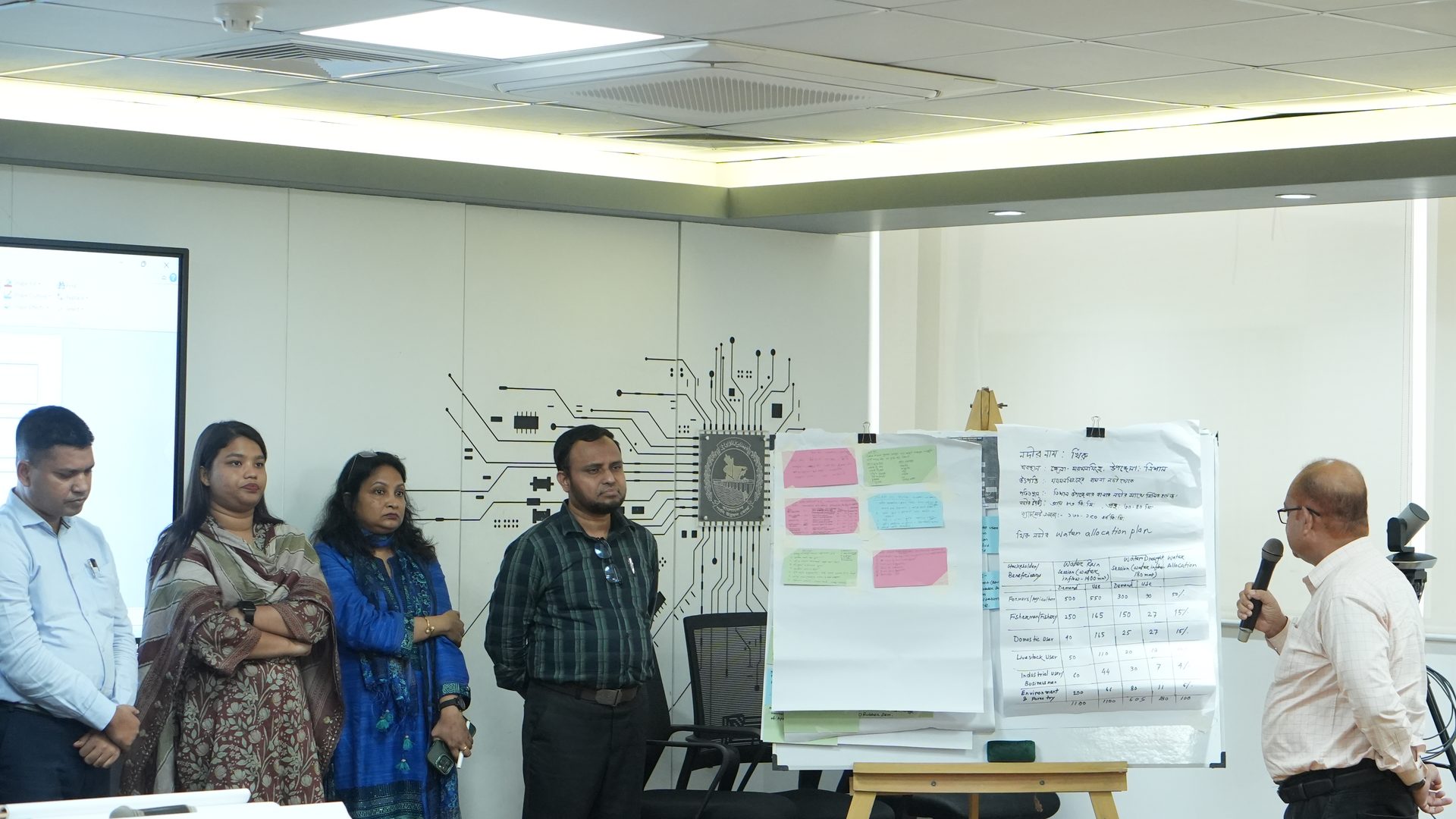
Group Poster Presentations
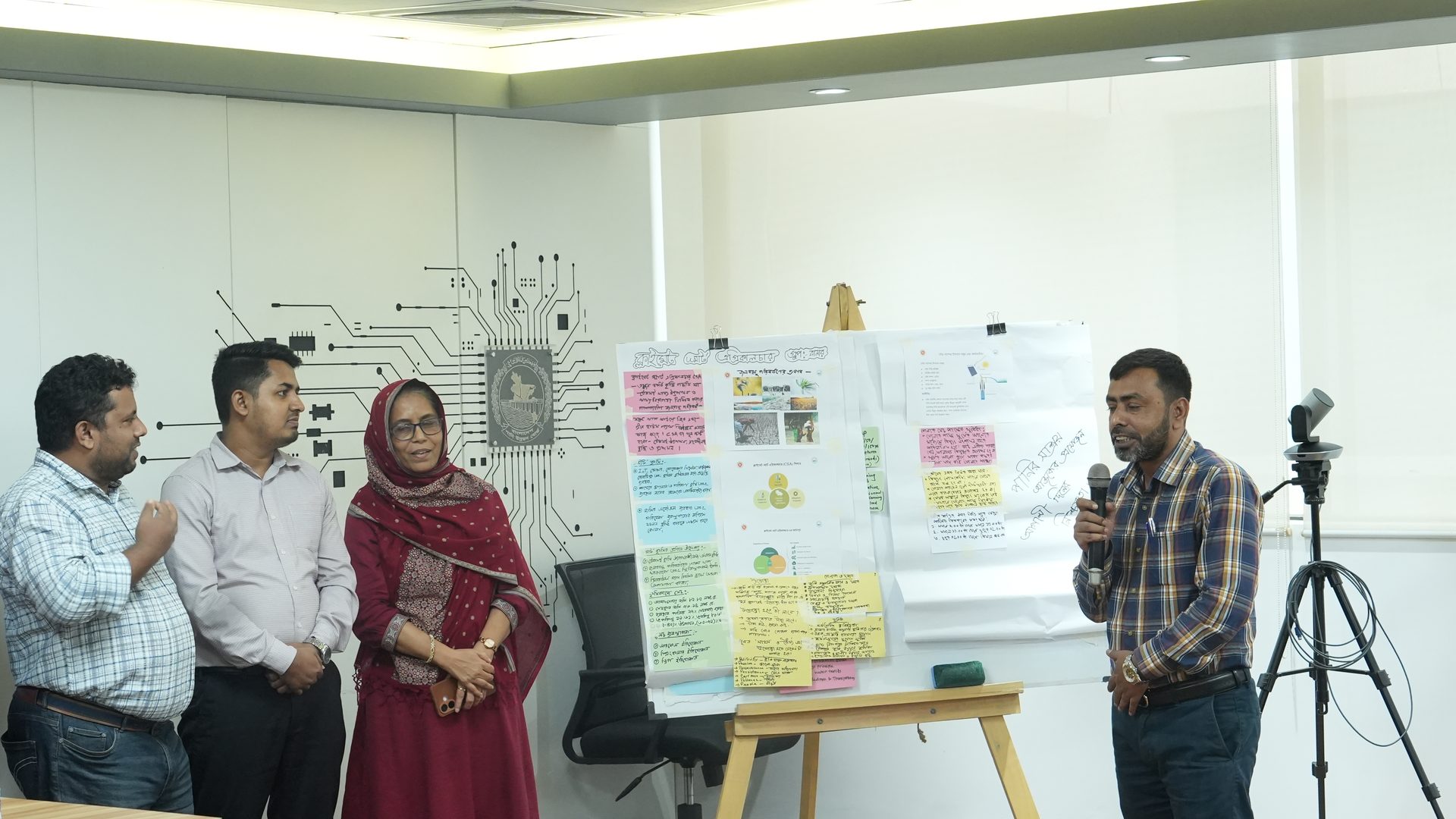
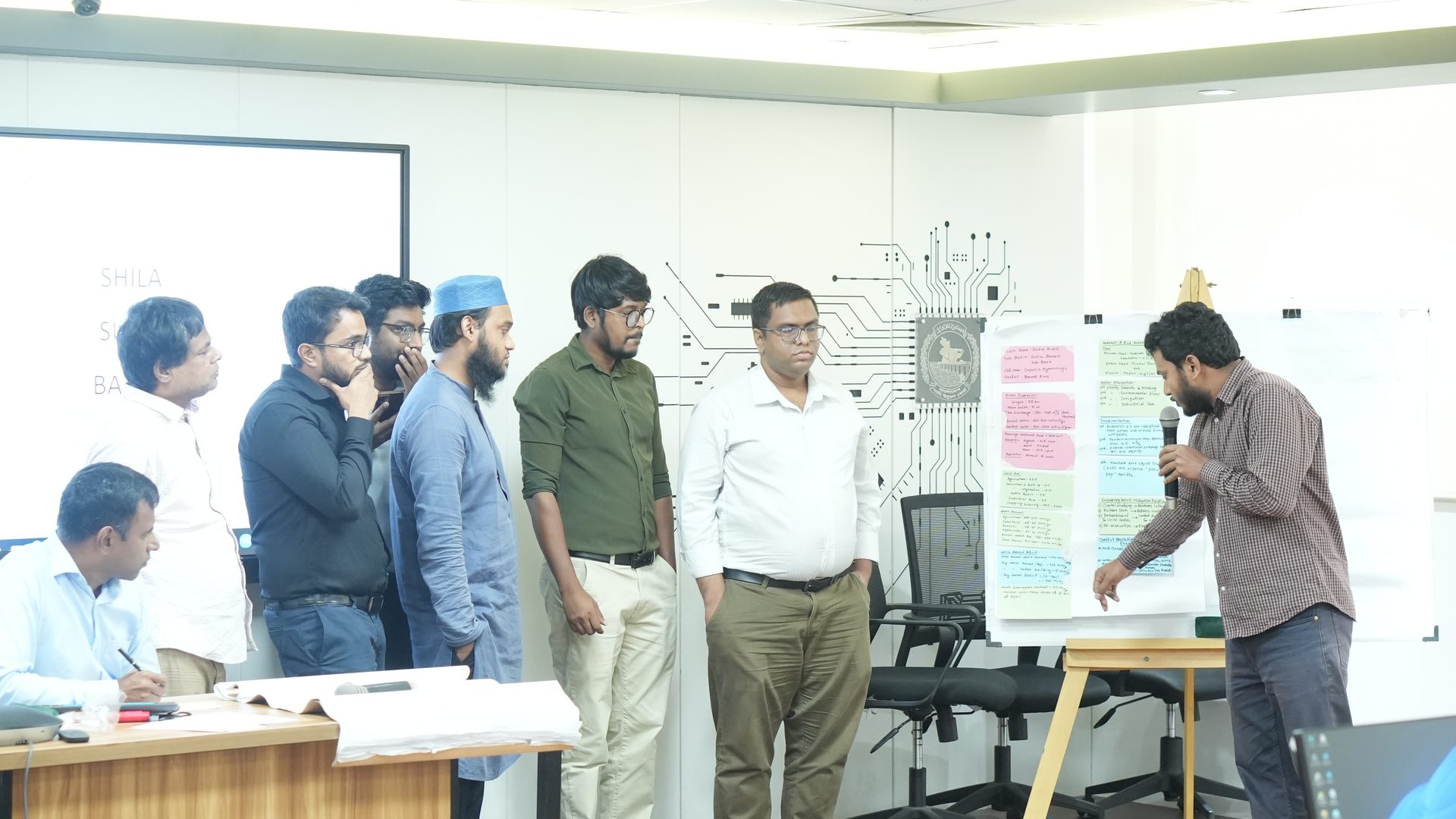
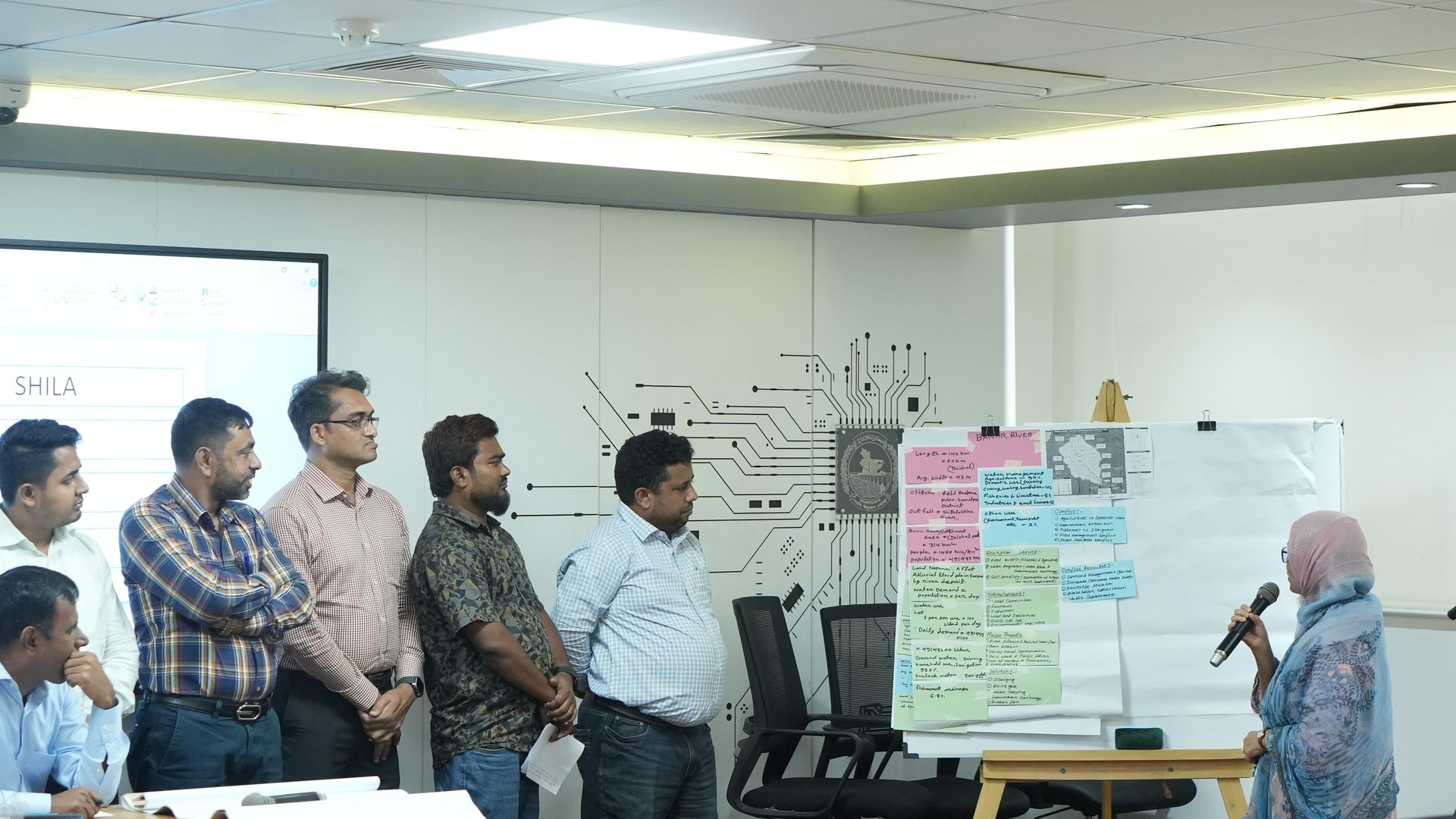
Participants worked in groups across the three days and presented their analysis on flip-chart posters — hand-drawn catchment sketches, printed site photographs, tabulated allocation figures and VIPP cards, defended to the room. It is the most visible evidence in the photographic record that this was analytical work rather than attendance: a group cannot draw a watershed and tabulate its demand figures without having done the exercise.
Participant Feedback
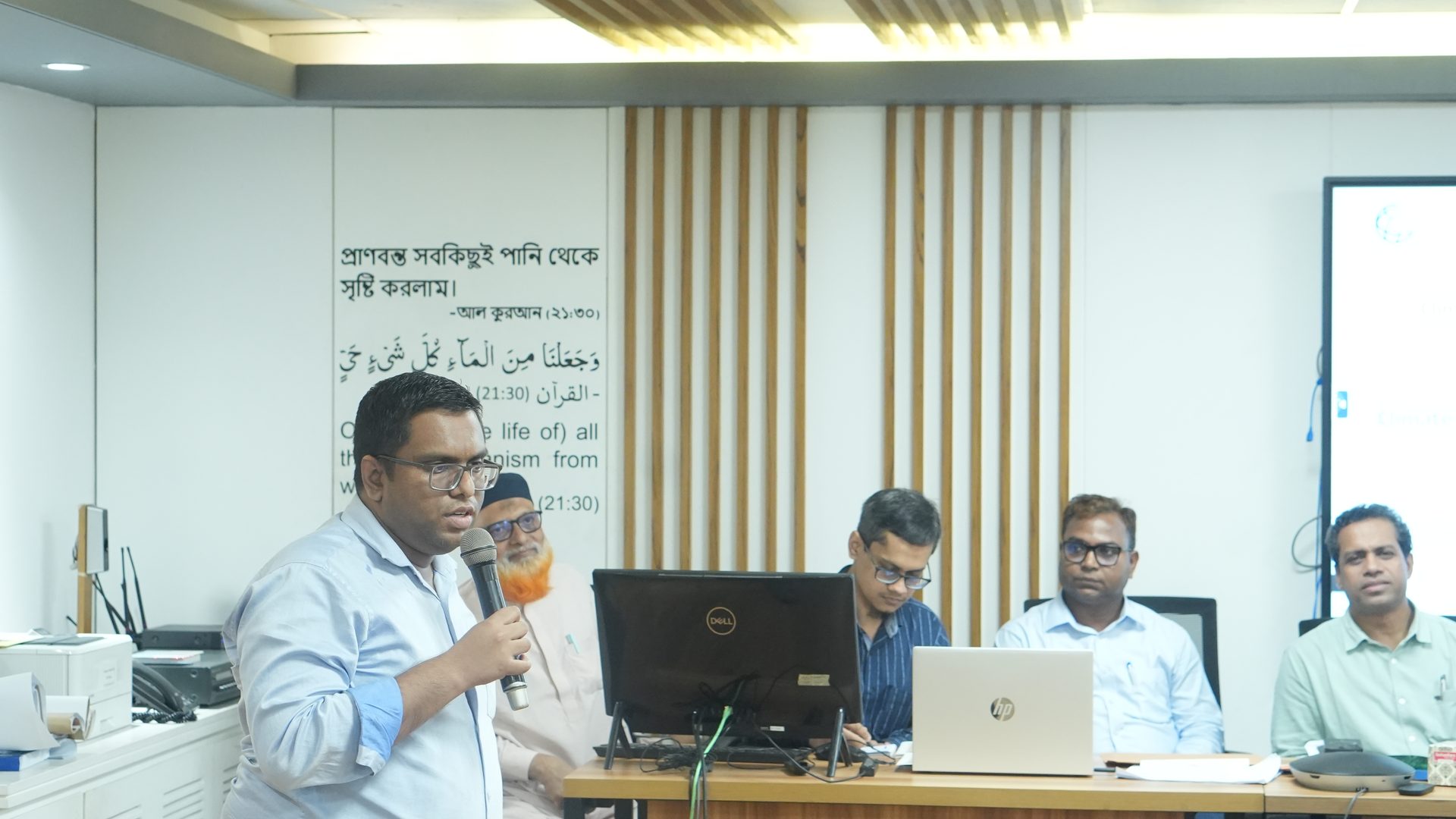
Feedback was taken from the floor on the final afternoon — on the pacing across three quite different technical registers, on the hands-on GIS content, and on how directly the agriculture day connected to the schemes participants supervise.
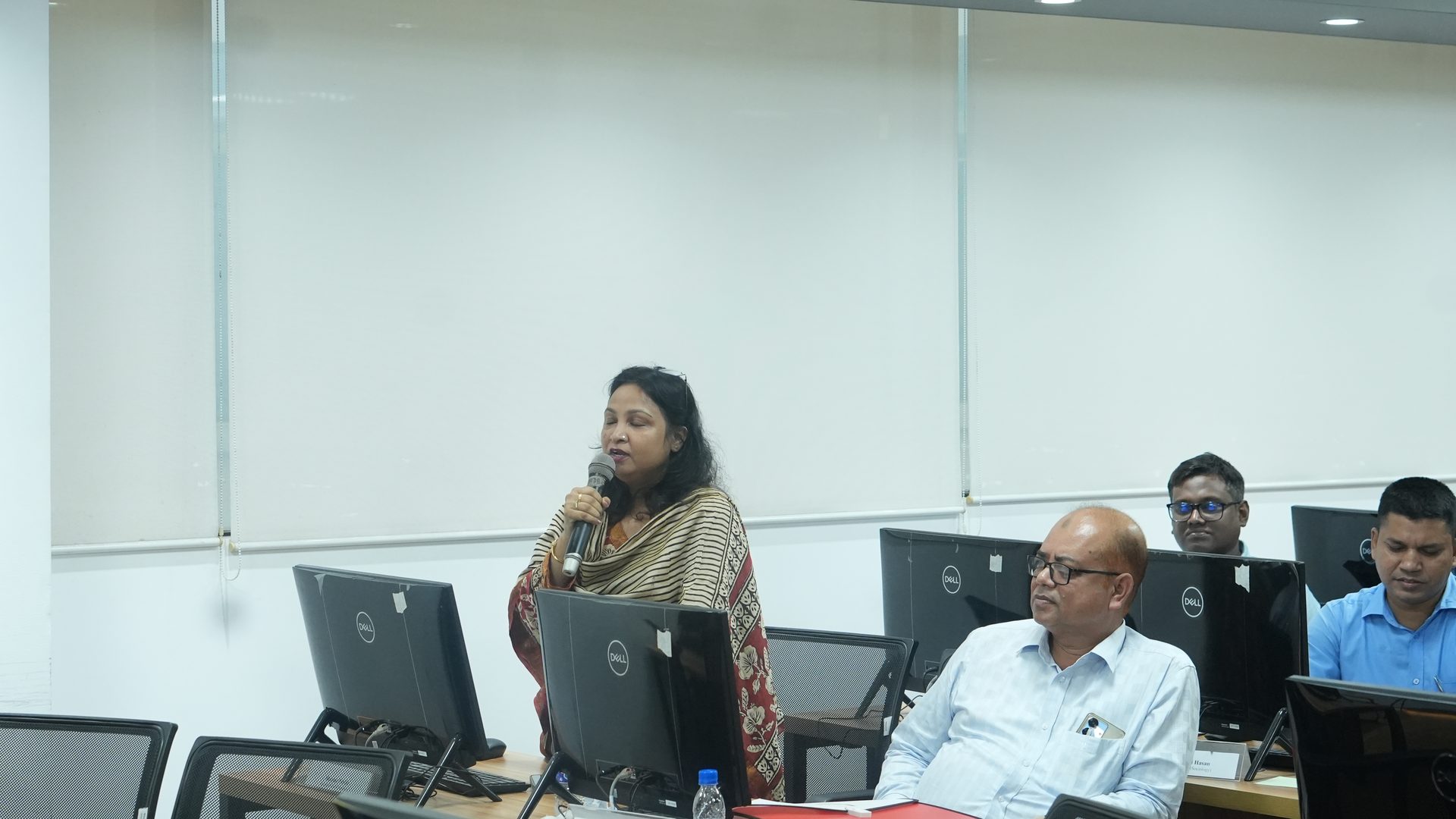
Who Was in the Room
Fifteen of the twenty-five were engineers — two Executive Engineers, five Sub-Divisional Engineers, seven Assistant Engineers and a Sub-Assistant Engineer — but the notable thing is how deliberately non-uniform the rest of the room was. Alongside them sat four finance and accounts officers, two assistant extension officers from Natore and Rangpur, two research officers in sociology and in environment & forest, and two assistant chiefs in sociology.
For a course whose third day is about farmers' cropping decisions, having sociologists and field extension officers in the room is not decoration. The offices represented reach across the Board's technical spine — the Central GIS Directorate, the Surface Water Hydrology Circle, the North Eastern Hydrology Measurement Division, Design Circle-5, the Directorates of Planning-2 and Planning-3 — and out to WD divisions and circles in Thakurgaon, Chandpur, Dhaka, Natore and Rangpur. Twenty directorates, circles, divisions and projects in all.
Full Participant Roster
Executive Engineer (Civil)
Directorate of Planning-3, BWDB, DhakaAdditional Director (FA&A)
Directorate of Finance, BWDB, DhakaDeputy Director (FA&A)
Directorate of Accounts, BWDB, DhakaExecutive Engineer (Civil)
B-Strong Project (BWDB Part), DhakaSub-Divisional Engineer (Civil)
Central GIS Directorate, BWDB, DhakaSub-Divisional Engineer (Civil)
Design Circle-5, BWDB, DhakaSub-Divisional Engineer (Civil)
Directorate of Planning-2, BWDB, DhakaSub-Divisional Engineer (Civil)
Directorate of Planning-3, BWDB, DhakaSub-Divisional Engineer (Mechanical)
Workshop Division, BWDB, DhakaSenior Assistant Director (FA&A)
ME RAC, BWDB, DhakaAssistant Engineer (Civil)
Surface Water Hydrology Circle, BWDB, DhakaAssistant Engineer (Civil)
Thakurgaon WD Division, BWDB, ThakurgaonAssistant Engineer (Civil)
Directorate of Planning-2, BWDB, DhakaAssistant Engineer (Civil)
Dhaka WD Division, BWDB, DhakaAssistant Engineer (Civil)
Dhaka WD Division, BWDB, DhakaAssistant Engineer (Civil)
Chandpur WD Circle, BWDB, ChandpurAssistant Engineer (Civil)
Office of the Chief Engineer, Planning, BWDB, DhakaAssistant Director (FA&A)
CSAWM (BWDB Part) Project, BWDB, DhakaAssistant Extension Officer (AEO)
Office of the AEO, BWDB, NatoreAssistant Extension Officer (AEO)
Office of the DCEO, BWDB, RangpurResearch Officer (Sociology)
Directorate of Economic Evaluation, BWDB, DhakaResearch Officer (Environment & Forest)
Directorate of Economic Evaluation, BWDB, DhakaAssistant Chief (Sociology)
Disaster Risk Management Enhancement Project, BWDB, DhakaAssistant Chief (Sociology)
Directorate of Planning-3, BWDB, DhakaSub-Assistant Engineer (Civil)
North Eastern Hydrology Measurement Division (NEHMD), BWDB, DhakaThe cadre keeps compounding: six of these twenty-five had attended an earlier batch, and Shawon Kumar Saha, Sub-Divisional Engineer (Mechanical) at Workshop Division, is on his third course of the programme. More striking is the leadership line: Md. Mohsin Patwary sat as a participant on the Package 22 Project Management batch on 12–13 July and served as this batch's Course Evaluator a fortnight later. Across 75 batches, that is how a training programme stops being delivered to an organisation and starts being delivered by it.
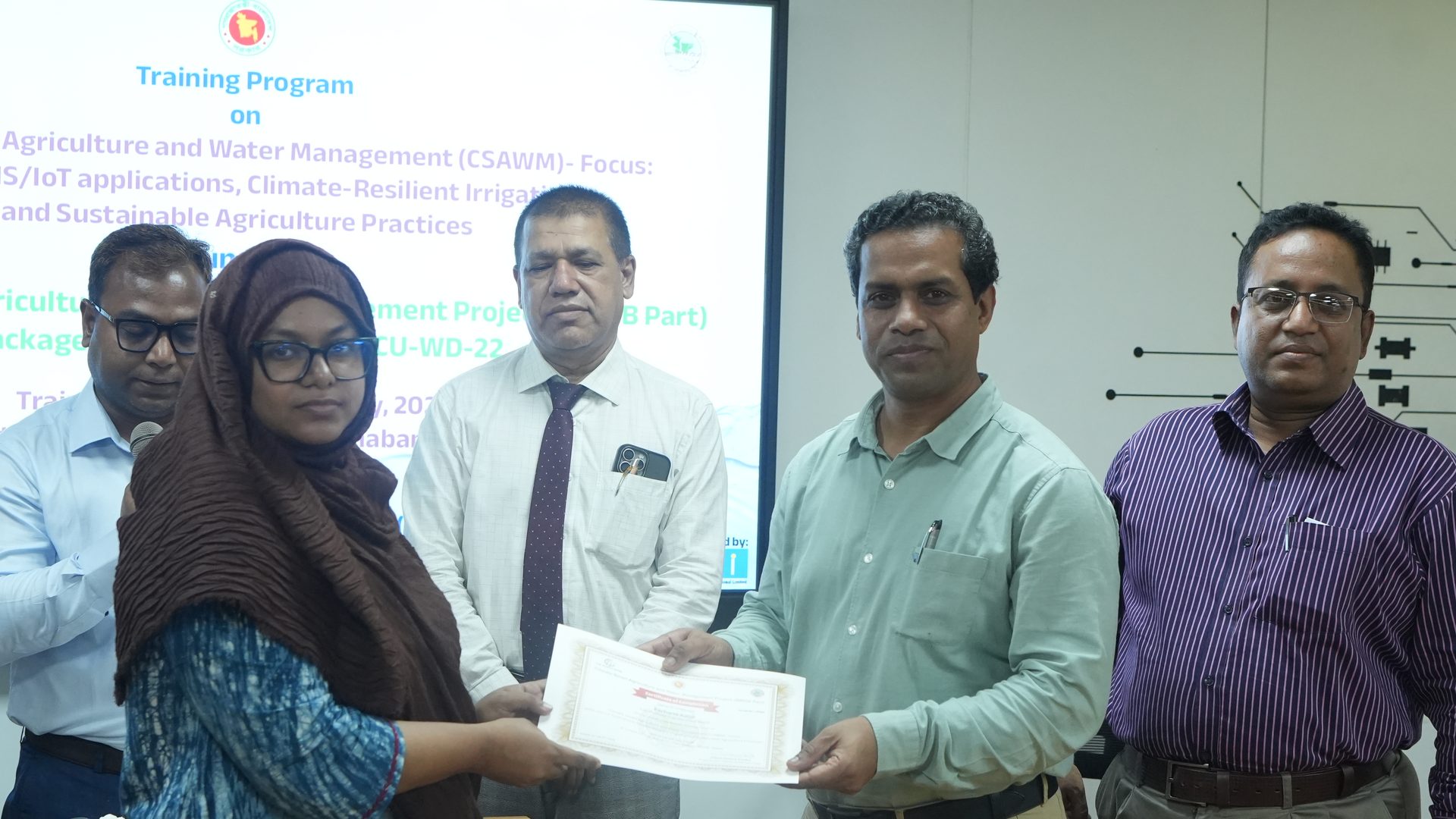
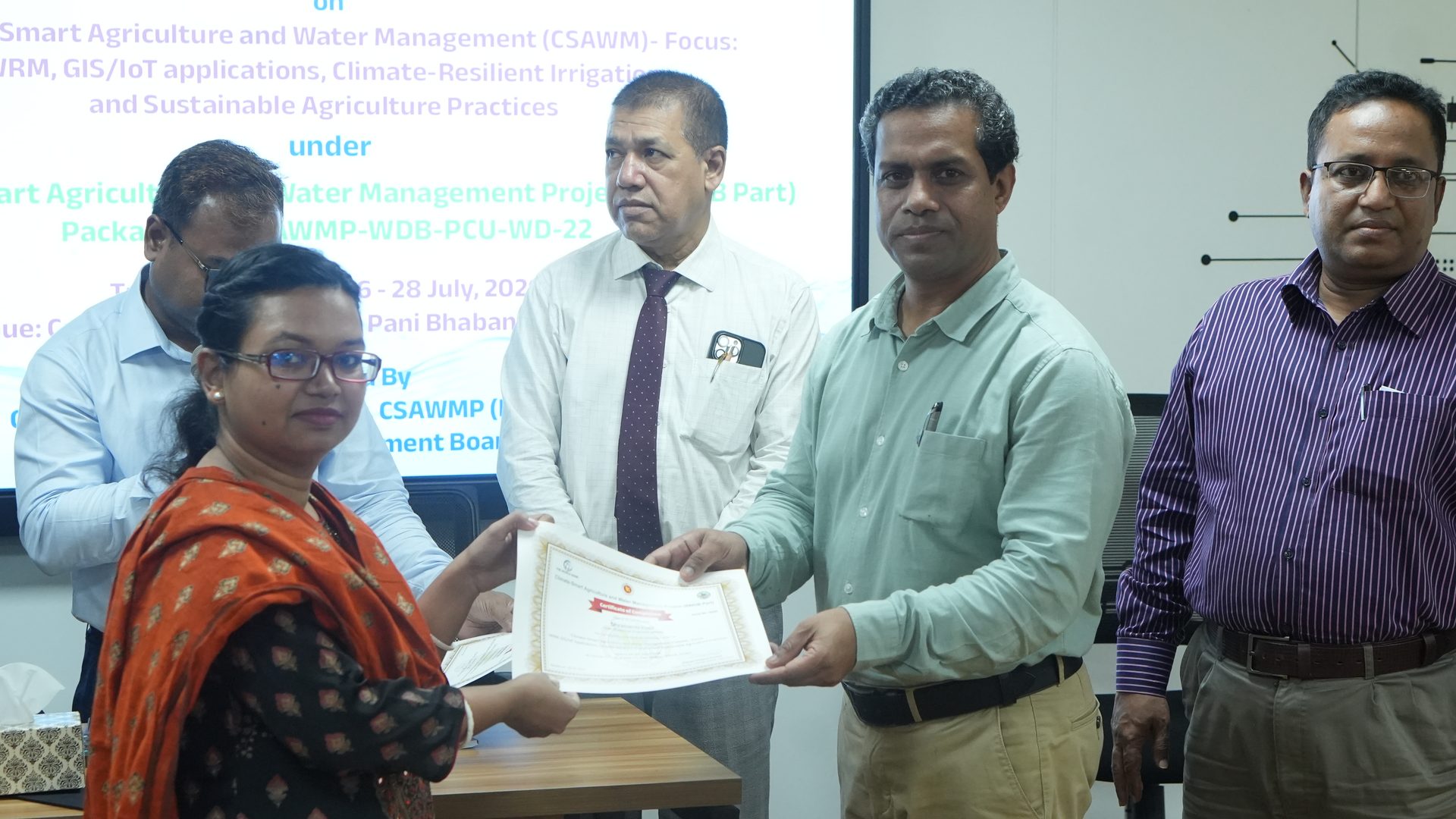
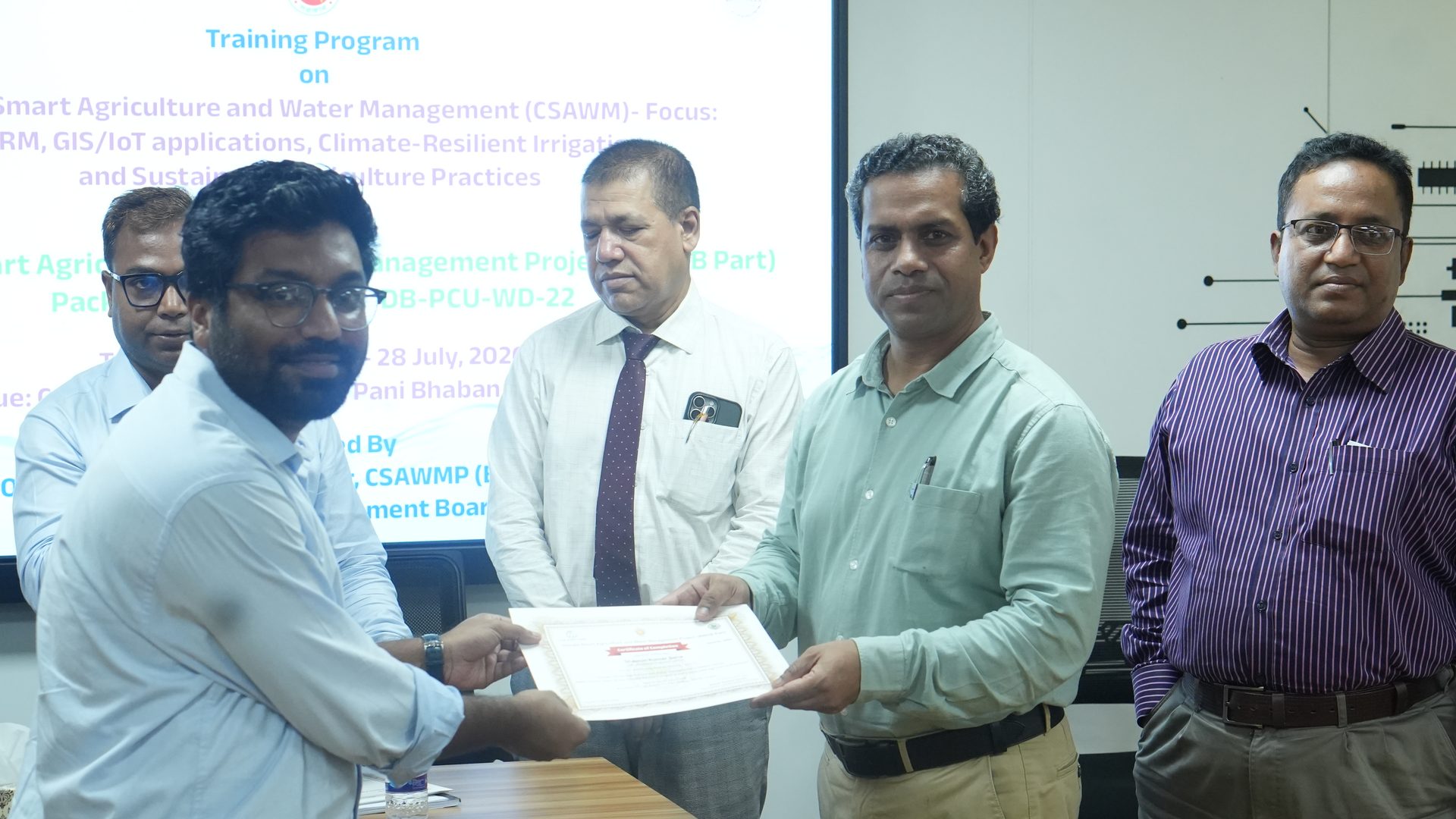
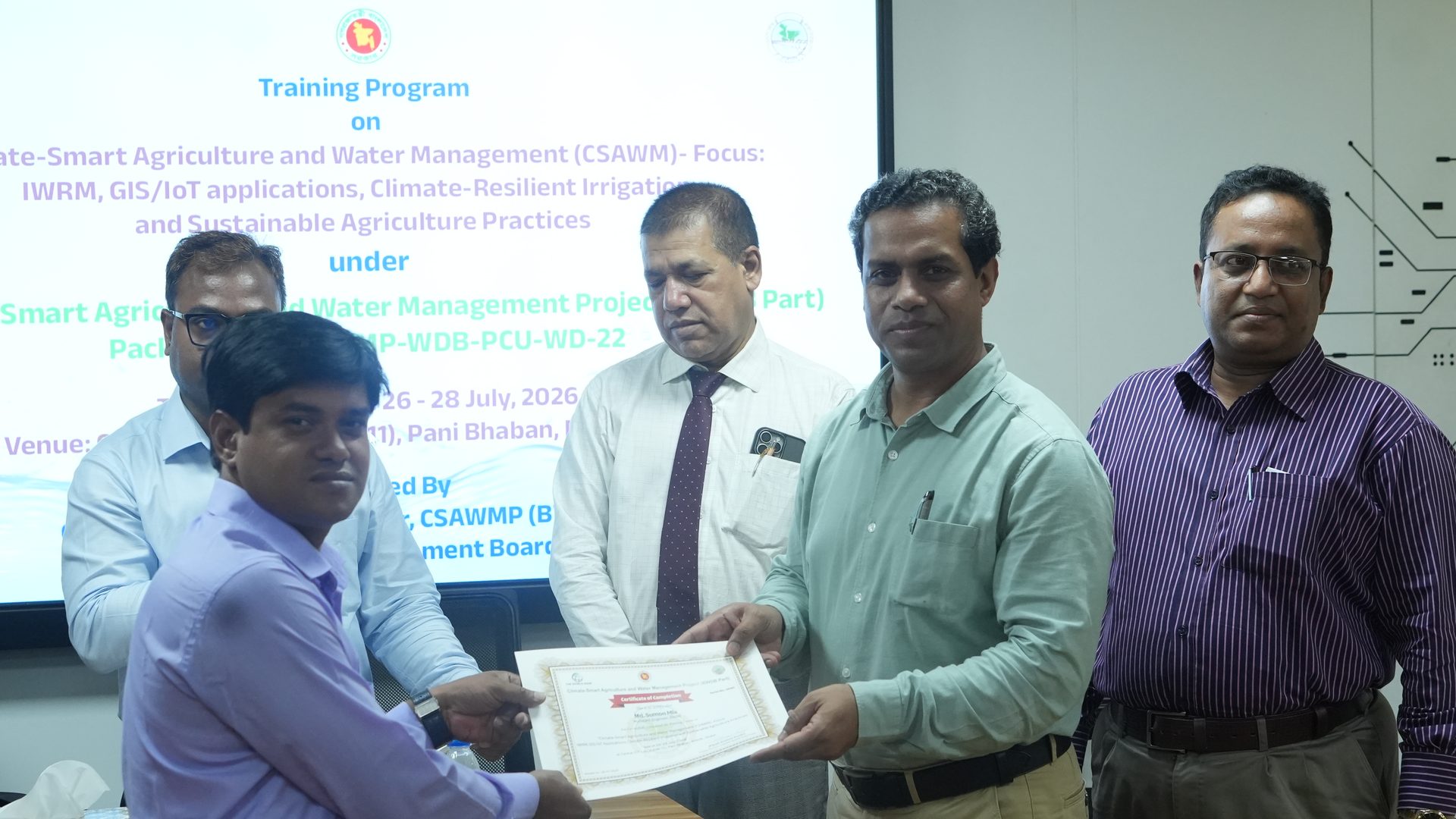
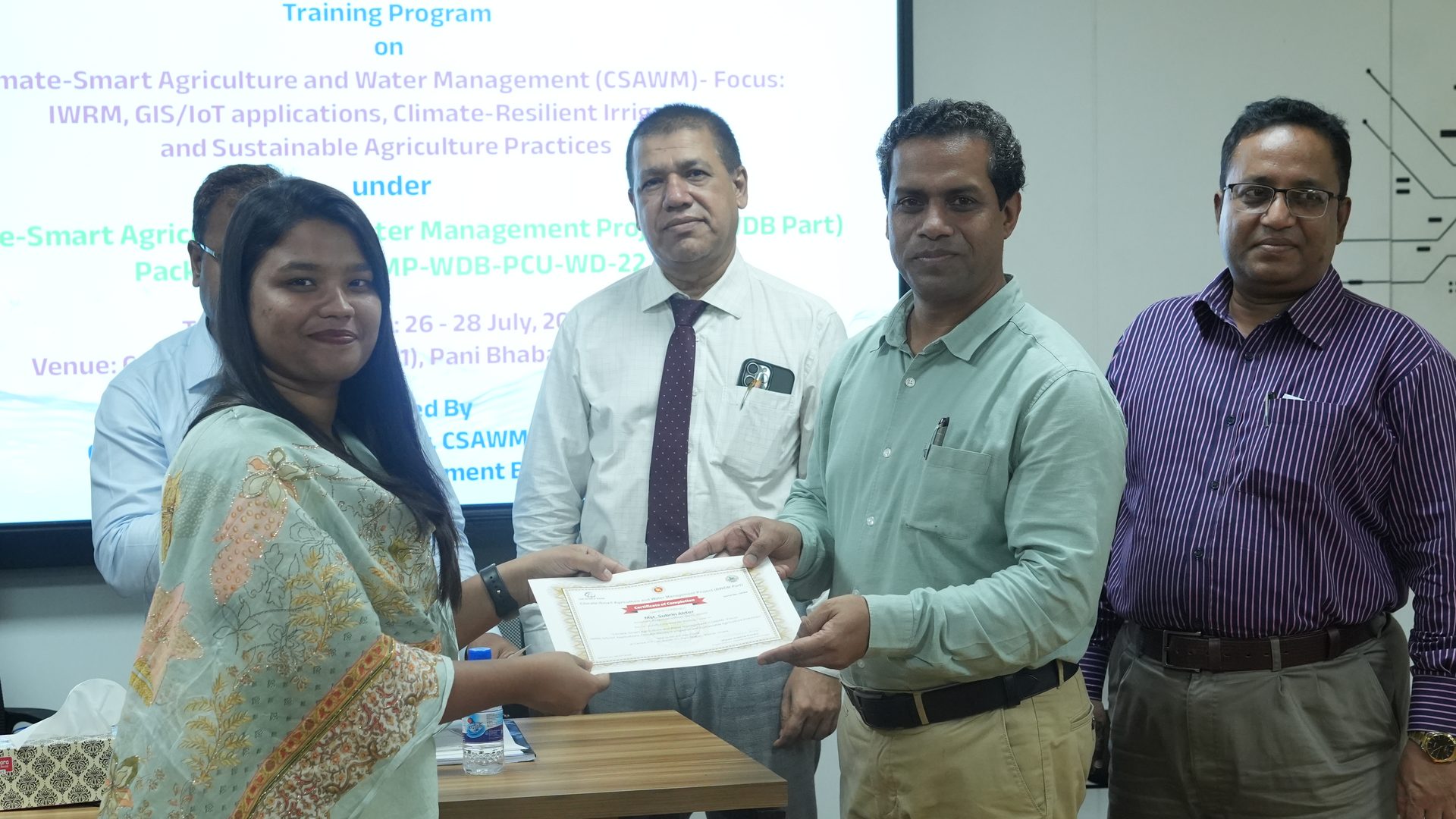
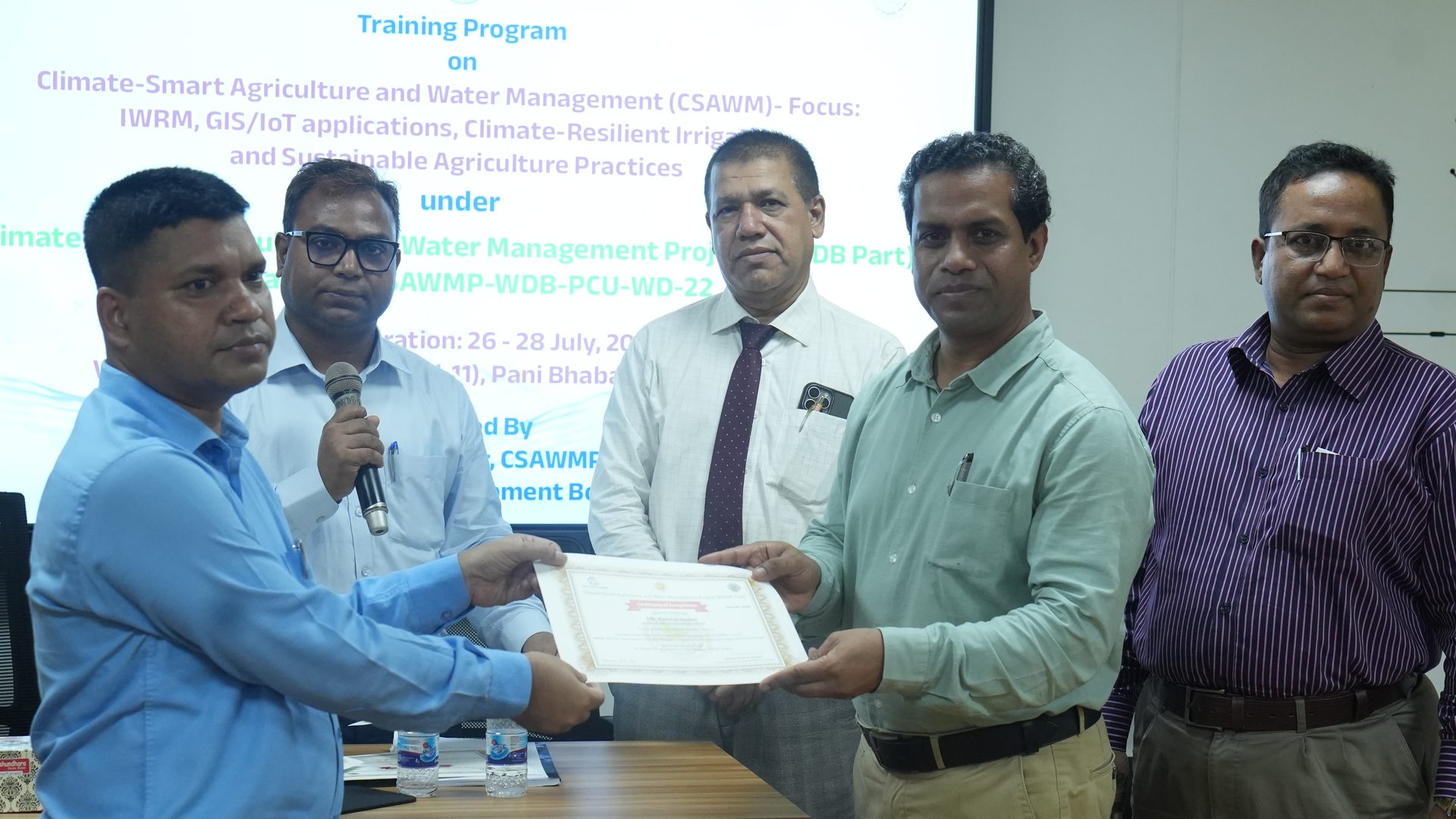
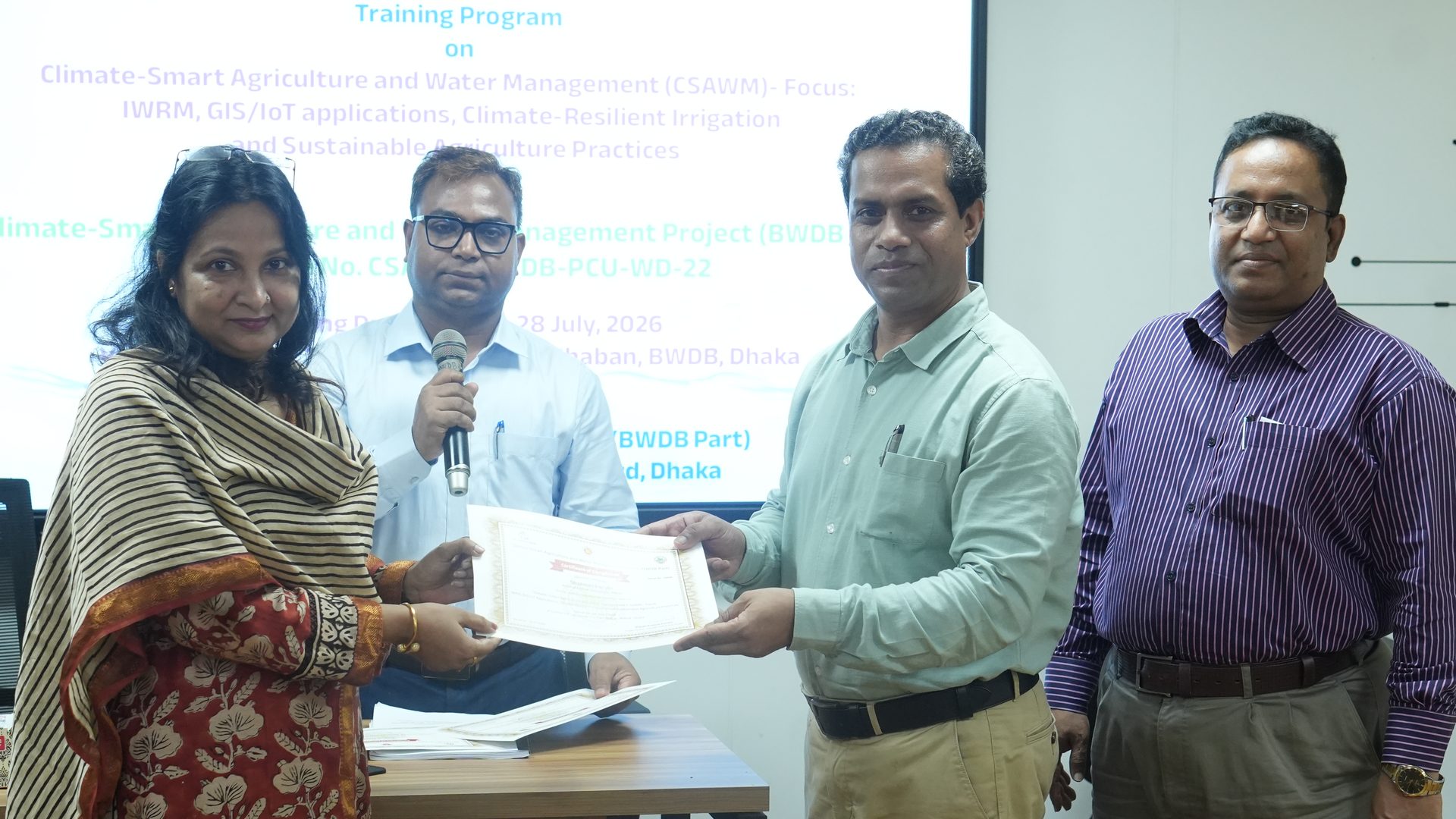
Closing Ceremony & Certification
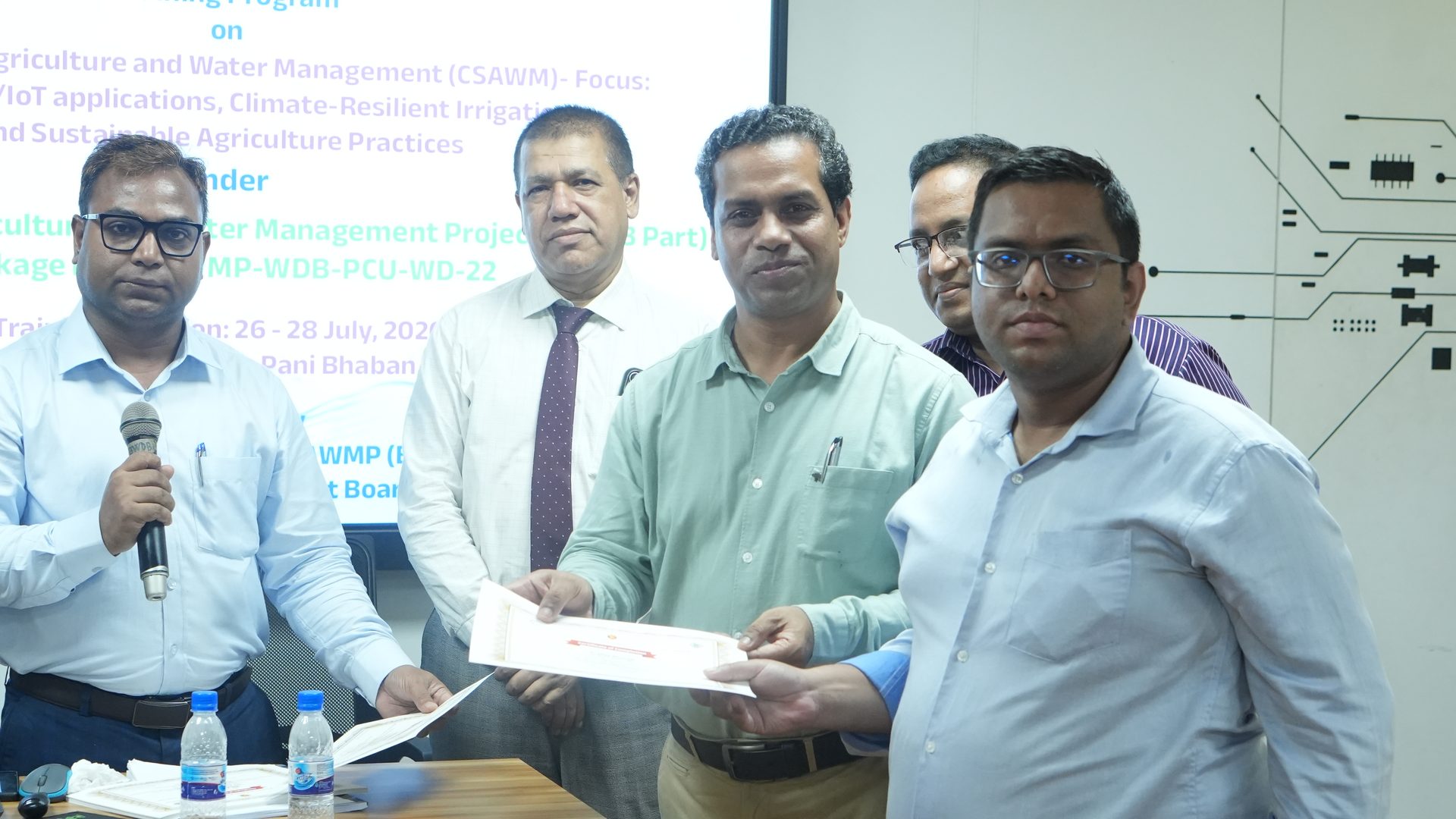
The Project Director led the course review on the final afternoon, participants sat the post-evaluation against their Day 1 baseline, and certificates were distributed to all twenty-five.
The Course in Pictures
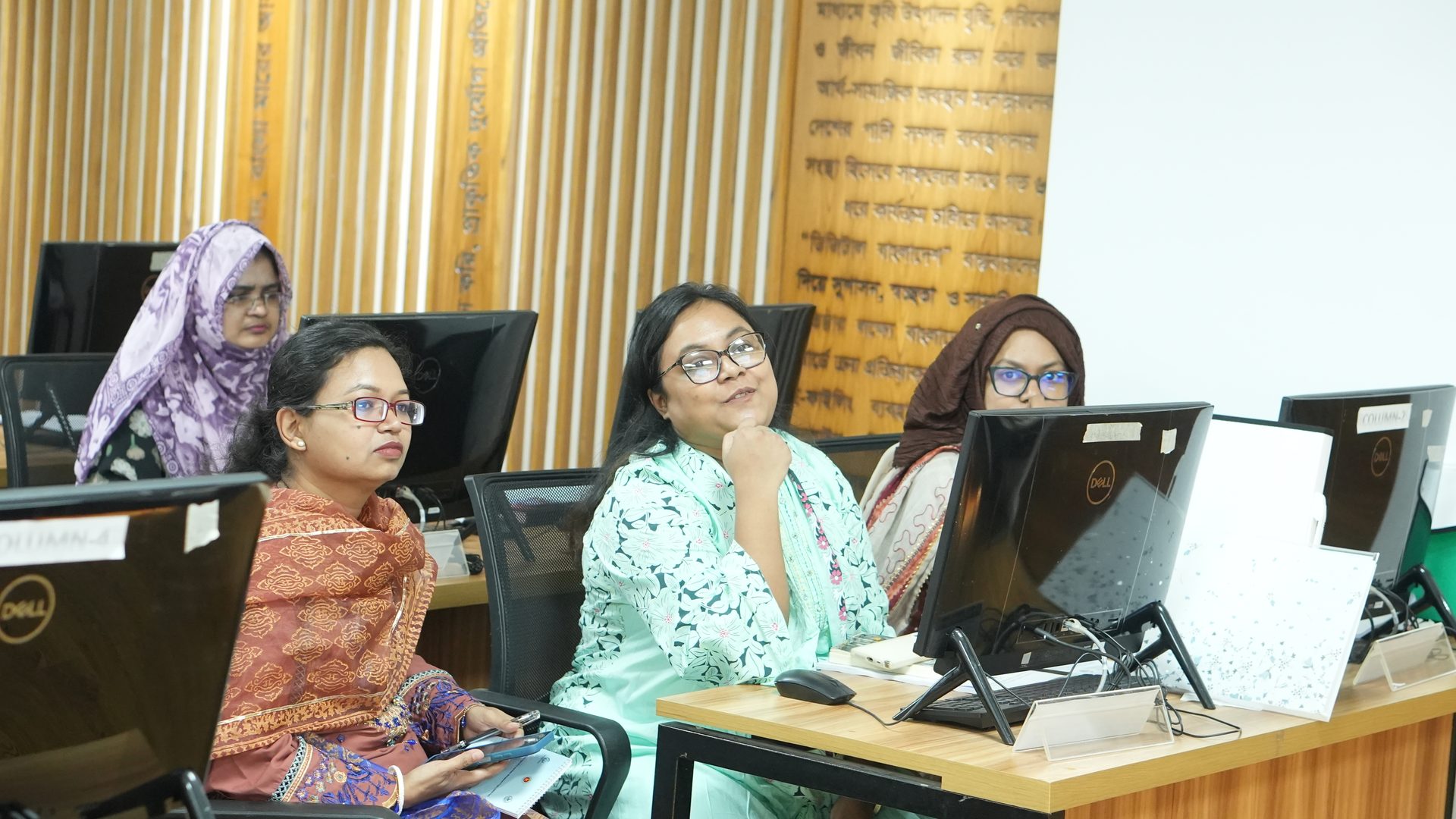
Twelve further photographs from the three days at the Central ICT Lab, Pani Bhaban — technical sessions, group poster presentations and the certificate ceremony.
Why This Matters
"Climate-smart" is one of those phrases that can mean everything and therefore nothing. This course gives it a testable definition: it is what happens when the person allocating water in a basin, the person reading the satellite imagery, and the person advising the farmer on which variety to plant are working from the same picture.
Each of those three currently sits in a different institutional world. Basin allocation is BWDB planning; remote sensing and telemetry are increasingly a data-directorate speciality; cropping advice belongs to the Department of Agricultural Extension. A polder that holds back salinity is worth nothing if the cropping calendar behind it does not change; a soil-moisture sensor is an expensive ornament if nobody adjusts the irrigation schedule it reports on; a drought plan written without agronomy is a document about water, not about food.
Putting all three in one room over three days — and having the last day taught by the counterpart project director from the agriculture side — is the most direct expression yet of what the Climate-Smart Agriculture and Water Management Project is for. Across the remaining batches of Packages 21 and 22, it is the model worth repeating.
More from this Programme
Programme Snapshot
| Field | Detail |
|---|---|
| Course Title | Climate-Smart Agriculture and Water Management (CSAWM) — Focus: IWRM, GIS/IoT applications, Climate-resilient irrigation and sustainable agriculture practices |
| Batch Reference | CSAWMP-WDB-PCU-WD-22-4-CSAWM-01 — Package 22, Batch 4 |
| Module Course ID | CSAWMP-WDB-PCU-WD-22/CSAWM-01 |
| Duration | 3 days — 26 to 28 July 2026 |
| Venue | Central ICT Lab (Level-11), Pani Bhaban, BWDB, 72 Green Road, Dhaka-1205 |
| Participants | 25 officials of the Bangladesh Water Development Board |
| Ministry | Ministry of Water Resources, Government of the People's Republic of Bangladesh |
| Implementing Agency | Bangladesh Water Development Board (BWDB) |
| Project | Climate-Smart Agriculture and Water Management Project (CSAWM Project), BWDB Part |
| Inter-agency delivery | Day 3 delivered by CSAWMP (DAE Part), Department of Agricultural Extension |
| Source of Fund | CSAWM Project (BWDB Part) |
| Project Director | Pijush Krishna Kundu, Additional Chief Engineer (Civil) |
| Course Coordinator | A. Z. M. Ridwan, Executive Engineer, CSAWM (BWDB Part) Project |
| Sessions | 12 technical sessions across 3 days, four sessions per day |
| Resource Persons | 5 — three from BWDB and two from the DAE Part of the same project |
| Training Service Provider | Management and Training International Ltd. (MTI Ltd.) |
| Country | Bangladesh |
Frequently Asked Questions
What did the Climate-Smart Agriculture and Water Management training cover?
Three days across three linked domains. Day 1 covered Integrated Water Resource Management — principles and framework, basin and sub-basin planning, stakeholder participation and governance, water balance and budgeting, surface-groundwater interaction, flood and drought management, environmental flow and conflict resolution. Day 2 covered GIS and IoT applications — spatial data and thematic mapping, remote sensing and change detection, watershed delineation and hydrological modelling, asset inventory and condition assessment, sensor networks and telemetry, smart irrigation, decision support systems and GIS for disaster risk management. Day 3 covered climate-resilient irrigation and sustainable agriculture practices.
Why was the Department of Agricultural Extension teaching part of a BWDB course?
The Climate-Smart Agriculture and Water Management Project has two implementing halves — a BWDB Part under the Ministry of Water Resources and a DAE Part under the Department of Agricultural Extension. Day 3 was delivered by the DAE side: Engr. Mofazzal Hossain, Agricultural Engineer of CSAWMP (DAE Part), on climate-resilient irrigation, and Khandakar Mohammad Rashed Iftekher, Project Director of CSAWMP (DAE Part), on sustainable agriculture practices. It is the first inter-agency teaching in the programme.
Who attended the training and where was it held?
Twenty-five officials of the Bangladesh Water Development Board — fifteen engineers, four finance and accounts officers, two assistant extension officers, two research officers and two assistant chiefs — from twenty directorates, circles, divisions and projects across five districts, attended at the Central ICT Lab, Level-11, Pani Bhaban, 72 Green Road, Dhaka, from 26 to 28 July 2026.
What GIS and IoT content was taught?
GIS fundamentals including spatial data basics, layer analysis and thematic mapping; remote sensing with satellite imagery for land and water monitoring and change detection over time; watershed delineation and hydrological runoff modelling; infrastructure asset inventory and condition assessment; IoT sensor networks for real-time data collection and telemetry for remote transmission; smart irrigation with automated scheduling and soil moisture sensing; multi-source data integration and decision support systems; and GIS for disaster risk management including flood hazard zonation and early warning risk communication.
Who funded and organised the course?
The course was funded by the Climate-Smart Agriculture and Water Management Project (CSAWM Project), BWDB Part, under the Bangladesh Water Development Board, Ministry of Water Resources. Management and Training International Ltd. (MTI Ltd.) served as the training service provider under reference CSAWMP-WDB-PCU-WD-22-4-CSAWM-01.
How many batches will be delivered under Package 21 and Package 22?
75 training batches are planned across Package 21 (40 batches) and Package 22 (35 batches) of the CSAWM Project (BWDB Part). This was the fourth batch of Package 22 and the sixth course in the programme overall.