Second DPP Batch: BWDB Officials Trained on DPP Structuring, Cost-Benefit and Sensitivity Analysis
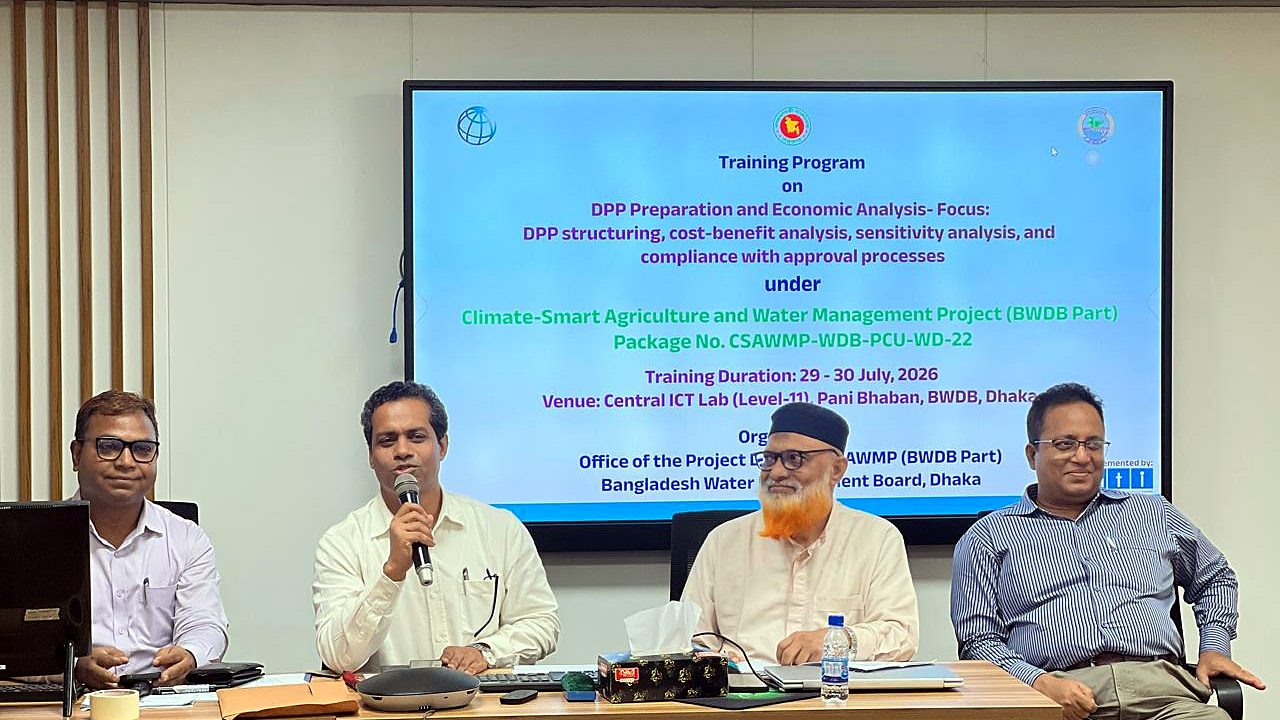
Management and Training International (MTI) Ltd. conducted the second running of the two-day course on DPP Preparation and Economic Analysis — DPP structuring, cost-benefit analysis, sensitivity analysis and compliance with approval processes on 29 and 30 July 2026 at the Central ICT Lab, Level-11, Pani Bhaban, BWDB, Dhaka. Twenty-five officials of the Bangladesh Water Development Board (BWDB), under the Ministry of Water Resources, took part — the fifth batch under Package 22 of the Climate-Smart Agriculture and Water Management Project (CSAWM Project), BWDB Part.
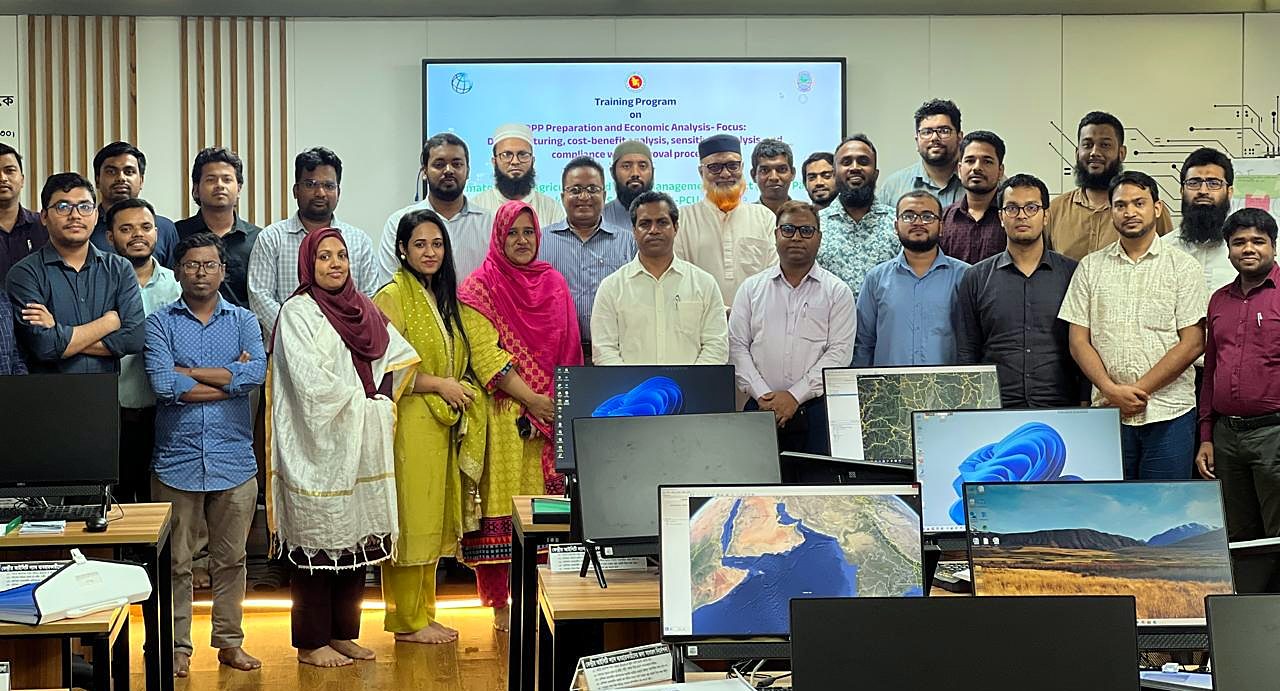
About the engagement: Under reference CSAWMP-WDB-PCU-WD-22-5-DPP-02 (Course ID CSAWMP-WDB-PCU-WD-22/DPP-02), MTI Ltd. is delivering the Package 22 training programme for the Climate-Smart Agriculture and Water Management Project (BWDB Part), implemented by the Bangladesh Water Development Board under the Ministry of Water Resources. The course was authorised by Office Order Memo Nos. 42.01.0000.000.647.25.0010.26-121 (course module) and 26-122 (participants), both dated 28 July 2026, following the Director General’s D-Nothi approval (Para 5.3) of the same date.
Before a Scheme Is Built, It Has to Be Justified
Every major BWDB scheme starts as a Development Project Proposal. Before a single embankment is raised, the DPP has to show what the project is for, what it will cost, what it will return, how sure anyone can be of those numbers, and that it meets the Planning Commission’s format and the Ministry of Finance’s conditions. A weak DPP does not just delay approval; it fixes a poorly-justified design into the public budget for years.
This second DPP batch, which ran the day after the first Climate-Smart Agriculture and Water Management course closed, followed the same two-day module as the first batch a week earlier, with two of the same resource persons and a new specialist from the Economic Planning Wing for sensitivity analysis. Day 1 built the proposal — structure, then cost-benefit analysis. Day 2 stress-tested it — sensitivity, then compliance.
Resource Persons: Engineering, Economics and Evaluation
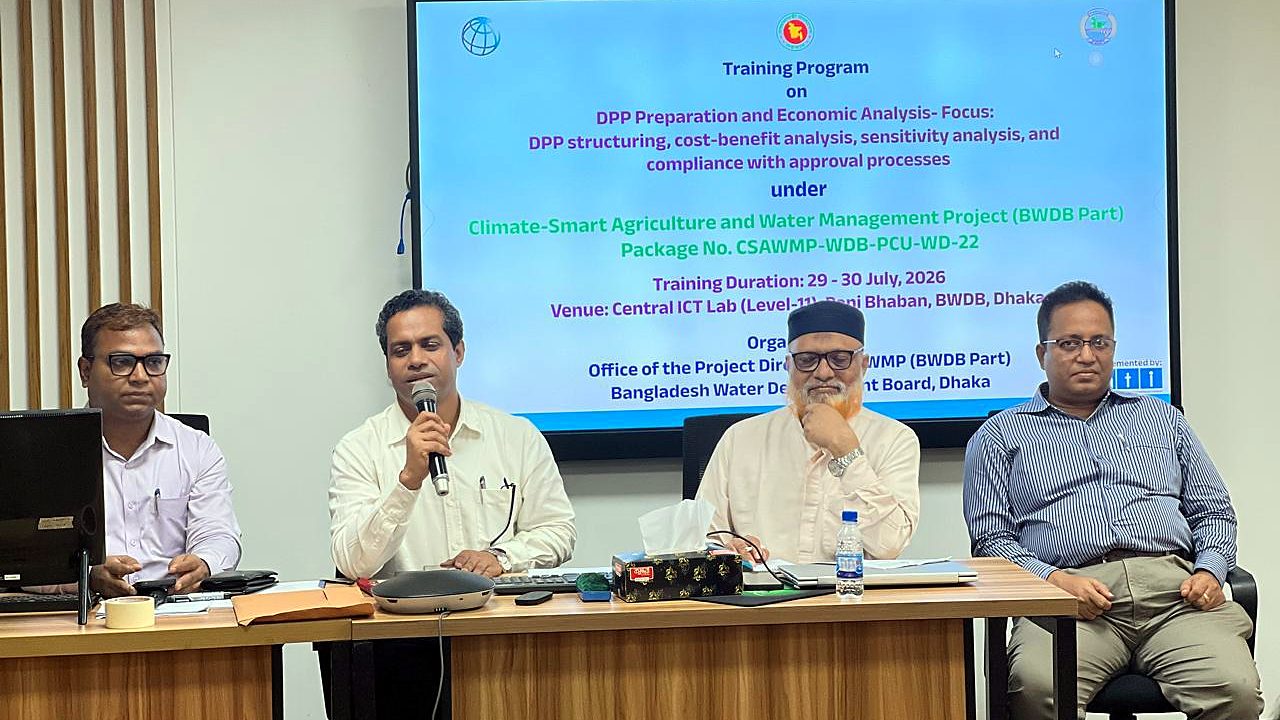
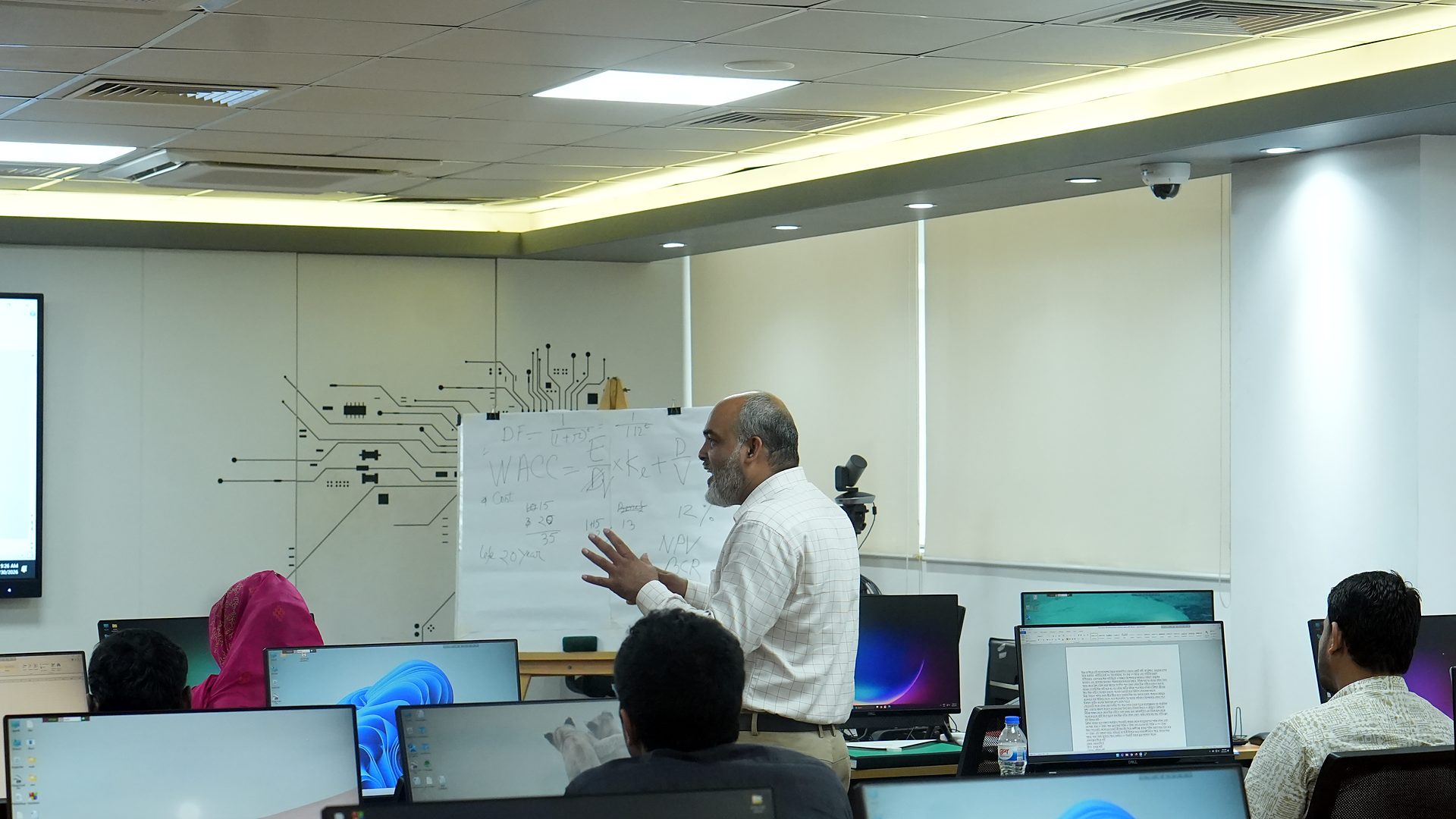
Three specialists split the eight sessions along the line a DPP itself follows. A.B.M. Khan Mozahedy, Superintending Engineer of the Surface Water Hydrology Circle, taught the whole of Day 1 — structuring the proposal and its cost-benefit analysis. Md. Mustafizur Rahman, Assistant Chief (Economics) of BWDB’s Economic Planning Wing, took sensitivity analysis; and Shahnaz Akter, Director of the Directorate of Economic Evaluation, took compliance with approval processes.
Additional Chief Engineer (Civil) & Project Director
CSAWM Project (BWDB Part)
Superintending Engineer (Civil)
Surface Water Hydrology Circle, BWDB
Assistant Chief (Economics)
Economic Planning Wing, BWDB
Director (Economic Evaluation)
Directorate of Economic Evaluation, BWDB
Course Leadership
Deputy Chief Extension Officer
CSAWM Project (BWDB Part)
Assistant Programmer
Central ICT Directorate
Sub-Divisional Engineer
CSAWM Project (BWDB Part)
Managing Director
Management and Training International Ltd.
Four Questions Every DPP Must Answer
What Is It For?
Objectives, the logical framework matrix linking inputs to impacts, and an evidence-based technical design.
What Will It Cost and Deliver?
Budget structured by activity, physical milestones and the institutions responsible for delivery.
Is It Worth It?
Direct costs against indirect benefits; market and shadow prices; discounting, NPV, IRR and the benefit-cost ratio.
How Sure Are We?
Critical variables, best- and worst-case scenarios, switching values and break-even thresholds, and probabilistic risk.
Does It Follow the Rules?
Planning Commission templates and BWDB requirements, inter-agency consultation and technical committee review.
Will It Be Funded and Audited Cleanly?
Ministry of Finance clearance, audit compliance, and alignment with development partner frameworks and reporting.
Day-by-Day Course Schedule
The course ran four sessions a day from 09:00 to 16:00 on both days.
- 09:00–09:20 Inauguration and Opening of the Training Course Welcome and opening remarks; participant introductions and expectations; training objectives and agenda; pre-evaluation. Methods: speech, interactive discussion. Pijush Krishna Kundu Project Director, CSAWM Project (BWDB Part)
- 09:20–10:40 Session 1 — DPP Structuring: Objectives, Logical Framework & Technical Feasibility Project objectives and logical framework: defining objectives with clear goals and measurable outcomes; the logical framework matrix linking inputs, outputs and impacts. Technical feasibility and design: a concise engineering design summary; evidence-based justification for the chosen design. A.B.M. Khan Mozahedy Superintending Engineer (Civil), Surface Water Hydrology Circle, BWDB
- 10:40–10:50 Refreshment and tea break
- 10:50–12:10 Session 2 — DPP Structuring: Financial & Physical Targets and Institutional Arrangements Financial and physical targets: aligning budget structure with activities; quantifiable physical milestones. Institutional arrangements: defining implementing agencies and their roles; assessing institutional readiness. A.B.M. Khan Mozahedy Superintending Engineer (Civil), Surface Water Hydrology Circle, BWDB
- 12:10–13:30 Session 3 — Cost-Benefit Analysis: Identifying Costs and Benefits & Economic Valuation Costs and benefits: direct costs of construction, operation and maintenance; indirect benefits such as flood protection and livelihood improvement. Economic valuation: the market price approach for tangible outputs; shadow pricing to correct for distortions in local markets. A.B.M. Khan Mozahedy Superintending Engineer (Civil), Surface Water Hydrology Circle, BWDB
- 13:30–14:20 Lunch and prayer break
- 14:20–15:40 Session 4 — Cost-Benefit Analysis: Discounting, NPV, IRR & Benefit-Cost Ratio Discounting and net present value: selecting a discount rate in line with national guidelines; calculating NPV to test long-term viability. IRR and BCR: estimating the internal rate of return; comparing benefits with costs through the benefit-cost ratio. A.B.M. Khan Mozahedy Superintending Engineer (Civil), Surface Water Hydrology Circle, BWDB
- 15:40–16:00 Day review and refreshment
- 09:00–10:20 Session 1 — Sensitivity Analysis: Key Variables & Scenario Testing Key variables: critical cost drivers — materials, labour, maintenance; benefit assumptions such as crop yield and avoided flood damage. Scenario testing: best-case projections and worst-case stress tests of project resilience. Md. Mustafizur Rahman Assistant Chief (Economics), Economic Planning Wing, BWDB
- 10:20–10:40 Refreshment and tea break
- 10:40–12:00 Session 2 — Sensitivity Analysis: Switching Values, Risk & Uncertainty Switching values: break-even analysis to find the thresholds of viability; acceptable ranges for each input. Risk and uncertainty: probabilistic modelling of forecasts; risk mitigation and contingency planning. Md. Mustafizur Rahman Assistant Chief (Economics), Economic Planning Wing, BWDB
- 12:00–13:20 Session 3 — Compliance with Approval Processes: Guidelines, Formats & Inter-Agency Coordination Government guidelines and formats: the mandatory Planning Commission DPP structure and BWDB-specific sectoral requirements. Inter-agency coordination: consultation with ministries and local bodies; technical committee review. Shahnaz Akter Director (Economic Evaluation), Directorate of Economic Evaluation, BWDB
- 13:20–14:20 Lunch and prayer break
- 14:20–15:40 Session 4 — Compliance with Approval Processes: Financial Approval, Audit & Donor Alignment Financial approval and audit: Ministry of Finance clearance; audit compliance. Development partner alignment: harmonising with donor frameworks and meeting monitoring and reporting obligations. Shahnaz Akter Director (Economic Evaluation), Directorate of Economic Evaluation, BWDB
- 15:40–16:00 Review of the training, post-evaluation and closing ceremony Pijush Krishna Kundu Project Director, CSAWM Project (BWDB Part)
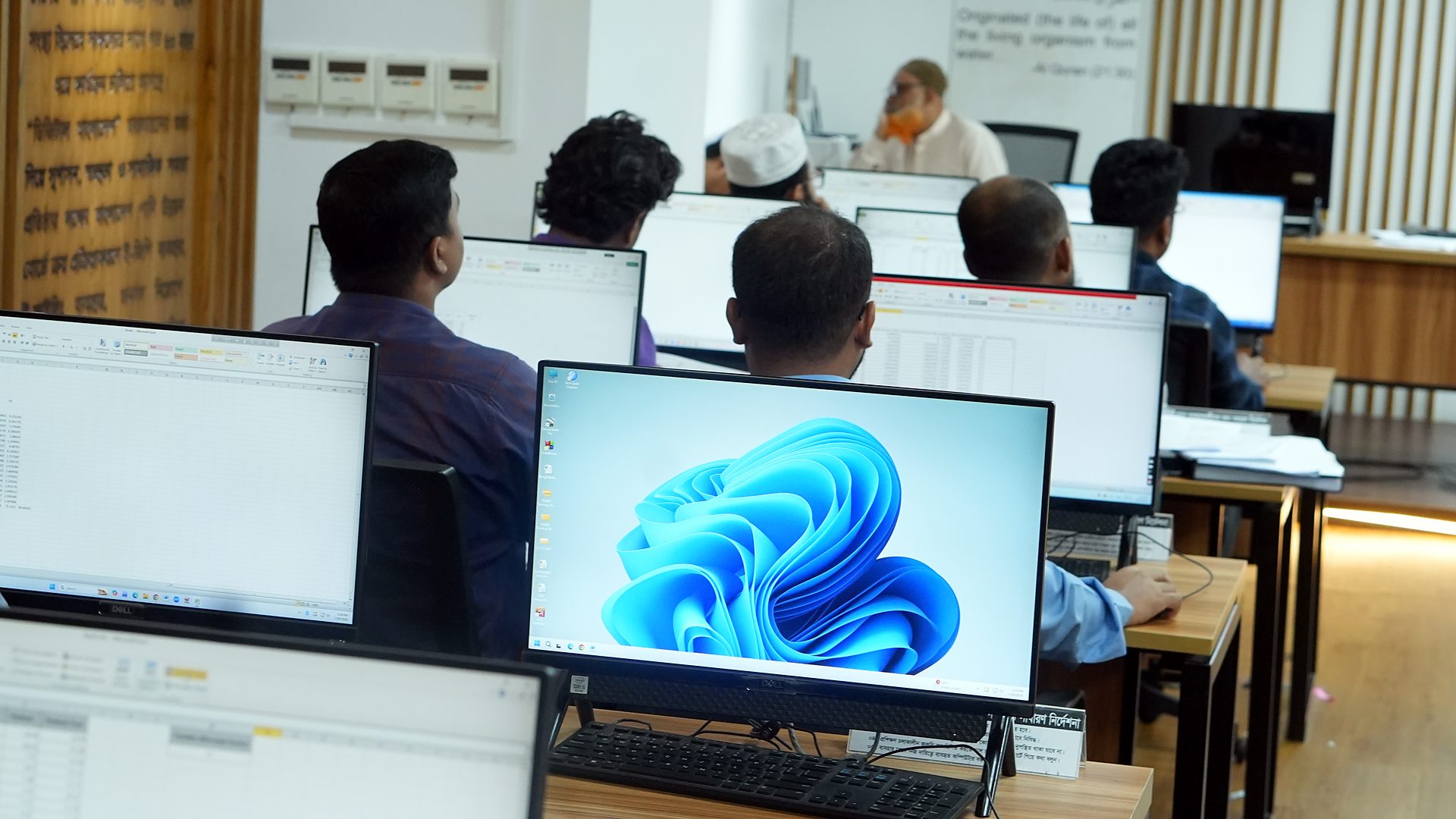
Training Methodology
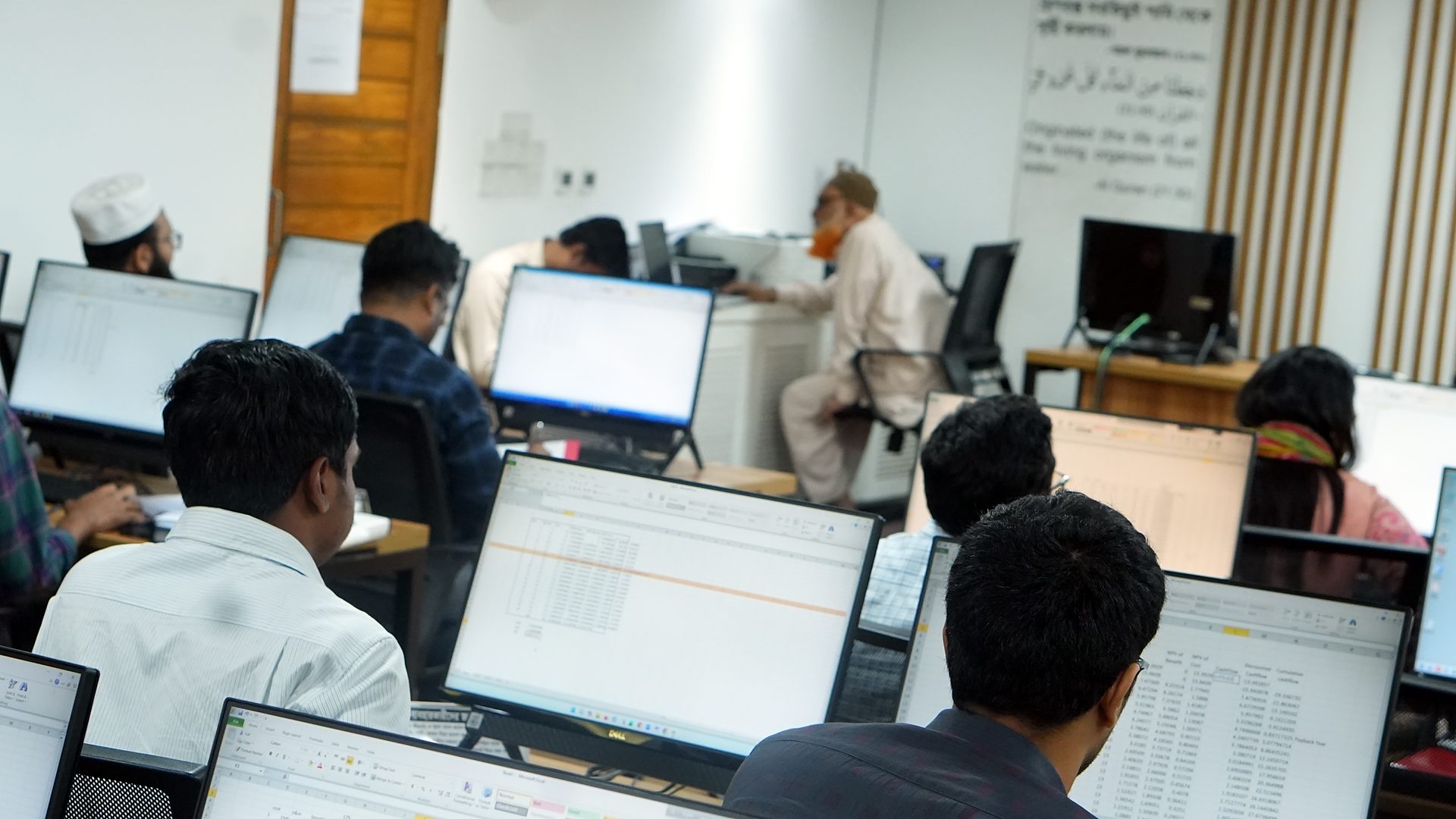
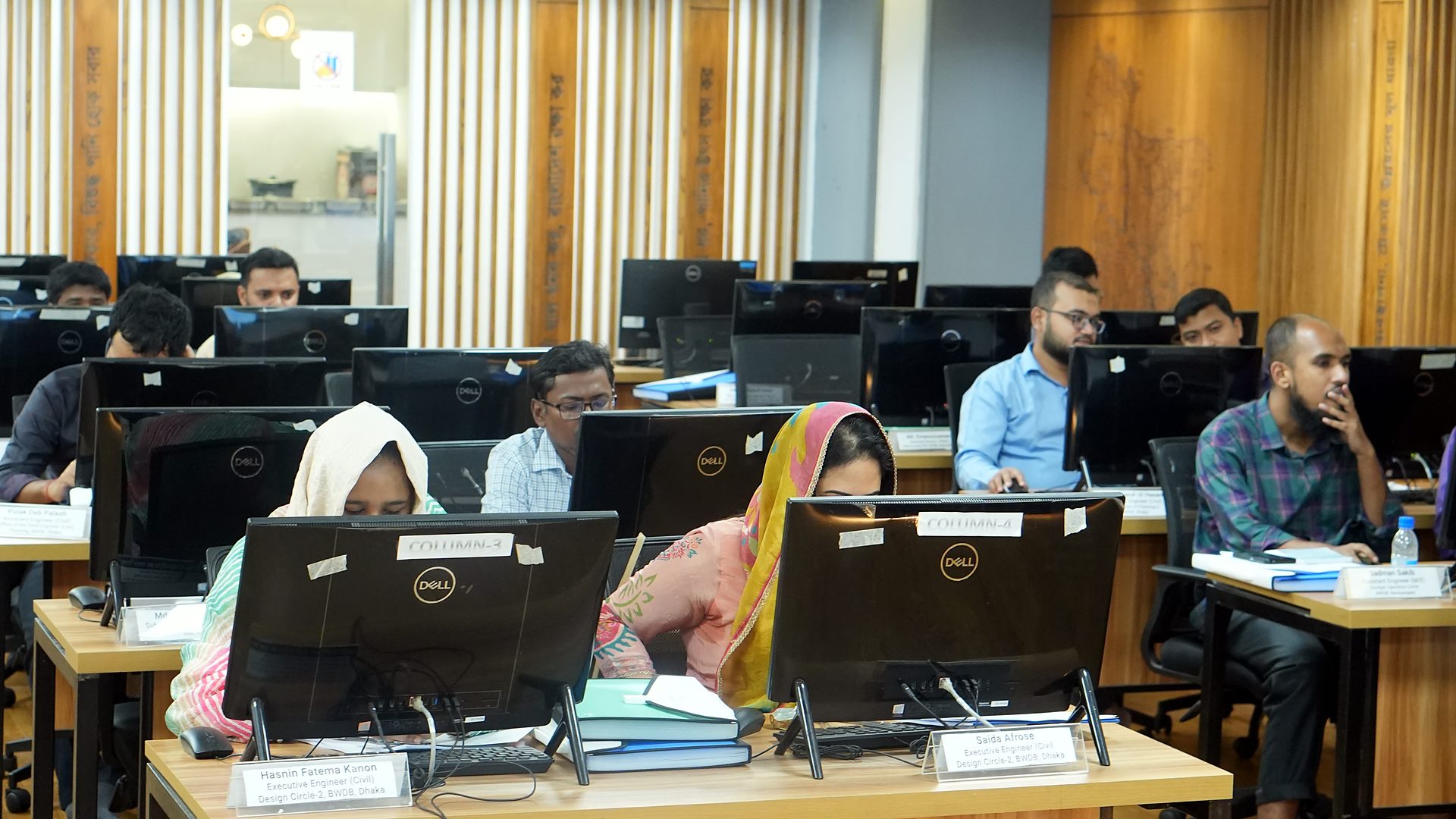
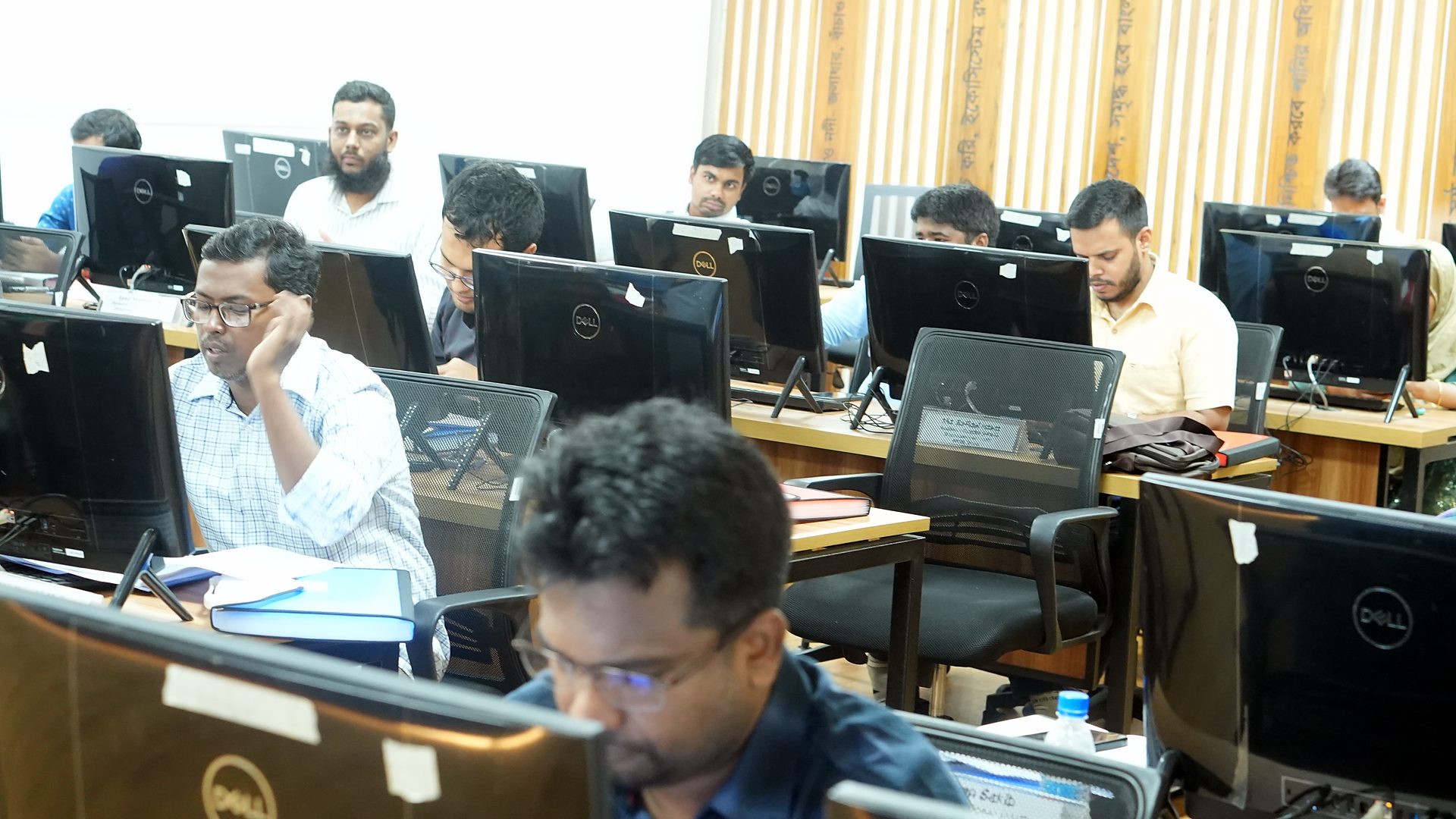
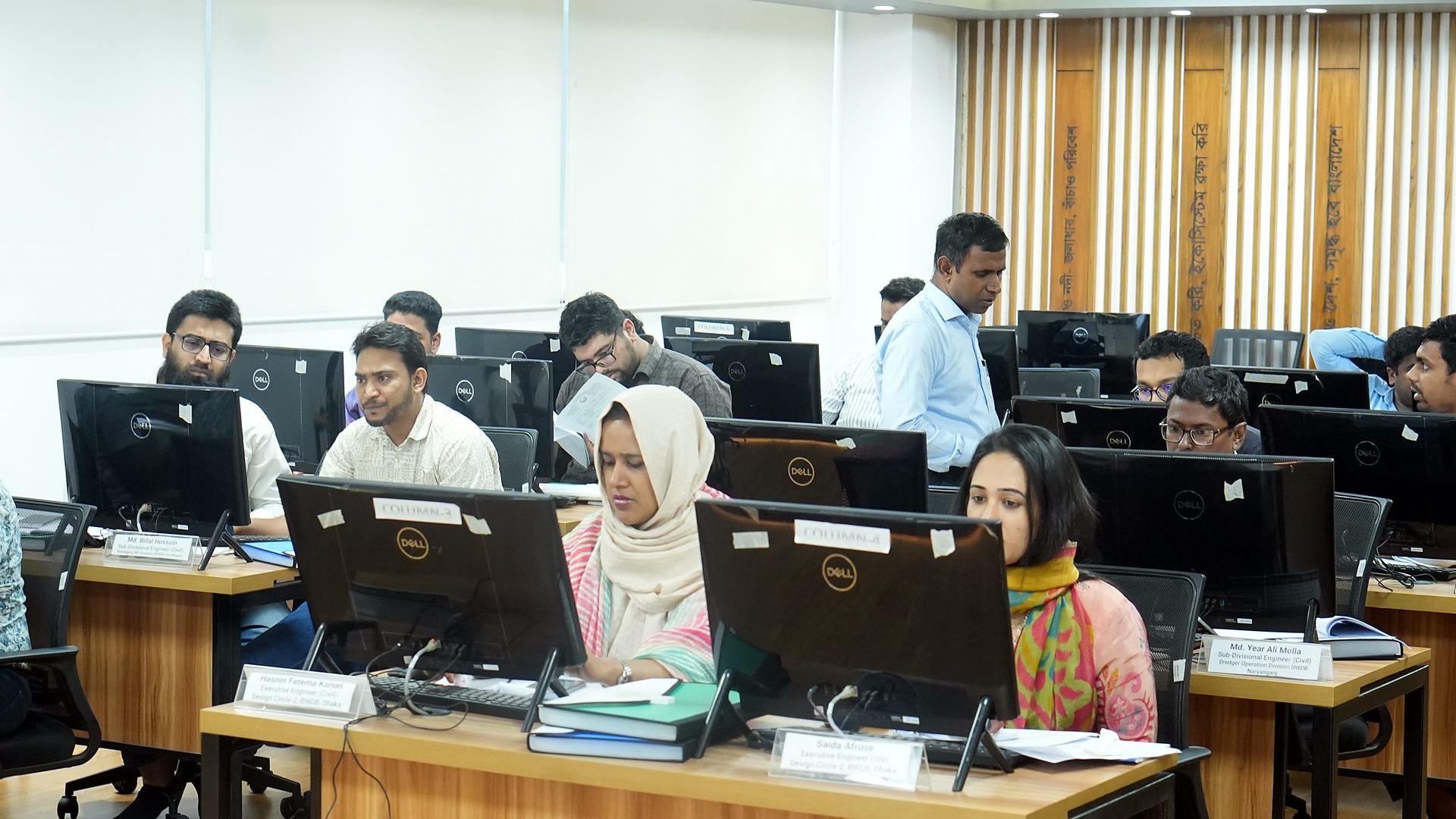
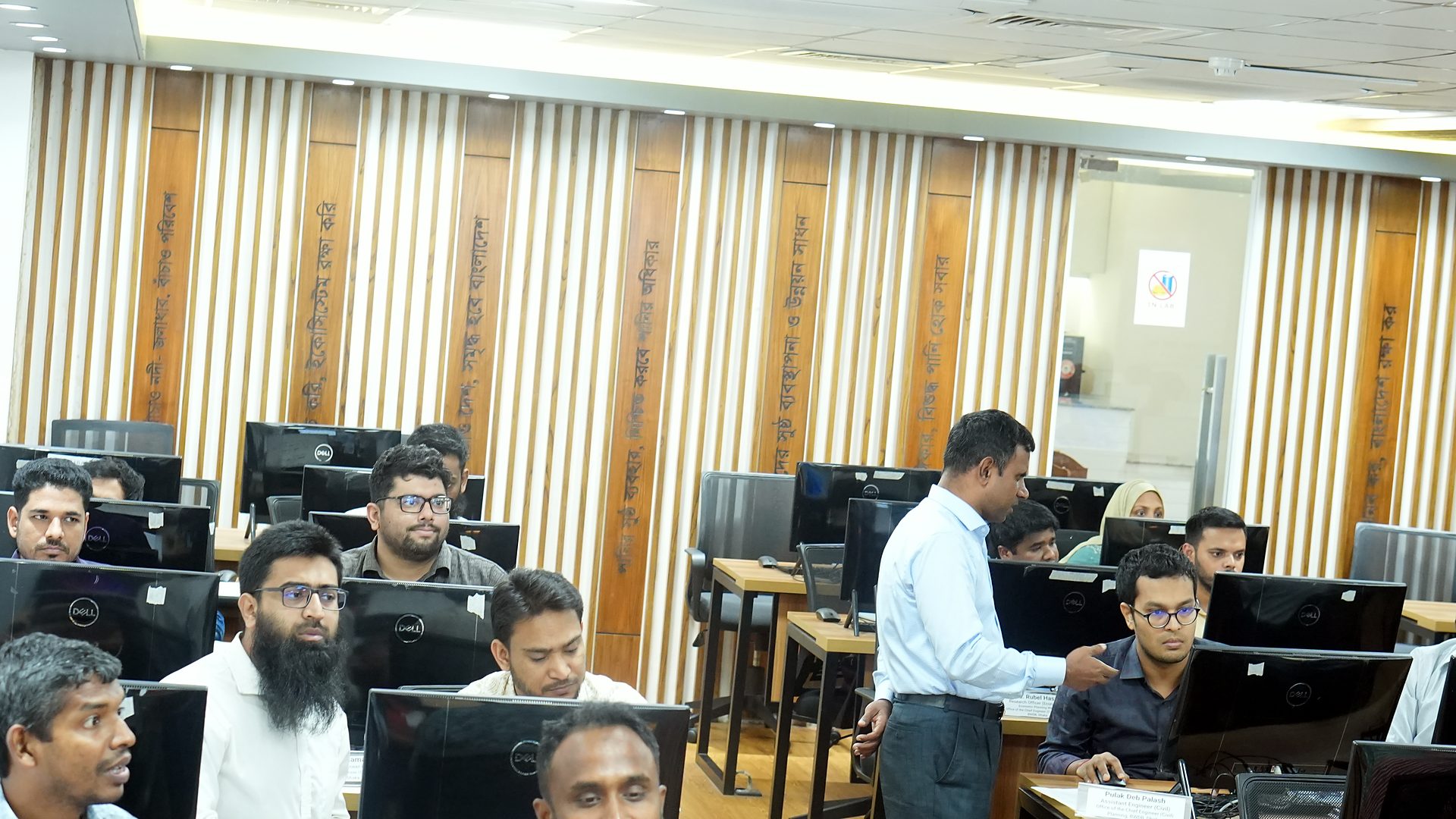
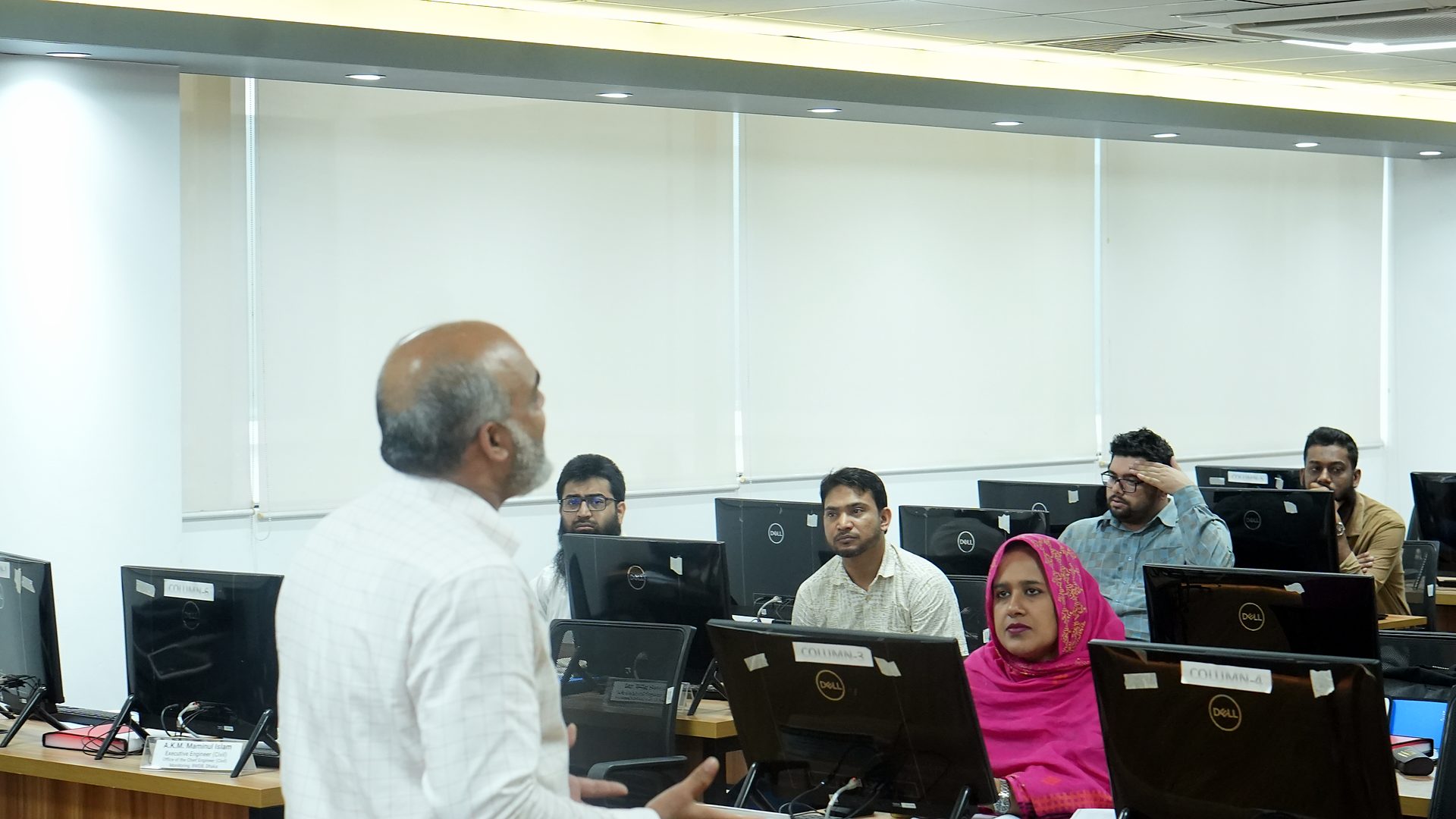
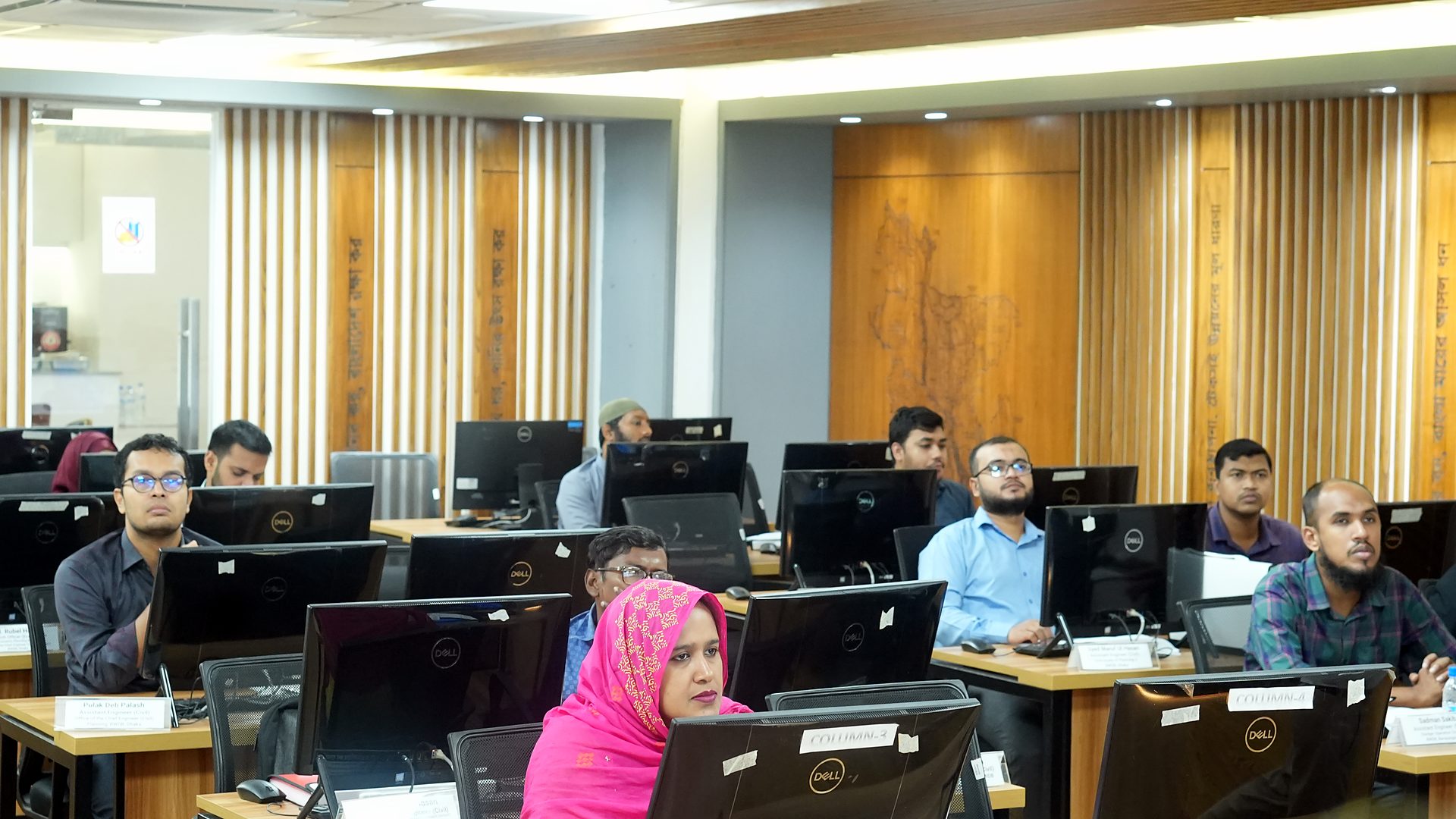
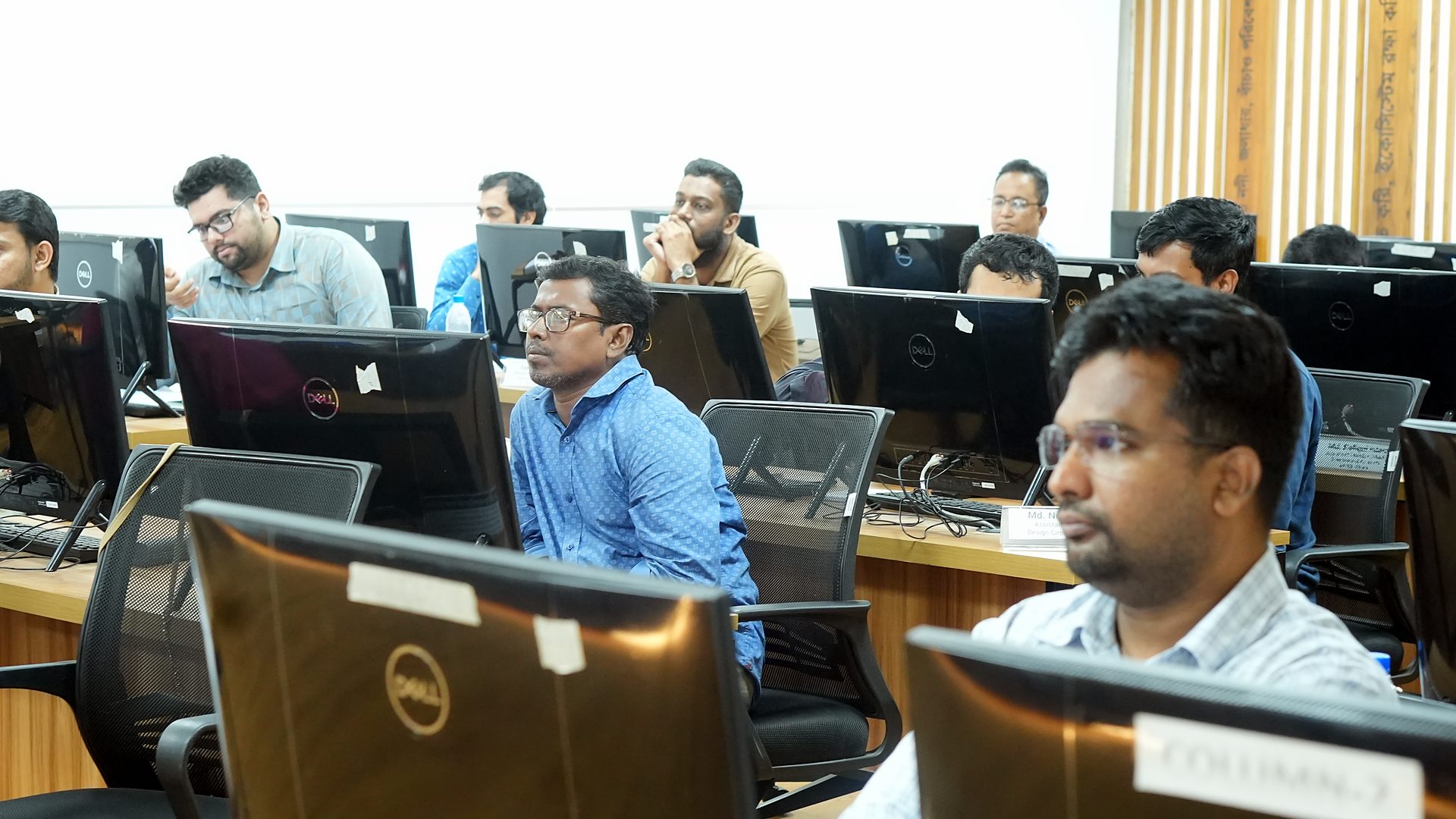
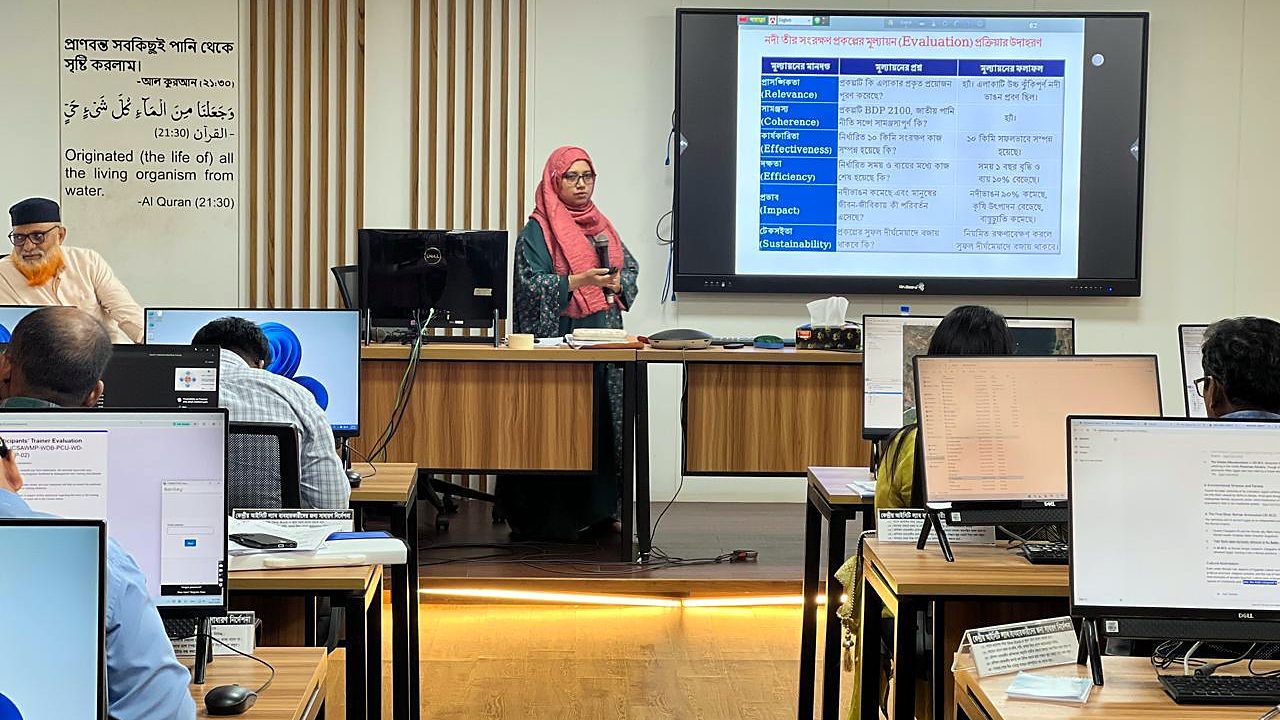
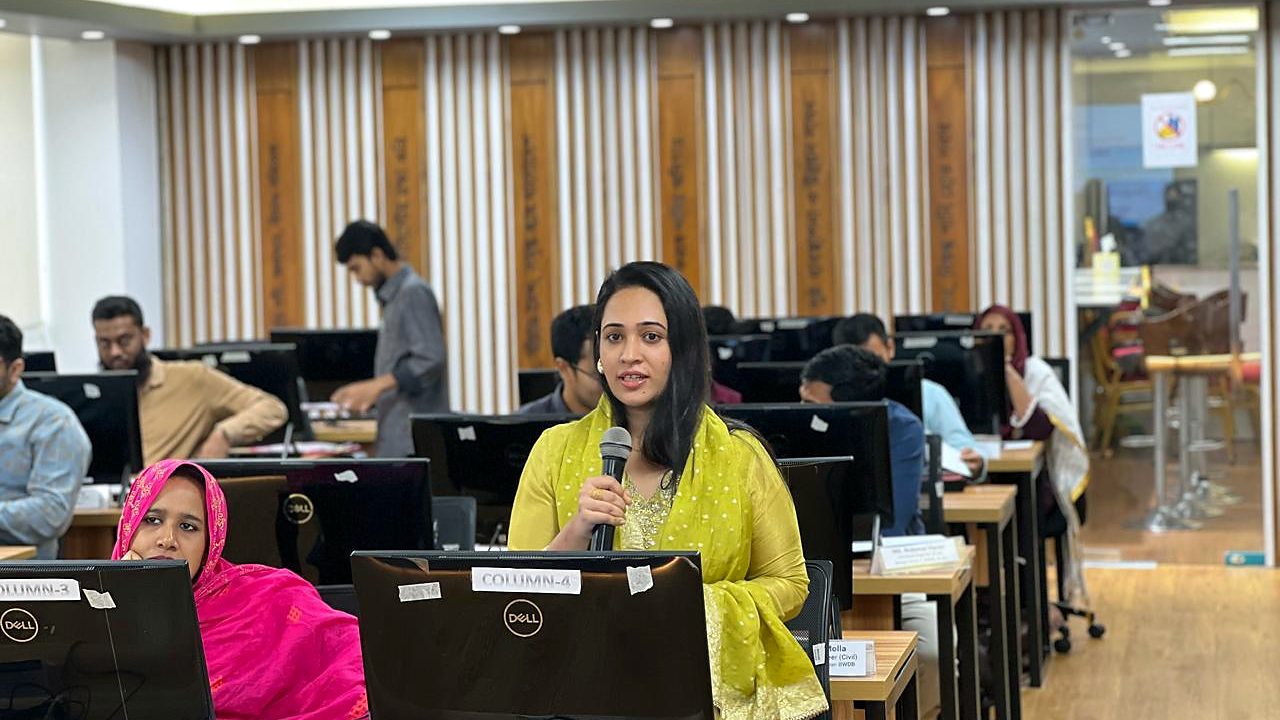
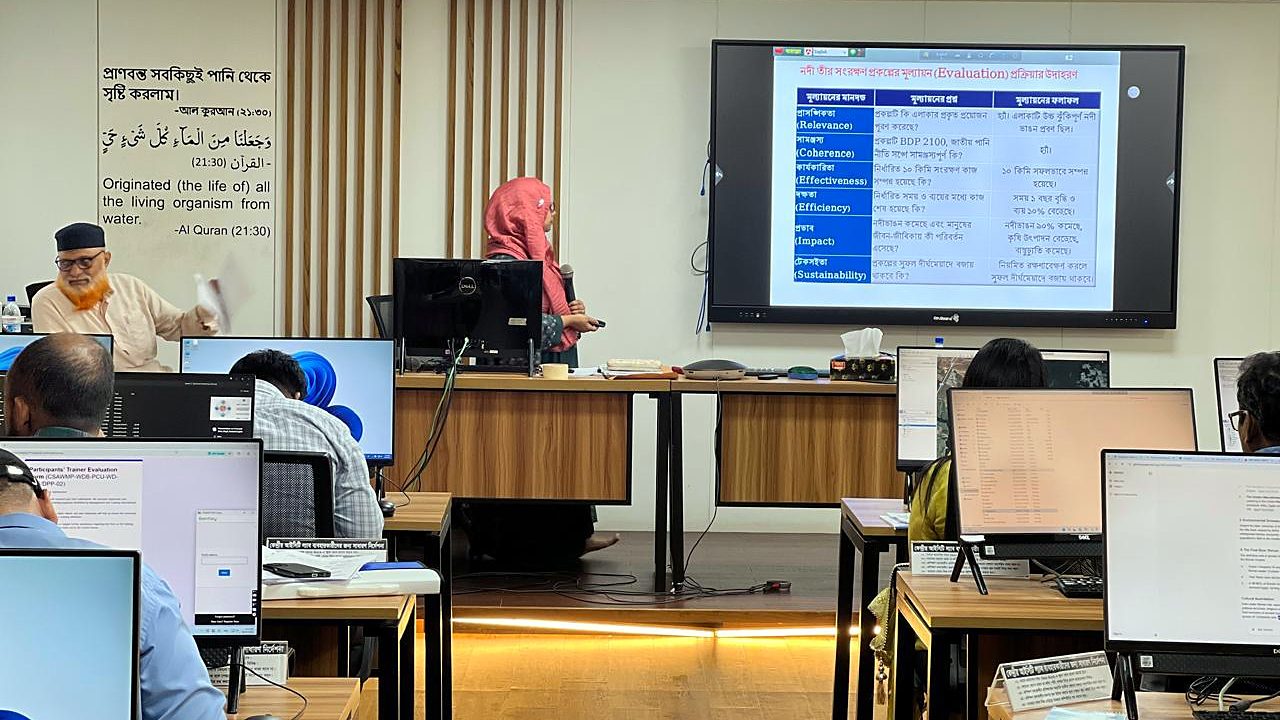
Economic analysis is learned by doing the arithmetic. The Central ICT Lab put a workstation in front of every participant, and the cost-benefit and sensitivity sessions were worked on screen — discounting cash flows, calculating NPV and IRR, and moving a single assumption to see where a project stops being viable. The compliance sessions drew on the actual government guidelines for project formulation, processing and approval.
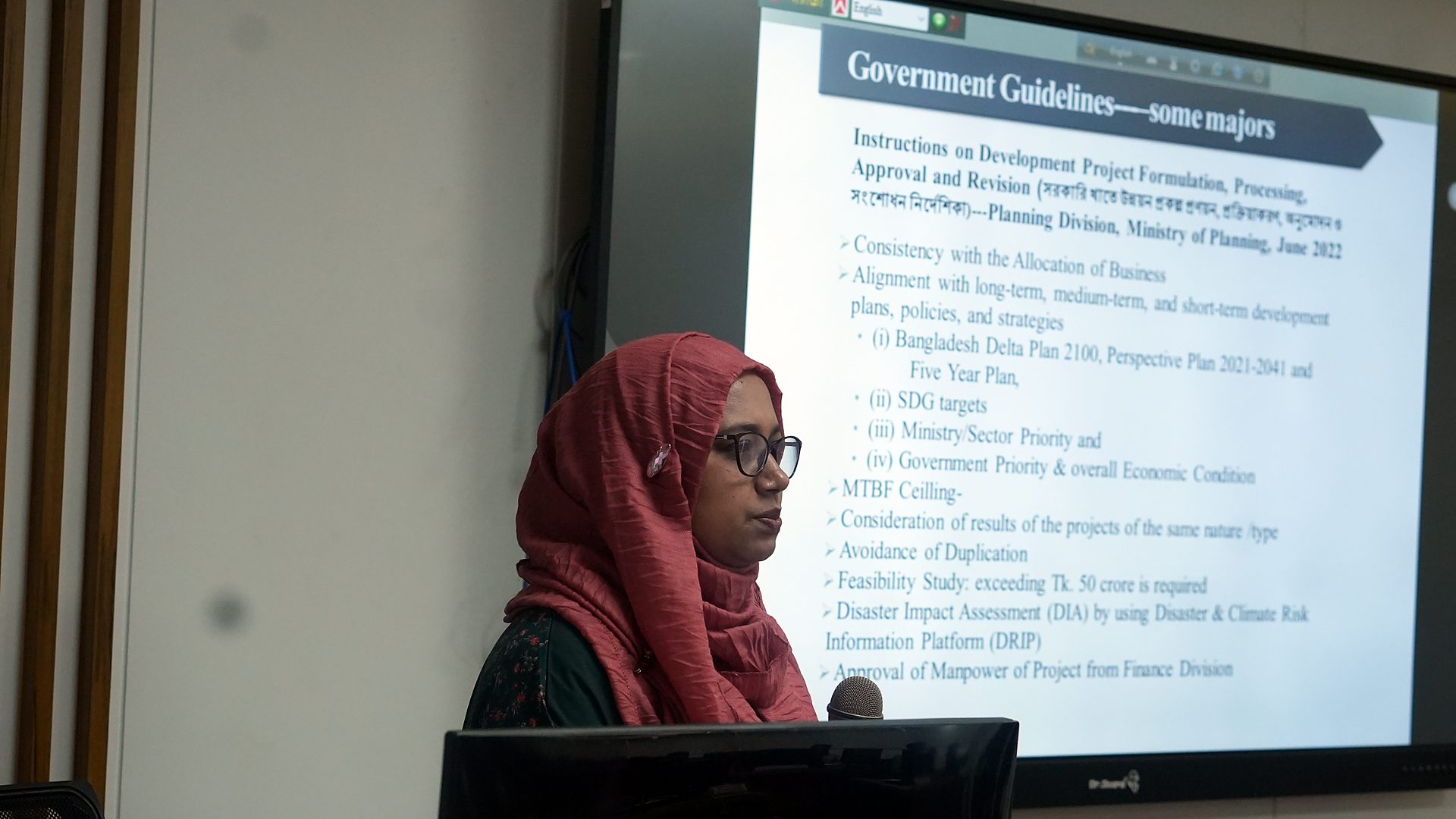
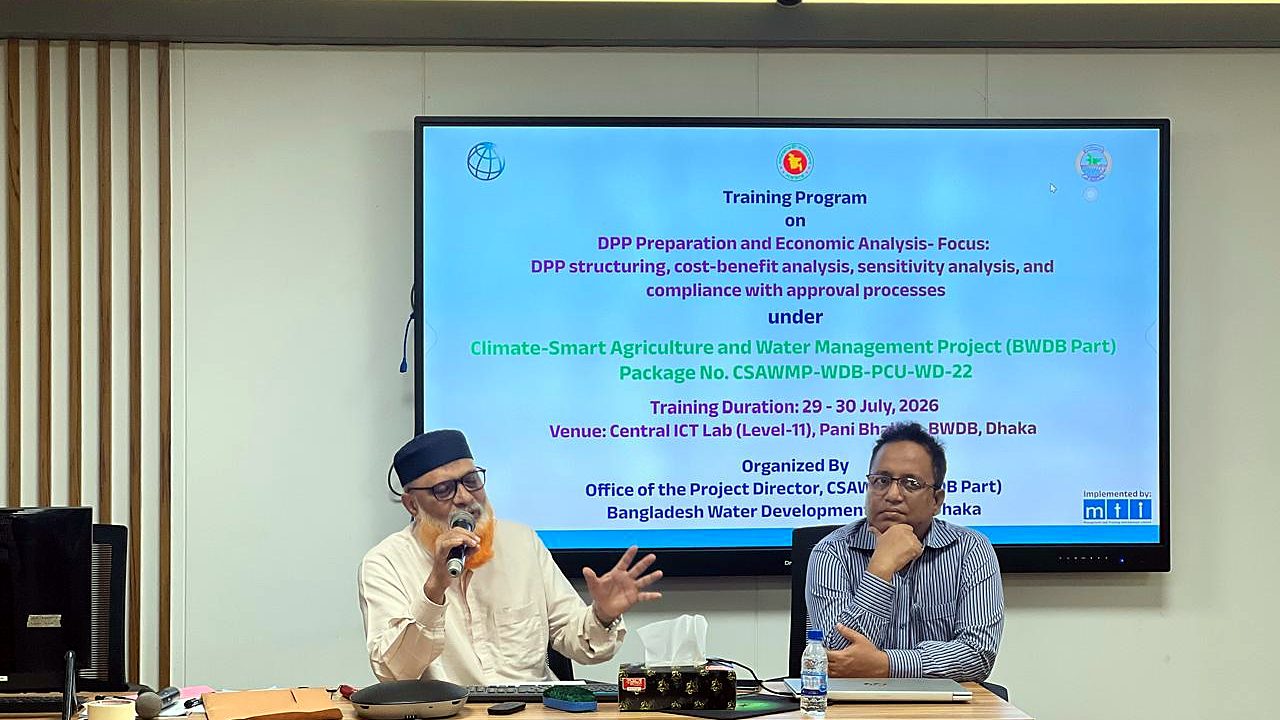
Who Was in the Room
Eighteen of the twenty-five participants were engineers — six Executive Engineers (one of them mechanical), four Sub-Divisional Engineers and eight Assistant Engineers — the people who will actually write the technical and cost chapters of future DPPs. Two Research Officers (Economics) from the Economic Planning Wing and the Directorate of Planning-1, three Assistant Directors (FA&A) and two Sub-Assistant Engineers completed the cohort. Participants came from twenty offices, including the Contract and Procurement Cell, the P&D Mechanical Circle, the Dredger Operation Circle and Division, the Adaptive River System Management Project and the Joint Rivers Commission; five travelled in from Thakurgaon, Manikganj, Narayanganj and Mymensingh.
Full Participant Roster
Executive Engineer (Civil)
Design Circle-2, BWDB, DhakaExecutive Engineer (Civil)
Design Circle-2, BWDB, DhakaExecutive Engineer (Civil)
Design Circle-5, BWDB, DhakaExecutive Engineer (Civil)
Contract and Procurement Cell, BWDB, DhakaExecutive Engineer (Civil)
Office of the Chief Engineer (Civil), Monitoring, BWDB, DhakaExecutive Engineer (Mechanical)
P&D Mechanical Circle, BWDB, DhakaSub-Divisional Engineer (Mechanical)
Thakurgaon Mechanical Division, BWDB, ThakurgaonSub-Divisional Engineer (Civil)
Manikganj WD Division, BWDB, ManikganjSub-Divisional Engineer (Civil)
Focal Unit- Adaptive River System Management Project (ARSMP), BWDB, DhakaSub-Divisional Engineer (Civil)
Dredger Operation Division BWDB, NaryanganjAssistant Engineer (Civil)
Design Circle-7, BWDB, DhakaAssistant Engineer (M/E)
Dredger Operation Circle, BWDB, NarayanganjAssistant Engineer (Mechanical)
Dte. Of Estate and Transport, BWDB, DhakaAssistant Engineer (Civil)
Directorate of Planning-2, BWDB, DhakaAssistant Engineer (Civil)
Directorate of Planning-2, BWDB, DhakaAssistant Engineer (Civil)
Office of the Chief Engineer (Civil), Planning, BWDB, DhakaAssistant Engineer (Civil)
Office of the Chief Engineer (Civil), Planning, BWDB, DhakaAssistant Engineer (Civil)
Design Circle-7, BWDB, DhakaResearch Officer (Economics)
Economic Planning Wing, Office of the Chief Engineer (Civil), Planning, BWDB, DhakaResearch Officer (Economics)
Directorate of Planning-1, BWDB, DhakaAssistant Director (FA&A)
Directorate of Accounts, BWDB, DhakaAssistant Director (FA&A)
Directorate of Accounts, BWDB, DhakaAssistant Director (FA&A)
Mymensingh RAC, BWDB, MymensinghSub-Assistant Engineer (Civil)
Dhaka WD Circle-2, BWDB, DhakaSub-Assistant Engineer (Civil)
Joint Rivers Commission, BangladeshContinuity across the programme: this cohort was entirely new to the series — none of its members had attended an earlier batch. Several went on to later courses: Md. Kamrul Hasan to the second IWRM batch, A.K.M. Maminul Islam to the second PWMR batch, Md. Nobonur Hasan to Quality Control and Construction Management, Md. Rafiqul Islam to the second CSAWM batch, and Saida Afrose and Khan Md. Osama Elias to the third Project Management batch.
Closing & Certification
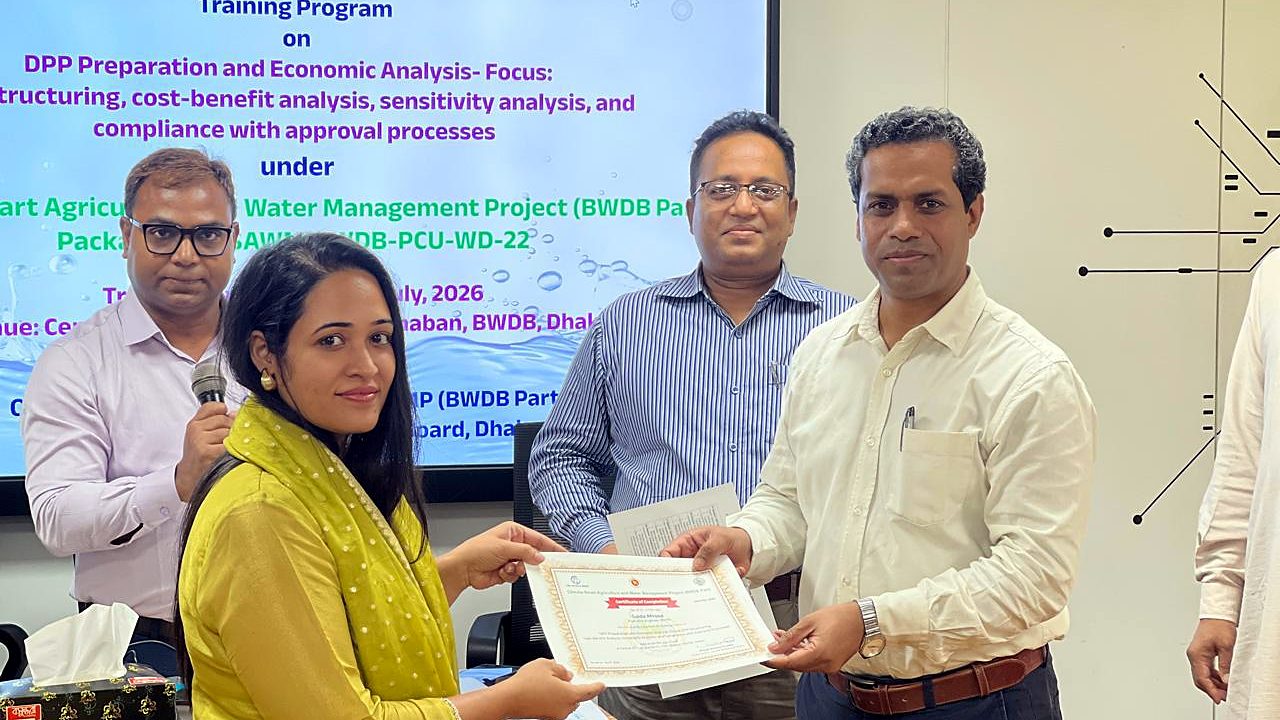
The course closed on the afternoon of 30 July 2026 with a review of the two days, the post-evaluation and the distribution of certificates by the Project Director and the course management team.
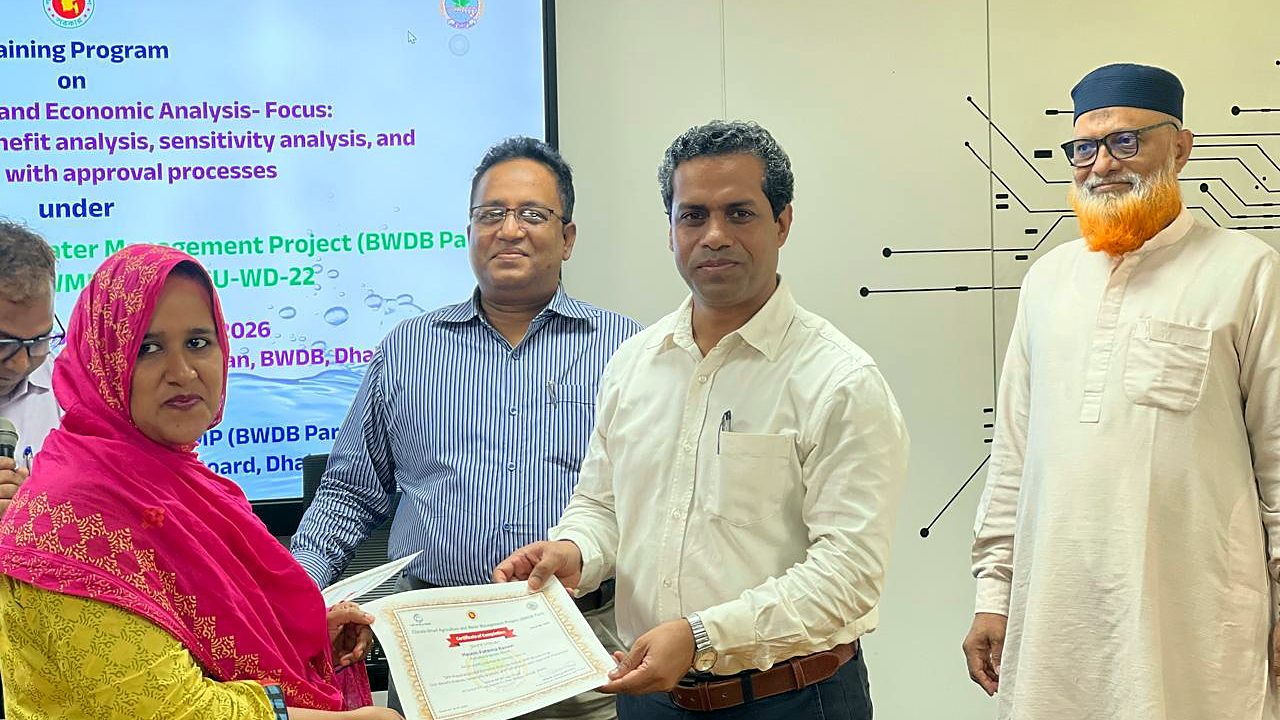
The Course in Pictures
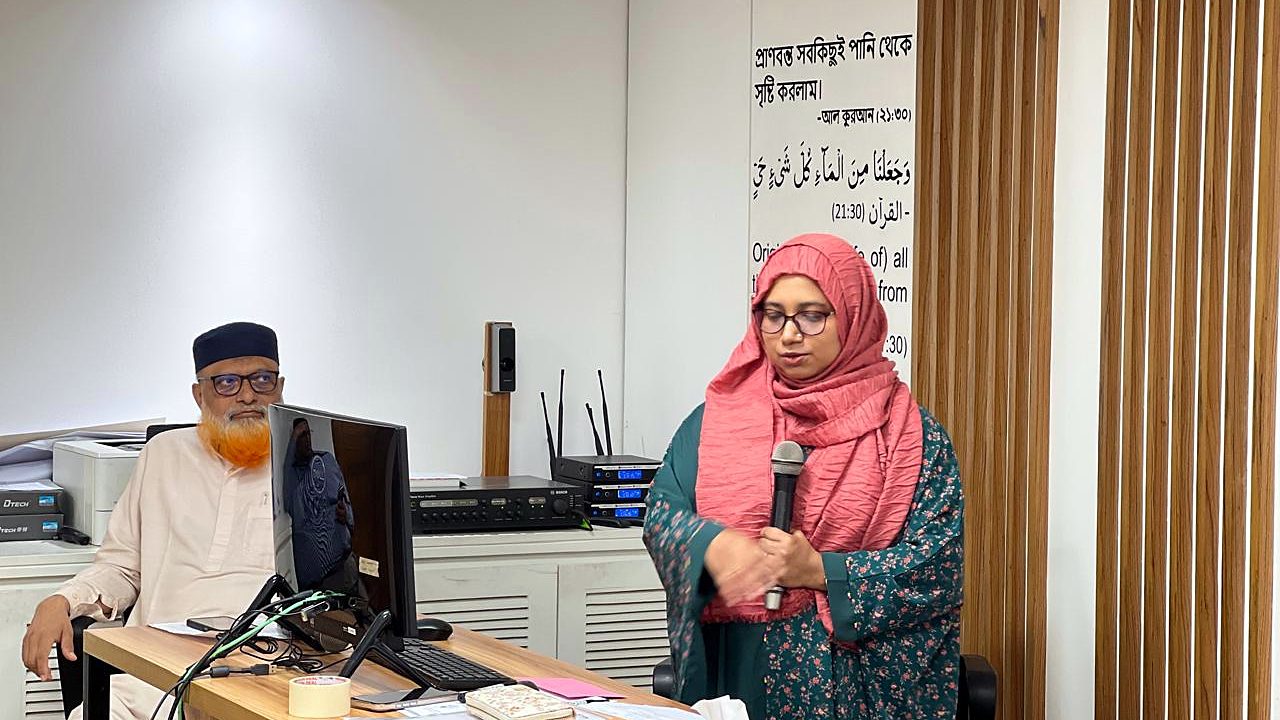
Thirteen further photographs from the two days at the Central ICT Lab, Pani Bhaban.

Why This Matters
The economic case for a water project in Bangladesh is unusually hard to make well. Its biggest benefits — flood damage that does not happen, a harvest that is not lost to salinity, a livelihood that survives a bad monsoon — never appear on an invoice. Valuing them honestly, testing how fragile those values are, and presenting the result in the form the Planning Commission and the Ministry of Finance require is skilled work.
Under the Climate-Smart Agriculture and Water Management Project, where future investments will have to show climate-resilience benefits as well as engineering soundness, the engineers who sat this course are the ones who will write those DPPs. Teaching them to build the case and then try to break it is how better projects get approved, and weaker ones get fixed before they are.
More from this Programme
Programme Snapshot
| Field | Detail |
|---|---|
| Course Title | DPP Preparation and Economic Analysis — Focus: DPP structuring, cost-benefit analysis, sensitivity analysis, and compliance with approval processes |
| Reference | CSAWMP-WDB-PCU-WD-22-5-DPP-02 — Package 22, Batch 5 |
| Duration | 2 days — 29 and 30 July 2026 |
| Venue | Central ICT Lab (Level-11), Pani Bhaban, BWDB, 72 Green Road, Dhaka-1205 |
| Participants | 25 officials of the Bangladesh Water Development Board |
| Ministry | Ministry of Water Resources, Government of the People’s Republic of Bangladesh |
| Implementing Agency | Bangladesh Water Development Board (BWDB) |
| Project | Climate-Smart Agriculture and Water Management Project (CSAWM Project), BWDB Part |
| Project Director | Pijush Krishna Kundu, Additional Chief Engineer (Civil) |
| Course Coordinator | Md. Hafizur Rahman, Deputy Chief Extension Officer, CSAWM Project (BWDB Part) |
| Sessions | 8 technical sessions across 2 days, four sessions per day |
| Resource Persons | 3 BWDB specialists in engineering, economics and economic evaluation |
| Training Service Provider | Management and Training International Ltd. (MTI Ltd.) |
Frequently Asked Questions
What is a DPP and why does BWDB train officials to prepare one?
A Development Project Proposal (DPP) is the document through which a public project in Bangladesh is justified and approved. It sets out objectives, design, costs, benefits, risks and institutional arrangements in the format the Planning Commission requires. BWDB engineers prepare DPPs for flood-control, irrigation and river-management schemes, so their quality directly affects which projects are approved and how well they are designed.
What did the course cover?
Day 1: DPP structuring (objectives, logical framework, technical feasibility, financial and physical targets, institutional arrangements) and cost-benefit analysis (identifying costs and benefits, market and shadow pricing, discounting, NPV, IRR and BCR). Day 2: sensitivity analysis (key variables, scenarios, switching values, risk and uncertainty) and compliance with approval processes (Planning Commission formats, inter-agency coordination, Ministry of Finance clearance, audit and donor alignment).
Who were the resource persons?
A.B.M. Khan Mozahedy, Superintending Engineer, Surface Water Hydrology Circle (Day 1); Md. Mustafizur Rahman, Assistant Chief (Economics), Economic Planning Wing (sensitivity analysis); and Shahnaz Akter, Director, Directorate of Economic Evaluation (approval compliance). The Project Director, Pijush Krishna Kundu, opened and closed the course.
Where and when was the training held?
At the Central ICT Lab, Level-11, Pani Bhaban, 72 Green Road, Dhaka, on 29 and 30 July 2026.
Who funded and organised the course?
The course was funded by the Climate-Smart Agriculture and Water Management Project (CSAWM Project), BWDB Part, under the Bangladesh Water Development Board, Ministry of Water Resources. MTI Ltd. served as the training service provider under reference CSAWMP-WDB-PCU-WD-22-5-DPP-02.
How many batches are planned under Package 21 and Package 22?
75 batches in total: 40 under Package 21 and 35 under Package 22. Six of the Package 22 batches are DPP Preparation and Economic Analysis courses; this was the second.