BWDB Officials Trained on Project Management, PPA/PPR/e-GP Procurement Compliance and Climate-Smart Execution
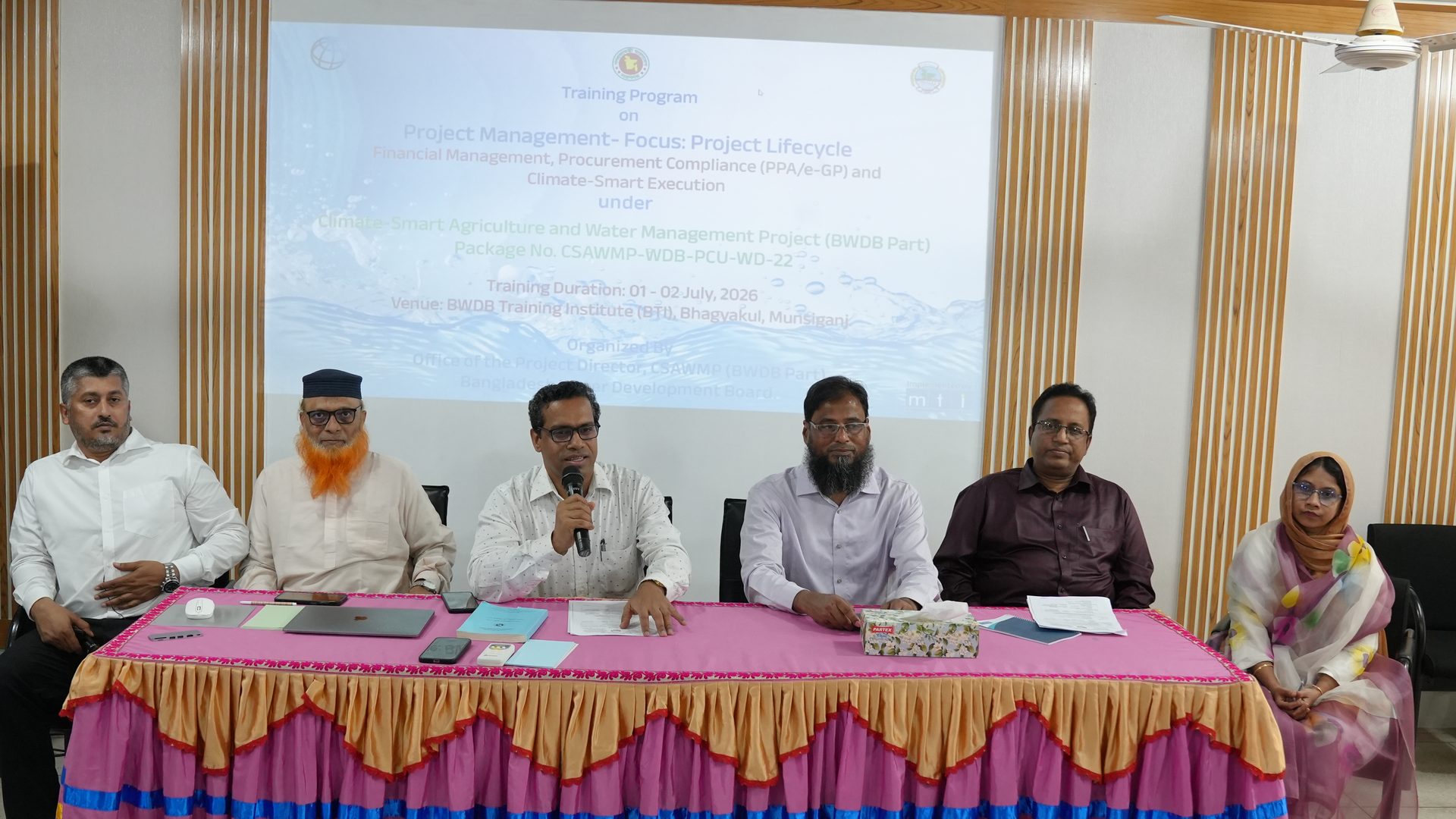
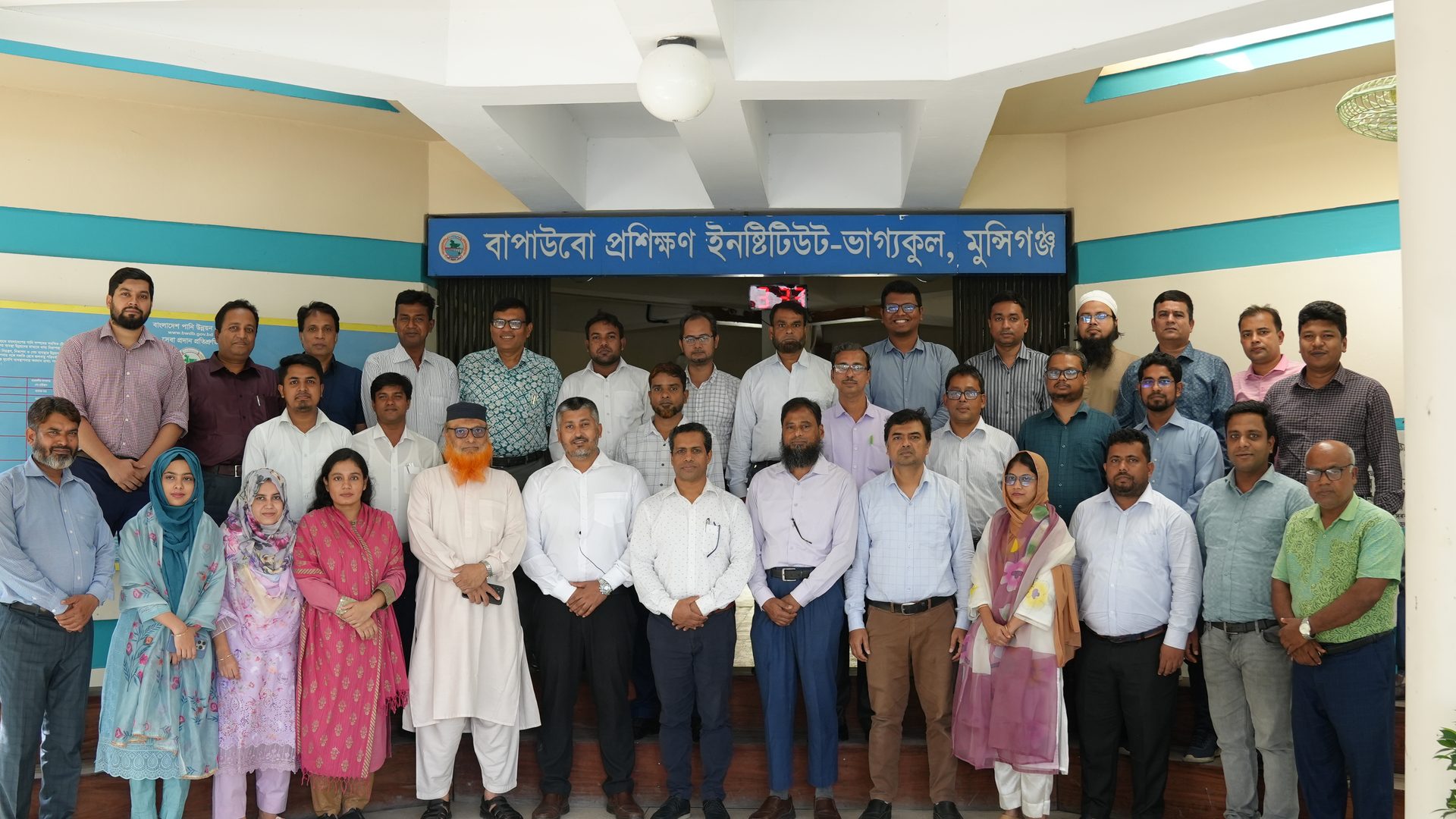
Management and Training International (MTI) Ltd. conducted the two-day training course on Project Management — focusing on project lifecycle, financial management, procurement compliance (PPA/PPR/e-GP) and climate-smart execution on 1 and 2 July 2026 at the BWDB Training Institute (BTI), Bhagyakul, Munshiganj. Twenty-five officials of the Bangladesh Water Development Board (BWDB), under the Ministry of Water Resources, took part — the opening batch of Package 22 of the Climate-Smart Agriculture and Water Management Project (CSAWM Project), BWDB Part.
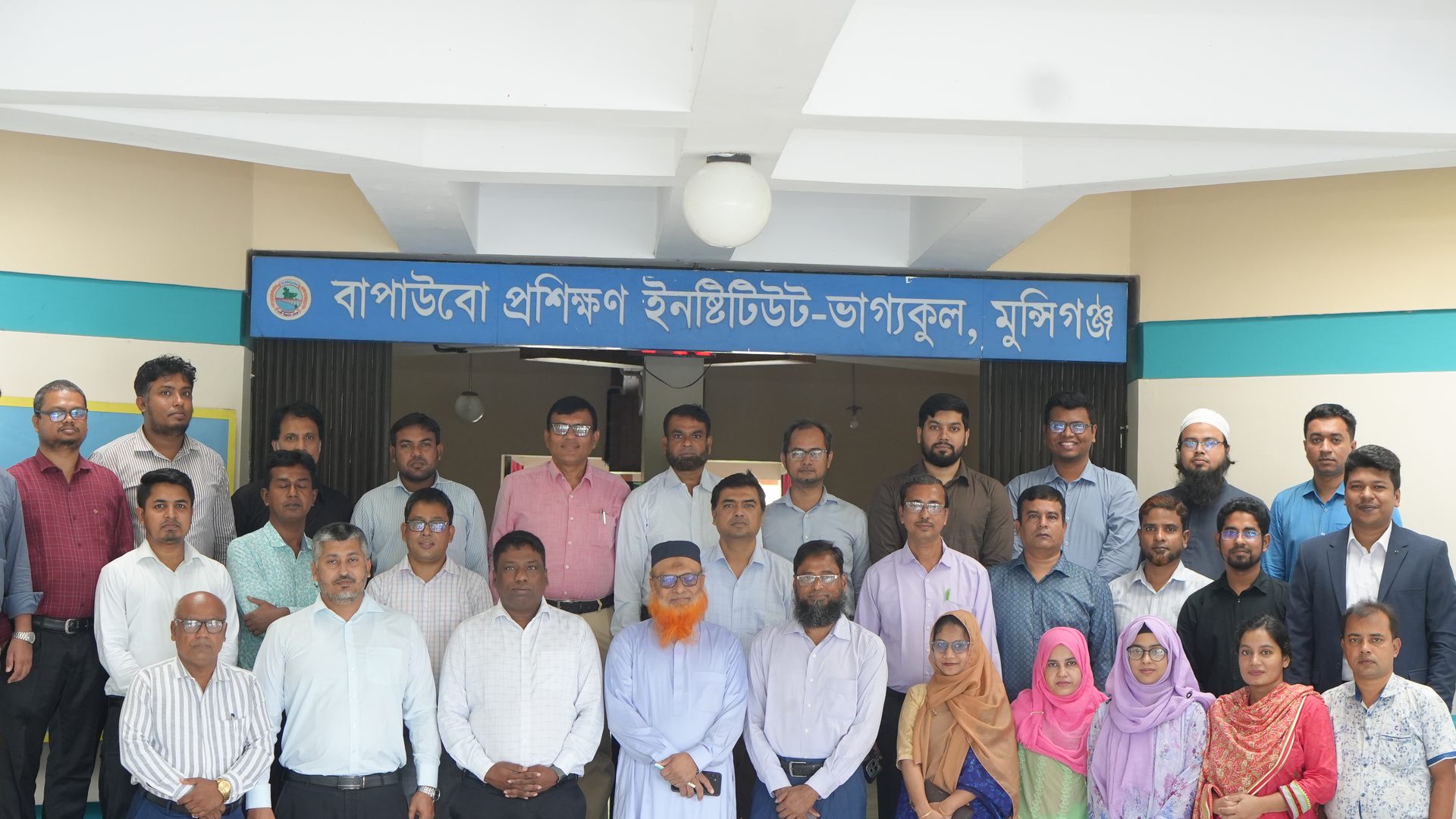
About the engagement: Under reference CSAWMP-WDB-PCU-WD-22-1-PPA-eGp-01, MTI Ltd. is delivering the training package for the Climate-Smart Agriculture and Water Management Project (BWDB Part), implemented by the Bangladesh Water Development Board under the Ministry of Water Resources, Government of the People's Republic of Bangladesh. The course was authorised by Office Order Memo No. 42.01.0000.000.647.25.0010.26-991 & -992, dated 29 June 2026, issued by the Office of the Project Director, CSAWM Project (BWDB Part), Pani Bhaban, 72 Green Road, Dhaka, following the Director General's D-Nothi approval (Para 1.2) of the same date.
Package 22 Opens on the Delivery Side
Package 21 began with the governance question: what the law, the policy and the community framework require of the Bangladesh Water Development Board. Package 22 opens with the operational one — how a project actually gets built. Over two days this course walked the cohort along a single continuous track: identify the need, test whether the scheme is technically and economically viable, decompose it into a work breakdown structure, cost and budget it, release funds against certified bills, tender it lawfully under the Public Procurement Act and the e-GP system, administer the resulting contract, and then build it in a way that survives flood, erosion and salinity.
Framed that way, the four subject areas in the course title are not four topics. They are four consecutive points of failure on the same project, and an officer who is strong at one and weak at the next still produces a scheme that fails.
Inauguration, Pre-Evaluation and Course Leadership
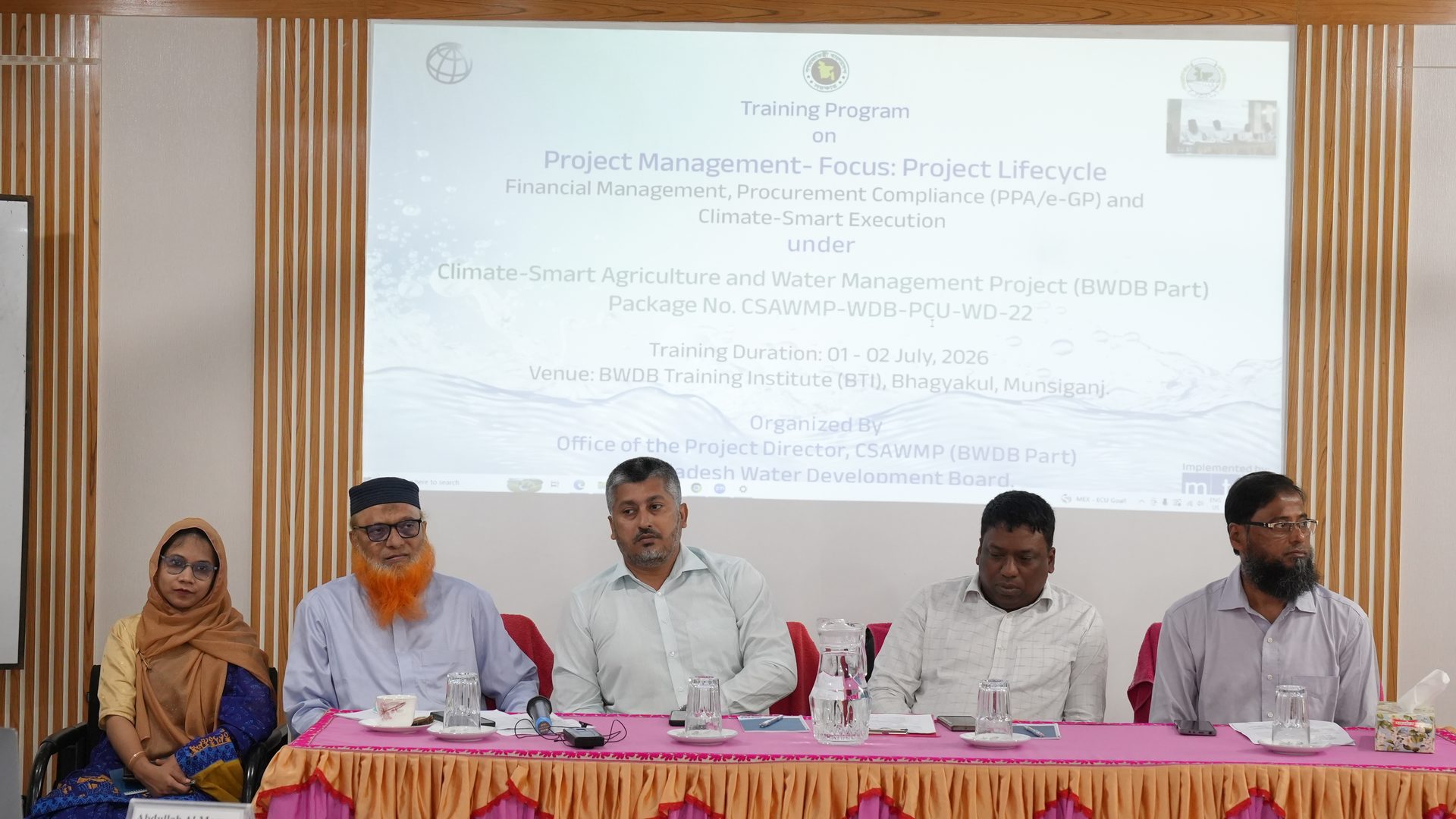
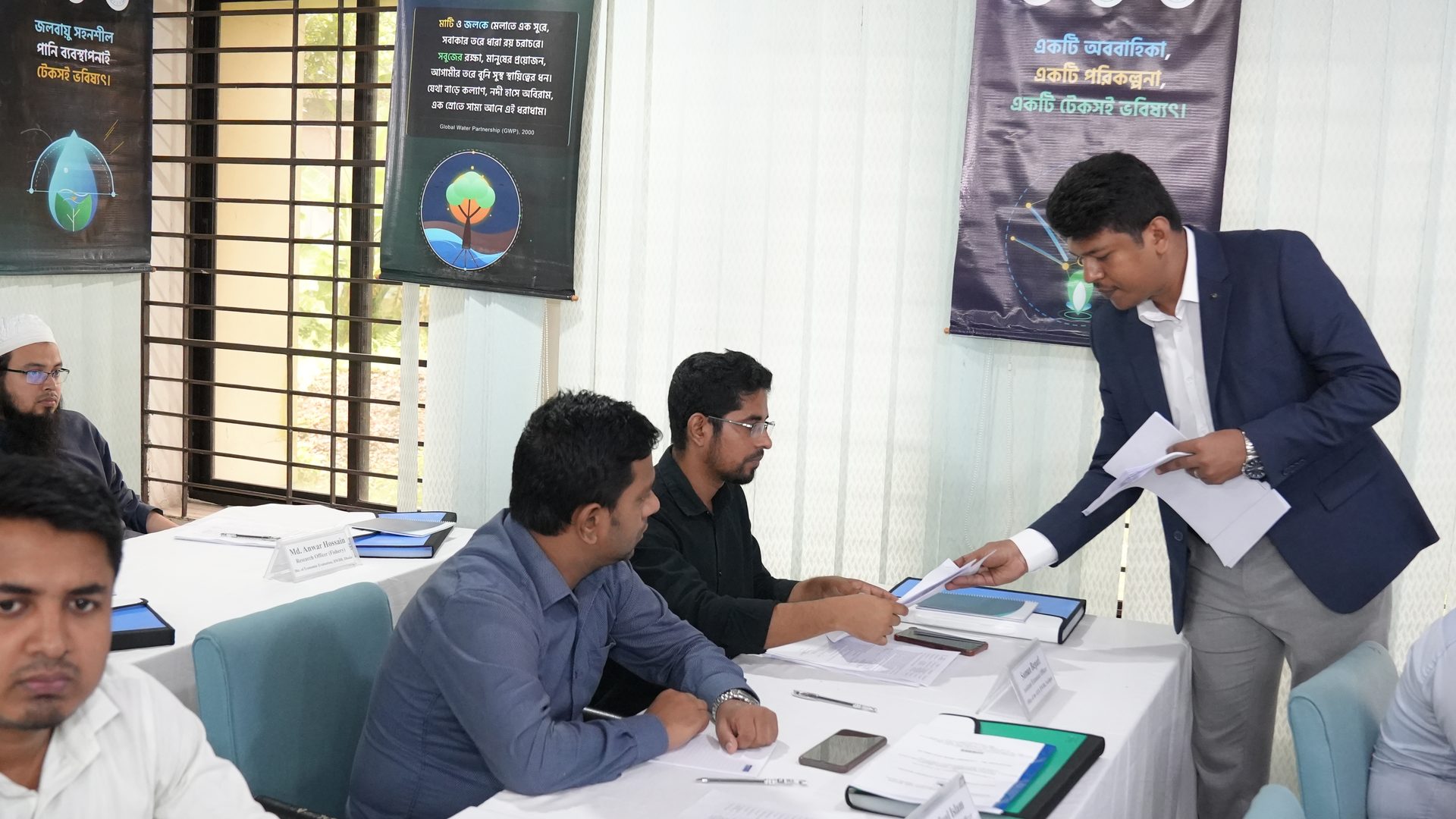
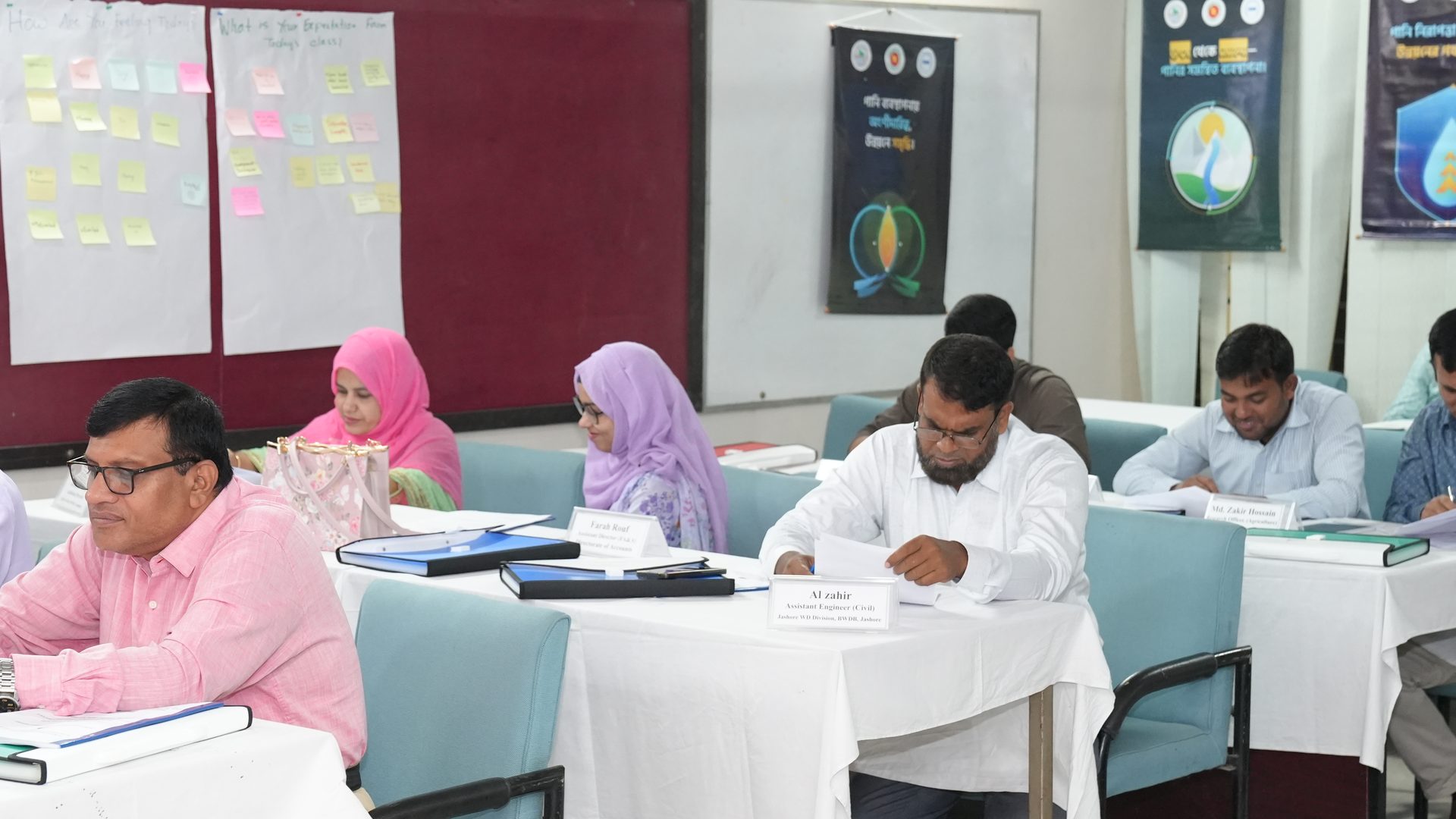
Pijush Krishna Kundu, Additional Chief Engineer (Civil) and Project Director of the CSAWM Project (BWDB Part), opened the course and returned on the second afternoon to close it. The opening session ran straight from the welcome remarks into participant introductions and expectations, then into a written pre-evaluation — the same instrument repeated as a post-evaluation at the end of Day 2, so the learning gain across the two days is measured rather than assumed.
Course administration was handled by the BWDB Training Institute, with the CSAWM Project supplying the Course Evaluator.
Additional Chief Engineer (Civil) & Project Director
CSAWM Project (BWDB Part)
Deputy Director (Admin)
BWDB Training Institute (BTI)
Assistant Engineer (Civil)
BWDB Training Institute (BTI)
Executive Engineer
CSAWM Project (BWDB Part)
Managing Director
Management and Training International Ltd.
Resource Persons
Five senior BWDB officials delivered the eight sessions. The line-up is worth reading closely: Muhammad Shohiduzzaman Sharker and Md. Halim Shalehy — who served as Course Coordinator and Assistant Course Coordinator respectively for the first Package 21 batch a week earlier — appear here as resource persons, with Md. Halim Shalehy carrying all four sessions of Day 2 single-handed. The Training Institute is not only hosting this programme; its faculty is progressively taking over its delivery.
Additional Chief Engineer (Civil) & Project Director
CSAWMP (BWDB Part)
Superintending Engineer (Civil)
BWDB Training Institute, Bhagyakul
Superintending Engineer (Civil)
Cumilla WD Circle
Controller (FA&A)
Office of the Controller, Finance Accounts & Audit
Executive Engineer (Civil)
BWDB Training Institute, Bhagyakul
Eight Blocks, One Project
Each session pairs two sub-topics, and the eight blocks run in the order a real scheme encounters them.
Identification & Feasibility
Needs assessment to identify genuine project demand, and feasibility analysis covering technical and economic viability before commitments are made.
Planning & Design
Work breakdown structure and task decomposition, and detailed design preparation — drawings and specifications that a contractor can actually price and build.
Implementation & Monitoring
Construction scheduling and the time sequencing of activities, with progress monitoring that tracks physical and financial status together rather than separately.
Closure & Evaluation
Completion reporting, final documentation and handover, followed by post-project evaluation of performance and lessons learned.
Budget & Cost Estimation
Cost estimation techniques including quantity and rate analysis, and budget allocation as financial planning and distribution across the scheme.
Funds, Control & Audit
Fund flow management and timely release, contractor billing and certification, expenditure tracking and variance, audit compliance, risk identification and cost-overrun mitigation.
Procurement: PPA, PPR-2025 & e-GP
Procurement planning and package structuring, tender documentation and bid evaluation under the Public Procurement Act, e-GP tender publication and e-submission, contract administration and dispute resolution.
Climate-Smart Execution
Hazard identification for flood, erosion and salinity, vulnerability analysis, adaptive and nature-based design, resource efficiency, environmental safeguards and resilience-indicator monitoring.
Day-by-Day Course Schedule
Both days ran the same four-session rhythm — 09:00–10:20, 10:40–12:00, 12:00–13:20 and 14:20–15:40 — with a tea break at 10:20, prayer and lunch from 13:20, and refreshment from 15:40 to 16:00.
-
09:00–10:20
Session 1 — Welcome, Introduction & Project Lifecycle
Welcome and opening remarks by senior BWDB officials; participant introductions and expectations; training objectives and agenda; pre-evaluation. Project Identification and Feasibility: needs assessment to identify project demand; feasibility analysis for technical and economic viability. Project Planning and Design: work breakdown structure and task decomposition; detailed design preparation — drawings and specifications. Methods: speech, interactive discussion, plenary discussion with PPP, experience sharing, Q&A.
Pijush Krishna Kundu Project Director & Addl. Chief Engineer (Civil), CSAWMP
Muhammad Shohiduzzaman Sharker Superintending Engineer (Civil), BTI - 10:20–10:40 Refreshment and tea break
- 10:40–12:00 Session 2 — Project Lifecycle: Implementation, Monitoring, Closure & Evaluation Project Implementation and Monitoring: construction scheduling and time sequencing of activities; progress monitoring tracking physical and financial status. Project Closure and Evaluation: completion reporting — final documentation and handover; post-project evaluation of performance and lessons learned. Methods: interactive discussion, experience sharing, Q&A. Md. Abdullah Al Amin Superintending Engineer (Civil), Cumilla WD Circle, BWDB
- 12:00–13:20 Session 3 — Financial Management: Budget Preparation & Fund Disbursement Budget Preparation and Cost Estimation: cost estimation techniques — quantity and rate analysis; budget allocation — financial planning and distribution. Fund Management and Disbursement: fund flow management for timely release; payment procedures — contractor billing and certification. Methods: plenary discussion with PPP, VIPP, Q&A. Md. Mehedi Hasan Controller (FA&A), Office of the Controller, Finance Accounts & Audit, BWDB
- 13:20–14:20 Lunch and prayer break
- 14:20–15:40 Session 4 — Financial Management: Control, Audit & Cost Overrun Financial Control and Audit: expenditure tracking — cost control and variance; audit compliance — financial transparency and reporting. Risk and Cost Overrun Management: risk identification of financial uncertainties; cost overrun mitigation through corrective financial measures. Methods: plenary discussion with PPP, VIPP, Q&A. Md. Mehedi Hasan Controller (FA&A), Finance Accounts & Audit, BWDB
- 15:40–16:00 Day review and refreshment
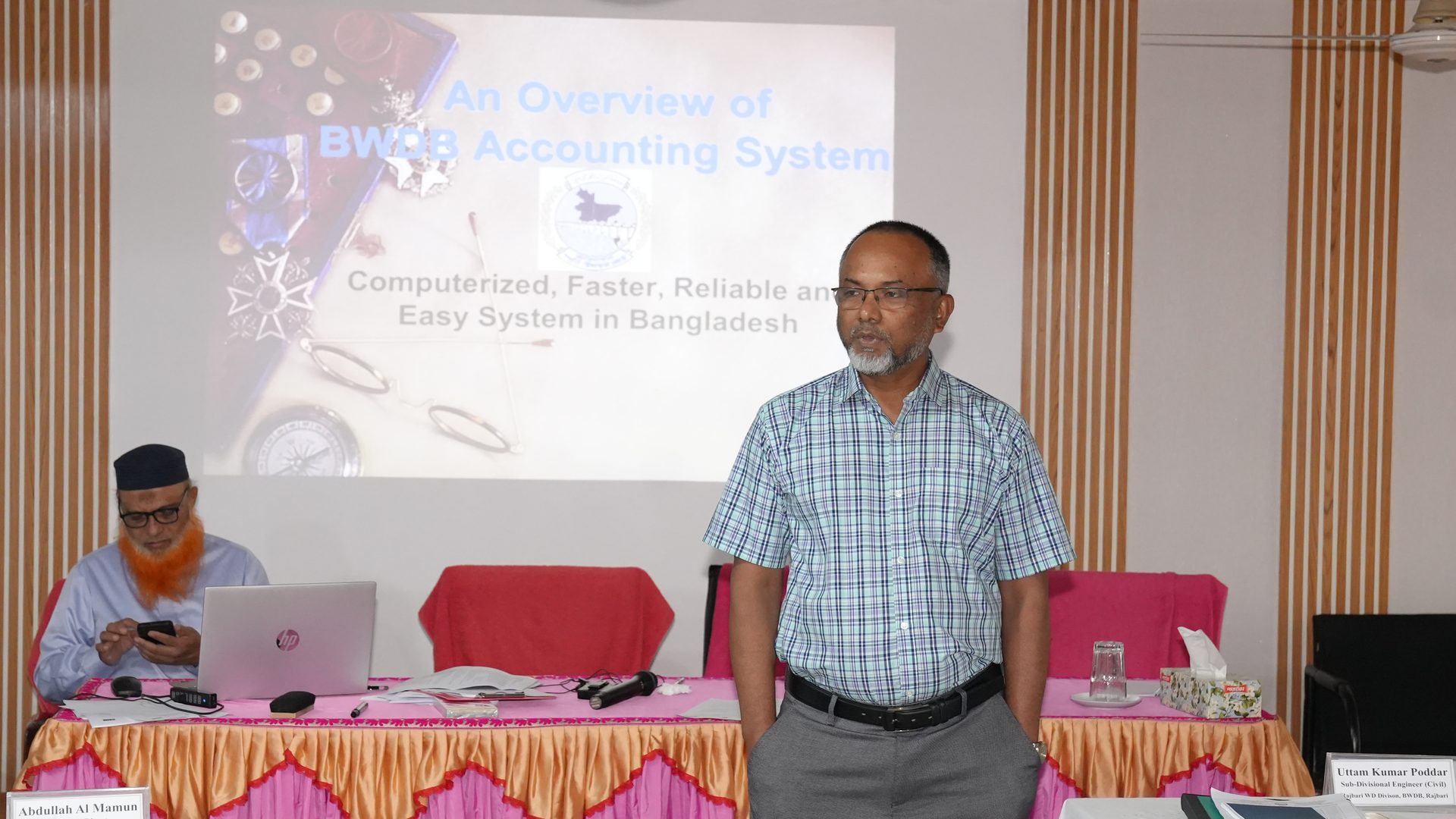
- 09:00–10:20 Session 1 — Procurement Compliance (PPR-2025, e-GP): Planning & Tendering Procurement Planning: procurement plan preparation and tender scheduling; package structuring — contract grouping strategy. Tendering Process under PPA: tender documentation — specifications and conditions; bid evaluation — technical and financial assessment. Methods: interactive discussion, brainstorming, experience sharing. Md. Halim Shalehy Executive Engineer (Civil), BTI, Bhagyakul, Munshiganj
- 10:20–10:40 Refreshment and tea break
- 10:40–12:00 Session 2 — Procurement Compliance (PPR-2025, e-GP): e-GP Operation & Contract Management e-GP System Operation: tender publication and the online invitation process; e-submission and opening — digital bid handling. Contract Management and Compliance: contract administration — execution and supervision; dispute resolution — claims and arbitration handling. Methods: interactive discussion, brainstorming, experience sharing. Md. Halim Shalehy Executive Engineer (Civil), BTI, Bhagyakul, Munshiganj
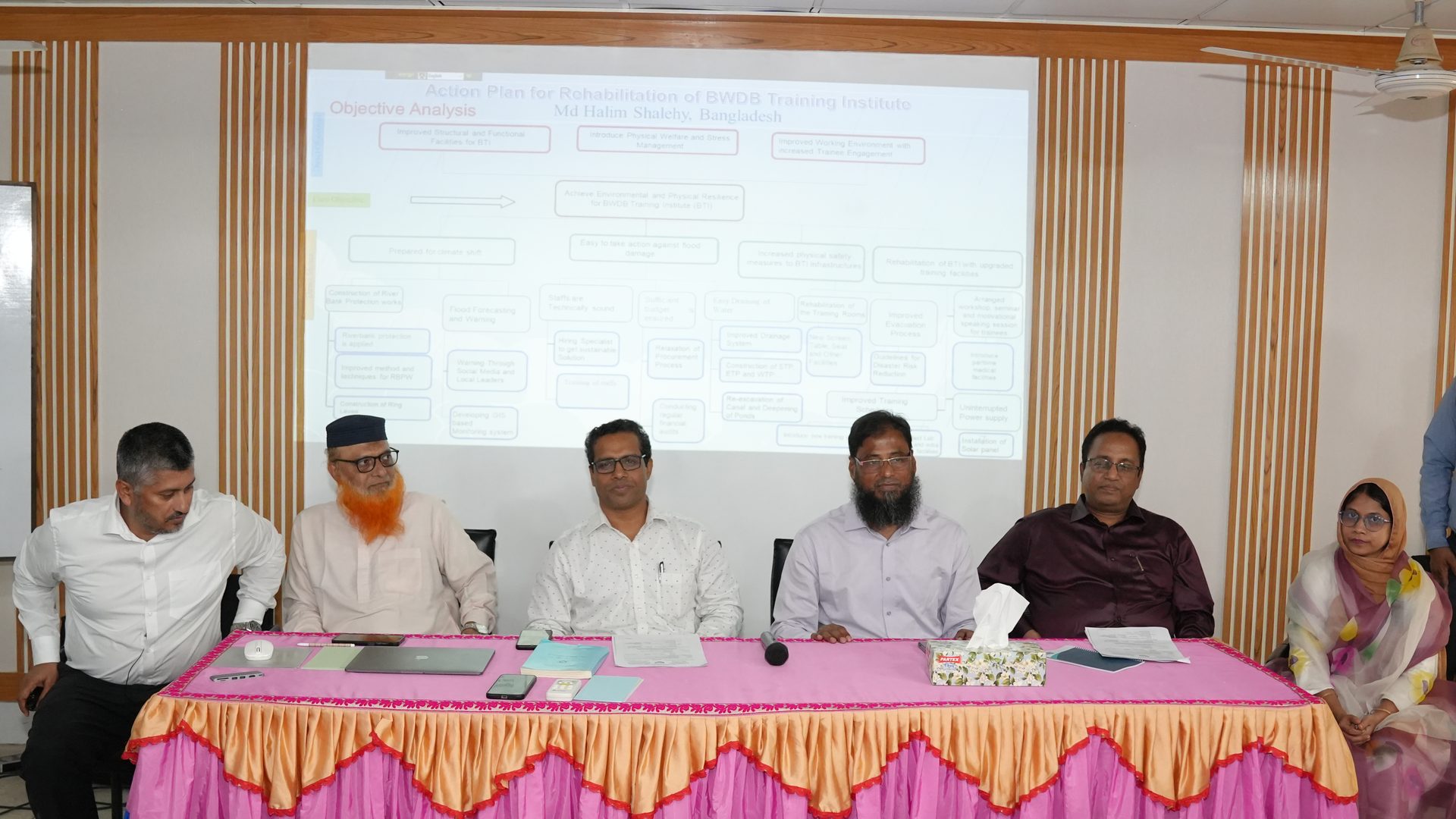
- 12:00–13:20 Session 3 — Climate-Smart Execution: Risk Assessment & Resilient Design Climate Risk Assessment in Projects: hazard identification — flood, erosion and salinity risks; vulnerability analysis — exposure and sensitivity. Climate-Resilient Design Integration: adaptive design for resilient infrastructure planning; nature-based solutions and eco-friendly approaches. Methods: plenary discussion, large group discussion with PPP. Md. Halim Shalehy Executive Engineer (Civil), BTI, Bhagyakul, Munshiganj
- 13:20–14:20 Lunch and prayer break
- 14:20–15:40 Session 4 — Climate-Smart Execution: Sustainable Construction & Adaptation Monitoring Sustainable Construction Practices: resource efficiency — energy and material optimisation; environmental safeguards — pollution control measures. Monitoring Climate Impacts and Adaptation: performance monitoring against resilience indicators; adaptive management and continuous improvement. Course review and conclusion; post-evaluation. Methods: Q&A, large group discussion with PPP, case study. Md. Halim Shalehy Executive Engineer (Civil), BTI, Bhagyakul, Munshiganj
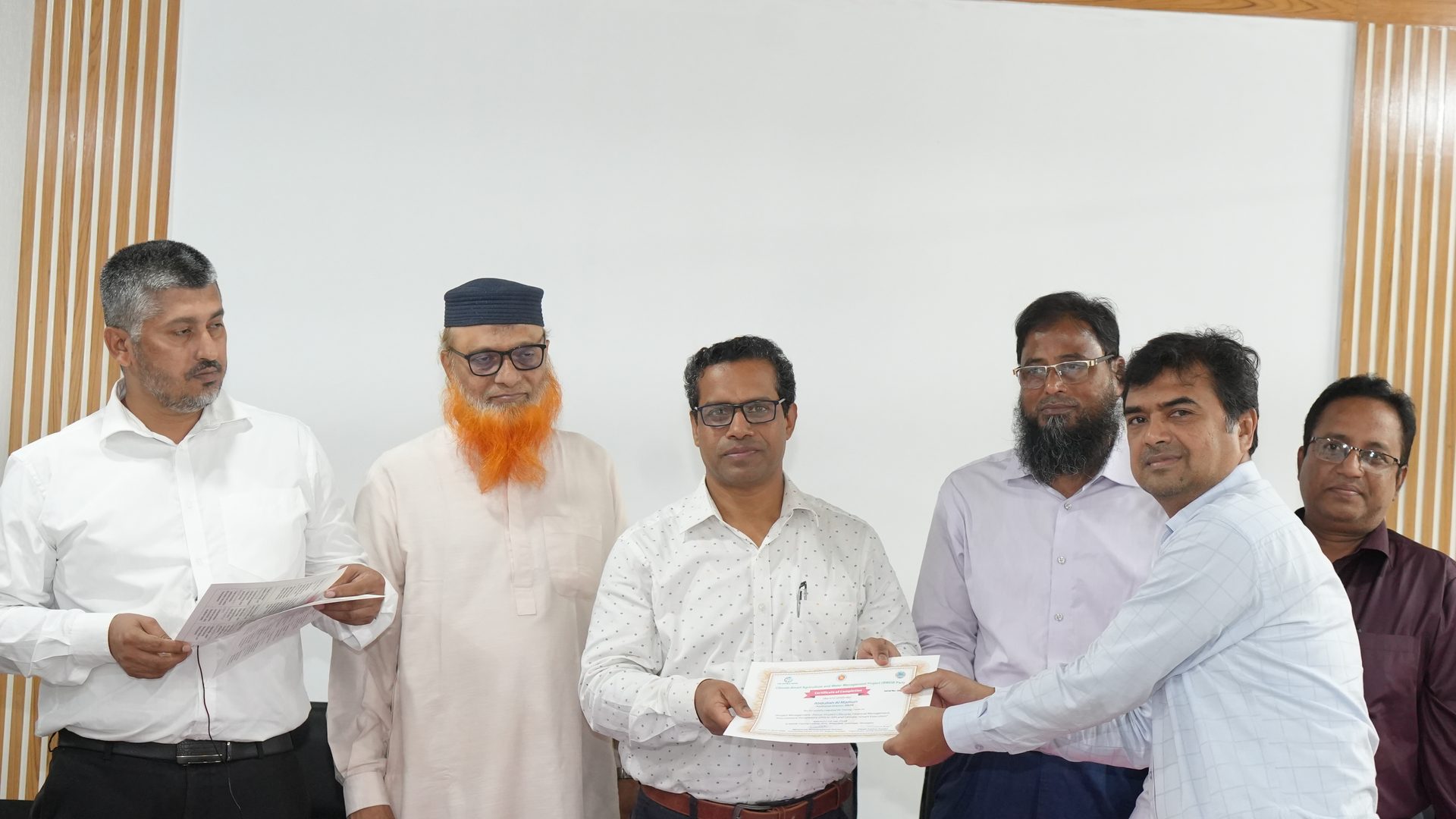
- 15:40–16:00 Closing ceremony, certificate distribution and refreshment Pijush Krishna Kundu Project Director, CSAWMP (BWDB Part)
Training Methodology
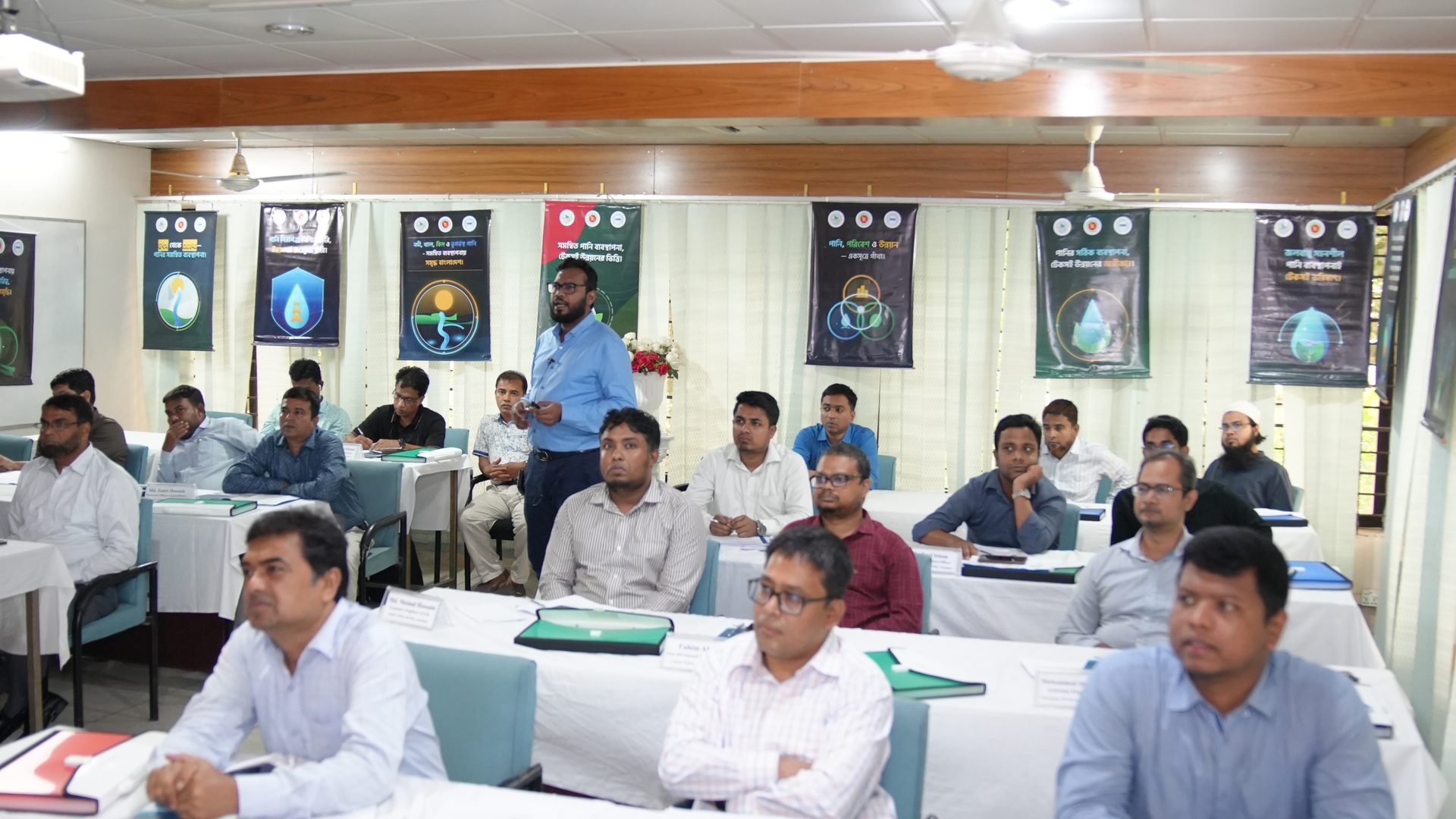
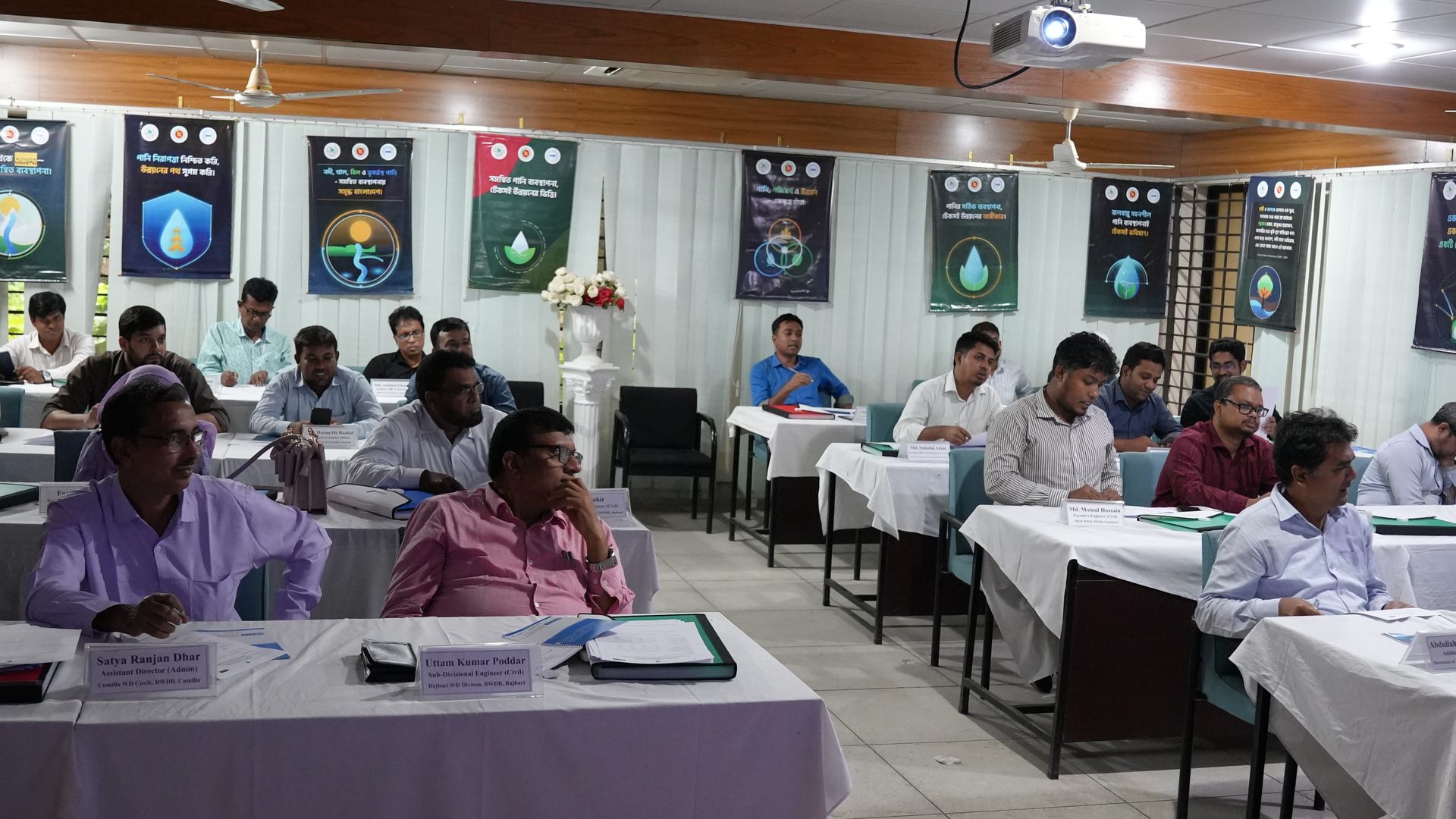
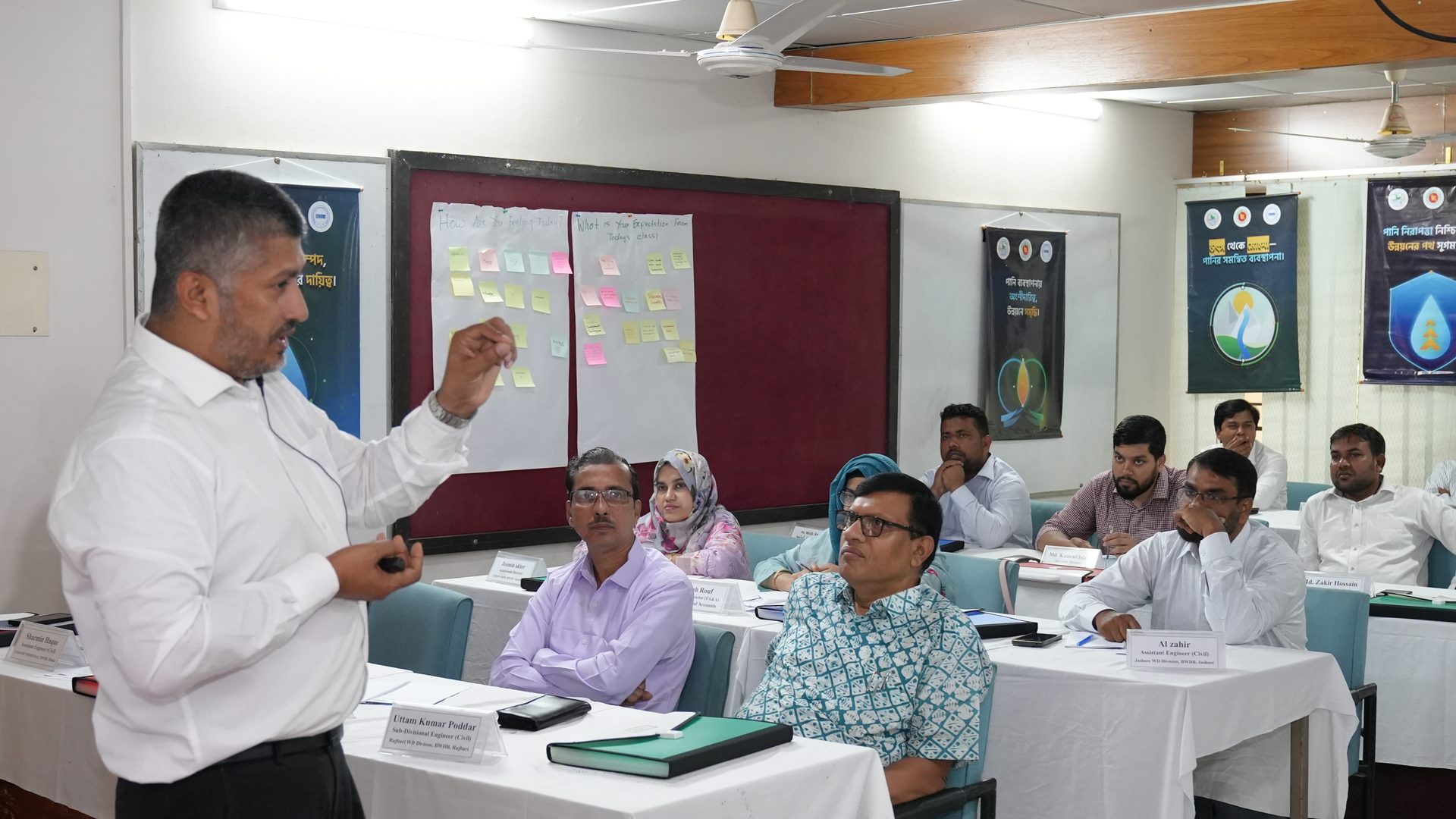
The two days leaned heavily on the experience already in the room. With Superintending Engineers from a field circle, a Controller from Finance Accounts & Audit and the Training Institute's own faculty delivering, experience sharing was written into five of the eight sessions as a formal method rather than left to chance in the Q&A. VIPP card work carried the financial-management sessions, and the course closed on a case study.
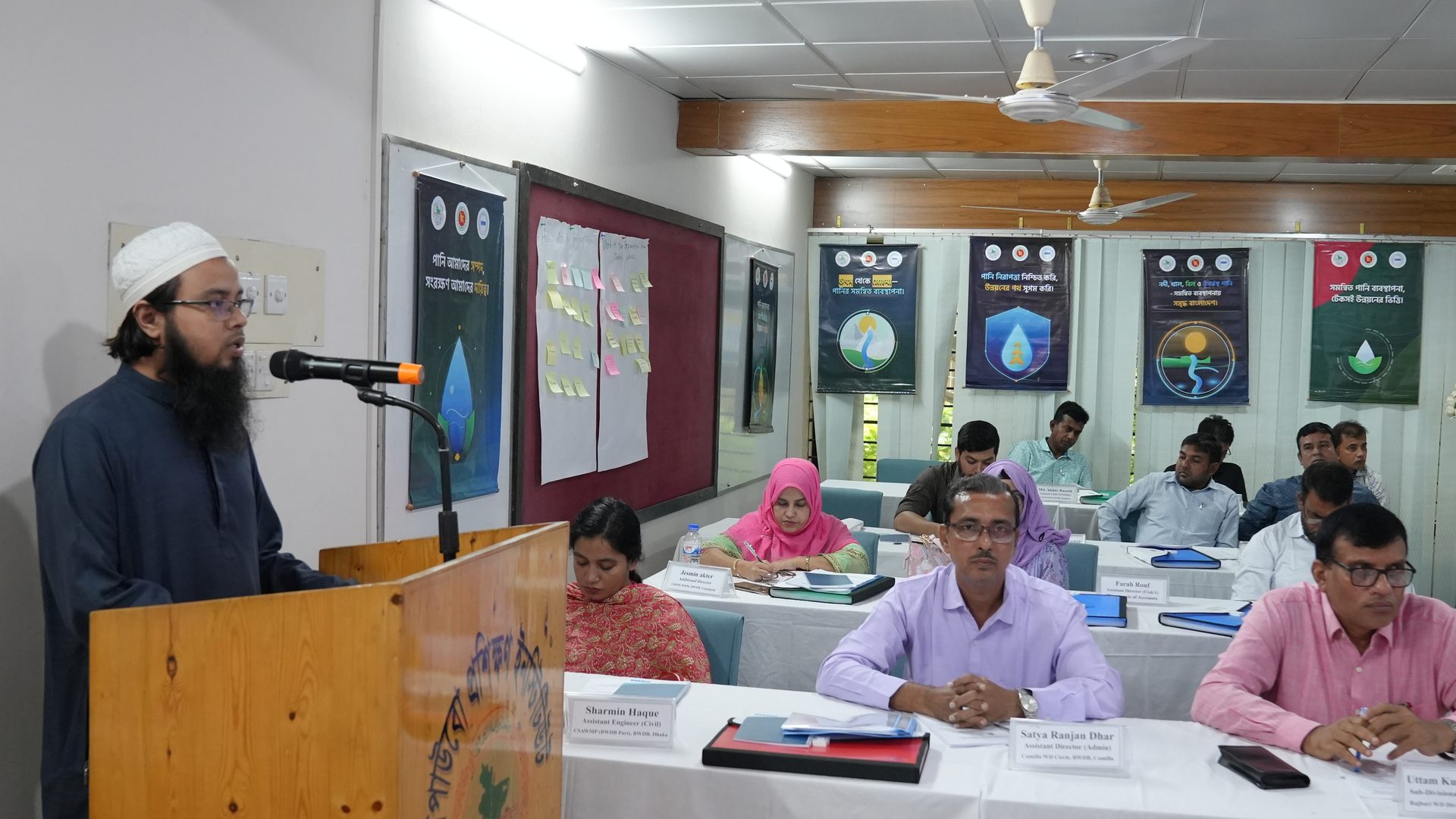
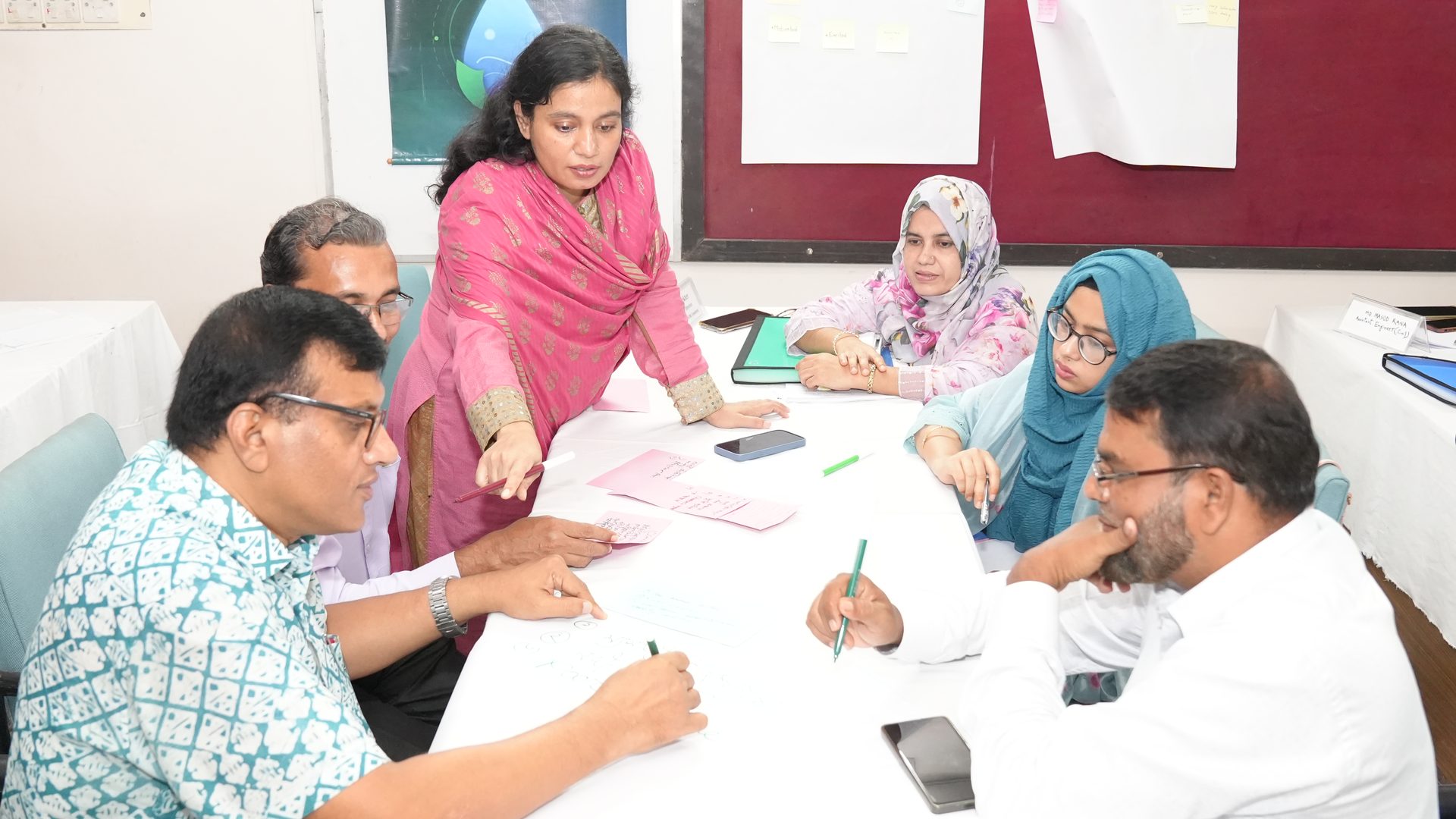
Group Work & VIPP Poster Presentations
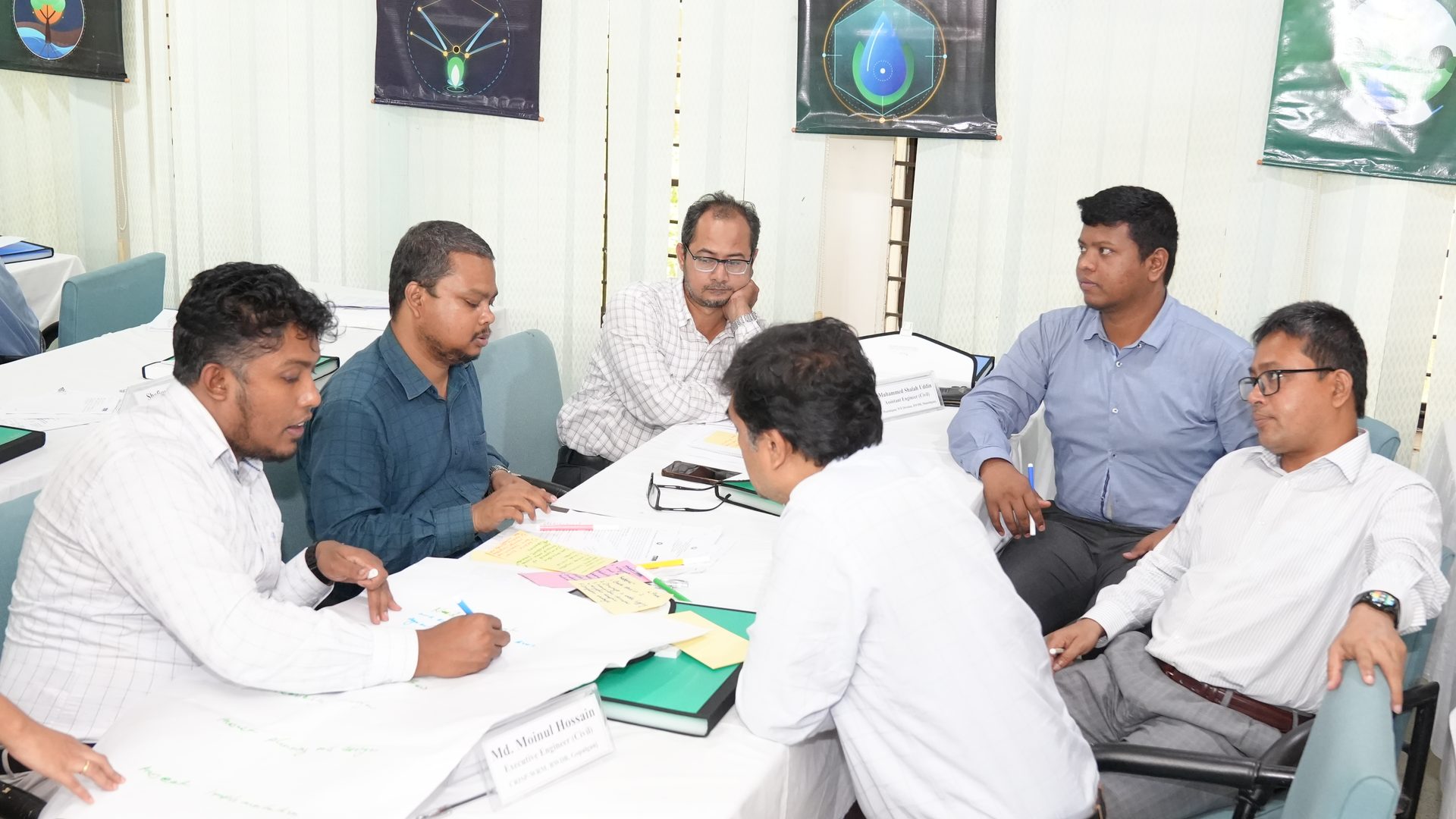
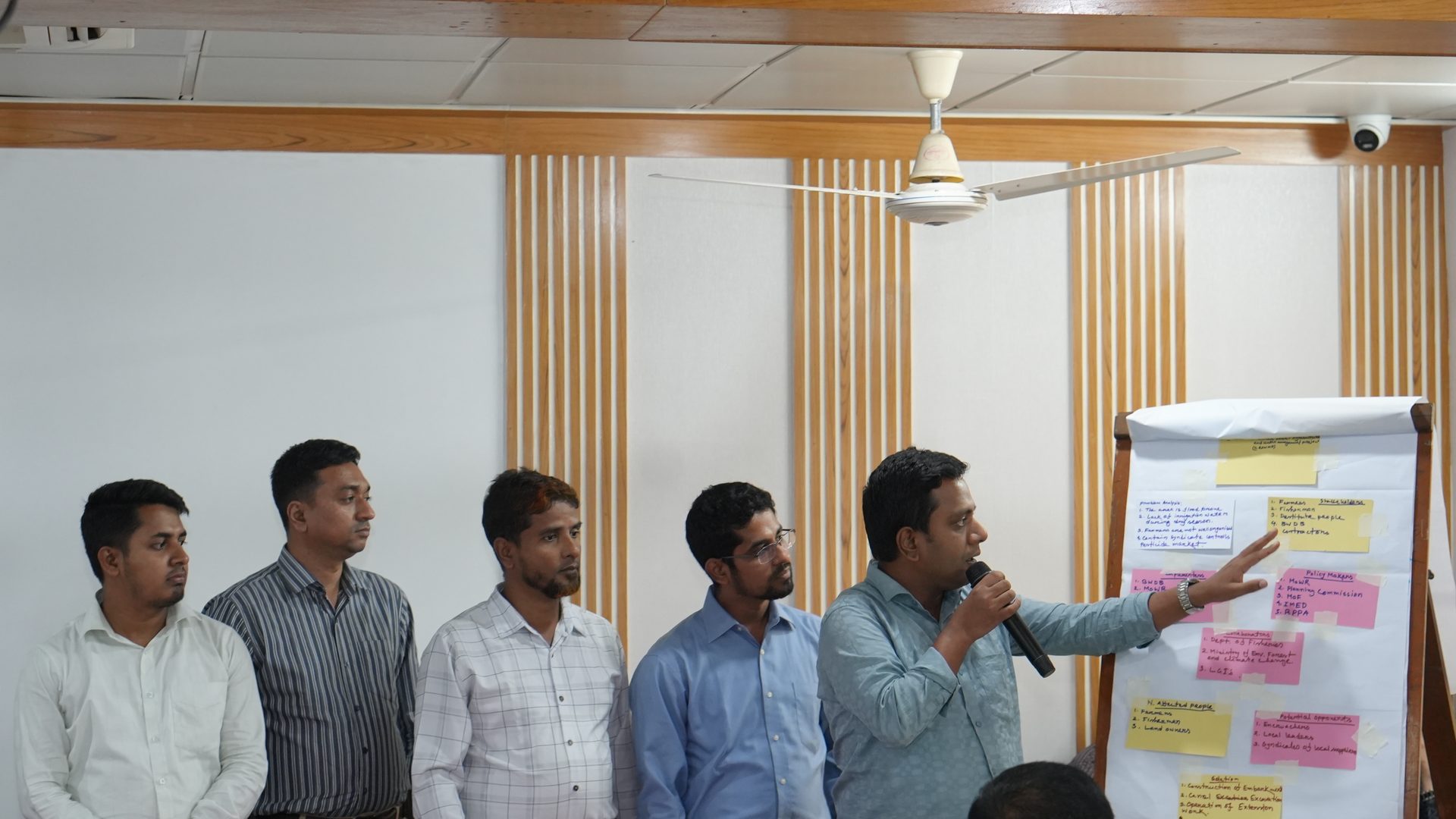
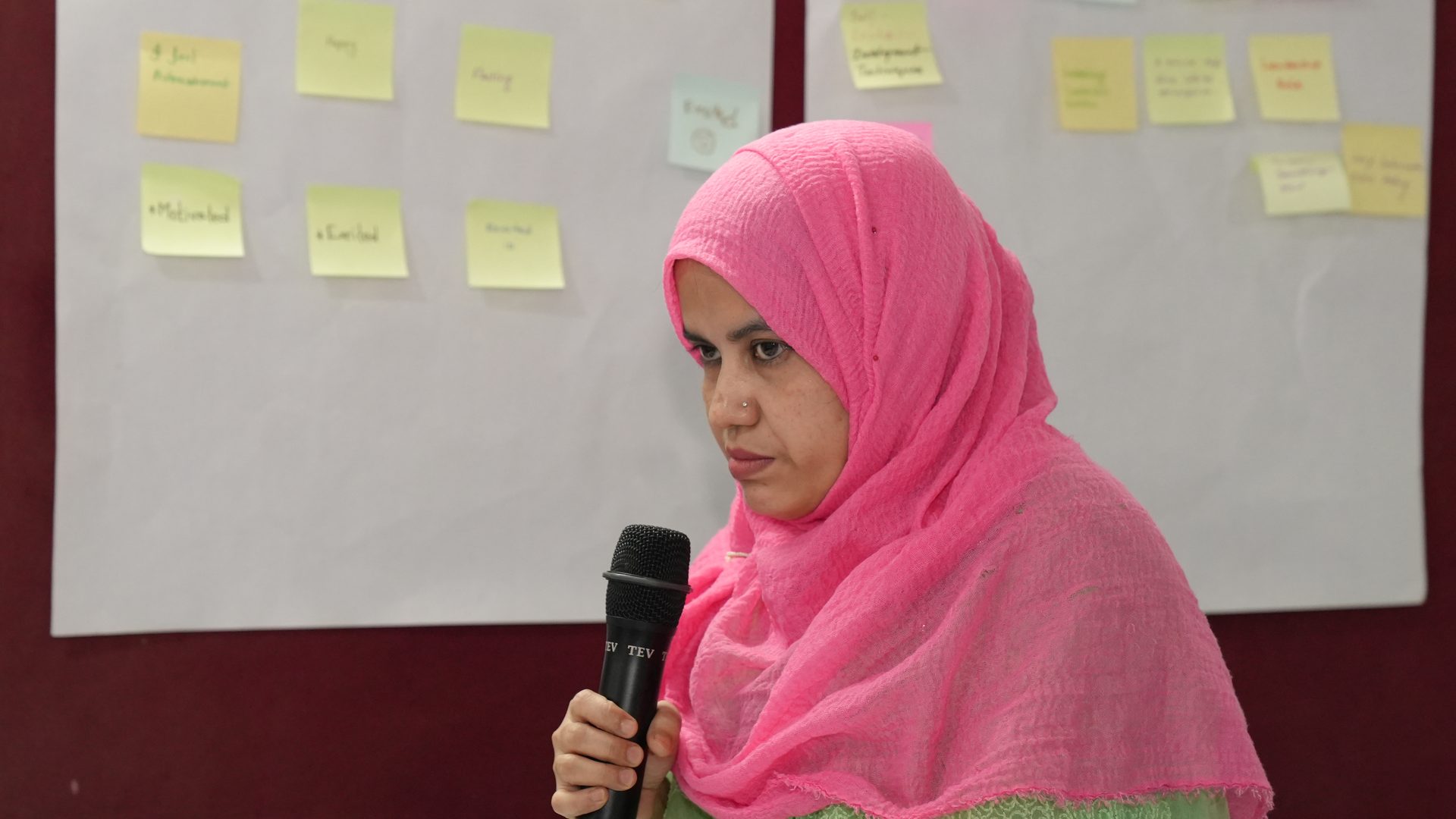
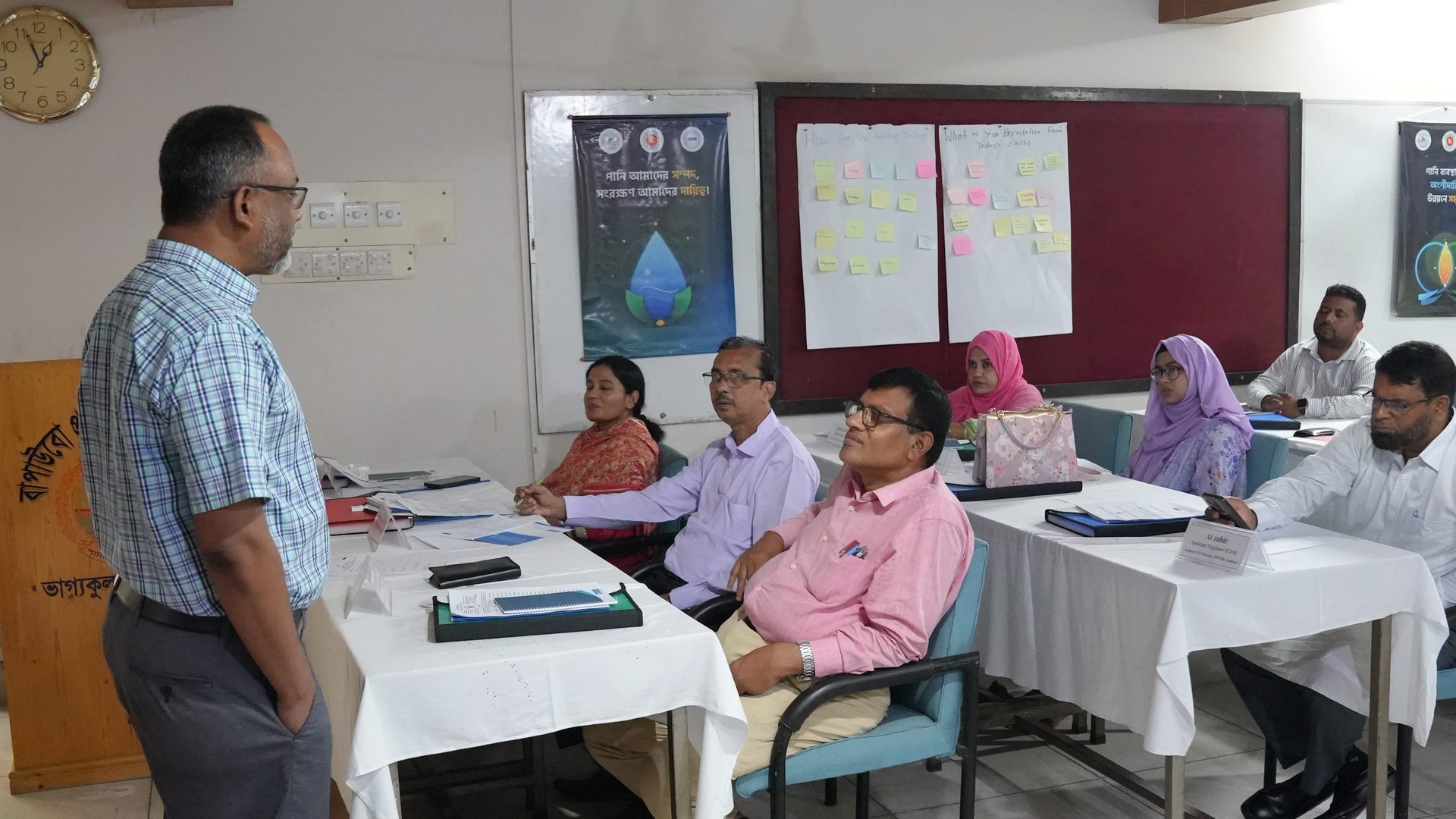
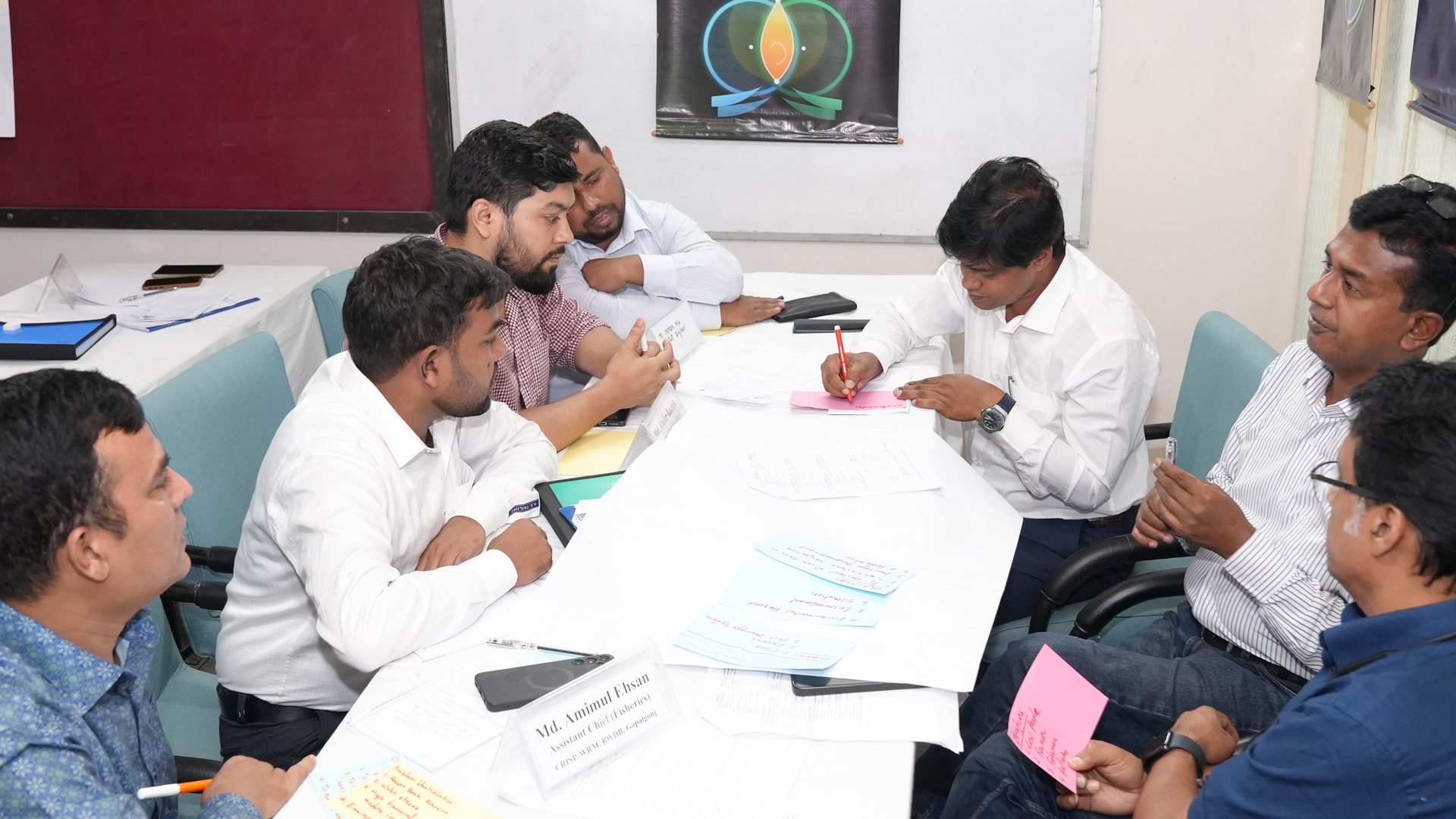
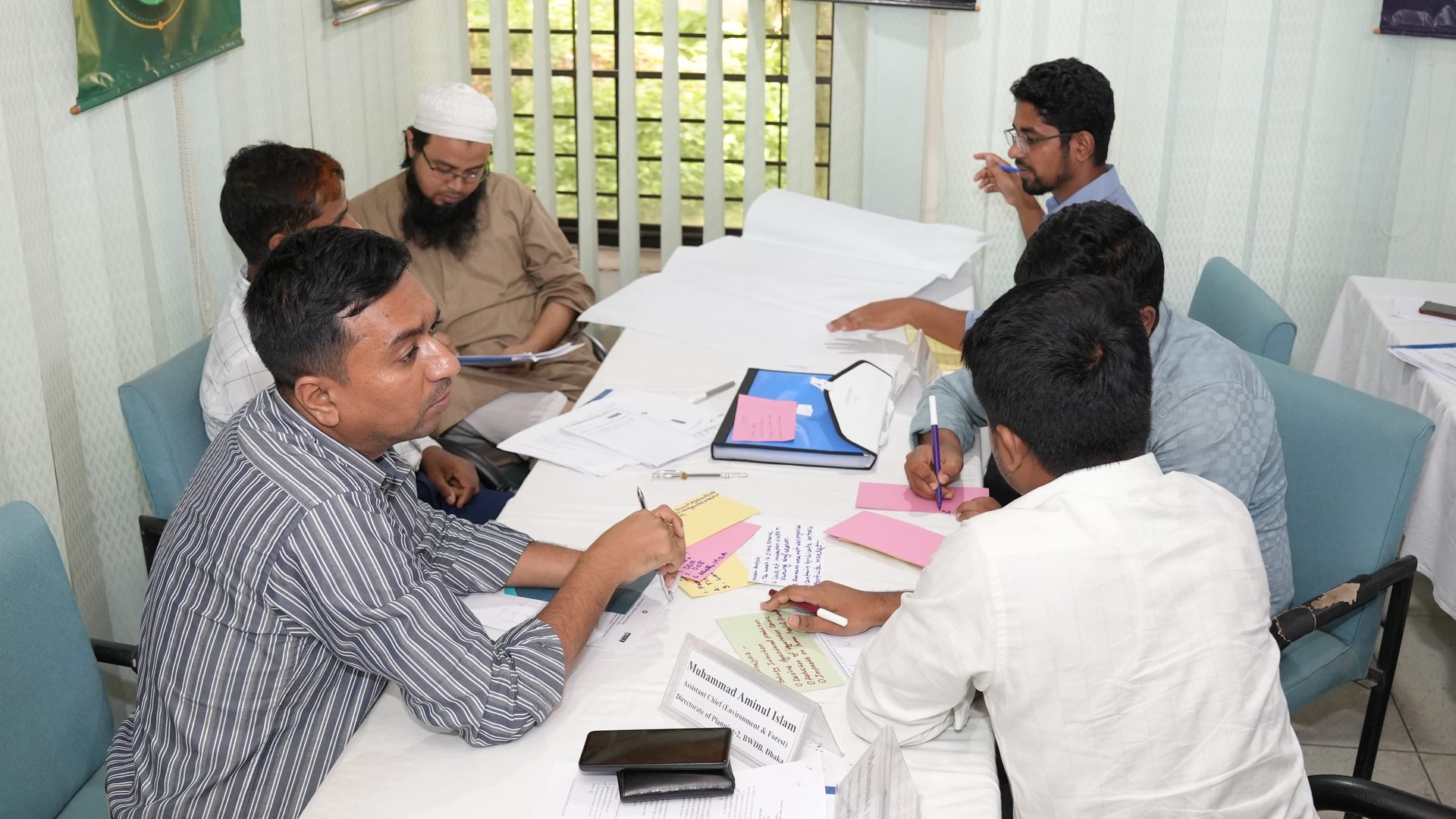
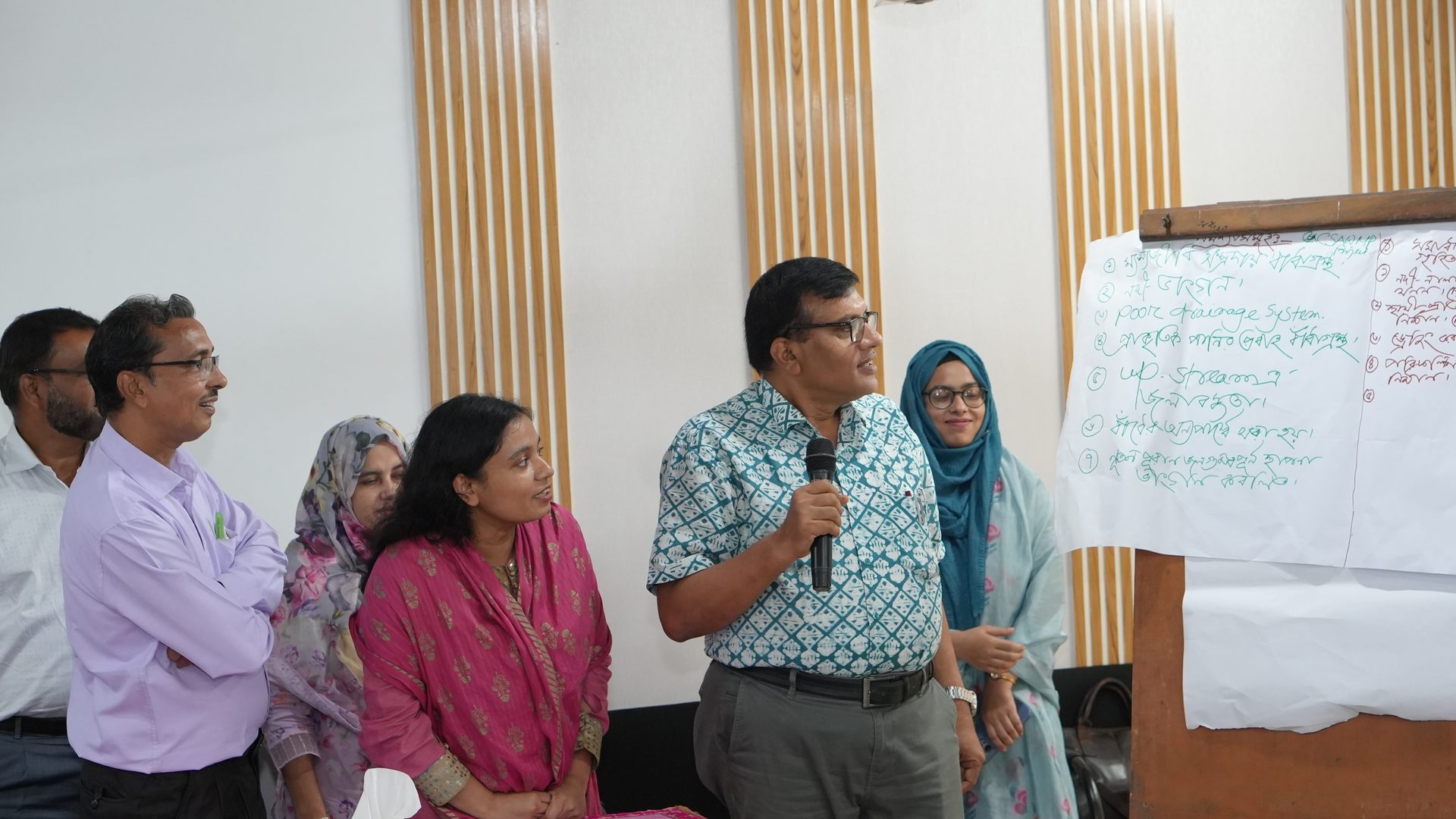
On the second afternoon the cohort split into groups and worked the material onto flip charts using VIPP cards — the coloured-card technique that forces a group to reduce an argument to a single line per card before it can be pinned up. Each group then defended its board in front of the room. The output is visible in the photographs: structured boards mapping problems to responses, argued through rather than copied from a slide.
Participant Feedback
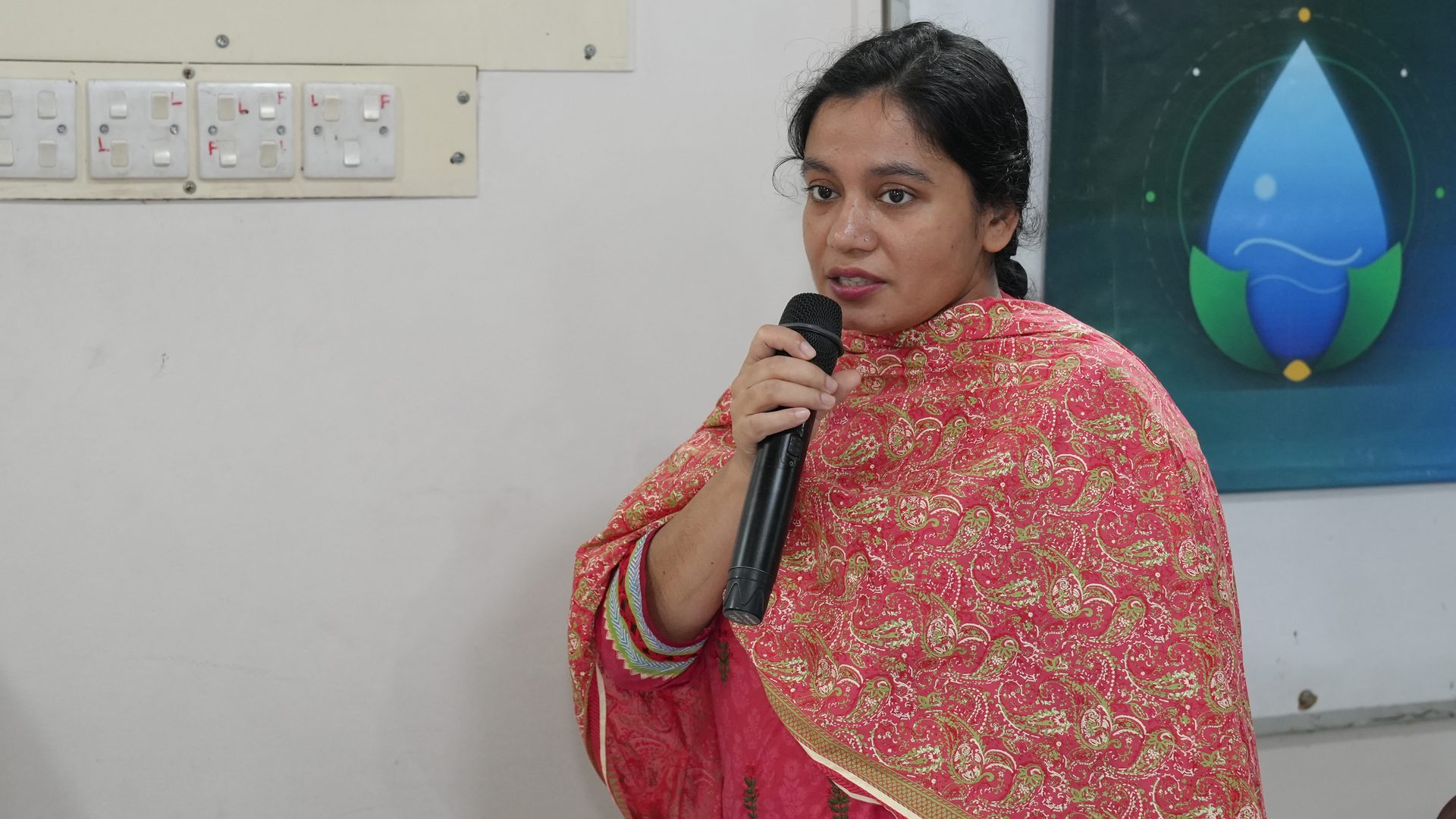
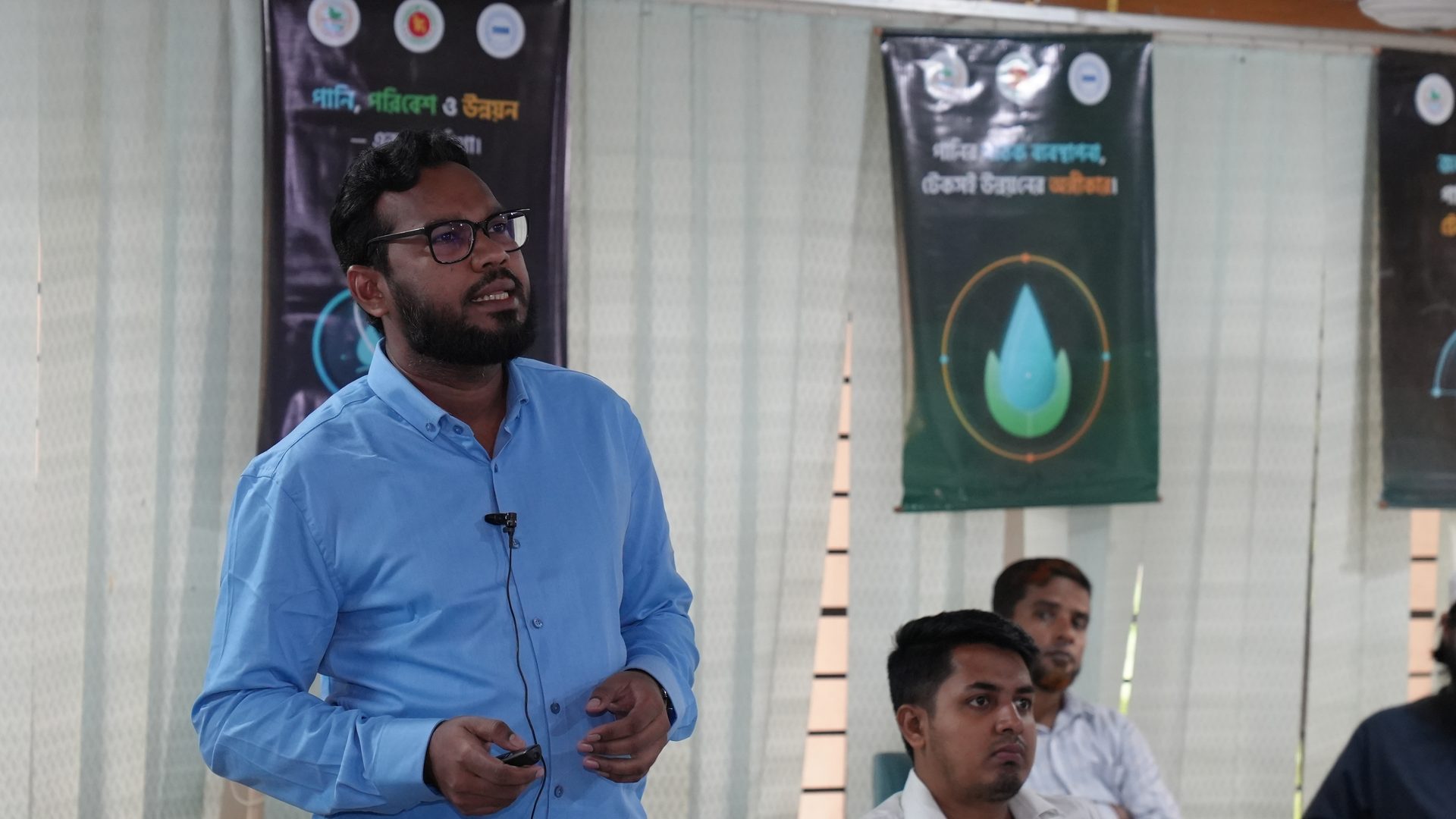
Feedback was collected from the floor on both days rather than only on a form at the end — participants were invited to comment on pacing, on the depth of the procurement content, and on how far the sessions matched the problems they meet in their own divisions and circles.
Who Was in the Room
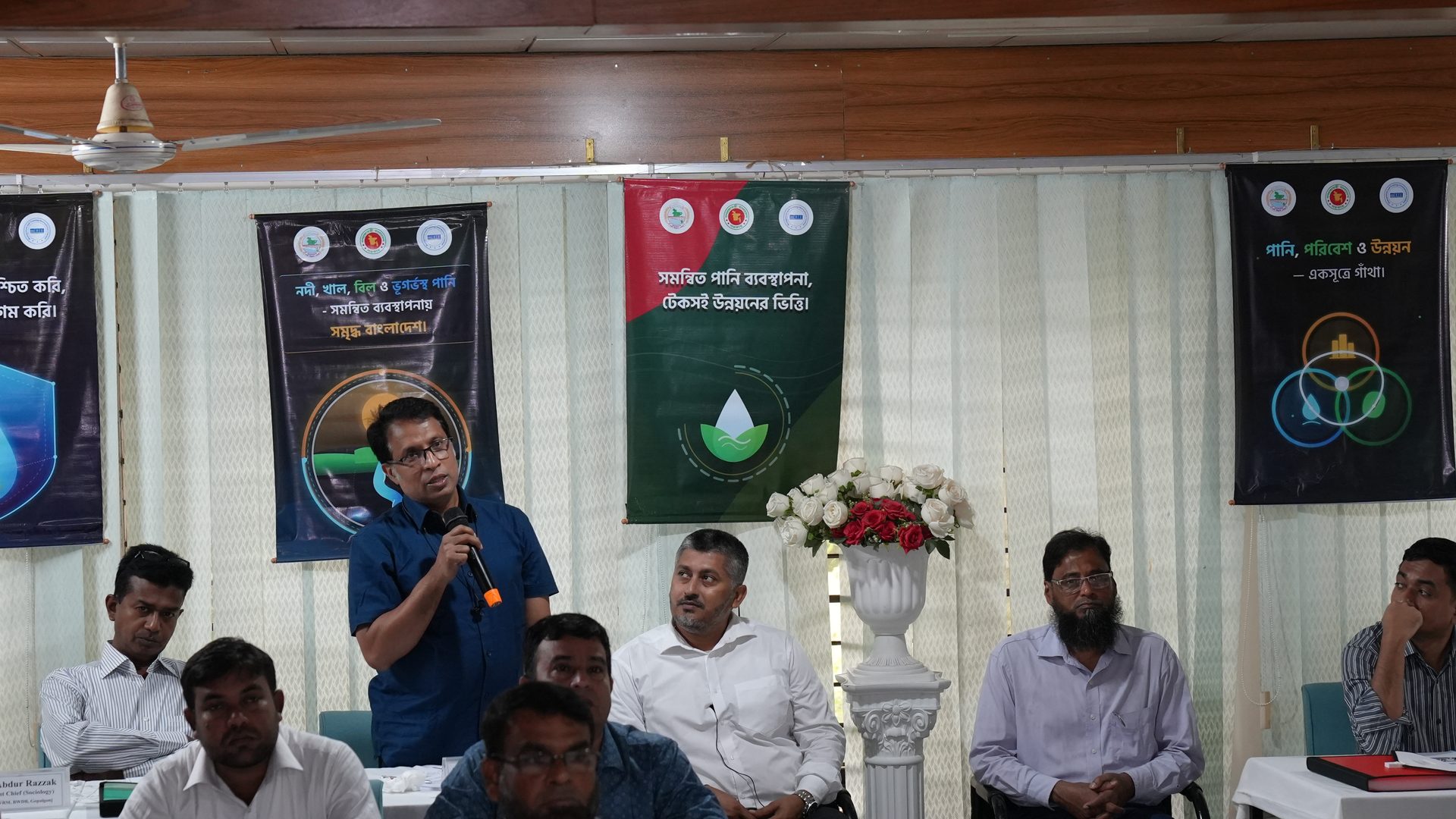
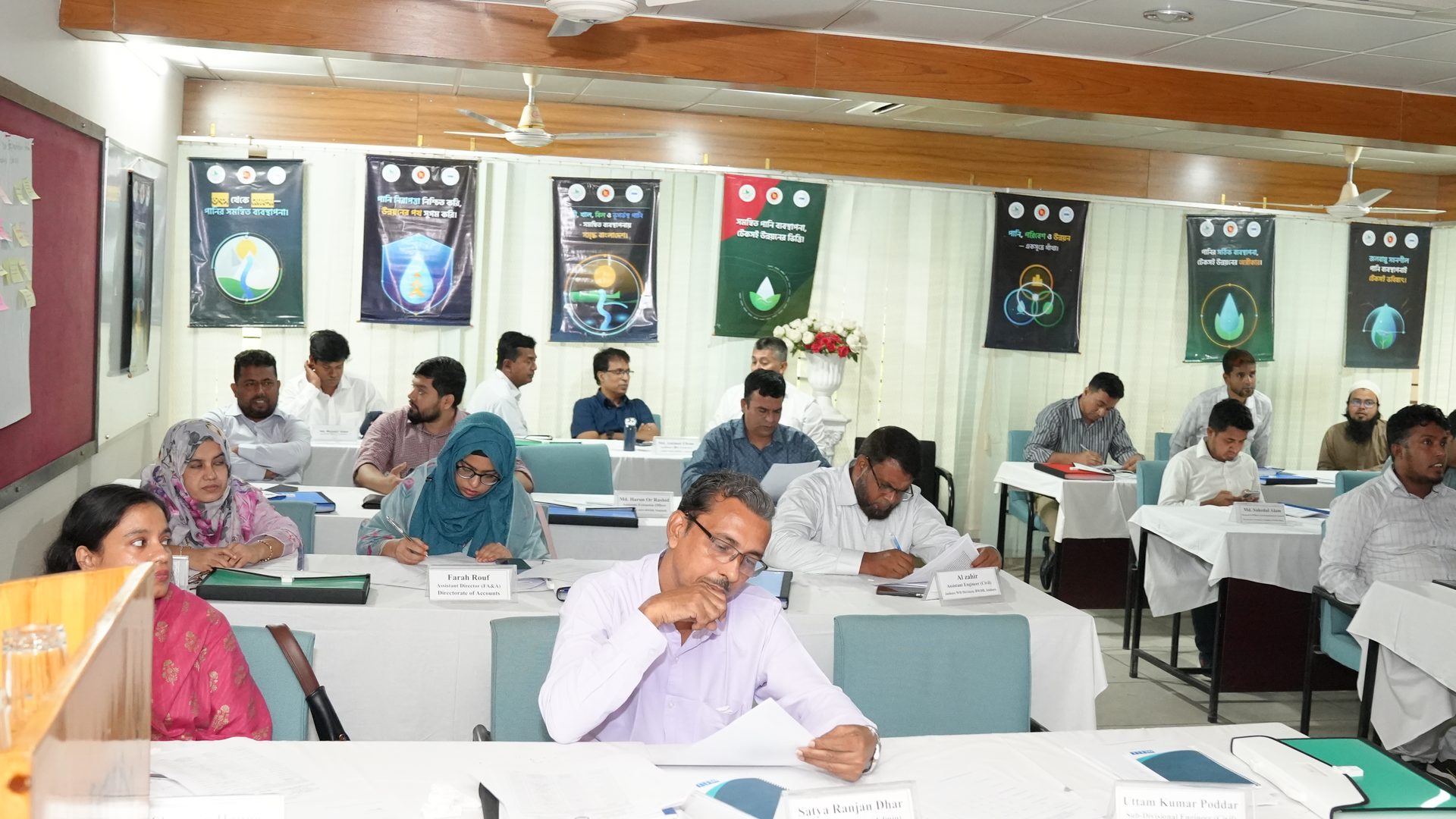
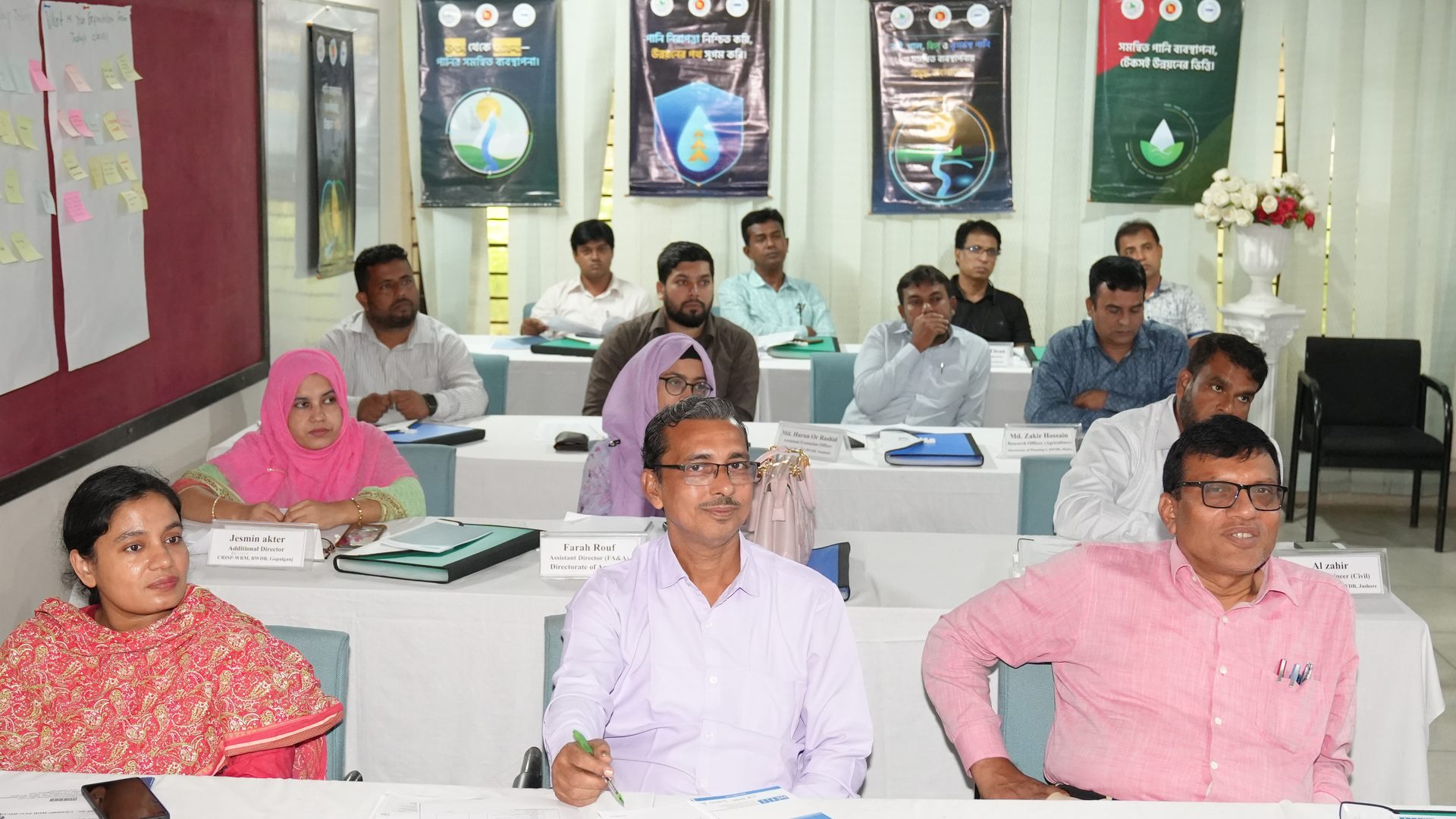
This cohort is weighted toward the people who write and appraise project documents rather than those who sign contracts. Six research officers — in agriculture, economics, fisheries, and environment & forest — came from the Directorates of Planning-1, Planning-2 and Planning-3, the Directorate of Economic Evaluation and the Office of the Chief Engineer, Planning. Alongside them sat six civil engineers from field divisions in Rajbari, Jashore, Munshiganj and Gopalganj, three assistant extension officers from Chandpur, Noakhali and Faridpur, three assistant chiefs covering sociology, fisheries and environment & forest, and four officials from Accounts, Finance and Audit.
That is a deliberate pairing. The research officers appraise whether a scheme is viable; the engineers build it; the accounts and audit officers certify the money. Putting all three in one room for the lifecycle and financial-management sessions is precisely what makes the feasibility-to-audit chain legible to each of them.
Full Participant Roster
Additional Director
Directorate of Accounts, BWDB, DhakaExecutive Engineer (Civil)
CRISP-WRM, BWDB, GopalganjDeputy Chief (Soil)
Directorate of Planning-2, BWDB, DhakaSub-Divisional Engineer (Civil)
CRISP-WRM, BWDB, GopalganjSub-Divisional Engineer (Civil)
Rajbari WD Division, BWDB, RajbariAssistant Chief (Sociology)
CRISP-WRM, BWDB, GopalganjAssistant Chief (Fisheries)
CRISP-WRM, BWDB, GopalganjAssistant Chief (Environment & Forest)
Directorate of Planning-2, BWDB, DhakaDeputy Director (FA&A)
Directorate of Accounts, BWDBAssistant Extension Officer
Office of the AEO, BWDB, ChandpurAssistant Extension Officer
Office of the AEO, BWDB, NoakhaliAssistant Extension Officer
Office of the AEO, BWDB, FaridpurAssistant Engineer (Civil)
Jashore WD Division, BWDB, JashoreAssistant Engineer (Civil)
CSAWMP (BWDB Part), BWDB, DhakaAssistant Engineer (Civil)
Munshiganj WD Division, BWDB, MunshiganjAssistant Director (Admin)
CRISP-WRM, BWDB, GopalganjAssistant Director (Admin)
Cumilla WD Circle, BWDB, CumillaAssistant Director (FA&A)
Directorate of Accounts, BWDBResearch Officer (Agriculture)
Directorate of Planning-3, BWDB, DhakaResearch Officer (Environment & Forest)
Directorate of Economic Evaluation, BWDB, DhakaResearch Officer (Agriculture)
Directorate of Planning-3, BWDB, DhakaResearch Officer (Fishery)
Directorate of Economic Evaluation, BWDB, DhakaResearch Officer (Economics)
Office of the Chief Engineer, Planning, BWDB, DhakaResearch Officer (Environment & Forest)
Directorate of Planning-1, BWDB, DhakaAssistant Director
Directorate of Audit, BWDBA cadre, not a headcount: nine of these twenty-five officials had already attended a Package 21 batch — and Sharmin Haque, Assistant Engineer (Civil) at the CSAWM Project, has now completed three courses across both packages: IWRM, the Participatory Water Management Rules 2014, and this one. Read together, that sequence gives a single officer the governance framework, the community framework and the delivery framework. Across 75 batches, that is the intended shape of the programme.
Closing Ceremony & Certification
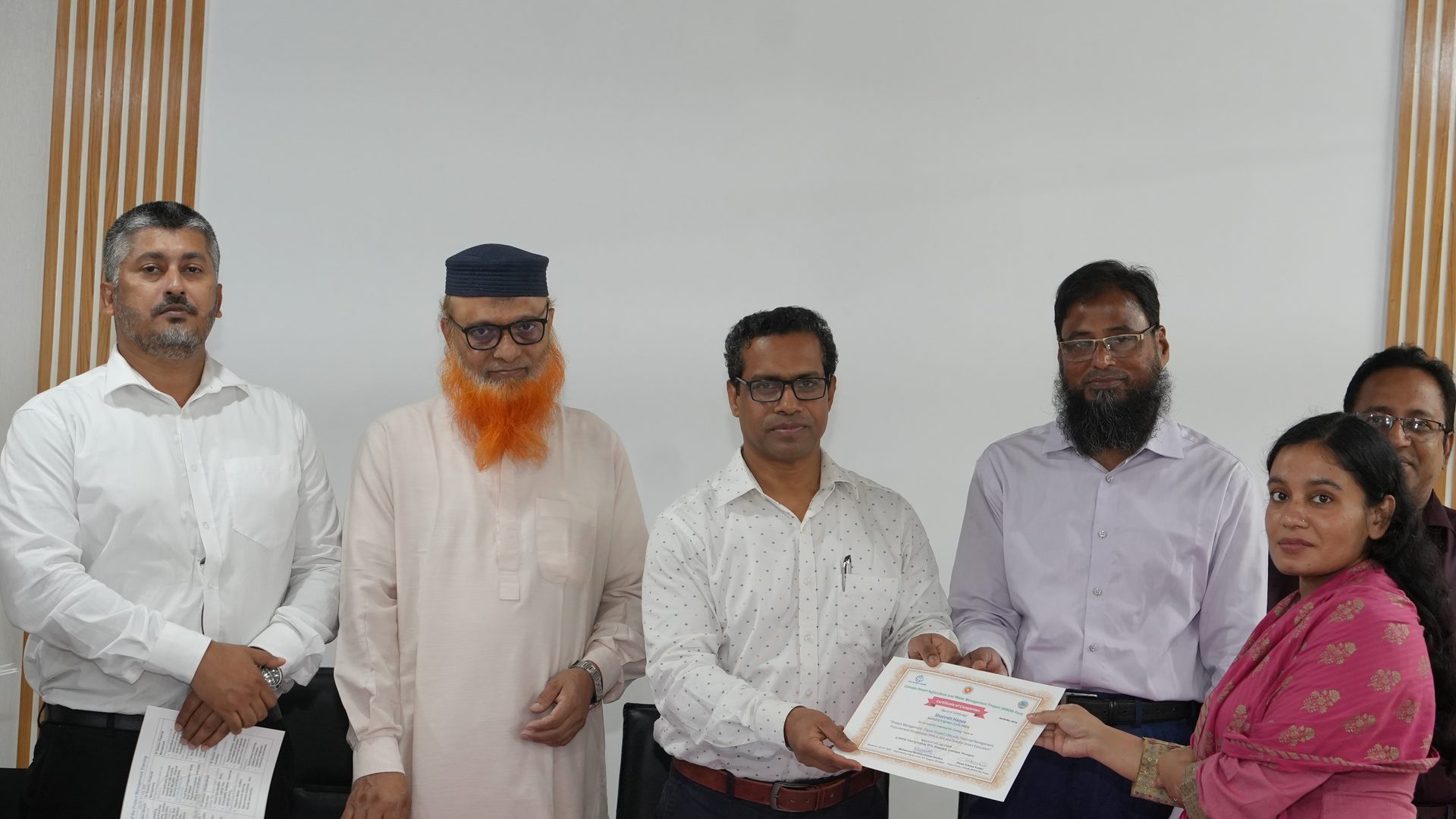
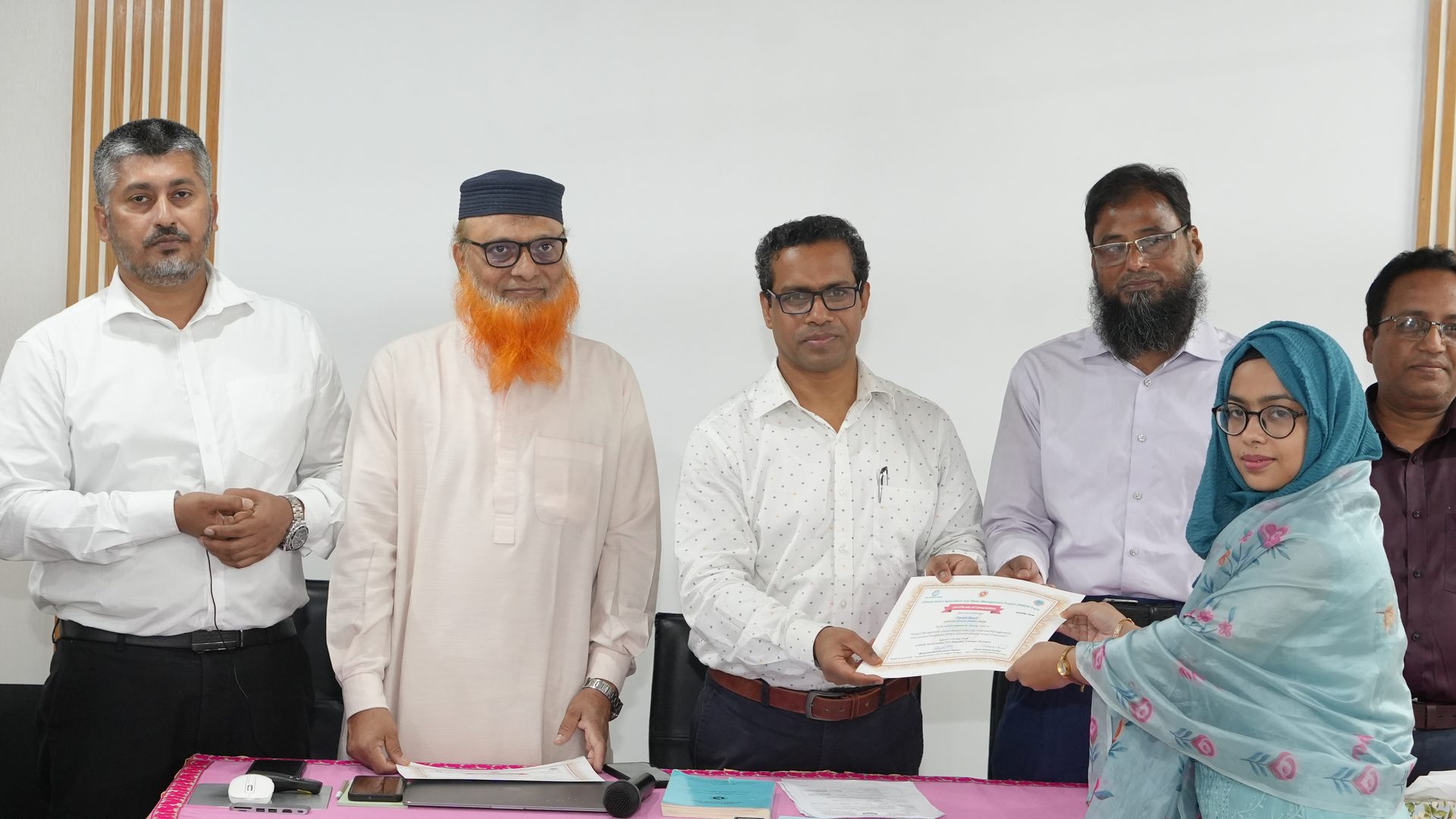
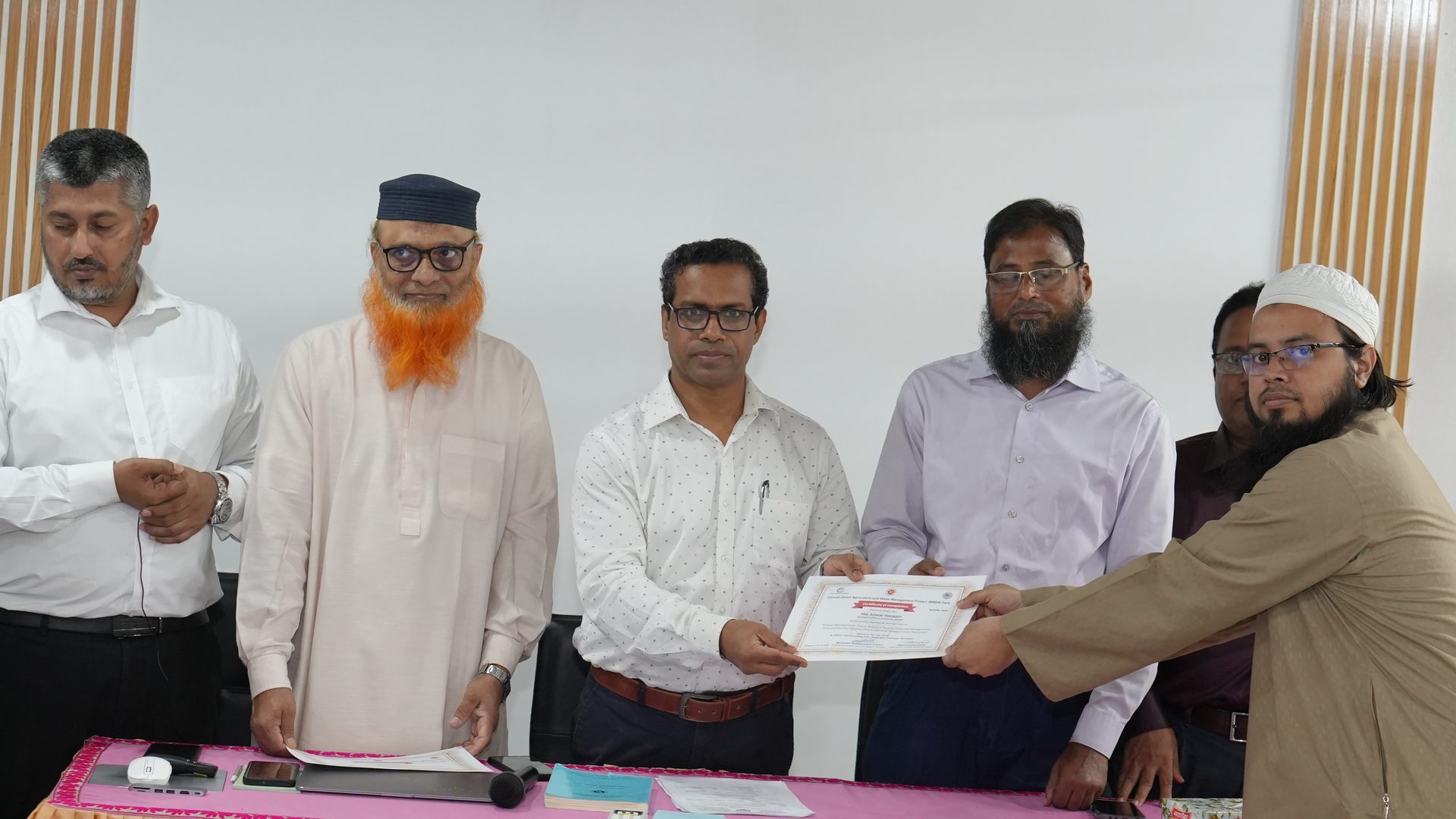
The Project Director closed the course on the afternoon of 2 July 2026, immediately after the post-evaluation, and certificates were distributed to all twenty-five participants.
The Course in Pictures
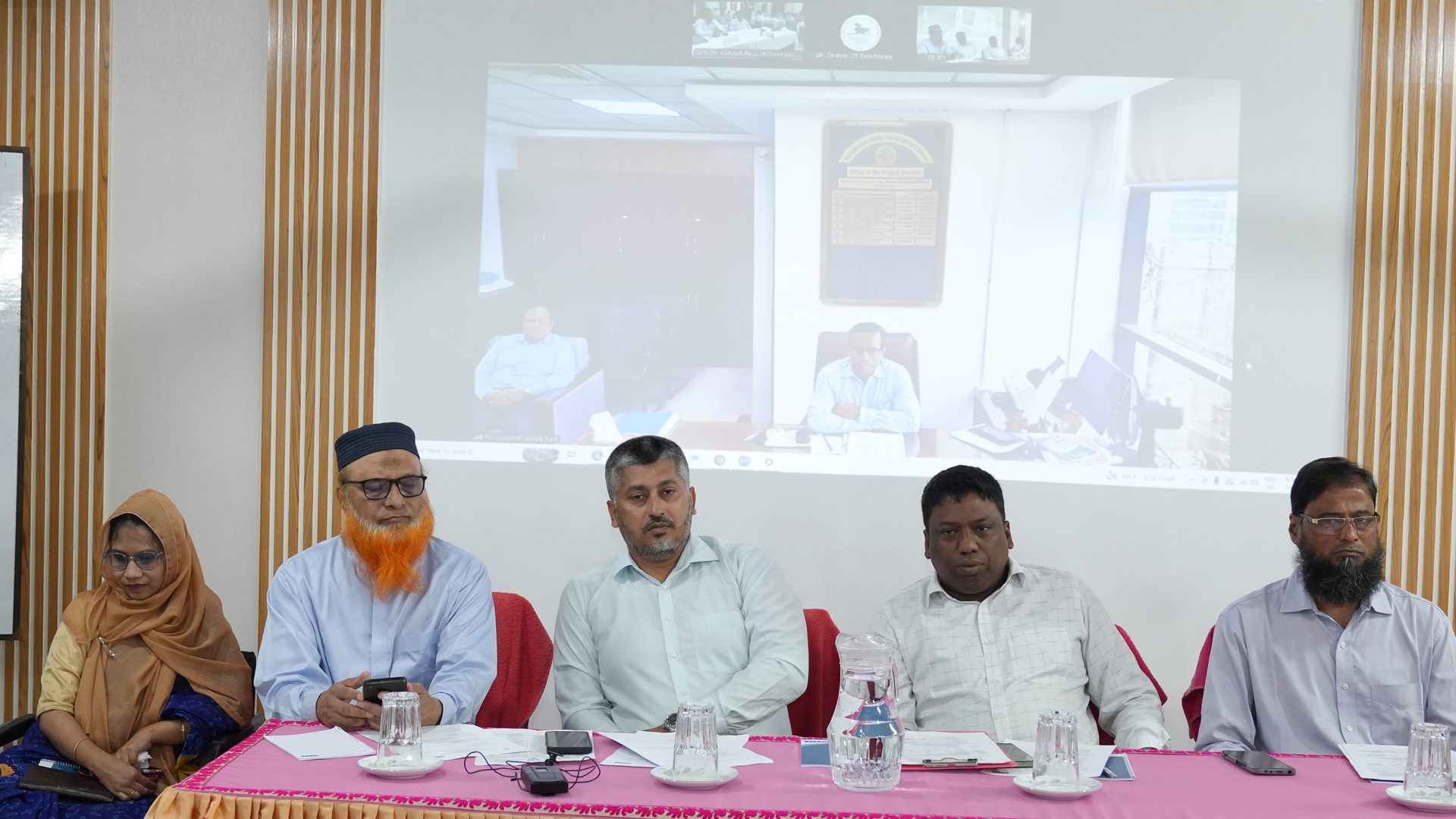
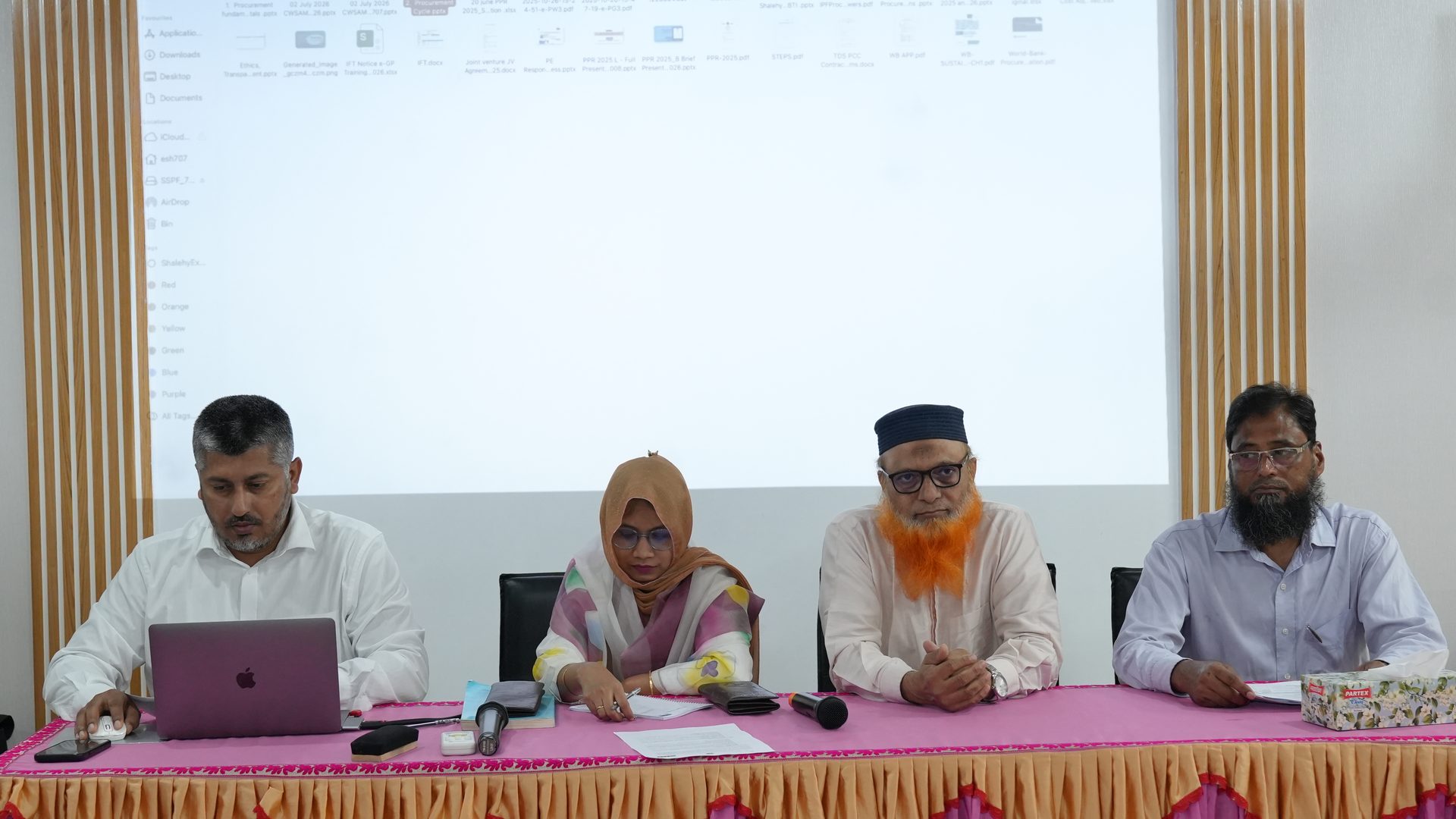
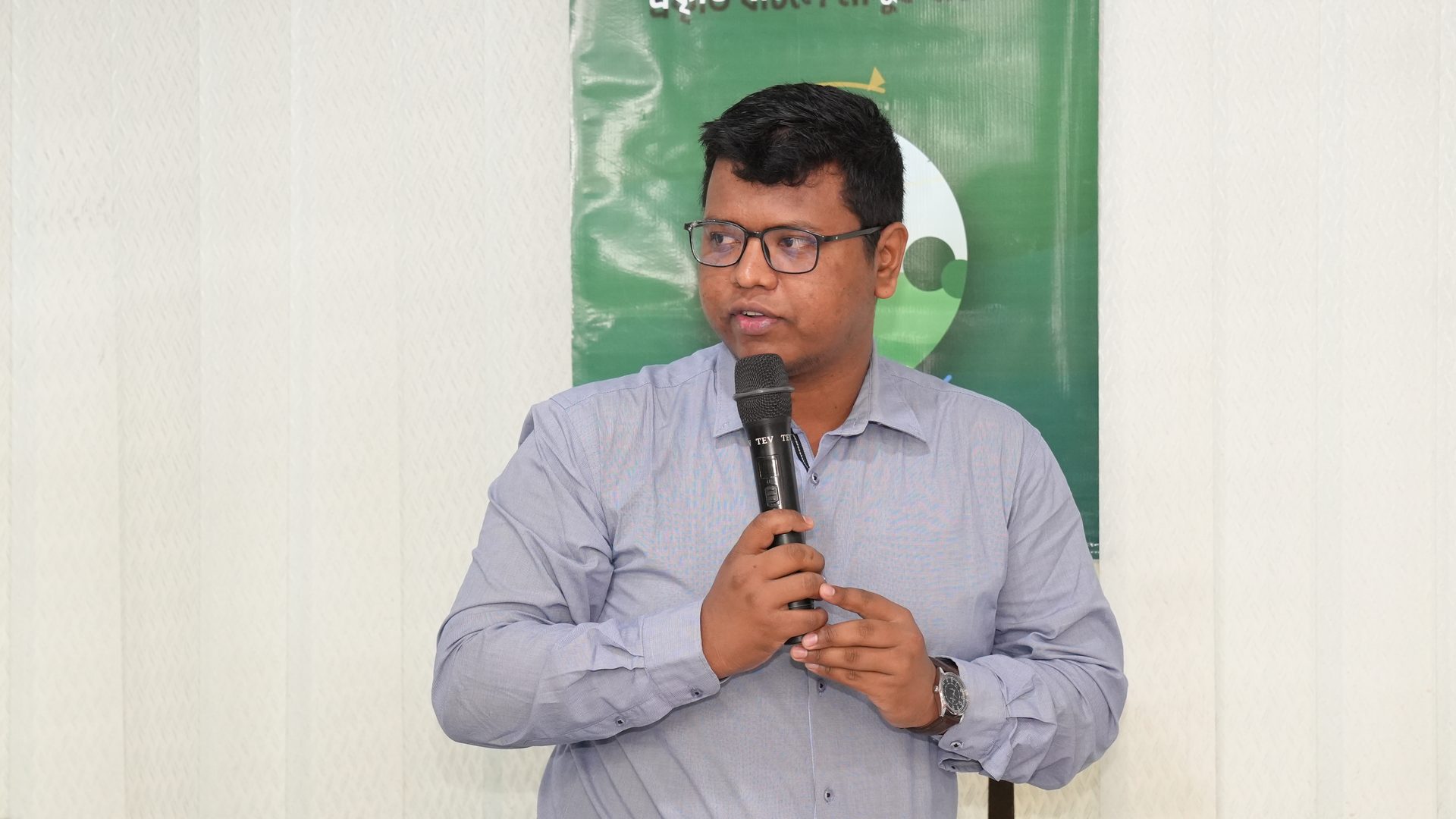
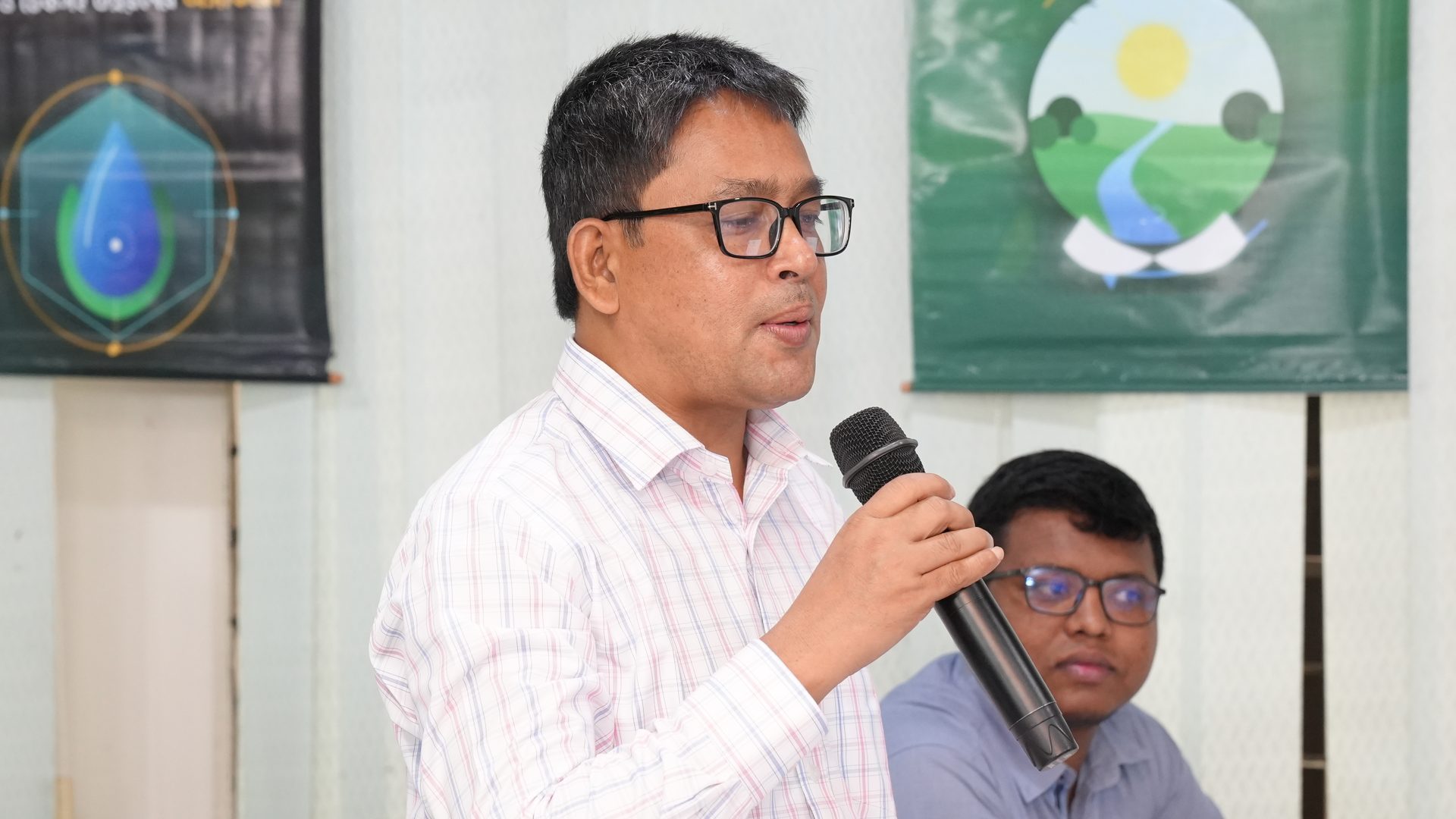
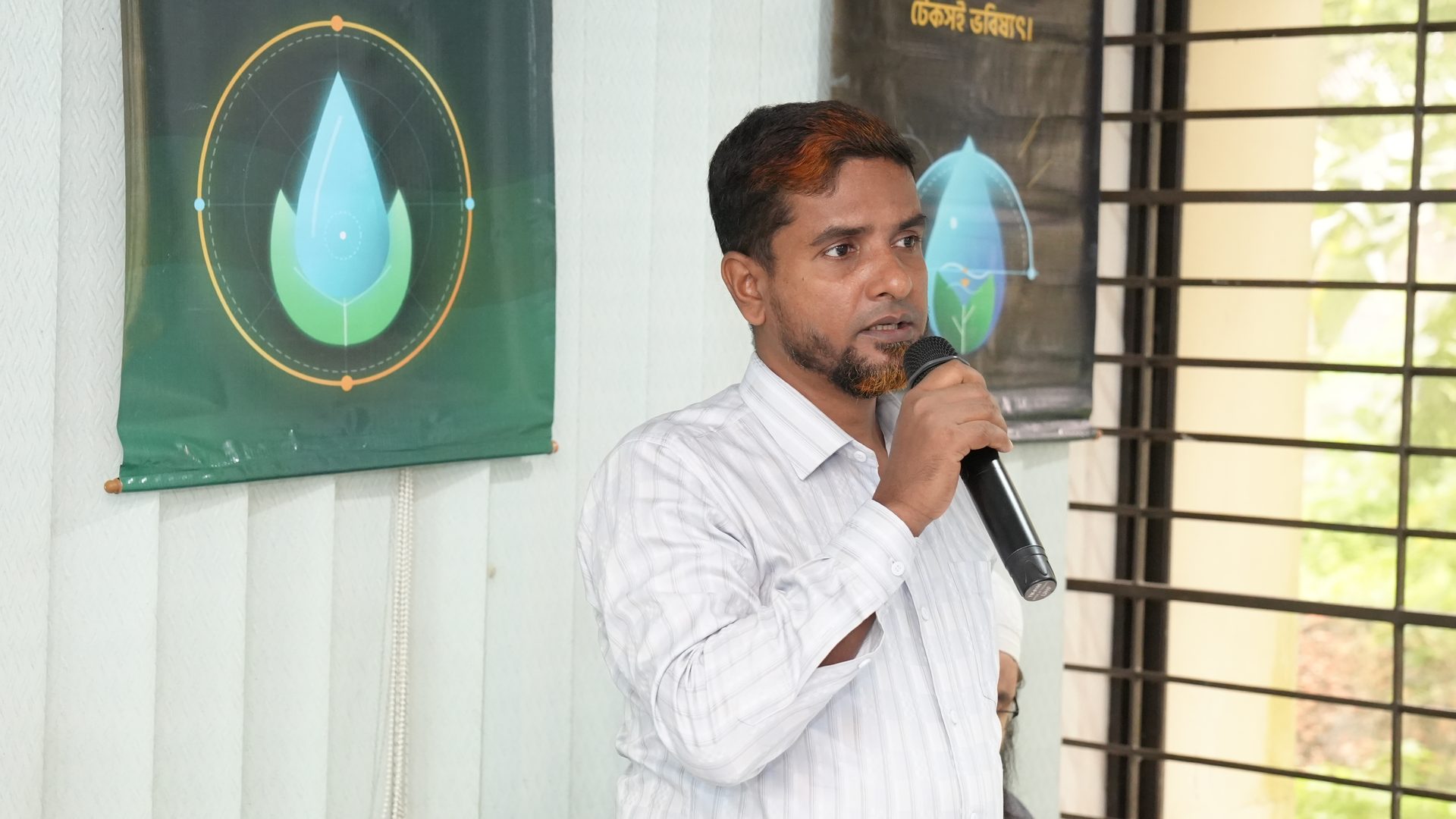
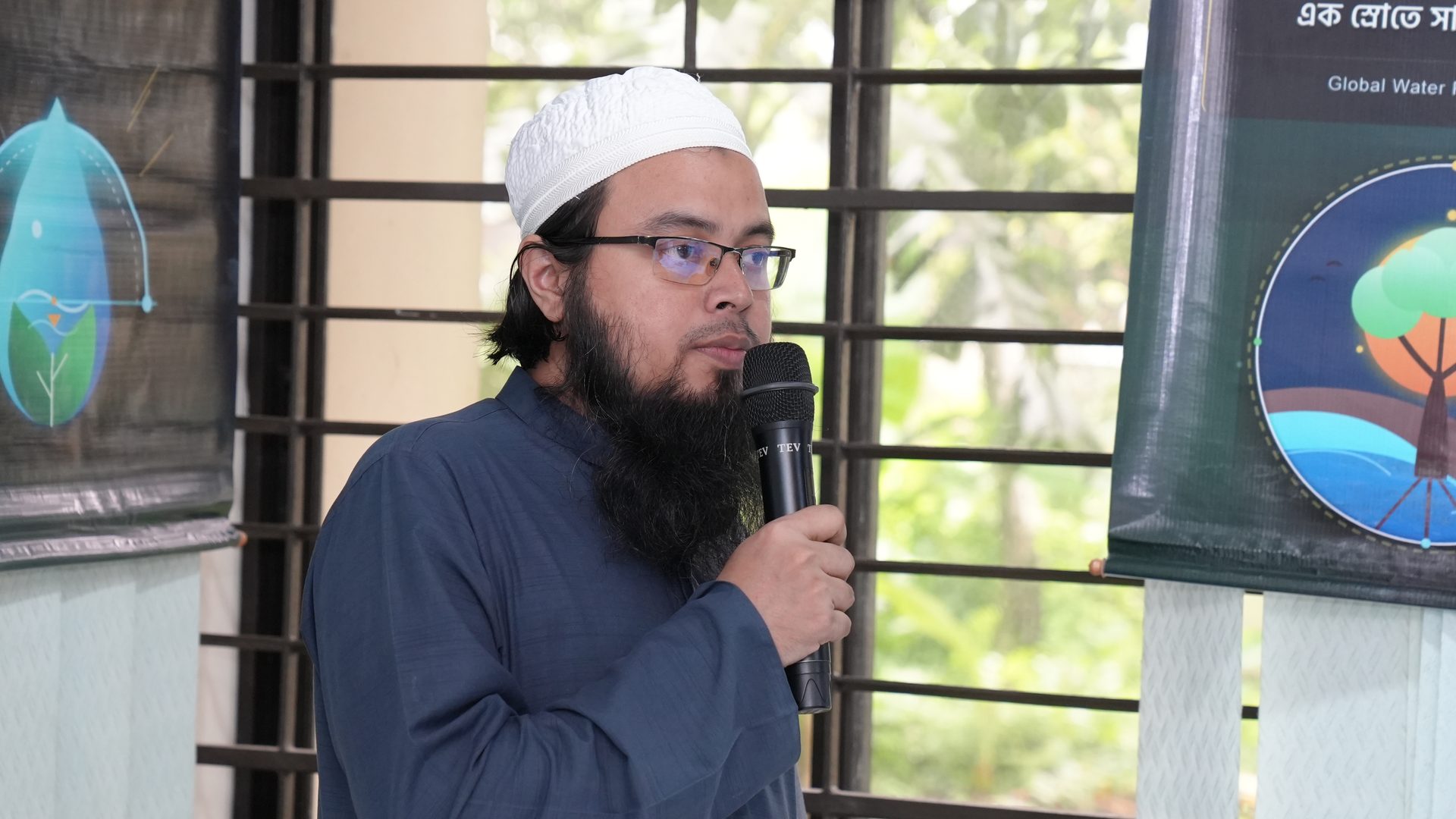
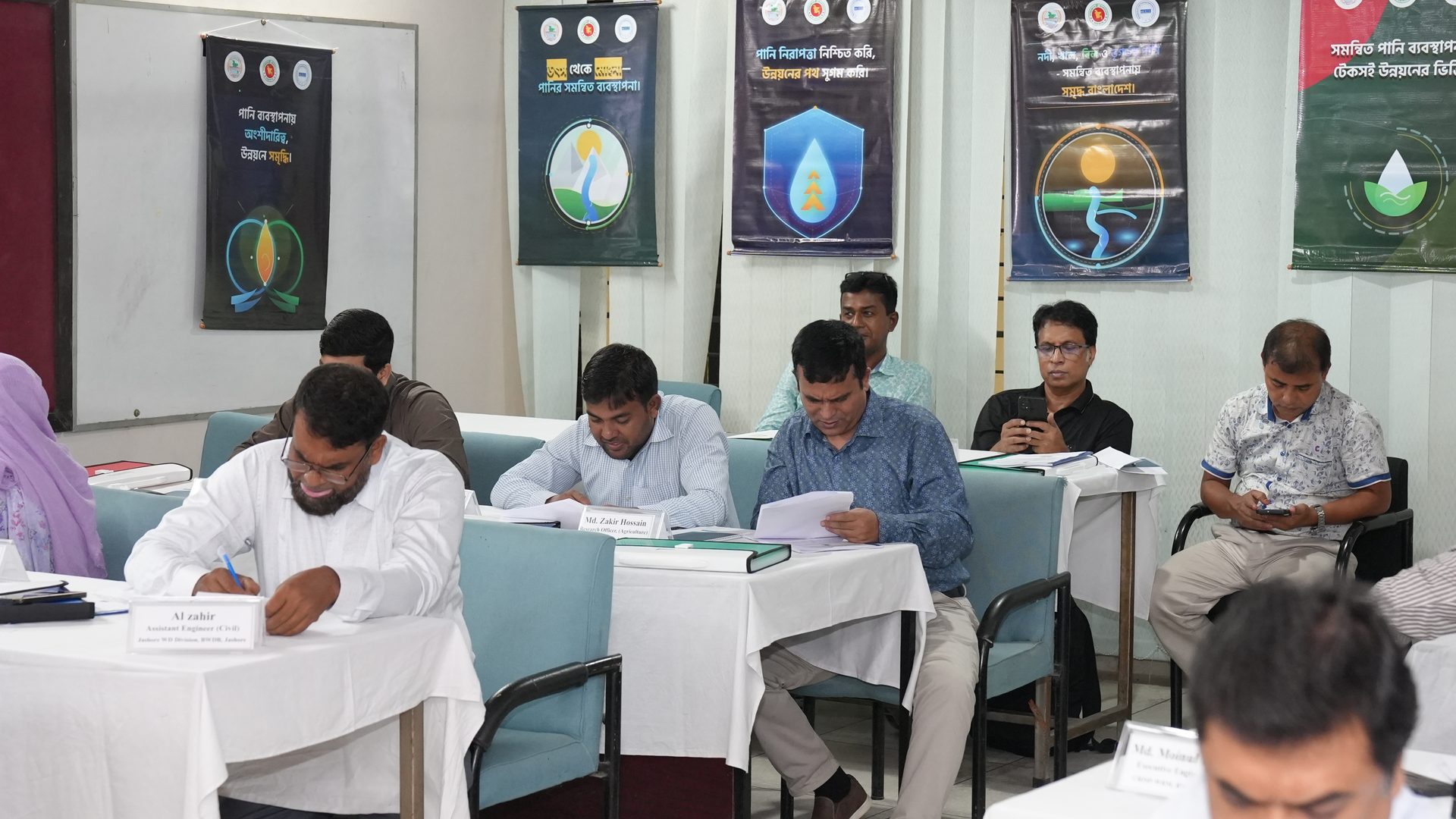
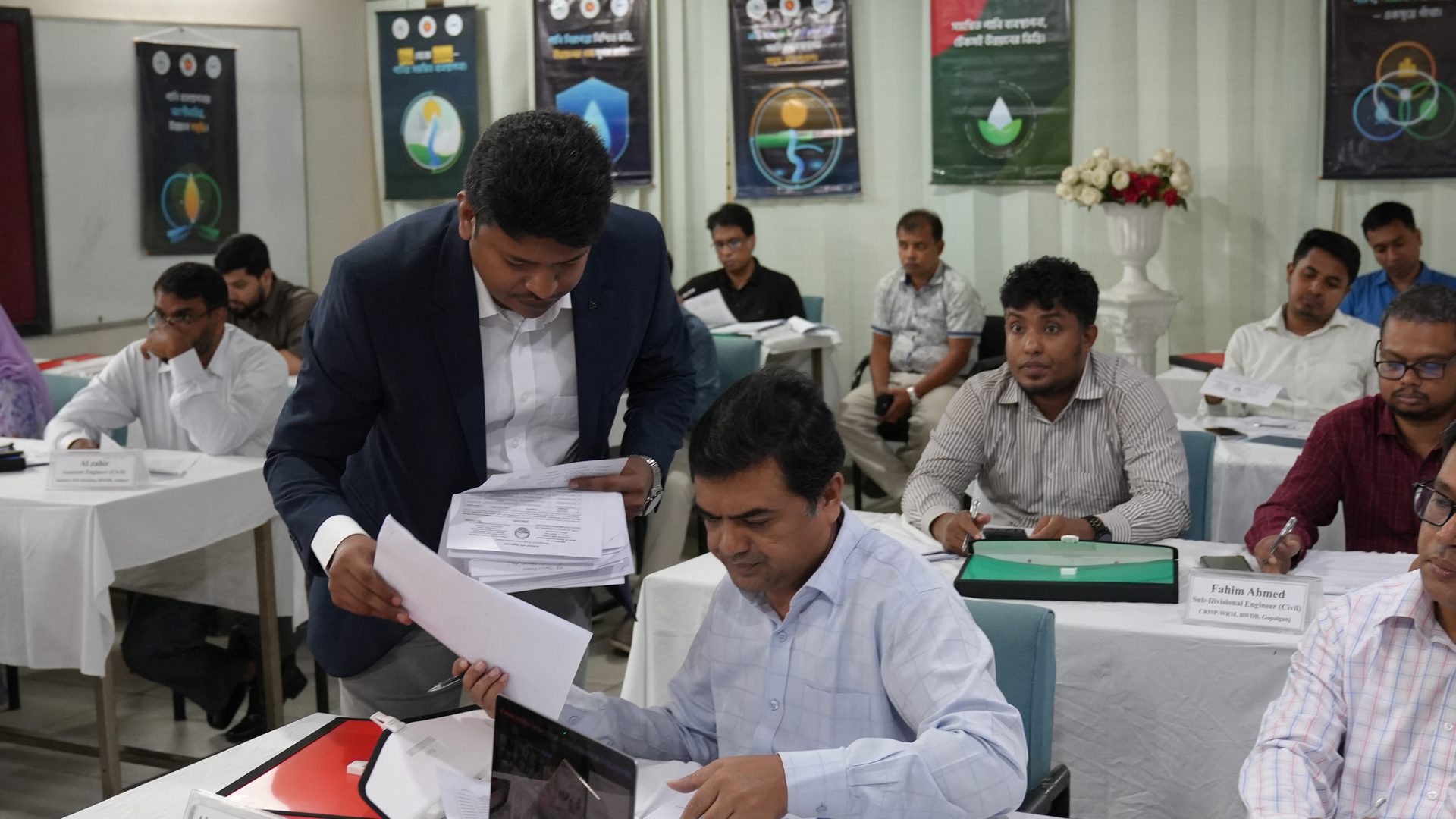
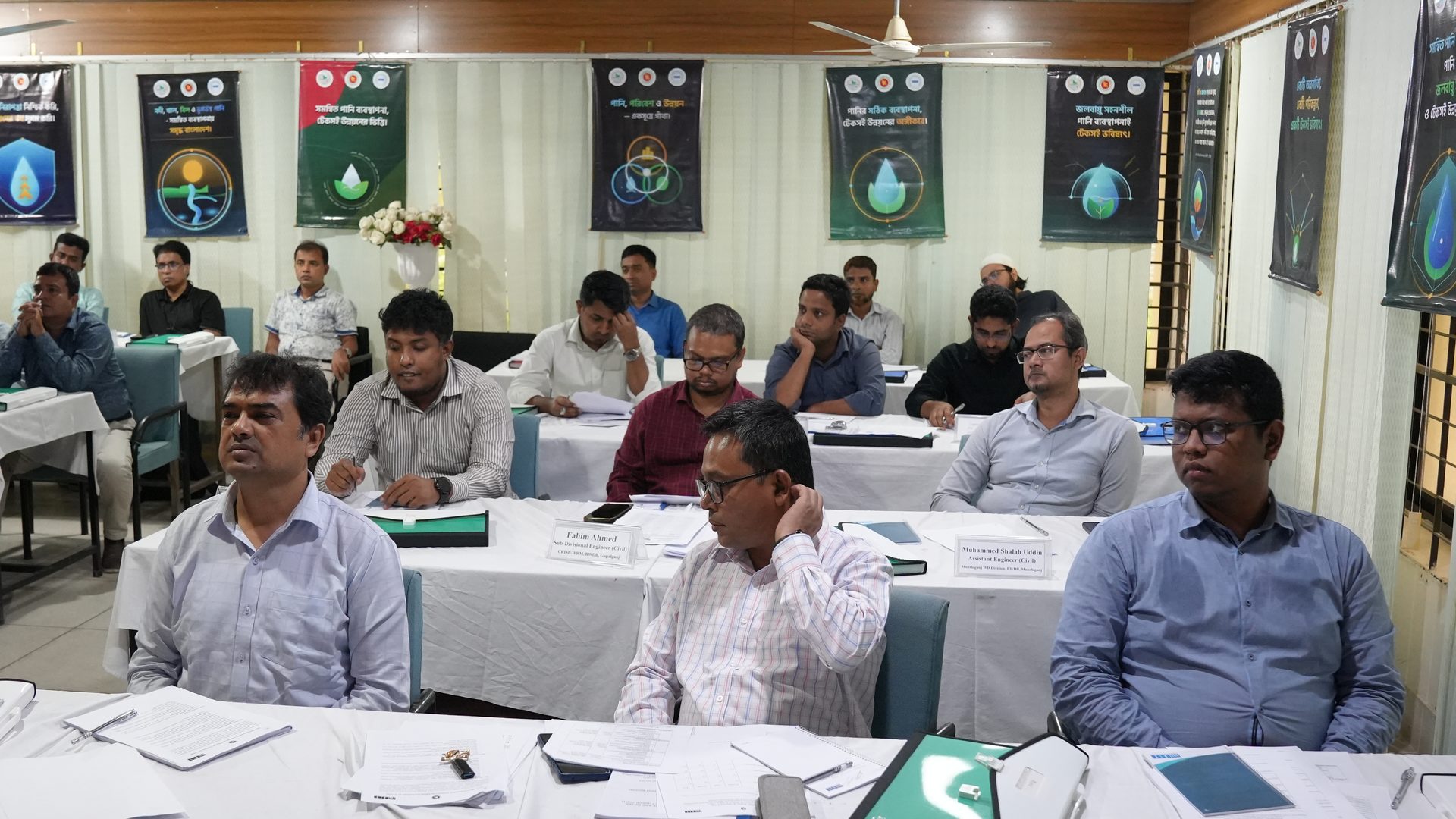
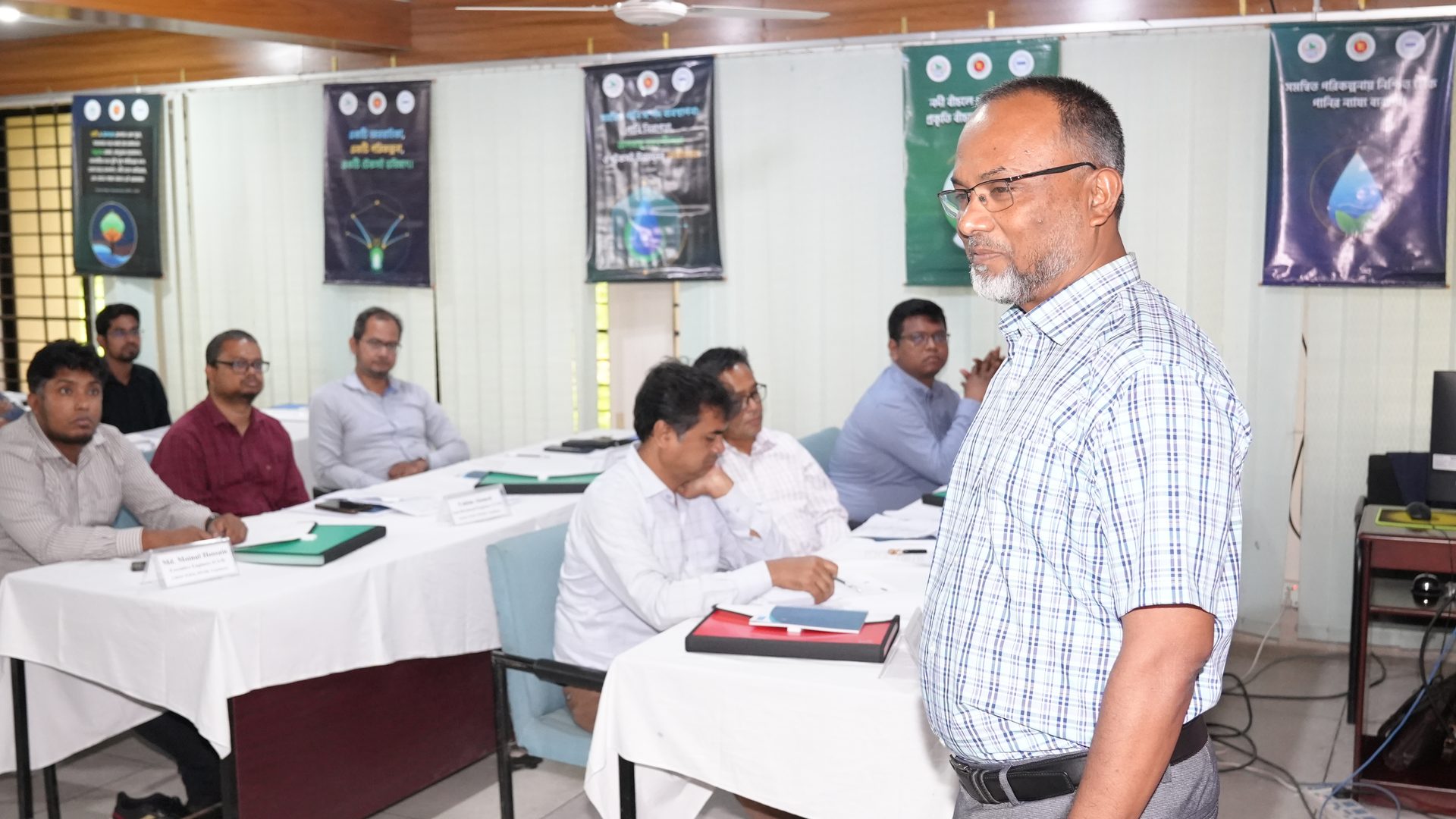
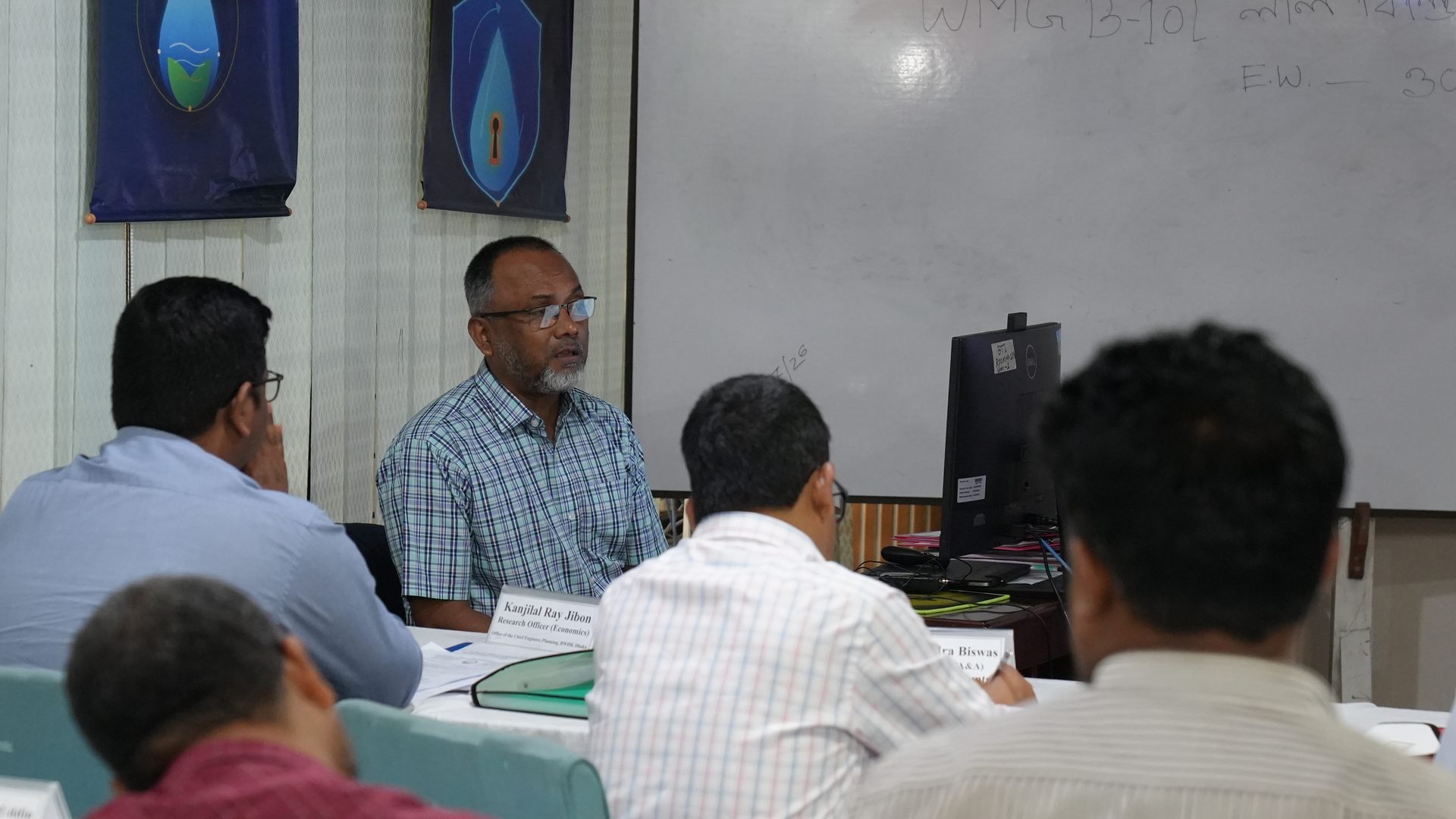
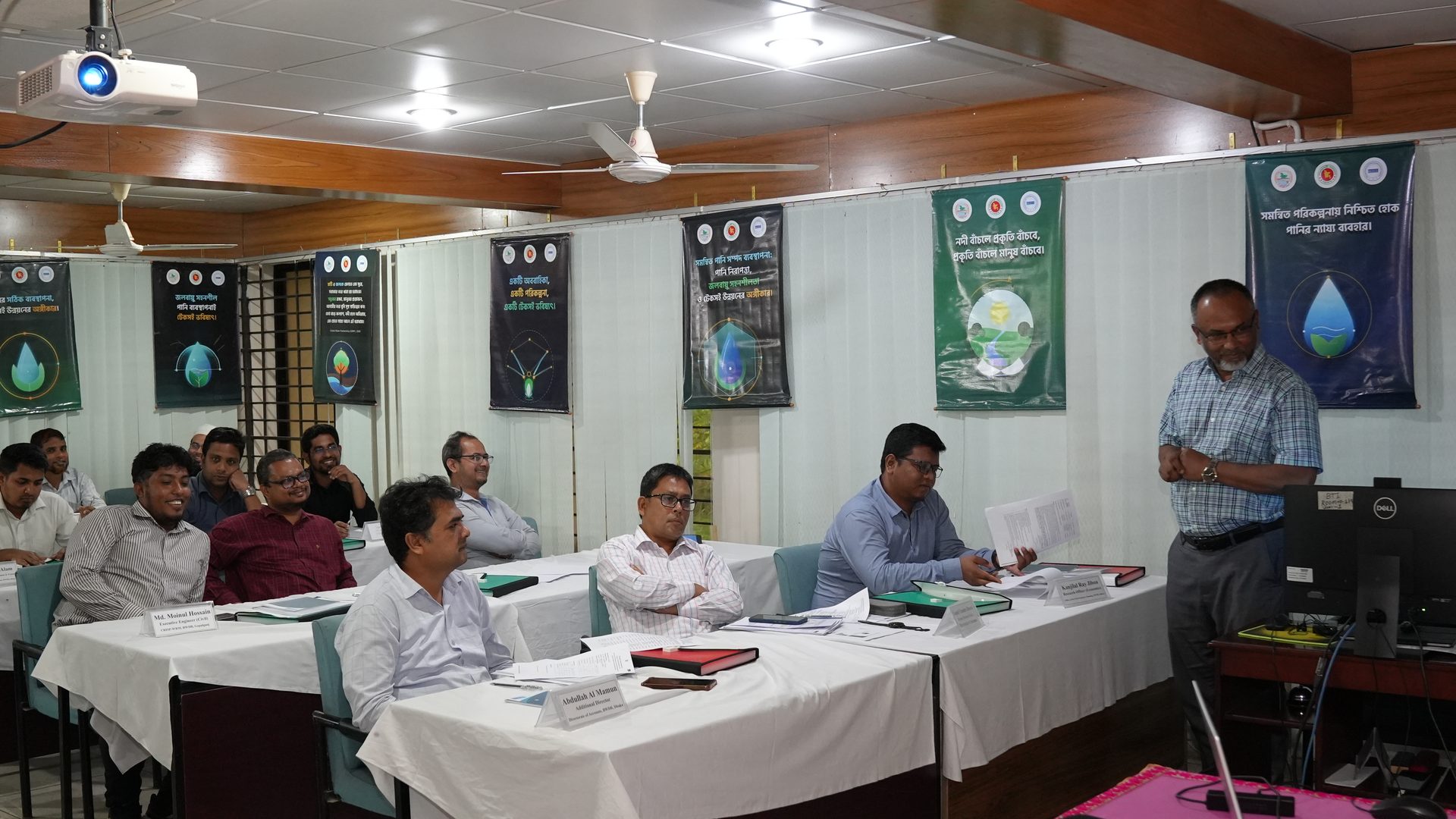
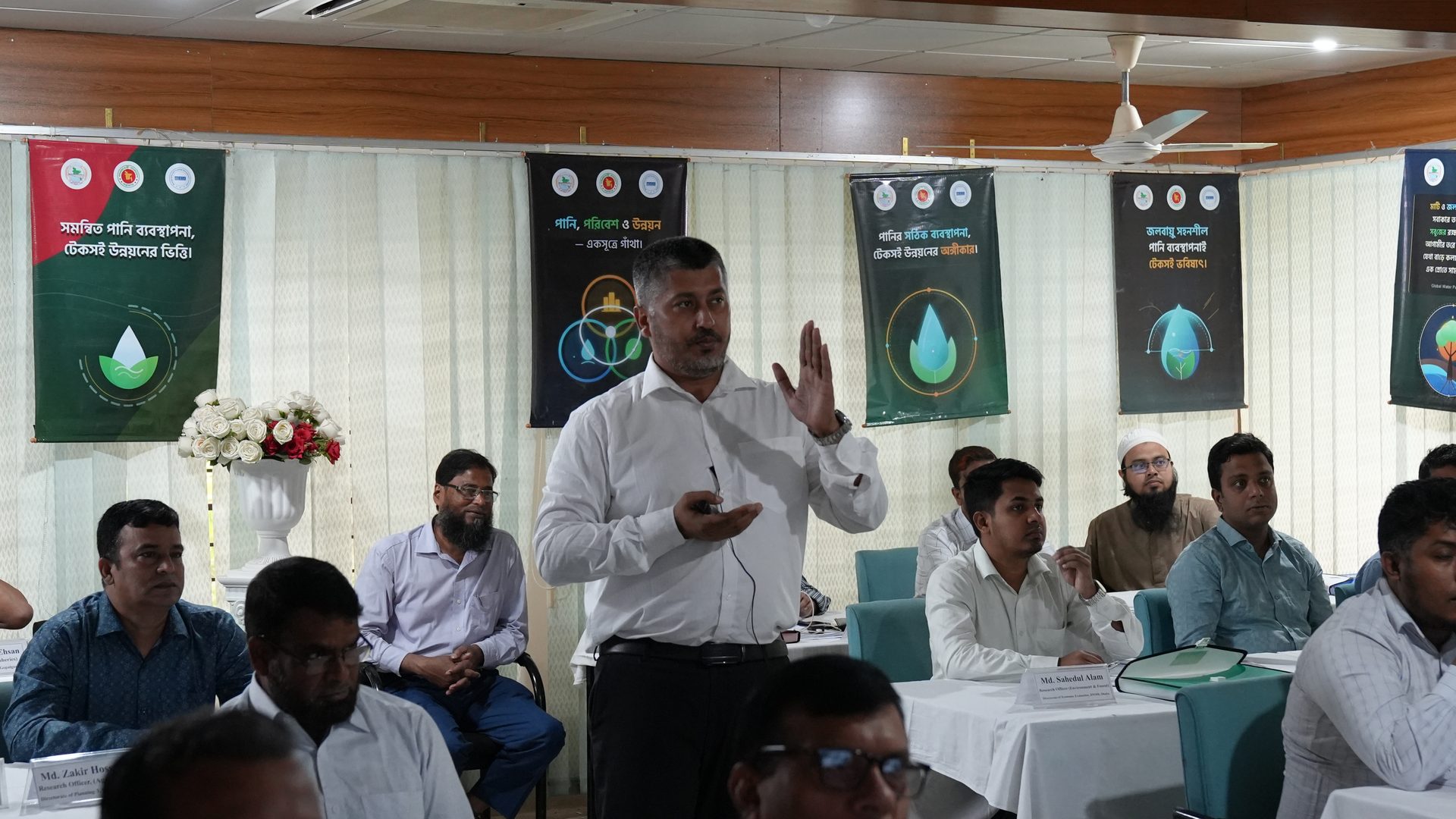
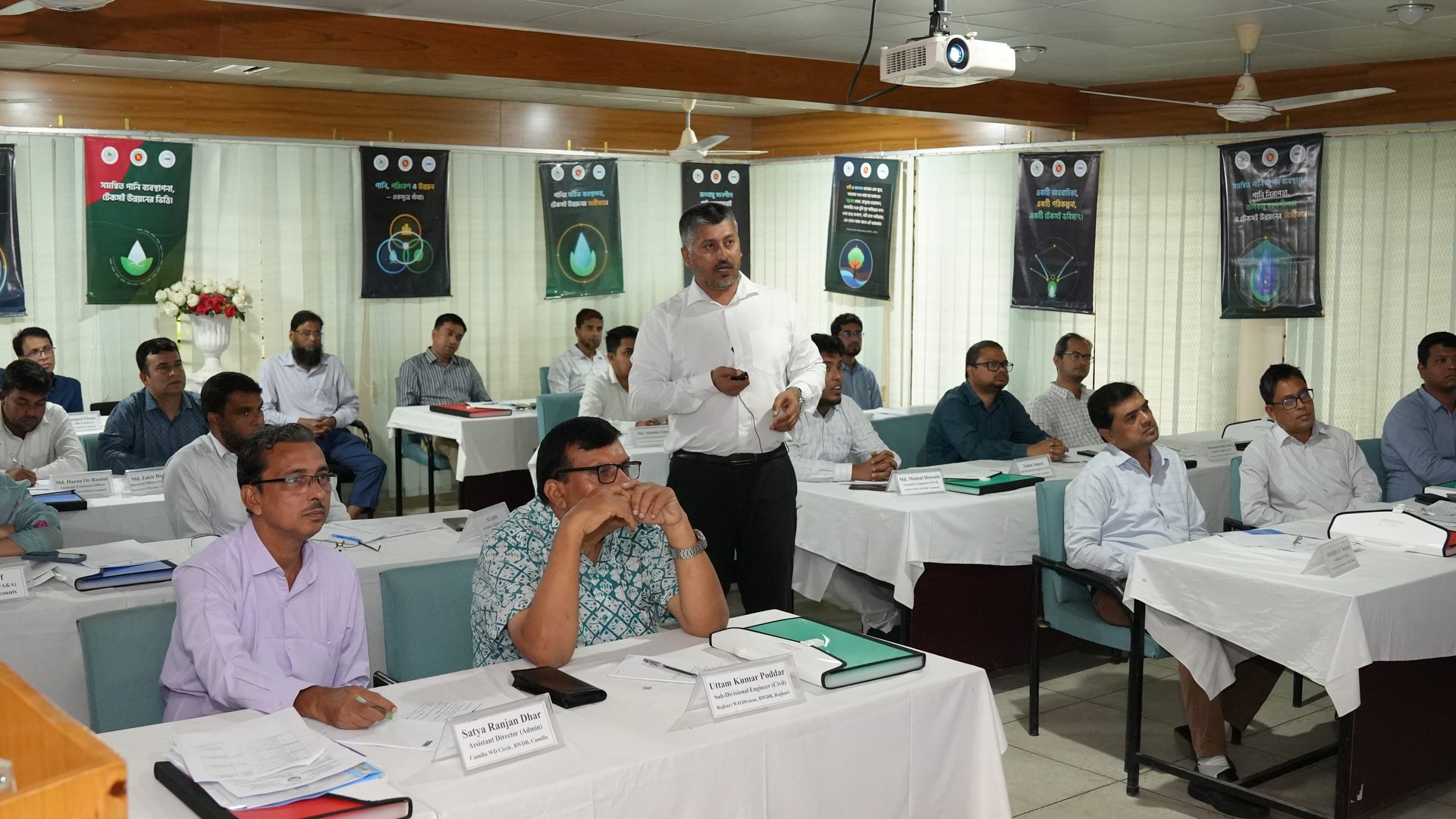
Twenty-eight further photographs from the two days at the BWDB Training Institute, Bhagyakul — the opening ceremony and introductions, the eight technical sessions, the VIPP group work and the certificate ceremony.
Why This Matters
Most public infrastructure does not fail at the moment of construction. It fails earlier — in a feasibility study that overstated demand, a work breakdown that omitted a component, a tender package structured so that only one bidder could realistically qualify, a fund release that arrived a season late, or a design that ignored the erosion regime of the river it sits beside. Each of those failures happens in a different office, and each of those offices sent someone to this course.
Naming PPR-2025 and e-GP explicitly matters too. Procurement compliance in Bangladesh is now substantially a digital process: tenders are published, submitted and opened online, and an officer who understands the Public Procurement Act in principle but not the e-GP workflow in practice is still a compliance risk. Teaching the legal framework and the system operation in the same session is the correct pairing.
And placing climate-smart execution at the end of the sequence — after the money and the procurement, not before them — makes the point the CSAWM Project exists to make. Climate resilience is not a design philosophy bolted onto a finished scheme. It is a set of choices about hazard, materials, safeguards and monitoring indicators that have to survive the budget line and the tender document to reach the embankment.
More from this Programme
Programme Snapshot
| Field | Detail |
|---|---|
| Course Title | Project Management — Focus on Project Lifecycle, Financial Management, Procurement Compliance (PPA/PPR/e-GP) and Climate-Smart Execution |
| Reference | CSAWMP-WDB-PCU-WD-22-1-PPA-eGp-01 — Package 22, Batch 1 |
| Duration | 2 days — 1 to 2 July 2026 |
| Venue | BWDB Training Institute (BTI), Bhagyakul, Munshiganj, Bangladesh |
| Participants | 25 officials of the Bangladesh Water Development Board |
| Ministry | Ministry of Water Resources, Government of the People's Republic of Bangladesh |
| Implementing Agency | Bangladesh Water Development Board (BWDB) |
| Project | Climate-Smart Agriculture and Water Management Project (CSAWM Project), BWDB Part |
| Source of Fund | CSAWM Project (BWDB Part) |
| Project Director | Pijush Krishna Kundu, Additional Chief Engineer (Civil) |
| Course Coordinator | Md. Shariful Islam, Deputy Director (Admin), BTI |
| Sessions | 8 technical sessions across 2 days, four sessions per day |
| Resource Persons | 5 senior BWDB officials |
| Training Service Provider | Management and Training International Ltd. (MTI Ltd.) — training delivery and participant transport from Pani Bhaban and WAPDA Bhaban to Bhagyakul |
| Country | Bangladesh |
Frequently Asked Questions
What was the Package 22 Project Management training about?
It was a two-day course covering four linked areas: the full project lifecycle from needs assessment to post-project evaluation; financial management including cost estimation, fund flow, audit compliance and cost-overrun mitigation; procurement compliance under the Public Procurement Act, PPR-2025 and the e-GP system; and climate-smart execution covering climate risk assessment, resilient design, sustainable construction and adaptation monitoring.
Who attended the training and where was it held?
Twenty-five officials of the Bangladesh Water Development Board — research officers, civil engineers, extension officers, assistant chiefs and accounts, finance and audit officials from sixteen directorates and field offices — attended at the BWDB Training Institute (BTI), Bhagyakul, Munshiganj, on 1 and 2 July 2026.
What does the e-GP session cover?
The e-GP System Operation session covered tender publication and the online invitation process, e-submission and opening for digital bid handling, followed by contract administration, execution and supervision, and dispute resolution including claims and arbitration handling.
How does Package 22 differ from Package 21?
Package 21 opened with the governance side of water management — Integrated Water Resources Management, the National Water Policy 1999, the Water Act 2013 and the Participatory Water Management Rules 2014. Package 22 opens with delivery: how a project is scoped, budgeted, procured, built and monitored. The two packages run in parallel and together cover both what BWDB is required to achieve and how it is required to achieve it.
Who funded and organised the course?
The course was funded by the Climate-Smart Agriculture and Water Management Project (CSAWM Project), BWDB Part, under the Bangladesh Water Development Board, Ministry of Water Resources. Management and Training International Ltd. (MTI Ltd.) served as the training service provider under reference CSAWMP-WDB-PCU-WD-22-1-PPA-eGp-01.
How many batches will be delivered under Package 21 and Package 22?
75 training batches are planned across Package 21 (40 batches) and Package 22 (35 batches) of the CSAWM Project (BWDB Part). This was the opening batch of Package 22.